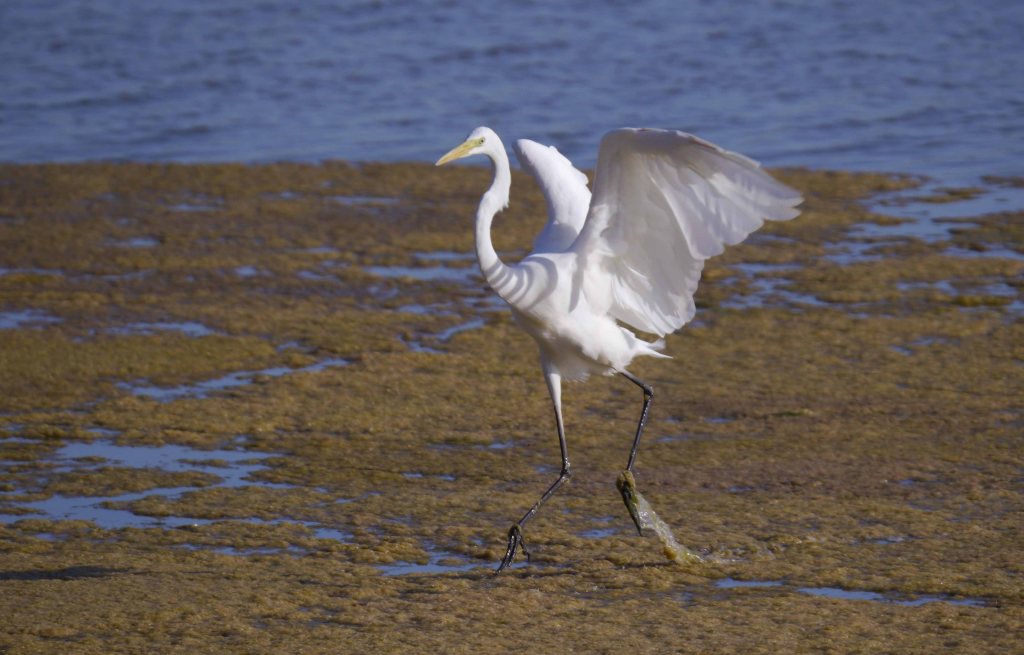
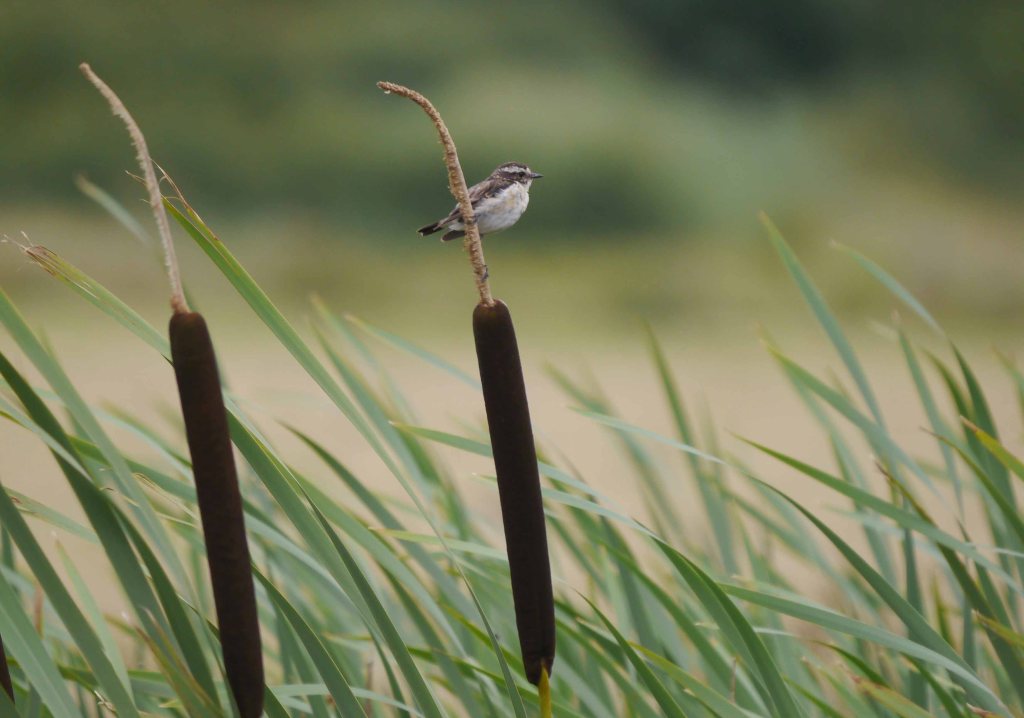
July has been an interesting month for local sightings. A flock of Common Scoters were hard to count in the choppy ebb tide waters of the Severn on 17 July, it turned out to total 27 (7 females), I managed a minimum count of 25 (5 females) as the drifted out, often being harassed by gulls causing them to dive. A Wood Sandpiper on the Rushy at WWT Slimbridge was a welcome sighting. Whinchats Pictured below) have begun to turn up locally along with a wide range of adult and juvenile waders on the Severn and WWT scrapes. The water levels are low so Grey Herons, Little and Great Egrets (pictured on Tack Piece) are all concentrating where the fishing is productive. The Severn has been attracting numbers, typically on the ebb tide.
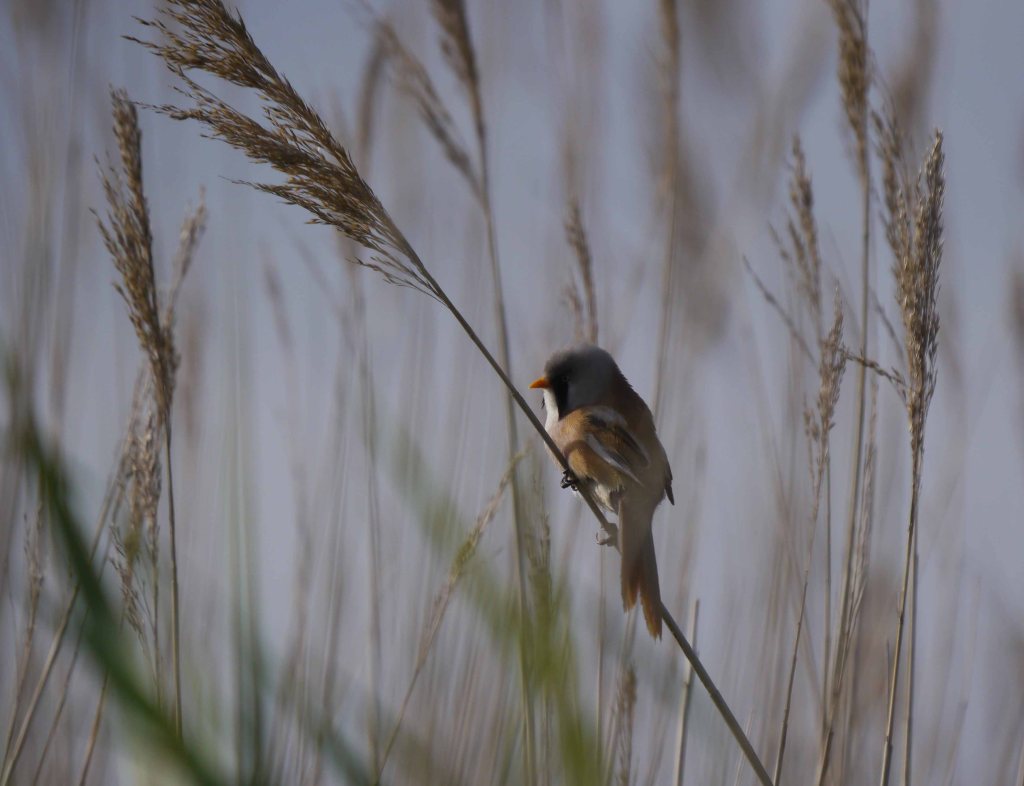
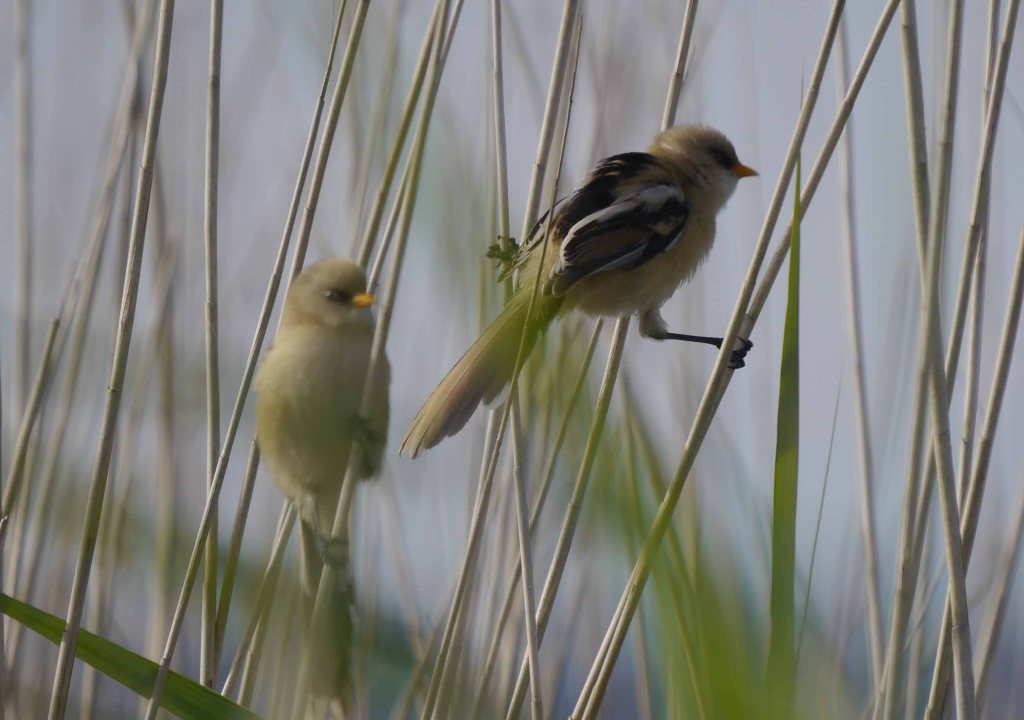
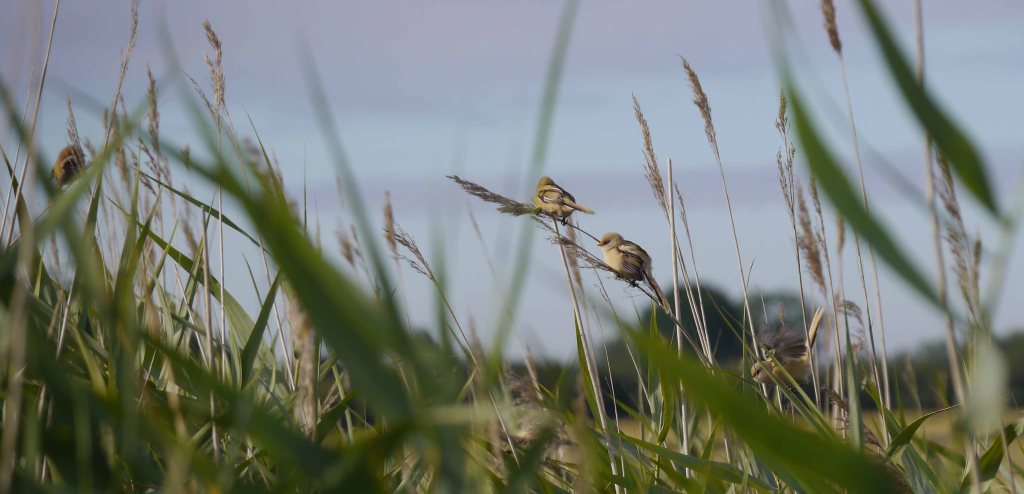
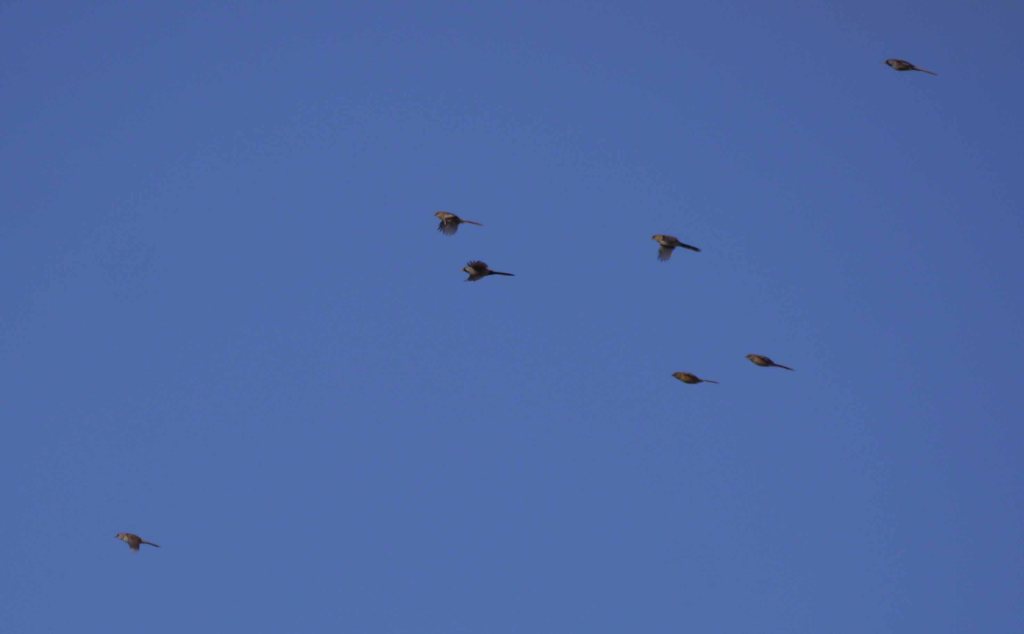
Pick of the birds locally has been the family party of Bearded Tits, I repeatedly missed them of late with my last encounter in November last year, although there has been sightings over the winter and especially recently. On the 9 July, the family group arrived at Middle Point from a little further North along the foreshore, I was then lucky to see them trying to fly out high over the Severn only to return twice, eventually they flew across the Dumbles. A pair with five juveniles.
A morning and early afternoon visit to Woorgreens Lake and surrounding heath and the Cannop Valley. Was hoping to find some shade, and being at a higher elevation than the Severn Vale, a slightly cooler part of the county.
A good range of species noted, was confident I would turn up a few more species but the heat was too much.
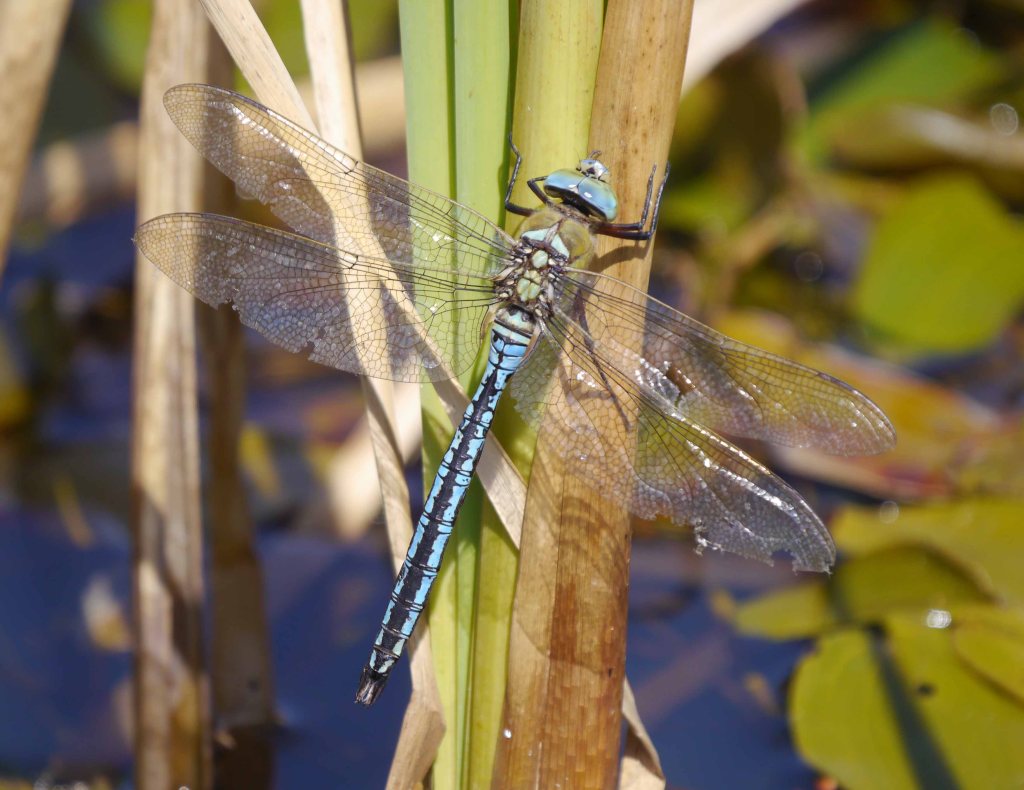
Keeled Skimmer, Black-tailed Skimmer, Broad-bodied Chaser, Four-spotted Chaser, Emperor, Southern Hawker, Brown Hawker, Moorland (Common) Hawker, Golden-ringed Dragonfly, Common Darter, Red-eyed Damselfly, Small Red-eyed Damselfly, Azure Damselfly, Common Blue Damselfly, Emerald Damselfly, Blue-tailed Damselfly, Large Red Damselfly.
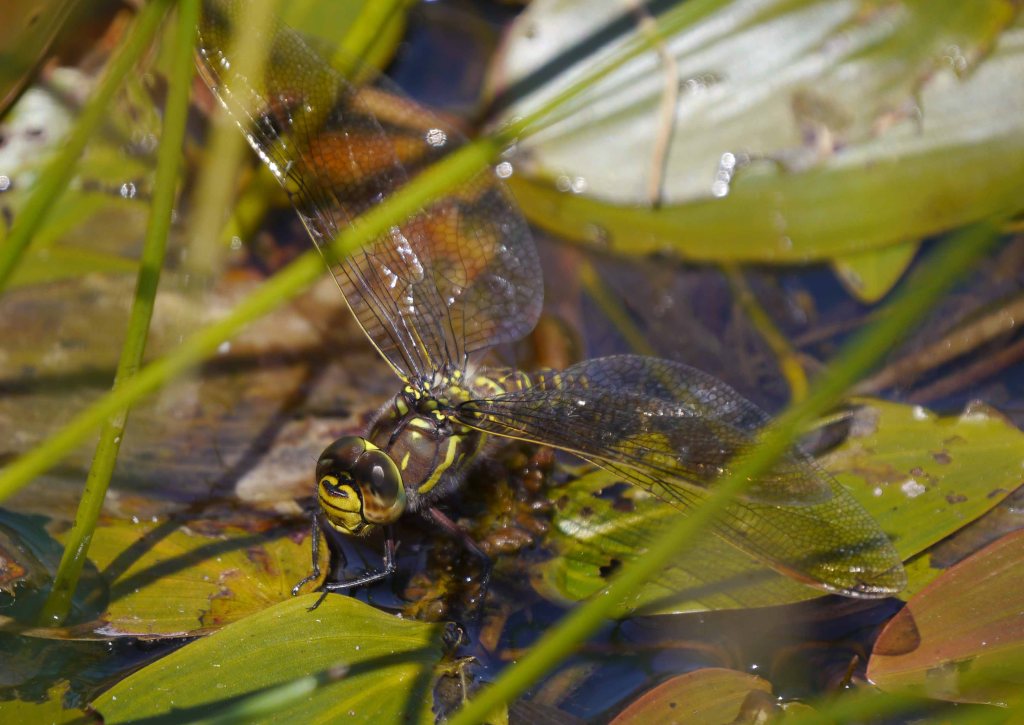
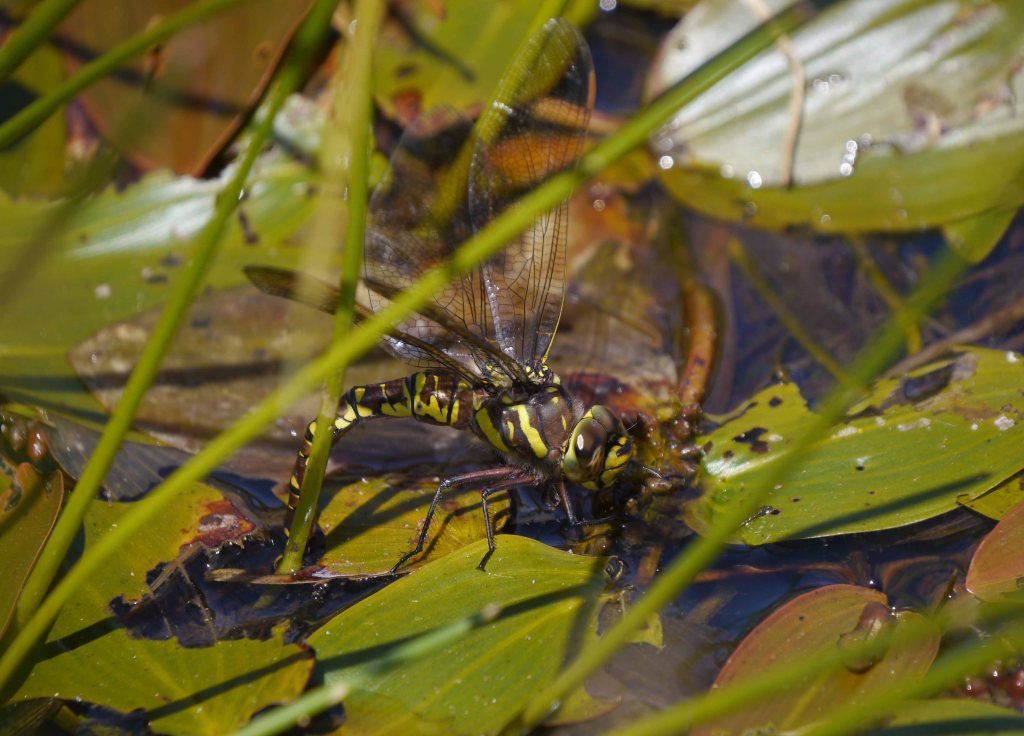
Keeled Skimmer, male Woorgreens GWT (1) Female Moorland Hawker, Woorgreens GWT (2&3) Male Emperor, Woorgreens GWT (4)
A few flyover and calling Crossbills were of note, largest party involved five birds, but three and four flew over at different times, another flew over Cannop Stoneworks. A number of vocal Siskins, a Mandarin, Buzzard, two Swifts, Swallows and House Martins, Tufted Ducks and Mallards plus Grey Heron.
A dozen Silver-washed Fritillaries were feeding around the spillway at the Cannop Stoneworks plus a family party of Grey Wagtails.
North and South Karelia, Saimaa Lakeland with the Porvoo, Espoo/Helsinki area.
15 June
Three of us were dropped off at Bristol bus station, coach with Flixbus to Gatwick South and flew with Norwegian, arrived late at Helsinki airport after a delay, collected car from Hertz (very smooth) and set off for Porvoo.
16 June
Arrived at Budget Easystay Porvoo 60.39612725978321, 25.63723004731547 at around 0230am, numerous Thrush Nightingales singing locally in gardens and roadside lane scrub nearby plus a few other common passerines. Got up at 0700am for a good breakfast in the converted former elderly persons home, it was a really good place, very comfortable, and quiet, lots of facilities to cook if you needed to. A little bit of birding around the accommodation noting a few species with singing Thrush Nightingales in the gardens of note. A hot and sunny day proved great for odonata spotting.
A short car journey to S of Porvoo to stop at the boardwalk/platform that leads to Ruskiksen lintutorni overlooking the marshes and bay at 60.38159943583155, 25.686288910708775
Adult White-tailed Eagle, male Black Woodpecker, 7+ Wood Sandpiper, Spotted Redshank, Greenshank, Redshank and Lapwing with young, 2 male Ruff, Little-ringed Plover, 2 Caspian and 7 Common Terns, 4+ Snipe displaying, Whooper Swan, Hobby, Teal, Mallard, Shoveler, Gadwall, White Wagtail, Swallows using an artificial nesting tower was of note.
Then moved to the other side of the channel to Sikosaari Lintutorni.
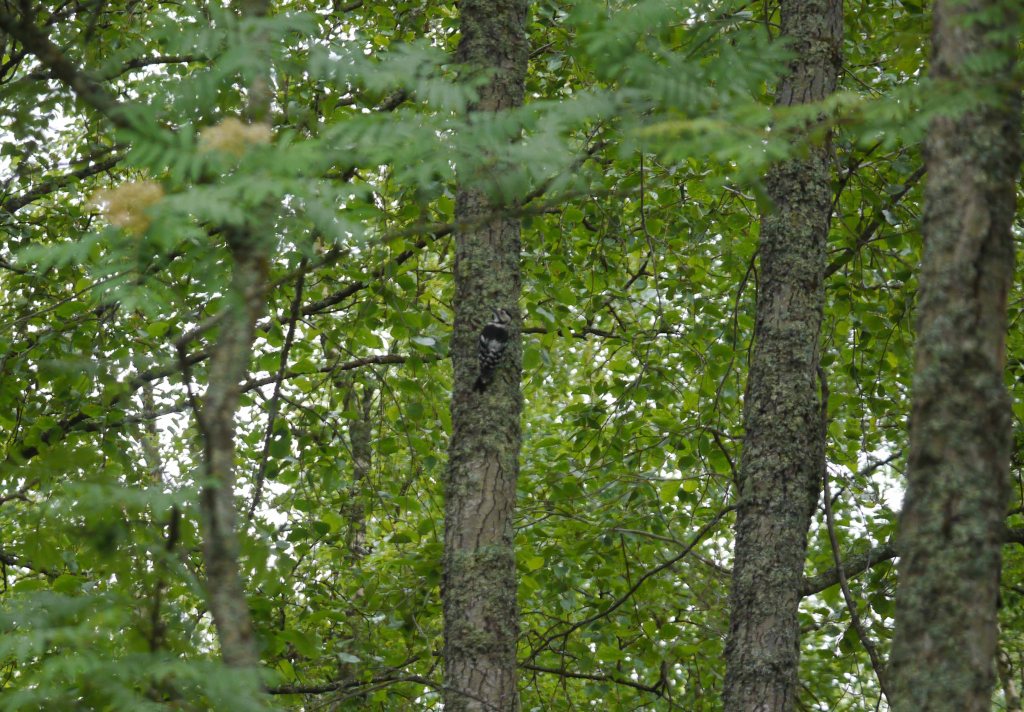
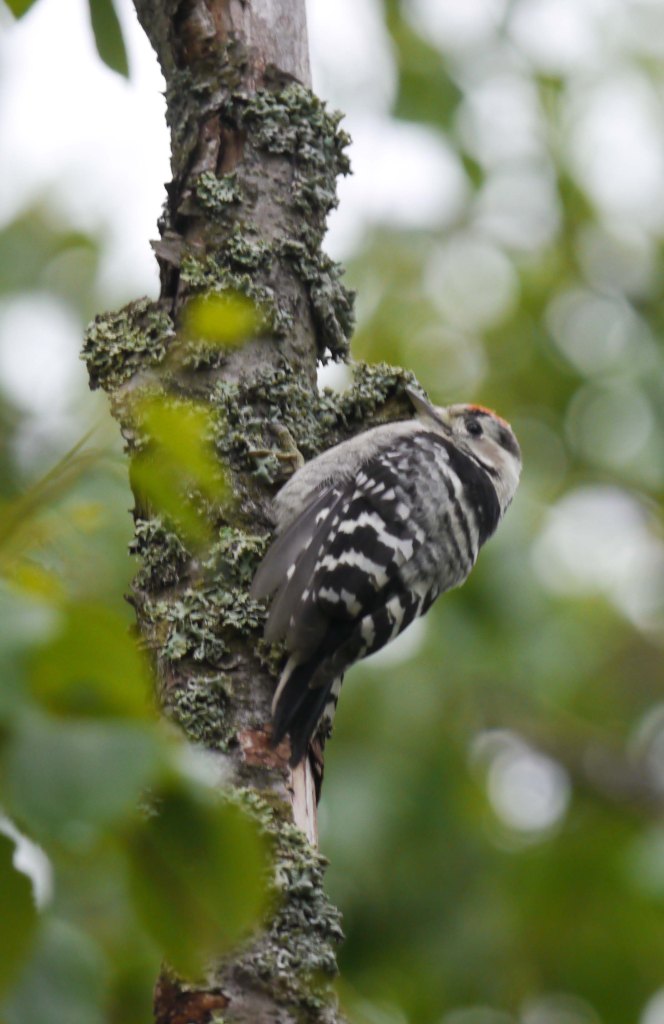
Two Wood Warbler, Pied Flycatcher, Treecreeper, Kestrel, Great-spotted Woodpecker plus Variable Damselflies, Four-spotted Chasers and a Large White-faced Darter.
Also noted Mistle Thrush, Robin, Reed Bunting, Blackbird, Common Whitethroat, Jackdaw (someringiii), House Sparrow, Grey Heron, Woodcock, Swift, Hooded Crow, Common Gull, Lesser Black-backed and Herring Gull, White Wagtail, Meadow Pipit, G C Grebe, Willow Warbler, Blue and Great Tits, Reed and Sedge Warblers, Goldcrest, Woodpigeon, Magpie, Skylark, Great Egret, G S Woodpecker also recorded.
Departed after a couple of hours to head NE toward Lapeenranta, stopped at the ABC servive station for food and then to the wetland peat bog area called Lapeenranta Joutseno, Kotasaari altaat. Drove the lanes and viewed over the former peat workings, very popular with birders and a good track record for attracting rarities. Again, a very productive birding area in hot weather.
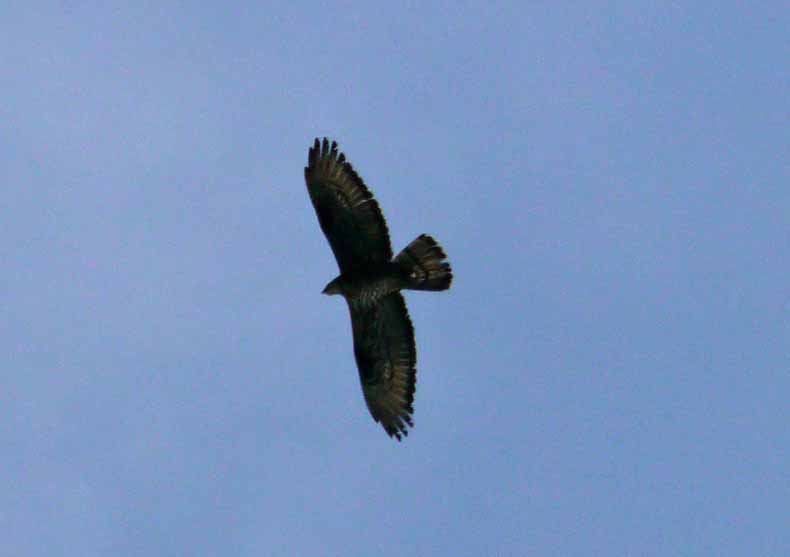
20+ Wood Sandpipers including chicks, breeding Redshank, Spotted Redshank, 10+ male Ruff, 2 Greenshank, 50+ Lapwing, 3 Curlew, Teal, Shoveler, Tufted Duck, Wigeon, Grey-headed Wagtails, Blyth’s Reed Warbler, Little-ringed Plover, nesting Black-headed and Little Gulls, Common Gull, Goldeneyes with young, distant Honey Buzzard, White Wagtails, Cuckoo, Coot and Moorhen, Hooded Crow, Cuckoo, Chaffinch, Yellowhammer, Buzzard, Fieldfare, Starling, Tree Pipits.
Citrine Wagtails and Marsh Sandpiper were suspected to be breeding here!
Left for the long drive to Värtsilä where we checked in at our accommodation at Majatalo Raja
62.1991914618367, 30.61576439412417. Good place with small kitchen, spacious rooms, again a good place to budget bird the area.
We headed back to Tohmajärvi seeing a roadside Short-eared Owl hunting in fantastic light, then stopped in town for a pizza/kebab/burger, out birding locally after.
First stop Peijonniemenlahti lintutorni, 62.19984648129685, 30.393564578514685
Sand Martins, Pied and Spotted Flycatchers, Pochard, Little and Black-headed Gulls, Common Terns, Cuckoo,
then the church and cemetery nearby at Kirkkoniemi with Corncrake, pair of nesting Blyth’s Reed Warblers and singing Common Rosefinch.
Back to Värtsilä and Sarpola and adjacent Lake Sääperi area. We stayed out to 0130hrs.
Whinchats, 30+ singing Blyth’s Reed Warblers, singing River Warbler, singing Grasshopper Warbler, two Sedge Warblers, Garden Warbler, Blackcap, Bittern booming at both lakes Saaperi and Uudenkylänlampi. Marsh Harriers, churring Nightjar, at least two hunting Long-eared Owls, 30+ Corncrake, singing Common Rosefinches, Fieldfares, Goldeneye, Siskin as well as fields full of Lapwing and Curlew with young.
Singing River Warbler was here 62.20794088288628, 30.619860973282446
17 June
I was up and out early at 0600hrs to explore other areas locally (Pykälävaara) (Whinchat, Willow Tits with brood, family of caudatus Long-tailed Tits, Curlews, Lapwings, Tree Sparrow and Common Rosefinch, two Crossbills) and returned for breakfast with Andy and Neil for around 0800am, they had managed a little bit more sleep than me. We birded around the village, riverside (Tree Sparrows, Sparrowhawk, Siskins, Hawfinch, Pied Flycatcher) and visited the lintutorni nearby 62.20268688879627, 30.62136960731301. It was a great lookout with some good birds about but we could only imagine the 1000s of geese that would have been present weeks before. The rain begain to fall lightly. (Fieldfare colony, Pied Flycatcher and Common Rosefinch).
Great breakfast, then off to Joensuu where it was now raining heavily, we parked and walked through the woods and marsh to the shoreline of the bay and canal mouth at Höytiäisen Suiston Lintutorni 62.61594795786382, 29.670606977812536. The rain and wind dampened things but we still managed to log a few species. (Ringed Plover, Wood Sandpipers, a putative ‘Marsh’ Gull, omissus type Herring with yellow legs). We had to head back S to Parikkala to check in at our next stop, a really nice place overlooking the lake 61.52861816943301, 29.512574650200857. (booming Bittern, Cuckoo, Woodcock, pair of Black-throated Divers, Common Sandpiper, Spotted Flycatcher, Corncrake, Blyth’s Reed Warbler, Siskins) We rapidly racked up a list of great birds here without leaving the vicinity of the house.
After a bite to eat at the Hotelli Ravintola Kägöne 61.53891992402837, 29.513541919649978 (we also had breakfast here two days, they own the house we rented). The weather cleared a bit, still breezy and light rain but we set off for 61.56642326358953, 29.55713287730292 at the Siikalahti Nature Reserve, the lake had excellent viewing facilities, two lintutorni and a hide and boardwalk platforms join the lake shore to islands and woods. A good birding spot that we returned to a few times. The evening and night was spent exploring the back roads and settlements S and SE of the lake, we listened for night singing birds at every stop until late.
(Red necked and Great Crested Grebes, Osprey, White-backed Woodpeckers, Wigeon broods, Common Terns, Little Gulls, 3 Bitterns at the wetland and numerous Woodcocks that came out very early in broad daylight around the roads and tracks). Our third Black Woodpecker of the trip was in a garden.
Also noted today Wren, Jay, Greenfinch, Redstart, Goldfinch, Song Thrush, Oystercatcher, Raven.
18 June
A later start to the day at around 0700hrs, birding from the house, then to the lake shore at Parikkala town. (nesting Common Gulls, Red-necked Grebes, Black-throated Divers, breeding Barnacle Geese, Pied Flycatchers, G.S Woodpecker, Oystercatchers). Warm and sunny again. Back for a breakfast and then off to Punkharju arboretum, best to park at 61.80441591220575, 29.31692661088256 then walk the trails from here. (two Nutcrackers, Pied and Spotted Flycatcher, two Chiffchaff, Willow Warblers, Honey Buzzard over).
We went on to Savonlinna, took a walk to view the castle (Common Gull colony, singing Redstart, Wheatear) and returned back toward Parikkala stopping for a coffee and cake at a lakeshore cafe (Black-throated Diver and Red-necked Grebes nearby). The rain began to fall again so we explored the sheltered woods nearby.
First track produced a few great birds- Tarvassaarentie 145, 61.59087253032078, 29.426594264061546 (female Grey-headed Woodpecker, Willow Tit, two White-backed Woodpecker, Great-spotted Woodpecker, Whooper Swan).
Second track we took was Tarvaslammentie 40-2, 61.60457073958849, 29.40183369087265
Third track not so good but the lake (Tarvaslampi) had a pair of Black-throated Diver. 61.60751453521392, 29.411130227256578
The evening was spent touring the roads and settlements to the S and SE of Siikalahti Lake, the weather closed in on us so we gave up for the night.
19 June
A short session along the roads to Kolmikanta prior to breakfast. (Three displaying Common Rosefinch and a low flying Honey Buzzard the highlights but Curlew, Lapwing and Whinchat all noted in the fields). Our next destination was Espoo near Helsinki. The weather was really poor, heavy rain all day as we travelled, we made a number of stops to scan bays from vantage points before crossing the bridge to Puumala. This destination was in the hope of a boat trip to see Saimaa Ringed Seals, it didn’t come to fruition, no trips offered in the bad weather, the market stall holders were seeing little trade on the harbour either. Nesting Black-throated Divers and Common Sandpipers of note.
Moving on, further stops were made to scan lakes but our main focus was getting to the Maarin lintutorni and wetland site at 60.18970887238838, 24.81893606158893. Once again, a really good site.
A stop on the university campus to dine at the Fat Lizard gave us a chance to dry out, we made a brief stop at Pirkka Park to search for Siberian Flying Squirrels but the weather was awful and gave up for the day.
20 June
Up early for 0400hrs and a walk around the woods where we stayed before heading to the airport for 0805hrs departure. Redstart and a few common species singing. Back to Bristol on the Flixbus, Uber taxi to Temple Meads, train to Cam and Dursley and then to the Old Forge for cold beers in the heatwave to bookend the trip.
I really enjoyed this trip, in hindsight a couple more nights would have been great but not possible for me this time, birding the Värtsilä and Tohmajärvi area for longer would have been well worth it. I think the mammals need another tour, the Flying Squirrels, Saimaa Ringed Seals and perhaps staying in hides for Bears, Wolverines and Wolf further NE would be a good reason to return one day.
A long overdue return to the ‘great white cape’ (as described by DIMW) for an overnight stay from 25-26 October. Despite the trip being cut short due to a surprise illness and commitments back in Gloucester, it was a great day’s birding on the Wednesday.
RDH and I travelled up early to allow for at generous half day or more in the field and it was just what we needed. Our first stop was at North Landing to walk the clifftop to the Northcliffe pools and marsh, soon after arriving we joined around 30 others watching a mixed flock of birds which handily included the first winter male Red-headed Bunting that had been around for a number of days. Large numbers of thrushes were feeding in stubble, plough or hedges with Tree Sparrows, Yellowhammers and Chaffinches. After sifting through this gathering we relocated to a nearby hide screen to scan the flocks of birds arriving of the North Sea. Starlings, Redwings, Fieldfares, Song Thrushes and Blackbirds streamed inland with large numbers bursting out of the bushes or feeding wherever they could. We spent a couple of hours scanning the arriving birds, other highlights were…
A pair of Stonechats, couple of Wheatear, couple of Brambling, a Woodcock in off and inland, Merlin, Sparrowhawk, Kestrel, two Peregrines, a Twite, 2+ Mealy (Common) Redpoll, single Lesser Redpoll with Goldfinches, the long staying Siberian Stonechat (it hadn’t been seen for a couple of hours before we arrived and I don’t think it was seen subsequently) and numerous Goldcrests in the clifftop weeds.
As we passed the Red-headed Bunting spot it happened to be showing again after the rain shower so we enjoyed even better views and studied plumage details through the scope whilst it preened. A slow wander back, a sit down brew of tea and we moved on to nearby Bempton Cliffs RSPB where a stunning Pallas’s Warbler was showing really well in the Dell, even in the murky light, the rump glowing when it hovered to glean and we were fortunate to be looking from above. A Short-eared Owl was sat on post with apparently little enthusiasm to move.
We arranged accommodation to begin birding in the morning but I had a very rough night of illness, it took the edge off the next day, the birds were still moving inland and we birded the lighthouse area for a time, we hoped some of the Waxwings had decided to stay around but none were found. A sensible breakfast followed but decided it best to head for home but would stop off for a Rough-legged Buzzard and Hen Harriers at Stone Creek, both species were showing well but heavy rain set in and the buteo went to ground soggy, I was feeling worse so we gave up, a long drive back and straight to bed for a couple of days for me, a pity but couldn’t be helped, was grateful for such a good day out.
Siskins, Redpolls and Chaffinches were passing over the New Grounds in numbers with a few other species like Brambling also making an appearance. A couple of Jack Snipe were also new in. Some late breeding season migrants were noted on this fine day, a 1cy Redstart and a Whinchat, the former was perhaps latest ever in Gloucestershire for me.
A chance to get away for a short break and escape the hot temperatures in Gloucestershire was welcome. A stay in a Shepherds Hut on a quiet farm near Ulgham was a good choice. Right out side the door wwas a gap in the hedge with feeders, at least 40 Tree Sparrow visited each morning and appeared to roost in the hawthorns. A Willow Tit called in and coveys of Grey Partridges were a daily sight be it gritting on the driveway and road mornings and evenings, a female brought four young to graze on the lawn early on our last morning. Roe Deer were regular with a few other commoner bird sightings including Common Whitethroat.
It’s a long drive from Gloucestershire but worth it for the coast and birding, I stopped at Redcar Beach on the way up, my family were visiting a nearby NT house (Ormesby) so I got to enjoy some beach birding with a male Greater Sandplover being the main attraction, what a great bird. We stopped in Barnard Castle before making it to Northumberland.
First morning out began at Widdrington Lake then to Newbiggin by the Sea, onto Druridge Bay and Cresswell Pond, Warkworth Castle, Boulmer, Craster and Dunstanburgh Castle. Day two Holy Island, Budle Bay, Stag Rocks, Bamburgh, Seahouses, Beadnell and Low Newton. The last day was extended when the car broke down on the A1, we spent the night in Newcastle whilst it was repaired and was back on the road on 1 September.
Highlights included the following
It was great to see a few seabirds, Manx Shearwaters, Gannets, Kittiwakes, Guillemots, Arctic Terns etc. The beaches held Bar-tailed Godwits, Ringed Plover, Sanderling, Dunlin, Redshank, Golden and Grey Plover, Curlew and Whimbrel.
Red-necked Grebe- adult at Widdrington Lake. Arctic Skuas- off Newbiggin, Boulmer, Low Newton and Dunstanburgh. Long-tailed Skua off Dunstanburgh. Avocet- Cresswell Pond. Dotterel- a juvenile with the Golden Plovers at Boulmer. Roseate Terns- watched fishing adult birds with the other terns of Stag Rocks/Budle Bay mouth. Greenish Warbler- a calling and sometimes showy bird on Holy Island. Merlin- one on Holy Island. Ruff- one on a pool near Seahouses.
A trip to Shetland was mooted and kept in the background from late summer, decided to wait and see where we are at closer to the time but book a week off, follow the weather and birds. By the last few days of September the forecasts were showing occasional SE airflow toward Shetland and a few decent birds had already been logged. An extremely busy run up to this leave with a week of long working days at work preceded this trip, it was all a last minute blur but all was booked and in place in the 48hrs prior to travel.
I travelled up with my mate Rich Hearn, we were both a bit frazzled so decided to just get to Aberdeen and not worry about birds on the way up, this allowed a bit of a lay-in to recuperate. We made the ferry and settled down for the 12hr crossing, a few beers in the bar and to our ‘sleeping pods’ to get what sleep we could. A poor nights rest followed but breakfast and coffee perked us up, the thought of migrant birds helped to give us shot in the arm.
2 October Picking up the hire car we were soon on our way from Lerwick to Unst to try our luck with the Lanceolated Warbler that was seen the previous day, negative news came in but we continued to Unst regardless. We birded Yell checking a few gardens and woody patches including for Barred Warbler. Highlights were Spotted Flycatcher at Mid Yell and two Chiffchaff at Cullivoe.
Out first stop was at the small plantation on the housing estate at Baltasound, a couple of Olive-backed Pipits played hide and seek in the windy conditions but some decent views were attained, our first Yellow-browed Warbler of the autumn also showed up. We checked the Doctor’s Garden with Woodpigeon being the only birds present. We also visited Norwick, Valyie and Haroldswick before returning in the dark to Lerwick on the late ferries. Highlights- Olive-backed Pipits, 100+ Brambling, Twite, Long-tailed Duck, Red-throated and Great Northern Divers, Rock Dove, Black Guillemots. There had been Bluethroat, Common Rosefinch, Little Bunting and Citrine Wagtail on the island but I for one decided that I’d spent enough time standing and waiting for Bluethroat at WWT Slimbridge this year so I wasn’t going to wait for this one, we had a quick look for the Haroldswick Little Bunting at dusk but it was a little late in the day.
3 October First port of call was to try our luck ‘down south’ for the Eastern Yellow Wagtail, a Jack Snipe and common passerines was our reward, next was high tide at Pool of Virkie for the Semi-palmated Sandpiper and Little Stint then Grutness were we caught up with one of the Shore Larks. We birded Levenwick then called in on the Bonelli’s Warbler species at Easter Quarff, (it was later heard and identified as Western). On to West Burra with Bramblings and an elusive pipit species- (Olive-backed or Tree) then East Burra where we had Pied Flycatcher, Siskins, juvenile Red-backed Shrike, seven Blackbirds and a few other passerines, a stop at Scalloway gave us another Yellow-browed Warbler to end up the day.
4 October Headed out West to where the mobile signal was dead but had a great morning and early afternoon carefully scanning gardens. The day started with a check of Wadbister Voe and Girlsta for the Red-breasted Flycatcher when news broke of another Western Bonelli’s Warbler so we joined the search for an hour, a Yellow-browed Warbler, Pied Flycatcher and Garden Warbler showed but not the WBW. West Burrafirth was a worthwhile stop, we turned up 4 Yellow-browed Warblers, Water Rail and 3 Sparrowhawk, Chiffchaff, Blackcap as well as an elusive Sylvia species. A Redstart was noted en route. A brief stop to see the juvenile Woodchat Shrike was made at Aith nr Aith Voe with a shopping/Red-eyed Vireo stop at Brae, the purchases in COOP were more successful although Pied Flycacther, Blackcaps and Siskins were noted here.
5 October Birded Lunna, Mainland in warm sunshine and calm condtions with Yellow-browed Warbler being the highlight. Went on to Yell and Unst, birded Uyeasound, female Otter with two young in tow at the harbour, lots of passerines checked with a few Bramblings about the village and a Whinchat, two GardenWarbler and two Blackcap were seen in the roses. Also checked Muness and Easting and Westing beach. At Eastings-20 Great Northern Divers in all stages of moult were of note as were a couple of Long-tailed Ducks and Red-breasted Mergansers. Four Wheatear were at Muness Castle. We briefly stopped on th eway back to take a look at the Ring-necked Duck on Sand Water, Yell.
6 October We stayed fairly local on Mainland with our first port of call being Kergord, we checked the upper plantation and tree belts, a Rustic Bunting had appeared again whilst we were there, careful behaviour led to great views and it was good to hear the call again. The almost full breeding plumage White-billed Diver at Brettabister was hard to locate when it was diving but eventually it stopped to preen and loaf giving good views. We called in again for the 3cy King Eider at Girlsta and located it in the Wadbister Voe with the Eider flock. All previous visits at we passed were something of a joke for us now, sunrise directly in the eyes or we left it to dusk when they had gone to roost. A final look around at Veensgarth gave us another Whinchat. We made it back to the ferry to settle in for the return crossing but had an hour or so on deck to look for seabirds.
7 October A wet day dawned in Aberdeen as we left the ferry, heading up the coast to RSPB Loch of Strathbeg gave us Greater and Lesser Yellowlegs shoulder to shoulder just a minute after getting out of the car, a Greenshank also accompanied them. Pink-footed Geese, Whooper Swans at least 7 Ruff, 25 Dunlin, 50 Golden Plover and a female Red-crested Pochard were also scoped. We also stopped at Rattray Head, the Ythan Estuary to go through Pink-footed Goose flocks, Cruden Bay and then Blackdog, Montrose and Lunan Bay. Seeing 70+ Velvet Scoter with the Common Scoters was as ever, a treat. More auks, Red-throated Divers and Gannets were logged before finding a place to stay in Dalkeith for the night.
8 October After breakfast we went straight to Musselburgh, a drake Surf Scoter was with the Common Scoters with more Velvets, Red-throated Divers, auks, Goosander and Red-breasted Mergansers, we had a good soaking and had scanned the shore for a long time so decided to head back home from here to round off a good week with some brilliant birds and enjoyable birding.
Took a day’s holiday for a bit of a rest and enjoy some of this September sunshine, great to hear news of the Lesser Yellowlegs on the South Lake (top spotting by Scott P, only the second reserve record and probably 4th for Gloucestershire), hopefully it’ll stay around until I’m next back at work. The scrapes look really good at WWT Slimbridge so it should give it and other waders plenty of feeding and roosting options.
I went for a short walk locally to the Glos to Shaprness Canal, I logged my first 7 Lesser Redpoll of the autumn passage period, 4 Stonechats on the fences and hedges added to the autumnal birding. At least 5 Chiffchaff, 3 calling Cetti’s Warbler and 2 Kingfishers were of note with a single juvenile Greenshank and juvenile Ruff also logged.
Back at home I was really pleased to see a Hummingbird Hawk Moth visiting the potted flowers on the patio for a prolonged period.
Everything aligned! My booked annual leave actually coincided with great insect weather, I set off to meet up with my family in Dorset handily finding myself with a hire car and time to allow for search for a couple of target butterflies. I stopped off at Shipton Bellinger on the Wilts/Hants border and walked the mature rambling hedgerows, a few other folks were also out looking which included a familiar face or two.
Parties of Chaffinch and Bullfinch were in these old hedges and mature trees with Great spotted and Green Woodpecker to boot.
Plenty of butterflies were on the wing, it didn’t take too long to find a Brown Hairstreak resting on the Blackthorn scrub but I only had a couple of minutes with it before it flew off. I didn’t find it or another in the next ten minutes or so but a friendly couple came over to say they had been watching one for 15 minutes or so, I could see they were on to something but didn’t want to invade their space.
The chap kindly walked back with me to where he had been watching it, sure enough it was still feeding on the bramble flowers, good to have a close look at this smart butterfly in great light. I took a few pictures but spent more time having a good look through my ‘bins’.
Brown Hairstreak, Shipton Bellinger, 30 July 2020
I enjoyed pottering about this place for an hour or two but was feeling pretty thirsty in the heat so headed back to the car for a drink. I had plenty of time and wanted to try my luck for Lulworth Skipper so plumped for one of the hotspots, next stop was Durslton Country Park. Once again some thorough searching soon revealed the busy little skippers in the meadows along the clifftop. I’ve been to this area a number of times before, it won’t be too long before I visit again.
I headed back inland to meet up with the family but stopped off a heath along the way and waited and hour for dusk, four churring males, wing clapping, calling females and a few close flypasts in fairly good light made it worthwhile. All in all a good day out in very good weather.
The next day I managed a bit of time in the New Forest but it was a bit too hot for birding, a few Tree and Meadow Pipit, Stoenchats and calling Dartford Warblers were noted, best of all were mating Keeled Skimmers. It was too hot so I scarpered for the shade of my sister-in-law’s garden and met up with the rest of the family again.
Sipping cold bottles of lager we managed to add a brilliant Hobby which was after hirundines and a Peregrine chasing Starlings to the breakfast list of Buzzard, Sparrowhawk and Kestrel.
Mating Keeled Skimmer in a ‘wheel’, New Forest 31 July 2020
Annual leave at the tail end of the year and a clear week with no commitments paved the way to hook up with Jubs in Kinross, we had hastily put together a plan to head up to the Orkney Islands to have a look about and have a go at seeing the first winter male Steller’s Eider that had been around for a month or so.
Up and about for 4am and on the road by 5am made sure I reached the Northumberland coast for my first birding stop at Cheswick Sands. I wanted to have a look for the Black Scoter that had returned to this area. The first birds after leaving the car were two Snow Buntings that flew about over the dunes.
A good vantage point from the dunes allowed me to scan the numerous birds on the sea, it was pretty rough out there but scopework revealed many Red-throated Divers, a couple of Great Northern Diver, a Long-tailed Duck, Eiders, 700+ Common and 7 Velvet Scoter plus Slavonian Grebes, Razorbills, Guillemots, Shags and a Great Crested Grebe. What appeared to be a scallop dredging boat came into the bay and drove the scoter flocks away so I didn’t have a chance to find the Black Scoter. I had a really good couple hours at this site, scanning a winter sea was exactly why I wanted to be here.
My next stop was at Fisherrow, near Edinburgh but it was getting dark as I arrived, Velvet Scoters, Eiders and a high tide wader roost were the highlights. An unwelome traffic obstructed drive across to the Forth bridge and then on to Milnathort where I met up with Jubs. We had a brew, a meal and decided to book a hostel room in Inverness to break up the journey. We set off so that we would arrive late evening allowing us to rest up from midnight and get going again at 0500am.
Our ferry was booked for 0845am, we arrived in Thurso with time to get some early morning bakes and tea from a supermarket before boarding the ferry in the car. With a daylight we stayed out on deck to scan the sea. Black Guillemots, Gannets and numerous Fulmars were logged as well as the Old Many of Hoy (sandstone rock stack). Conditions were not too good, very overcast and raining but we did appreciate the sunrise this far North.
Soon after docking we set off to explore Mainland Orkney with numerous stops on the East side of Scapa Flow especially scanning from the Churchill Barriers. It was great to see so many Red and Great Northern Divers, Razorbill and Guillemots, Black Guillemots, Slavonian Grebes, Eiders, Shags, Red-breasted Mergansers and especially the magnificent Long-tailed Ducks. One freshwater pool held a 1w male Greater Scaup along with Tufted Ducks and dabblers. A few Stonechats were also seen. Small flocks of Greylag Geese were regularly encountered.
We finished up at Scapa Pier prior to a short internal flight to Papa Westray (Papay) which turned out to be a rather scenic sunset flight. On arrival we were surprised to be met by one of the residents who ran the hostel, she kindly picked up our bags to drop off at the hostel and drove us the short distance to St Boniface Kirk where we had 30 minutes until darkness to have a stab at seeing the Steller’s.
We couldn’t locate it as the sun set but had good views of Glaucous and Iceland Gulls plus a few Eiders before giving up until the next day. A walk back to the hostel followed, our bags were waiting for us in the room and we had the whole hostel to ourselves. A couple of the islanders we re-stocking the adjacent community shop but they were expecting us and had already kindly arranged to open it so we could purchase provisions.
We settled in to watch a film, cook a meal and relax with a couple of beers. A comfortable night in the excellent hostel and next morning a good breakfast set us up for a full day on the island, we set off up the coast stopping at the the antiquities along the way. We turned up plenty of birds including Glaucous Gull, numerous Great Northern Divers and Purple Sandpipers. The Steller’s Eider gave itself up at around 2pm as it fed in the surf but took flight and flew close in past my sheltered vantage point. We followed it on a hunch thinking it must have joined the Wigeon flock on the sea. We relocated it settled on a small loch in the company of Tufted Ducks, we had good views of this rare Arctic visitor and whilst we were watching it a Hen Harrier dropped in to roost.
The school bus arrived to drop some kids off on the far side of the loch and this spooked the wildfowl, the ducks flew off onto the sea and we couldn’t relocate the little Eider, the conditions were pretty horrendous, strong winds and lashing hail and rain set in so we gave up, walking back in the dark torrential rain then set in. For the second time on this day an islander stopped to offer us lift back to the hostel despite us being dripping wet. Lovely people.
Another relaxing night at the hostel with a few beers and a bottle of prosecco to celebrate a good day out and up early the next day to pack up and catch our flight back to Mainland Orkney. We then had most of the day to continue birding with much of it spent looking for the local Orcas and visit the Ring of Brodgar and Stenness, a decent tea room for a shot of coffee and then a short drive to overlook a beach at high tide where we scanned the gull flocks finding a 1st winter Icleand and a good 1st winter Kumlien’s Gull candidate. With the light failing we headed off to catch the slightly delayed ferry back to the mainland.
A night drive back to Kinross where I stayed over at Jubs’s place then up and out early to Musselburgh the next morning to scan from the coast paths gave brilliant views of Velvet Scoters and many other sea duck species including a rather distant drake Surf Scoter. A drive further south back to Northumberland for another stop at Cheswick Sands resulted in more sea-duck, divers, auks and grebes including the Black Scoter but this was also distant. At 2pm I decided to wrap it up and set off for the long drive home.
One of the highlights from a recent Orkney Islands trip. Steller's Eider with Tufted Duck trio, Taken in the grip of a gale with stinging hail, Papa Westray, December 2019. pic.twitter.com/tf3xxfQy6o












 Anserbirding