1-30 November 2010 blog and sightings

 30 November 2010

The month ended with this Richard’s Pipit that JSL had found


Image by MJM

26-28 November 2010 I was guiding in Norfolk, a full trip report now on the relevant page. Lots of good birds but this putative Northern Harrier was one of the highlights.

Wigeon have been very showy on the WWT ‘lawns’

15-16 November 2010 Fogbound mornings allowed no birding.

14 November 2010 Back in Gloucestershire and at WWT Slimbridge. I did see and hear a Siberian Chiffchaff tristis well in the canoe trail as well as a possible abietinus bird and two collybitta Chiffs. The day was mostly fogbound.

Sibe Chiff

9-13 November 2010 I travelled to Champagne Ardennes region of France with a small group to watch the Cranes and other birds of Lac du Der. The 14th November 2010 count revealed 74,500 at the roost, a record! I reckon there were a few more on the 12th. A full trip report to come.

Short-eared and Barn Owl


8 November 2010 Highlights for me today was catching a Barn Owl in the Zeiss Hide, I released it safely, the Merlin hunting pipits on the Dumbles, watching White-fronted Geese arrive so we now have 53, a Little Stint, three Water Pipits together and a Short-eared Owl. Other locally notable birds were 2 Grey Plover and 4 Bar-tailed Godwit, will they spend the winter? A small fall of thrushes onto the Tack Piece hedge was also of interest, 6 Song Thrush, 5 Redwing, 20 Fieldare and 7 Blackbird.

Water Pipit trio

7 November 2010 A Leach’s Petrel was brought in dead having been found in the Bristol area by Mr Parry. A few images to study the plumage and tubenose for you. One was seen on the estuary near Awre on 4th and a Storm Petrel was off WWT on 6th. A Merlin showed all morning on the Dumbles and was still present at lunchtime.

2-6 November 2010 No birding except a few half hours at WWT.

1 November 2010 Back at work at WWT Slimbridge. An increase in wildfowl and Golden Plover 1400 and lots of visible migration. Parties and singles of Lesser Redpoll, Siskin, Brambling, Chaffinch, Linnet, Starling, Redwing and Fieldfare are all on the move. The Starling roost at the centre nubered 2000 birds and more were heading for WWT as I drove along the A38 home so it could be a decent build up of birds soon.

Cornwall and the Isles of Scilly 8-13 October 2010

Green Heron, The Lost Gardens of Heligan

W. Black-eared Wheatear female on the Garrison


American Golden Plover and Dotterel, St Mary’s Airfield
We were very pleased to see a Buff-breasted Sandpiper, a Dotterel, a European and  an American Golden Plover all feeding together on the turf along with large numbers of Wheatear, Meadow Pipit and Skylark. A Ring Ouzel and Red-throated Pipit also dropped in.


Buff-breasted Sandpiper and Golden Plover


European Golden Plover and Ring Ouzel


Red-throated Pipit (2nd with a Meadow Pipit in the foreground)


Little Buntings As many as three at Carn Friars


Greenshank

Wryneck Possibly three seen on the morning of 11th

Nightingale St Agnes

Pied Flycatcher St Agnes

Subalpine Warbler Bryher


Cornwall and the Isles of Scilly 8-13 October 2010

Summary
8th We travelled down to Cornwall stopping at Exeter services and then Davidstowe airfield on the way. We were unable to locate the Buff-breasted Sandpiper, a species that has been present most of late September and early October here.  An hours drive saw us arriving at the Lost Gardens of Heligan where a Green Heron was present before checking out the Hayle Estuary and just missed the Rose-coloured Starling on St Mary’s Church in Penzance en route to St Just where we stayed for the night.
9th We spent the day searching the area starting with Cape Cornwall , St Levan, Newlyn bay, Marazion, Porthcurno, Porthgwarra and then to Penzance heliport for our helicopter flight to St Mary’s. We dropped our bags and went straight to the Garrison to see the Black-eared Wheatear.
10th The whole day was spent on St Mary’s catching up with the various birds. We visited the Airfield (windsock), Porthellick Bay-Carn Friars-Higher Moors to Holy Vale-Longstones Cafe-Old Town churchyard-Lowers Moors ,ISBC hide-Porthmellon beach.
11th Explored Peniniss Head and the south side trail, caught a boat to St Agnes for the afternoon.
12th Checked out Porthmellon beach and then caught a boat to St Martin’s until 1430, returned to St Mary’s for a couple of hours and then caught a birders special boat to Bryher and returned in the dark.
13th Birded our way around St Mary’s taking a taxi to Porthellick Pool and walking through the Tremelethen trail-Higher Moors-Longstones Cafe-Telegraph-Bant’s Carn-Innisidgen to Newford Duck Pond, took a taxi back with the afternoon free to explore/shop. Returned to airport for a 1730 flight back to Penzance and returned home.

Species noted
1 Mute Swan
2 Greylag
3 Canada Goose
4 Shelduck
5 Mallard
6 Wigeon
7 Teal
8 Pheasant
9 Great Northern Diver– 2 adults in breeding plumage seen between Innisidgen and St Martin’s on 13th.
10 Little Grebe-one at Porthellick pool.
11 Gannet
12 Cormorant
13 Shag
14 Green Heron-a first winter at the Lost Gardens of Heligan on 8th.
15 Little Egret
16 Grey Heron
17 Marsh Harrier– a female was watched hunting over Annet on 11th.
18 Buzzard
19 Sparrowhawk- seen hunting around St Mary’s and St Agnes.
I did note an accipiter sp that may be a Sparrowhawk but was small and very well marked on St Mary’s, it was gingery brown and appeared to be very fresh, like it was very recently fledged.
20 Kestrel
21 Peregrine-seen on Annet on 11th
22 Water Rail-heard on St Mary’s and Bryher where one was seen close to by Bob.
23 Moorhen
24 Coot
25 Oystercatcher
26 Ringed Plover
27 Grey Plover-two on Ryan’s field, Hayle and two on rocks between Tresco and Bryher on 12th.
28 Dotterel-a first winter joined the Buff-breasted Sandpiper, European and American Golden Plover on 10th to make a delightful quartet for the airfield.
29 European Golden Plover-one on the airfield on 10th.
30 American Golden Plover-one on the airfield on the 10th.
31 Lapwing
32 Sanderling-150 on St Martin’s
33 Turnstone
34 Dunlin
35 Curlew Sandpiper-one seen on Ryan’s field on the Hayle Estuary.
36 Little Stint-two seen at the same site
37 Common Sandpiper-one at Porthmellon beach on 11th.
38 Redshank
39 Greenshank-see on the Hayle, at Porthellick pool and a close juv at Lower Moors.
40 Black-tailed Godwit- seen on the Hayle
41 Bar-tailed Godwit- seen with the above for comparison and two on rocks off Samson
42 Curlew
43 Whimbrel- one flying around Old Town bay on 10th and Porthcressa on 11th.
44 Snipe
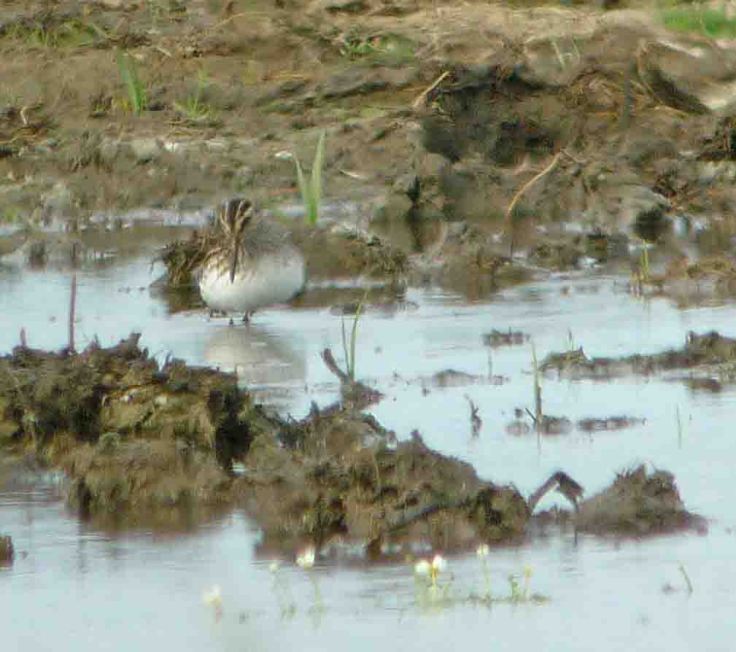
45 Jack Snipe-one at Lower Moors and one at Porthellick pool
46 Ruff-two at the Hayle Est.
47 Buff-breasted Sandpiper-one on the airfield on 10th in ‘good company’.
48 Arctic Skua-two harassing Kittiwake off Porthgwarra, sadly only seen b MJM.
49 Black-headed Gull
50 Mediterranean Gull-a few first winters at the Hayle Estuary.
51 Herring Gull
52 Lesser-black backed Gull
53 Great black backed Gull
54 Kittiwake
55 Sandwich Tern-three at the Hayle and four off St Mary’s
56 auk sp off Porthgwarra
57 Woodpigeon
58 Collared Dove
59 Kingfisher-Hayle estuary
60 Skylark
61 Swallow
62 House Martin
63 Rock Pipit
64 Meadow Pipit
65 Red-throated Pipit-one among Meadow Pipits at the airport on 10th was seen a few well a few times. On approaching the airfield I heard a close bird with a Tree Pipit type call that was probably it.
66 Pied and White Wagtail both seen on the beaches.
67 Yellow Wagtail-two on the airfield on the 10th and one on Porthmellon beach.
68 Grey Wagtail-singles were seen and heard flying about the islands.
69 Dunnock
70 Robin
71 Nightingale-one showed well at times on St Agnes on 11th.
72 Common Redstart-one feeding in Old Town bay on 10th.
73 Black Redstart-a few seen around the islands but no males.
74 Northern Wheatear-seen on Davidstowe airfield and around St Mary’s with 15+ on the 10th.
74 Black-eared Wheatear– a female watched on the Garrison on 9th and myself and Bob had another look on 13th.
75 Whinchat-two at Cape Cornwall on 9th and one on Peniniss Head coast path on 11th.
76 Stonechat
77 Song Thrush
78 Fieldfare- a few noted on 13th.
79 Blackbird
80 Ring Ouzel– a male flew in and around us at the airfield eventually landing on the turf and feeding among Starlings on the 10th and one flew over us on St Agnes on 11th.
81 Blackcap
82 Subalpine Warbler-one seen in the sunshine on Byher was well and truly ‘twitched’.
83 Sedge Warbler-two seen at Porthellick Pool.
84 Reed Warbler-seen and heard on St Mary’s (singles) St Martin’s (one) and St Agnes (three).
85 Willow Warbler-one on St Martin’s.
86 Chiffchaff-many were noted
87 Goldcrest-many heard, one or two seen
88 Firecrest-one seen briefly on St Agnes by MJM
89 Wren
90 Red-breasted Flycatcher-we gave up on an elusive bird at Old Town on 10th and saw two well at the fruit cage on St Agnes on 11th, another was seen well
91 Pied Flycathcer-two on St Agnes on 11th.
92 Great Tit
93 Blue Tit
94 Long-tailed Tit-seen in Cornwall
95 Magpie-as above
96 Jay-seen in Cornwall
97 Jackdaw
98 Rook-seen in Cornwall
99 Carrion Crow
100 Raven
101 Starling
102 House Sparrow
103 Chaffinch
104 Linnet
105 Goldfinch
106 Greenfinch
107 Siskin
108 Little Bunting-up to three seen at Carn Friars on 10th.
109 Snow Bunting-two distantly in flight over the sea between the airfield and Peniniss on 10th (MJM only).
110 Lapland Bunting-one over calling at Bant’s Carn on 13th

Other species present but not seen due to going for other birds include Dark (two on Tresco)and Pale Bellied Brent Goose (five were seen in Mount’s Bay), Spoonbill (2-3 around Tresco of islands), Hen Harrier-a ringtail over Annet. Pectoral Sandpiper on St Martin’s and St Mary’s, Tawny Pipit on St Martin’s, Pied Wheatear on St Mary’s, Common Rosefinch on St Martins and St Mary’s,  Melodius Warbler on St Martin’s, Icterine Warbler on Bryher, Dartford Warblers on Mary’s and Martin’s, Short-toed Lark, Yellow Browed Warbler. Late on the day we were leaving a Olive-backed Pipit and Pallas’s Warbler was found and a day or three after Red-eyed Vireo and Red-flanked Bluetail also made a guest appearance.

1-31 October 2010 blog and sightings

31 October 2010 A dreary start to the day turned into a pleasant autumn afternoon but I enjoyed a rest and the trees rather than birding, after all we still have November.

30 October 2010 We had a look around Loch Leven which had thousands of birds on offer, the Pinkfeet and Goosander in the sun were very nice, JJS saw a Snow Bunting in flight near Kirkgate cemetry. We packed up and headed for the Slamannan area an quickly located about 80 of the 227 strong flock of Taiga Bean Geese. These long-necked and rather lumbering birds can be very elusive and most of the this flock appeared to be over a rise out of view. Their long necks and bills, many with extensive orange/yellow were obvious and plenty had white feathering where the bill meets the head. It would seem that they are holding on in this area and it was a pleasure to see a flock like this. The Yare valley birds in Norfolk have been declining and are down to tens so this is the best that Britain has to offer. We also gained a brief view, before they sat down of what looked like 2 Tundra Bean Geese which made for a good comparison, great birding.

Taiga Bean Geese

29 October 2010 After the dissapointment of coming second in the local pub quiz the night before I was delighted to see about 50 Waxwing on the wayto Jers house it was also nice to see Pink-footed Geese flying around and landing next to the Travelodge where we were staying. We headed to Edinburgh for the day exploring the city including the Scottish National Gallery. Jeremy showed us all the best sites in the interesting city including one of his favourites.

28 October 2010 A showery start to the morning did not put off the flock of 160 Waxwing from stripping berries in the sun. JJS and I enjoyed on these birds a Kinross housing estate about half a mile from where he lives.

Waxwings in Kinross…

We also visited Tentsmuir forest and point. The forest meets a dune system and the sea which offers a shallow sandy beach ideal for the many loafing Seals. A Long-tailed Duck flew in to a pool nearby and groups of Red-breasted Mergansers, 3000-5000 Eider plus more were all present. We also heard a Lapland Bunting. The forest used to hold Capercaillie and still has Red Squirrel. Jeremy had work to get back to so we expored St Andrew’s. I spent a bit of time scoping the sea and had great views of 4 Long-tailed Duck, 20+ Velvet Scoter including a close imm/fem, 100 Common Scoter, 3 Red-breasted Merganser, 200 Eider, a Razorbill and an Arctic Skua chased Kittiwakes offshore.

Long-tailed Ducks

Velvet Scoter (left with a male Common Scoter)

26-27 October 2010 The weather improves today after a dark and overcast day yesterday. The country is being invaded by Waxwings, thousands have reached Scotland and have got as far South as Kent along the East coast. We may see them locally again this winter. I headed up to Scotland for a few days to visit Jeremy and explore some new sites for Anser trips and have a break with the family.

25 October 2010 A still, sunny and calm day, I spent the morning working on the feeding station where Bullfinch and 2 Redpoll were coming to the food and Coal Tit, Chiffchaff and a few Siskin were all present in the trees nearby. Some improvements to bird tables especially to try to attract large numbers of finches both at the willow plantation and Holden Tower should pull in Brambling among the Chaffinch but Greenfinch are also notable these days. The disease that has hit them hard has reduced the population. A good feeding station has always the chance of attracting something rare as well as supporting local and passage birds and I am always in hope of a scarce bunting or American Sparrow coming in to have a feed. Two new Bewick’s Swans arrived and we still held 17 E White-fronted Geese which favour the South Finger area. The Whooper Swan spent all day on the Rushy.

Bewick’s Swan on the Tack Piece

24 October 2010 A decent set of waders were about the Top New Piece at WWT including 6 Little Stint.

22 October 2010 The Am Wigeon was still present but since this date the Wigeon flock have been on the estuary during the day, this is due to in my opinion, the full moon and the fact they have fed all night and it is safer roosting out there in the day. It prevents the Peregrine from getting used to a routine and it acting as a turkey shoot.

21 October 2010 A quick check around the hides at WWT Slimbridge produced a female American Wigeon from the Zeiss Hide, I did not have the time to hang about and wait for it to flap. JSL is still on crutches and light duties so he staked the bird out and found on checking his HD video in the evening that he got the bird with a raised wing. This excellent footage and the stills clearly shows white axillaries (‘arm’pit or wing pit feathers).

  • It also shows a very grey head (with isolated dark mask around and behind eye),
  • greyish ‘shawl’ on the mantle and upper tail coverts and
  • a brighter isolated orange panel on the flanks.
  • I think the bill is brighter blue but this may be an illusion.

The bird drifted into the reedmace and out of view for me so this is the only image I can offer.

20 October 2010 A Tree Sparrow from the Holden Tower at WWT took me back to the days when we had up to 60 wintering here. It was so nice to hear it calling in the scrub and for it to show itself, fingers crossed that it may find the feeding station. Probably last seen here in the early nineties.

Tree Spug

19 October 2010 A Whooper Swan was with the three Bewick’s in the Rushy this morning but flew out toward the river. It was ringed at Welney in 2007. Also of note was a first winter Curlew Sandpiper on the Top New Piece. 

Whoop

18 October 2010 Our first Bewick’s Swans of the ‘winter’ arrived this morning. As I got out of the car a party of six dropped in to the Rushy but remained mobile, at least 8 were noted.

17 October 2010 My first Rock Pipit of the autumn for WWT today was notable.

15 October 2010 A Coal Tit in the garden was the first of the year for me.

14 October 2010 A day back in the tractor mowing at WWT, possibly two Whooper Swans called in today one ringed. I noted a pair of Stonechat, a Water or Rock Pipit, c20 Reed Bunting and flocks of Linnets, Chaffinch and Brambling and Redwing heading N along with 4 Swallows during the day.

8-13 October 2010 I was Cornwall and the Isles of Scilly with an Anser group, it was a great trip for birds and a full trip report is coming soon. 

Greenshank, juvenile at Lower Moors, St Mary’s

4-12 October 2010 The Marsh Harrier and Pectoral Sandpiper were the best birds around WWT from the tractor but large numbers of Ruff  21 and Grey Plover 50 were of note too.

Ruff, juvenile

Marsh Harrier, juvenile

3 October 2010 At WWT Slimbridge I spent most of the day tractor mowing the Dumbles. A quick hide round with MLK saw us noting plenty of duck, certainly an increase from last week. From the tractor today I saw a juvenile Marsh Harrier around Middle Point at 1325 when it drifted N toward Frampton, I saw it again at 1526 heading S along the Dumbles and again after 1600 on the ground feeding on carrion for at least half an hour. It drifted off toward Frampton again. I stopped a couple of times to scan waders on the estuary and 28 Grey Plover, 32 Ringed Plover, 1 Sanderling, 5 Curlew Sandpiper, 10+ Little Stint, 4 Knot, 8 Ruff with a juvenile Pectoral Sandpiper (saltmarsh) for ten minutes and 16+ Bar-tailed Godwit. Most of the waders were near the hide at Middle Point using the mud shelf.  A party of 20 Golden Plover were among the Lapwing for a while and 700 Wigeon plus the 2 White-fronted Geese were on the areas I have cut already and grazing happily. I flushed c20 Snipe with 19 flying over the Zeiss Hide in the morning and a single Jack Snipe flew a short distance back into cover. A Wheatear was also present and c15 Swallows. I also saw c25 Swallows in the village on the way home.

2 October 2010 DBP reports a Buff-breasted Sandpiper at WWT Slimbridge this morning. Viewable from the Holden Tower. I briefly saw the two Black Terns that Nick Goatman had found earlier today at Frampton Townfield Lake at dusk. c20 House Martin were still buzzing around home.

1 October 2010 No birding at all today.

1-30 September blog and sightings

28-30 September 2010 A good end to the month waderwise at WWT, a party of 25 Little Stint and 25 Grey Plover being notable for our area.

27 September 2010 Low cloud and a NW wind over WWT made for a dull miserable day but many new birds arrived, 22 Grey Plover, 16 Little Stint, a Curlew Sandpiper were among the many waders around the site. Many Swallows, c100 were noted heading North.

26 September 2010 At least 20 local House Martins were outside my home this morning for how much longer who knows…. Highlight of the day was seeing the Vulcan Bomber flying low over WWT Slimbridge, I was tipped off by NRS who had it fly over him whilst he was watching the Lapland Bunting at Saul Warth. It caused the bunting to run closer to him for protection! I called in on this bird on the way home and saw it as well as a Wheatear.

Lapland Bunting, Saul Warth MJM

Vulcan A common sight for me as a child as I went to primary school at the end of Filton Airport runway.


25 September 2010
A visit to Legoland did not raise any hopes of getting any birding done but I did see a fellow birder and what appeared to be a Turtle Dove?

22 September 2010 I flushed my first Jack Snipe of the autumn today whilst tractor mowing. Other birds of note include 3 Grey Plover, 3 Golden Plover, the 20 or so Bar-tailed Godwits and 3 Yellow Wagtail. the wags are now very yellow having completed moult from juvenile to first winter. I am seeing lots of Small Copper butterflies and c150 Migrant Hawker dragonflies around the reserve at present.

19-21 September 2010 Still plenty of birds around WWT to keep us all interested. Nice to watch the Pectoral Sandpipers although there was only one on 21st when I checked. Up to 8 Little Stint and 2 Curlew Sandpipers among many more species of wader.

This pairing of Lesser Black-backed and Herring Gull was productive. They had a juvenile begging from them on the South Lake and the adults were pair bonding and displaying to each other.


Juvenile Herring x Lesser Black-backed Gull, South Lake

16-18 September 2010 For the Anser cricket enthusiasts…I was on tour to Cornwall and Devon with Whitminster CC.  Despite there being some good birds around I never found the time what with playing cricket and ‘socialising’. I took a wicket for 12 runs in the 20/20 and made a total of four runs from eight balls (bowled out in 19.4 over) trying to hit over being yorked. The 35 over game on Sunday at Nomansland I opened the bowling, bowled six overs, 1 maiden, 2 wickets for 19 runs and made one off six balls faced in last two overs.

15-16 September 2010 At WWT there are still many migrants around, I am seeing up to 15 Yellow Wagtails among the cattle and the waders are still with us, five Little Stint, 19 Curlew Sandpiper, 30 Bar-tailed Godwit and a few others are still around the WWT scrapes. Having looked over both my lunchtimes the Pectoral Sandpiper appeared again on the Top New Piece and could be seen from the Zeiss Hide. It is mobile and was seen heading out toward the estuary again. My top tip would be to stake out the Zeiss Hide an hour before to an hour after high tide to improve your chances. As ever when a bird flies all the way from Arctic Canada to us, it is rude not to go and say hello.

14 September 2010 A slight change in wader numbers and their behaviour today, the scrapes were slightly quieter with many of them preferring the estuary saltmarsh. Constant attention from raptors, the strong winds and the fact that the Dumbles and saltmarsh are now providing perfect feeding conditions thanks to the high tide flooding last weekend mean they are more mobile. The first bird I clapped eyes on this morning from the Holden Tower was a juvenile Pectoral Sandpiper, it is in the company of Lapwing which are up and down like a yo-yo and move large distances about the reserve in the flick of a wing. It gave me the run around for a while but at lunchtime a search of the area found it commuting between the flooded grassland areas to roost and the saltmarsh to feed. Good views were obtained and the call heard etc etc. Pic below. I had a great count of 43 Bar-tailed Godwit -yesterday.

Pec Sand juvenile

Some of my images of the recent/current waderfest….

Curlew Sandpiper juvenile

Little Stint juvenile

Ringed Plover juvenile

Wood Sandpiper juvenile

Northern Wheatear first winter with ‘Issabelline Wheatear like’ black alula

13 September 2010 Still plenty of birds at WWT but the Phalarope and Black Tern have moved on.

12 September 2010 I saw 92 species of bird at WWT Slimbridge today between 0700-1700.

11 September 2010 A walk around Frampton Townfield Lake with my children was not only productive for stone skimming but an adult and juvenile Black Tern, 4 Yellow Wagtail and a few Garden Warblers. There were two Ospreys around but I did not see either.

5-10 September 2010 An absolutely bird packed period and all at WWT Slimbridge, when I get a chance I will have to tell all with images as I have seen so much lately I cannot keep up with writing about it. Look on the WWT site for full details of what is around. I logged 88 species of bird by midday at WWT on 10th.

White Wagtail juvenile


4 September 2010 A Chiffchaff in the garden is always nice. JSL reports a Wood Sandpiper, two Avocet and the Red-necked Phalarope at WWT today.

3 September 2010 A juvenile Yellow Wagtail was perched in the willow in the next door garden this morning before flying low across my garden, I have seen lots in recent weeks around my home. A roost of 150 hirundines included Sand Martins in the maize crop at the back of my house in the evening. I also have them perched on wires during the day over the garden.

I was busy doing various weekly things but got away for a few hours to the Forest of Dean to try to photograph drags in flight. I logged two Raven, a male Redstart, a Tree Pipit over calling, c60 Siskin and a Nuthatch but the Black Darters and Common Hawkers were the highlight when the sun shone. Common Darters, Emerald Damselflies and Southern Hawkers were also present. A very relaxing way to while away a couple of hours. Not sure if it best to publish this site as these species are scarce in Glos and need all the help they can get to conserve them. I had a Black Darter resting on my hood and a female Common Hawker on my arm at one point!

Southern Hawker (male)

Black Darter (male)

2 September 2010 Still lots of migrants around, a Spotted Flycatcher included.

Spot  Fly

1 September 2010 An early start to check hedges for migrants and turned up a large number of passerines, whilst checking out one area out for a work party the next day I spotted a passerine flying toward me along the ditch which I suspected of being an Aquatic Warbler. It showed a few times on the edge of the ditch and gave me some scope views and I got some images. I had to share my scope with JSL who also got some good views of the bird. It was moving along the ditch and after seeing it about four more times went into bullrush, we did not see it for an hour after or during a search at 1310-1400 but did see it at dusk. A decent fall had taken place as we logged 27 Sedge Warbler as well as Reed Warblers feeding young. A male Redstart was also a nice addition. The Red-necked Phalarope was still present.

Aquatic Warbler


Red-necked Phal

Look at August for more late posted images…

1-31 August 2010 Blog and sightings

27-31 August 2010 Lots of new birds around WWT, I will have to update the images when I get a chance. Best birds have been the Curlew Sandpipers (up to 15 juveniles) , a Redstart, the high tide waders including juvenile Knot, a Merlin that was hunting the high tide waders and a juvenile Red-necked Phalarope. All of them are pictured above/below.

26 August 2010 Thirteen mostly breeding plumaged Bar-tailed Godwits, six Knot, three juvenile Ruff and the adult Little Stint were wader highlights, the Little-ringed Plover commutes between the estuary mud and the Rushy. A second summer Common Tern was around at high tide. Six Wheatear were logged too.

25 August 2010 Still lots of waders about, new birds include a juvenile Little-ringed Plover in the Rushy, an adult and two juvenile Little Stint.

24 August 2010  Went in to work early with JSL to try to count some of the birds which are around in high numbers, with Gord Youdale counting the scrapes we had a good haul, it was a good move we logged a minimum of 126 Yellow Wagtail, 703 Ringed Plover and 900 Dunlin plus a total of 19 species of wader. The first juvenile Golden Plover was ‘in’ today. In the Rushy this afternoon were we are all busy on various improvements to the lake we had the usual daily flock of Yellow Wagtail around the digger etc, in fact all three wagtail sp are seen daily here, up to 60 Black-tailed Godwit feeding in the shallows and a juvenile Whimbrel over.

Little Stint-first juvenile of the year

Knot and Dunlin

Adult Turnstone (moulting)

Yellow Wagtail at WWT Slimbridge
With what could be over 100 present this morning it will long live in my memory that August 2010 has been the best I have ever known for this species locally.

22-23 August 2010 Back at WWT Slimbridge and plenty to write about, all sightings are on the WWT website. I find it very pleasing to look through a thousand waders that are on the estuary due to the heavy rains, 380 Ringed Plover, 550 Dunlin, 50 Sanderling, 7 Knot and single adult Turnstone, first-summer Bar-tailed Godwit, adult Golden Plover, juv Common Sandpiper,  4 Greenshank plus the other waders on the scrapes. Nick Goatman reports 4 Arctic Terns on Frampton Townfield Lake. Also very large numbers of passerines, warblers and especially Yellow Wagtail, I reckon there are over 100 on the reserve and am seeing and hearing them all day long (when not on or in machinery). I had three Whinchat and 5 Wheatear yesterday.

19-21 August 2010 A weekend in Bournemouth, the Friday afternoon was spent at Studland where I went for a walk for 1.5 hours on the slopes of Ballard Down. Perhaps as many as 1000 Adonis Blue Butterflies were on show as well as Brown Argus and Chalkhill Blues. Nice to see and hear Sandwich Terns from the sister in laws porch!


9-18 August 2010 A few birding sessions at work and a bit of dragonfly watching, the highlights are in images. Three Spotted Flycatcher were at the Tack Piece hedge on the 15th.

Buzzard i.d….could be useful as now is the time for Honey’s passing through
First one a WWT Slimbridge Common Buzzard the second a Honey Buzzard in Corsica.


1-8 August 2010 Corsica trip with the family, a full trip report is on the relevant page.

(Corse) Corsica Birding, Dragonflies and Butterflies) 1-8 August 2010

More images on the gallery, click here…. http://www.anserbirding.com/photos/svmanager/g24/

The big three….all images by MJMcGill.

Corsican Nuthatch


Corsican Citril Finch


Marmora’s Warbler

Birding in Corsica (Corse).
Dragonflies in Corsica
Butterflies in Corsica
by M.J.McGill

1-8 August 2010

Two tailed Pasha

I took time to write this report and carefully record what I saw as I found very little for insects but quite a few bird reports on the web, many of which are very helpful. Corsica looked a very good prospect offering a bit of everything. We booked our flight six days before leaving and arranged accommodation, a car, maps and guidebooks in less than five. It was actually a family holiday with me looking for wildlife early when they were asleep, getting ready for the day (thanks to Harriet for sorting that) or when they were on the beach fully occupied and I had done a decent shift of fun-filled activity. My family did come with me on a few walks and saw a lot of stuff from the car and on our travels. It is a great place for any type of holiday but ticks the boxes for active families too. We ate in a few nights and out on four, between the supermarket and favoured restaurant we ate very well all week being a vegetarian family. A huge choice of Corse produce, much of it free range is on offer, fish and meats are all excellently prepared and presented and full of taste. I know many of my birding/travel friends and Anser regulars would find plenty to keep them occupied. Mint is used in many dishes which I have not found anywhere else. For those on a budget pizzas are probably the cheapest way to eat out and offered everywhere, the supermarkets are an even cheaper option. We got bread from our local bakery every day and ate outside for every meal as the weather was very warm all week.

1 August

Arrived in Bastia after flying from Bristol, picked up hire car and drove straight to (Corti) Corte arriving by lunch. Plenty of Red Kite and Buzzards on the drive in but most notable were a pair of Pallid Swift that were visiting the eaves of a house near where we are staying. After finding and settling into our apartment we headed to the Plage de Tignalle (50 minutes) for a swim, I also spotted some vineyards and scrub and checked it over for 30 minutes where Bee Eaters, Zitting Cisticola and other passerines were seen and Mediterranean Shags, Cormorants, Little Egrets and terns were present on the Etang d’ Urbine.  In the evening back at Corti there were plenty of bats catching moths outside our apartment in the evening.

2 August 2010

Had a lie-in and headed out after picking up provisions from the Casino supermarket and Boulangerie in Corte, breakfasted on the patio where a Spotted Flycatcher was hunting insects. We explored the Restonica valley but did not get very far as we were distracted by the cool, clear mountain stream and climbed down from the road for a swim and spa treatment under the cascades and waterfalls, cold water but very refreshing. We carried on up the to the head of the valley but turned around as the 5 euro parking charge was not worth it as it was a flying visit so we descended to a restaurant for a cold drink. The buddleia and daisies in the garden were swarming with butterflies and I photographed a decent variety.

Beautiful and Copper Demoiselles (Damselflies) representing the odonates were along the river.Wall Brown
Silver Washed Fritillary
Argynnis paphia immaculata (Corsican sub-species, c6 seen)
Southern Grayling Hipparchia aristaeus aristaeus (Corsican/Sardinian sub-species) one basking on a granite boulder by the river.
Small Copper
Clouded Yellow

Common Blue
Brown Argus
Large and Small Whites
Cardinal
Fritillary (very common)
Speckled Wood.
Later in the day I saw a Swallowtail sp fly across the road plus a few unidentified sp.

After lunch back at the apartment we set of for the beach, this time the Plage du Padulone near Aleria. Again after a swim to cool off and the usual beach fun with the children I went for a walk. A covey of Red-legged Partridge burst out from the vines and a few Bee Eaters flew overhead. On leaving a Honey Buzzard flew out of the pines near the road, a pleasant change from the numerous Red Kites.

3 August 2010

A twenty minute drive from Corti (Corte) to a junction above the village of Vivario  and I was soon out and birding by 0700, this little road leads to the Col de Sorba and seems to be a regular stop-off for birders. I stopped in a layby opposite the first track to the right and explored along the track, within minutes I was watching Corsican Nuthatch and had great views of perhaps 2 pairs over a prolonged period. They are very agile and active but I was surprised to see one parachute out of the tree and pursue a moth that it chased looping and dancing after it and caught it on the wing. This area was very rich in passerines, family parties of Cirl Bunting, Coal, Blue and Great Tits, Blackcaps and to my delight Corsican Citril Finch, like my other target bird they showed very well. The males were very bright and juveniles streaky but all showed the streaky back pattern. A Woodlark sang and a Crossbill called from the tops of the pines. I spent a couple of hours here as there were butterflies as well as birds. My first Great Banded Grayling alighted upon the ground near me and allowed a couple of shots. It is very much like a White Admiral in flight but bigger.
After breakfast back at our apartment we set out for the day stopping first at A Capulatta tortoise village. www.acapulatta.com . A collection of terrapin and tortoise from around the world were on show but I found myself totally distracted by the dragonflies and damselflies that were around the ponds at this site. After an enjoyable couple of hours here we headed off toward the West coast. A low soaring Honey Buzzard was a treat to see near to the Ajaccio turn off N196. We spent most of the afternoon at the Plage de Verghia swimming etc. We ended the day by driving to the Filitosa prehistorique site, an excellent way to spend the late afternoon early evening among the menhirs with carved faces (Easter Island like) and dolmens. Well worth a look. www.filitosa.fr

As impressive as the carved stones was the Olive tree flanking the line of menhirs, it is the oldest in France at 1200 years and still bearing fruit, some of the occupants of the ancient village may have planted it. Unfortunately a migraine for me saw us heading home without hanging about so I could get an early night.

Dragonflies and Damsels seen at the tortoise sanctuary included…
Scarlet Darter-common
Southern Skimmer, egg laying and males resting.
Blue-tailed/Island Bluetail– in the pond closest to the road in far W corner of sanctuary. The Blue tailed does not appear to occur in but the 2-3 I saw look like this species.
Small Red Damselfy-two.
Black-tailed Skimmer– a few seen.

4 August 2010

Still suffering from a night of migraine I decided it was best to stay local and stay cool, he best places were the refrigerated sections of the Casino supermarket or the Haut Asco area, the latter offered more wildlife. An hour drive to the head of the valley was well worth it, I did see a Corsican Citril Finch on a roadside rock which was just feet away but as a car was waiting on the bridge I had to keep going and not hang about to take a picture. At the top we wandered up the slope and sat for a picnic under the pines. The Alpine feel was topped off by the chalets, snow on the highest peaks and the views. A chap was playing classicaI guitar on his veranda, very nice and set the scene. I was going to search for the ‘bone breaker’ Bearded Vulture but found myself looking at the ground at the numerous butterflies, there were hundreds on the wing. I also noted a male Southern Skimmer holding territory on seepage near the main stream. This area is about 1500m above sea level. Birds noted were Crag Martins, Alpine Swift, Alpine Chough (3 high over the peaks) and 2 Raven.

Butterflies noted on the slope most coming to thistles above the car park included

Cardinal Fritillary (very common)
Corsican Fritillary
Argynnis elisa (common)
Corsican Heath
Coenonympha corinnaa few seen
Corsican Grayling
Hipparchia neomiris
Corsican Silver-studded Blue
Plebejus argus corsicus
Small Tortoiseshell Aglias urticae ichnusa (Corsican sub-species)
Clouded Yellow
Blue sp x2 -have not got an id as yet
(possibility of idas bellieri)
Brown Argus
Brimstone
Cleopatra
( I saw one on the trip but cannot remember where)
Corsican Swallowtail

On the drive back down we spotted a male Red-backed Shrike on wires above Asco village, in the village a Corsican Swallowtail drifted along the road and up the slope. We headed for a beach for a swim and ended up at the Plage de Lozari where the waves were rough and quite a challenge when getting in and out of the surf. I noted a Mediterranean Shag fly past but was focussing on the waves and not getting bowled over to do any birding. We headed back late in the day and ate in Corte in the evening, the food was excellent, a good variety of vegetarian grub on the menus in this very interesting town. We very much enjoyed eating at the U Museu restaurant at the foot of the citadelle. We ate here every night as the menu was varied, extensive and the staff accommodating for our vegetarian requests, my wife speaks French and would ask the chef to leave things off to suit. I was also pretty good value as Corsica can be expensive.  The Chevre Chaud (hot goats cheese salad) was a very good meal especially with Leek or Chestnut and cheese fritters starter and chestnut cake to finish, the Corsican wine was also very good.

5 August 2010

I headed out at 0800 and drove up into the Restonica valley. At a decent spot that looked good for Corsican Nuthatch I parked and listened from the road and scanned the peaks spending about an hour out. This spot was above the main bridge and where the trees thin out.

Raven; a pair were perched up in roadside trees.
Crag Martin-dozens were on the wing high above the valley with House Martin also.
Alpine Swift– a few were feeding over the nearer peaks.
Corsican Nuthatch– a pair were calling and feeding on pines cones either side of the road.
Corsican Citril Finch– heard and seen fluttering from rock to rock before dropping into the scrub to feed. I had another two perched on a roadside rock but they were flushed by a passing car.
Crossbill– one flew across the valley.

After breakfast I headed to the beach at Plage de  Padulone near Almeria, I saw a Honey Buzzard on the way soaring low along the road a few km from Corte. After arriving and setting up the kids on the beach with Harriet I explored the same vineyards that I was birding in earlier in the week. I spent 45 minutes searching the area for California Quail as the scrub meets the vineyards here which is what I believe they prefer as habitat of choice. To get there…there is a left turn before reaching the beach, sign says Plage, it leads onto rough tarmac if you go straight on rather than following it right to the vineyard shop, if you carry on and follow it around to the beach car park where the vines end there is a lot of scrub which meets the Etang D’ Diane (famous for oysters which the Romans sent to Rome and Napoleon has sent by the boatload to France). This area has many tracks which I explored I found a party of three Tawny Pipit which were calling and running around near the hilltop. A Sylvia sp was calling from scrub probably a Dartford plus Red Kites and Hooded Crows

Swallowtail (20+ noted)
Mallow Skipper
Carcharodus alceae 1
Southern Gatekeeper
Pyronia cecilia 3
Two tailed Pasha
1
Common Darter
1

Plus a crushed Heerman’s Tortoise

After a few hours we headed for the Ancient site known as the Aleria mound, mostly Roman but also Greek settlements in good condition and in a great spot that commands views over the whole area. It was only 5 euros for the whole family to visit this and the museum both of which were very interesting, the swords and pottery were outstanding and the situation of this settlement perfect for the occupants then and visitors now.

Swallowtail 3
Common Quail calling from the fields to the N of the museum between here and the river.

To return home we took a drive up over the mountains across to the Col de Sorba stopping at a gorge near Ghisoni for a few minutes where many Crag Martins were buzzing around. A patch of thistles on the road side had 3 Scarce Swallowtail. Apart from butterfly/scenery stops I returned for a short walk at the same site where I had my first Corsican Nuthatches on the 2nd, there was a family party of Corsican Citril Finch feeding along the track and lots of tits and Spotted Flycatcher. Continuing down to Vivario we stopped for five minutes at the junction of D193/D69 where a Great Banded Grayling flew by. In the village of Vivario I noted the second Hummingbird Hawk Moth of the day, this one visiting buddleia near the war memorial. This spot must be good for many butterfly species when the sun shines on the bushes on it.

6 August 2010
I got up earlier than the others for an hour to look around the lower Restonica Valley but we drove 1.40hrs to the stunning and safe Plage de Pinarellu, the best beach of the trip. A Grey Heron and Little Egret were the only birds noted but after swimming and enjoying the scenery I went for walk checking the tracks through the scrub between the beach and the lagoons that are found behind. It was great for dragonflies and damselfies with Two tailed Pasha and c 20 Red –crested Pochard, a few Coot and Little Grebe were also present. A juvenile Sparrowhawk was calling in the treetops and making short flights. This area is excellent and deserves a really good bashing for insects and birds, looking at the map it shows much the same habitat along the Porto Vecchio coast and could be a great base for insect lovers. After four hours at the beach we headed back via Ghissonicia (and a crepe) and then home.

Dragonflies seen…
Southern Migrant Hawker 3 were hawking along the road/rides, very approachable.
Lesser Emperor 1 male hawking a ride
Island Bluetail Damselfly 2
Scarlet Darter many
Ruddy Darter 3
Southern Skimmer female

After returning from a meal in Corte centre ville I picked up the call of a Scop’s Owl from the hillside above the campsite (Restonica valley entrance), it was vocal at 1100pm.

7 August 2010

I went out early to explore the Vivario area or the maquis above it. I had a really good couple of hours walking the hillside tracks and was rewarded with lots of great views of Marmora’s Warbler, most were family groups and I logged about 30 individuals. A couple of juvenile Subalpine Warbler, Great Spotted Woodpecker, a family of Woodlark, a family of Red-backed Shrike, Long-tailed Tits and a few other common passerines kept my binoculars busy.  A scan of Monte de Oro gave me an adult Golden Eagle to complete a really good start to the day. I headed back for breakfast on our balcony. After breakfast we headed up the Restonica Valley, paid and parked and walked up the road to where it opens out. I spent most of the time here building a dam in the coldwater stream with the children but kept an eye on the sky. A flock of c80 Alpine Chough or Jackdaw were high over the ridge, a party of 4 Alpine Chough hopped around the rocks near us. Coat Tits were common throughout the valley. A Corsican Painted Frog was found in a drying rock pool. We descended and spent the rest of the day exploring Corti including turning stones on the river. No amphibians but a Western Spectre (Dusk Hawker) flew by and Beautiful and Copper Demoiselles.

8 August 2010

We were up early to head to the airport and home leaving at 1050.

Summary

Corse (Corsica) is a very beautiful island, there is plenty of wildlife to be seen much of which is only found here or Sardinia at least. I did look for fifteen minutes with the children under stones etc for Corsican Fire Salamander and Brook Newt in Corti and with more time reckon I would have found them.  Mouffllon occur in a few places high in the mountains, c 600 apparently. I could easily locate the speciality birds if doing an Anser trip, a 3-4 night trip would be enough to see the birds well and take in a fair bit of the island.  A visit earlier in the year would make it easier to find the introduced California Quail but may not be so good for insects. Good weather and being in the right place in the morning would deliver Bearded Vulture I was looking a bit too late in the day and not giving it enough attention to locate them.

Other stuff      

With more time I would have liked to have visited some of the WW2 aircraft wrecks that can be found around the clear Corsican waters, the Heinkel 111 in Bastia harbour, the P47 Thunderbolt also N of Bastia are perhaps too deep for snorkelling and good views, diving to them is probably the only way to get good views, trips do go out from the harbours. The B-17 bomber in Calvi is more accessible to view but I did not have the time to try to see them as a family holiday was the priority. Check out the links.

http://www.aero-relic.org/English/B-17_42-31044_Chaplick/e-00-b17chaplick.htm

http://wreckshot.com/search.php?search=corsica&match_type=all

http://www.youtube.com/watch?v=A8jiWvBEkiY

Red-crested Pochard Netta rufina-seen on lagoons near Pinarellu
Red-legged Partridge Alectoris rufa-a covey flushed near Aleria
Quail Coturnix coturnix-calling near the Aleria mound
Little Grebe Tachybaptus ruficollis-seen on lagoon near Pinarellu
Great Cormorant
Phalacrocorax carbo sinensis-seen at Etang D’Urbino
European Shag Phalacrocorax aristotelis desmarestii
Little Egret Egretta garzetta
Grey Heron Ardea cinerea
Golden Eagle Aquila chrysaetos-over ridge W of Vivario
Red Kite Milvus milvus-common
Common Buzzard Buteo buteo arrigonii-common
Honey Buzzard Pernis aviporus-three seen in different parts of the island
Sparrowhawk Accipiter nisus wolterstorffi-three seen inc a juv at Plage du Pinarellu
Common Kestrel Falco tinnunculus
Moorhen Gallinula chloropus
Coot
Fulica atra
Black-headed Gull Larus ridibundus
Yellow-legged Gull Larus michahellis
Common Tern Sterna Hirundo
Woodpigeon Columba palumbus- c15 seen in different areas
Collared Dove Streptopelia decaocto
Turtle Dove Streptopelia turtur-a few seen on wires around Aleria/Ghissonacia
Scop’s Owl Otus scops-one calling Corte
Common Swift Apus apus-common
Pallid Swift Apus pallidus brehmorum- seen well at Corte
Alpine Swift Apus melba-seen at Vivario, Haut Asco and Restonica valley
European Bee-eater Merops apiaster-seen around Aleria/Ghissonacia
Great Spotted Woodpecker Dendrocopos major parroti-common in the upland areas
Woodlark Lullula arborea-seen around Vivario
Sand Martin Riparia riparia-seen among hirundines in the North
Crag Martin Ptyonoprogne rupestris-seen in many upland places
Barn Swallow Hirundo rustica
House Martin Delichon urbicum
Tawny Pipit Anthus campestris-three near Aleria/Plage de Padulone
Grey Wagtail Motacilla cinerea-common along rivers/streams
Spotted Flycatcher Musciapa striata tyrrhenica- common everywhere, feeding fledged young and carrying nest material.
Stonechat Saxicola torquatus-a family near Vivario
Blackbird, Turdus merula
Blackcap Sylvia atricapilla paulucii-common and many still singing
Sardinian Warbler Sylvia melanocephala-saw and heard a few
Subalpine Warbler Sylvia cantillans moltonii-two juvs near Vivario
Marmora’s Warbler Sylvia sarda-c30 seen near Vivario
Wren Troglodytes troglodytes koenigi-saw/heard c5 in upland areas.
Zitting Cisticola Cisticola juncidis
Long-tailed Tit Aegithalos caudatus irbii-a party of c25 seen near Vivario
Coal Tit Parus ater sardus-many fledged young and adults in upland areas
Blue Tit Parus caeruleus cogliastrae- many fledged young and adults in upland areas
Great Tit Parus major corsus- many fledged young and adults in upland areas
Corsican Nuthatch Sitta whiteheadi-seen well near Col de Sorba and Restonica Valley
Treecreeper Certhia brachydactyla corsa-seen and heard in a few upland forests’
Red-backed Shrike Lanius collurio- a male at Asco and a pair near Vivario.
Woodchat Shrike Lanius senator badius-two seen between Ghissonacia and Plage de Tignalle
Eurasian Jay Garrulus glandarius corsicanus-very common
Alpine Chough Pyrrhocorax graculus-three Haut Asco and four Restonica, poss 80 here also.
Hooded Crow Corvus cornix sardonicus-common
Common Raven Corvus corax
Spotless Starling Sturnus unicolor
‘Italian‘ House Sparrow Passer domesticus italiae-common
Chaffinch Fringilla coelebs tyrrhenica-c20 seen in upland areas with a few at A Capulatta
European Serin, Serinus serinus-
Corsican Citril Finch Serinus corsicanus-seen near Vivario, Col de Sorba, Restonica and Asco.
Goldfinch Carduelis carduelis tchusii-common
Greenfinch Carduelis chloris madarszi-three seen near Col de Sorba
Linnet Carduelis cannabina
Common Crossbill Loxia curvirostra Corsicana-one near Col de Sorba and one Restonica
Cirl Bunting Emberiza cirlus nigrostriata

Herps

Italian pool frog Pelophylax bergeriseen at A Capulatta and Filitosa.
Hermann’s tortoise Testudo hermanni-crushed specimen near Aleria
Turkish gecko Hemidactylus turcicus-seen in Corte
Italian wall lizard Podarcis sicula-common
Tyrrhenian wall lizard Podarcis tiliguerta– common
Corsican painted frog Discoglossus montalentii –one Restonica

Thanks to the following website

http://www.herpfrance.com/

Red-backed Shrike, male

New Forest day trip 31 July 2010

 Juvenile Dartford Warbler

Grayling (butterfly) the Master of disguise and a Beautiful Demoiselle


Southern Damselfly (next three images, male the first two and a female)
Crockford stream New Forest.
When the sun came out so did the insects and Dartford Warblers.

We left Whitminster at 0700 stopping off at a service area as we entered the New Forest, our first walk was around the Beaulieu road station heath where we had calling Green Woopecker, Siskins, Kestrel, Coal Tits, plenty of Stonechat with young, a couple of Azure Damselflies and a Grayling. The cloud had built and light drizzle saw us head back to the car. A short drive away passing the Beaulieu river with Oystercatchers and young and we arrived at the Crockford Clump, it started to rain properly so we sheltered and waited, even so we saw a Cuckoo, Meadow Pipits, Great Spotted Woodpecker and more Stonechats. When it cleared we followed the stream onto the heath, very soon I could hear juvenile Dartford Warblers calling and after a bit of group fieldcraft we all got good views. The warmth had brought lots of insects out and we had plenty of Keeled Skimmer, Common Darter, c10 Southern Damselfly, c 10 Beautiful Demoiselle, a Golden ringed Dragonfly and Black Darters (newly emerged-teneral). We also saw a Holly Blue near the stream and many Silver studded Blues on the heath.

Silver studded Blue
Initially causing much discussion within the group, the broad black fringe on the wings show that it is this species and not Common Blue, a smart butterfly that all of us enjoyed.

Moving on to Hatchet Pond we took another stroll on the heath but located nothing new bird wise, insects were still showing well a quick look at the mouth of the stream and a Common Blue, a Blue-tailed and two Scarce Blue-tailed Damselflies were noted.

Scarce Blue-tailed Damselfly

We took in a stop at Lyndenhurst, Jayne and Rich had seen a chippy and loos the previous weekend and I got to sample my first ever mushy peas and chips combo! Thanks Bob. It turned into a lunch stop and when we finished we headed for Acres Down and the great view across the forest. Out on the ridge we saw Stonechat, a Crossbill flew over, a young Goshawk sat on top of a pine for a while whilst a Buzzard soared. Roberta saw what she though was a flash of red and called it as a Redstart, soon we were all watching c5 Redstarts dashing about with other passerines in the trees. Another short drive through some lovely oak wood and we explored Bolderwood, well after many of the group had got an ice cream. It is a popular stop so we had a lot of noise around which did not help with calls. A party of 8 Crossbill were in the tops of the pines, a Goldcrest was heard and a few tits. Heading N from here we crossed the heath and I saw a Woodlark with a caterpillar in its bill on the side of the road, sadly it flew down into a valley and was not seen again. We had a good look around another likely spot for them but found only Bullfinch, Tree Pipit, Lapwing and a juvenile Willow Warbler. It was time to head home as we had stayed out later than planned, it was a very pleasant day of wildlife watching.

Martin J McGill

Northumberland and Upper Teesdale 15-19 June 2010

Northumberland and Upper Teesdale 15-19 June 2010

A selection of images on the link below..

http://www.anserbirding.com/photos/svmanager/g29/

15 June
We all met up on time at Whitminster at 0700 to allow a decent chance of getting some birding in as we travelled so after checking if all were up for a bit of en-route rarity searching we left Gloucestershire at 0700 and made for our first birding stop with a comfort rest before this. The first species we were looking for was a Great Reed Warbler that had taken up a territory on a small pond at Straw’s Bridge in Derbyshire.  The bird gave good views as it sang and hopped around in a small patch of phragmites reed. This species is more of a Starling sized bird, showing a large red gape (inside of the beak) when cranking out its varied and loud song, it really performed well for all of us. The site was also good for other warblers and we heard or saw Lesser and Common Whitethroat, Reed, Sedge, Willow and Garden Warbler, Chiffchaff and Blackcap. A pair of Bullfinch, Great Spotted Woodpecker and a Hobby was also noted.

Great Reed Warbler

After enjoying this lot we set off again this time for Saltholme RSPB and Port Clarence flood in Co. Durham. This site is near to Middlesbrough and set among the industry and factories of Teesside. The reserve was excellent, lots of birds to enjoy with the Common Tern and Sand Martin colonies being very busy. A few wader species were present as well as wildfowl. We took awhile to orientate ourselves as to where our target bird was feeding and eventually got to the correct place to look for it on a flooded field. A party of Ringed Plover and a single Dunlin were feeding along the edge of the wetland, Len picked up the Broad-billed Sandpiper first feeding near the other small waders. Seeing that we all had many scans with our scopes it made me think it must have been roosting in a cows footprint or skulking for the first thirty minutes that we looked for it as it was not initially on view. It was a very handsome bird, the split supercilium (double lines on the face and head above the eye) being seen well in the scopes and the rather unique structure of this small wader appreciated. 

Broad-billed Sand

We still had some way to go until reaching our accommodation near Holy Island (Lindisfarne) but did try for a reported Red-backed Shrike en-route, it was not seen but 2 Grey Partridge were along with a variety of common passerines. We carried on north and checked in to our rooms and met for dinner to recount the birds we had enjoyed during the day. The weather had been great all day.

16 June
Most of us had an early start to look out across Fenham flats hopefully to see some waders but also to take in whatever else was about. A glorious start to the day, very calm and warm but the tide was very high and good weather had probably allowed any lingering migrants to move on so only the breeding and resident birds were seen. The highlight was probably the hundred or so Grey Seals bellowing in the shallows between us and Lindisfarne. After breakfast we headed for Seahouses to enquire about tickets to the Farne Islands but could not all get on the boat, I changed the schedule to go the next day and just did what was I had planned for day three a day earlier. This itinerary involved going to Beadnell Bay to have a look at the Arctic and Little Tern colony. We were not disappointed as a few Sandwich Terns were also present and Ringed Plover were also nesting. The Little Terns numbered around 20 pairs but the Arctic Terns 900 pairs. A few Reed Buntings were singing in the dunes as we walked to the wardens hut and many Drinker moth caterpillars were seen.  An hour was spent enjoying the birds here.

We walked back along the long wide white sand beach and stopped a few times to look out into the bay where Gannets fed in the distance. As I had planned to visit a variety of wetland sites we had time allocated for each place with our first being Hauxley NR. Most of what we saw was what you expect for the time of year but a Pink-footed Goose among the Greylags and the Tree Sparrows were the pick of the birds. From here we went to East Chevington which is always productive thanks to the comings and goings of the terns. At least 8 first summer Little Gulls were seen and it was fun comparing Arctic and Common Terns alongside. A couple of days after we returned home a Bridled Tern was photographed here bathing and drinking on the rocks! We searched for the local Marsh Harriers but had no luck over the vast reedbeds however the sheep management by reserve staff was appreciated by a few members of the group.

We then tried Cresswell Pond which was unusually very quiet and then Druridge Pools which had birds but was difficult viewing as the vegetation had grown in front of the hides. A Meadow Pipit displayed above us on the track. Our time was up as I had booked the boat to take us out to Coquet Island to view the Roseate Terns among other things. It sure was a lovely summer evening for enjoying these pink flushed terns, we had taken turns to go out in the boat to stop by the quay then moor up to watch them at the entrance to their nest boxes, on the terraces or flying around the colony. Pairs of the Roseate Terns were seen with chicks, sky pointing and other courtship displays. The island is also home to large numbers of seabirds which were all much in evidence. I stayed with part of the group whilst Neil went out first, we searched the hill near where to Red-backed Shrike was last seen but did not locate it. My group went out second and on our return found they had not looked for the shrike but had been in the pub! Another good day but time for a rest and a meal so we headed back for the evening.

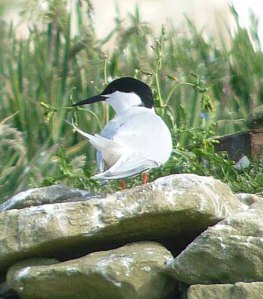
Roseate Terns

17 June
This time we headed straight for Seahouses and prepared to board the boat for the Farne Islands. We visited Staple Island first with ample time ashore to enjoy the seabirds before then moving to Inner Farne, we had to wait awhile for the tide to come in to allow us to get off the boat and shore. This was a very special bird filled day in marvellous weather , I will leave the images to tell the story as it was such a good day for photgraphy. On the way home and after a tea we stopped at Budle Bay for half an hour before heading back for a meal.

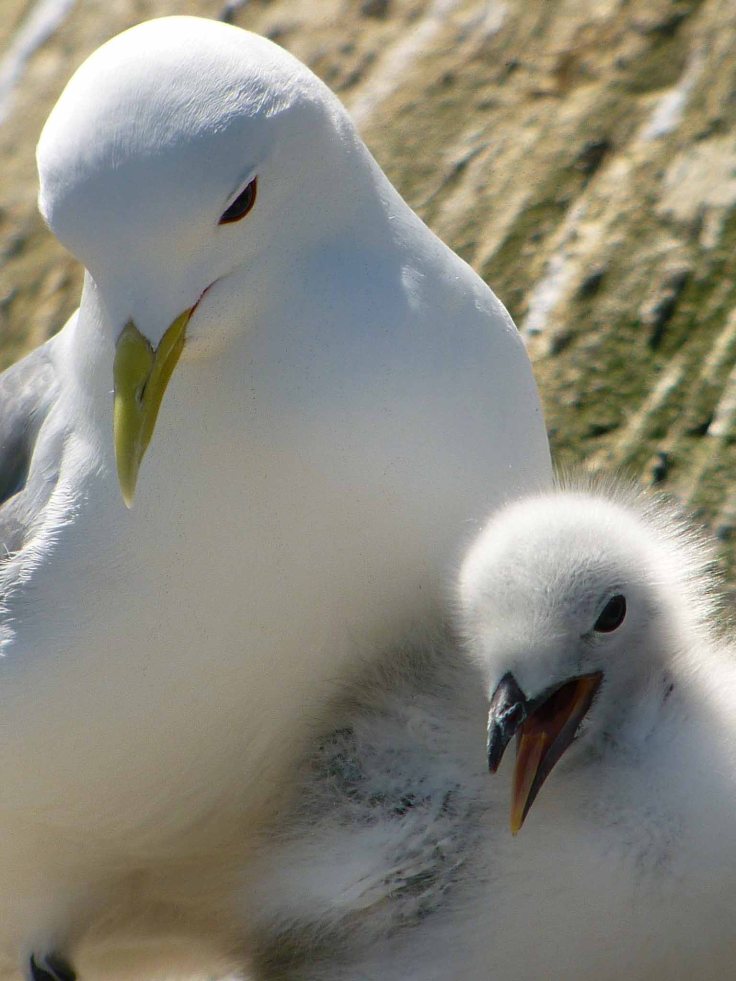
Kittiwake and chick

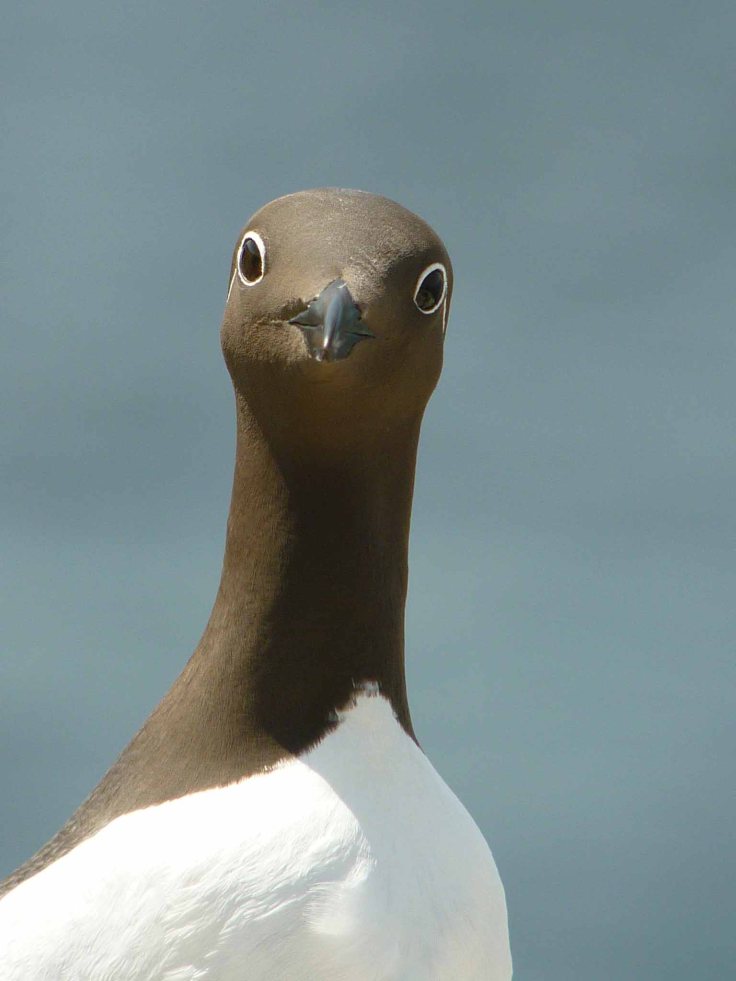
Bridled Guillemot

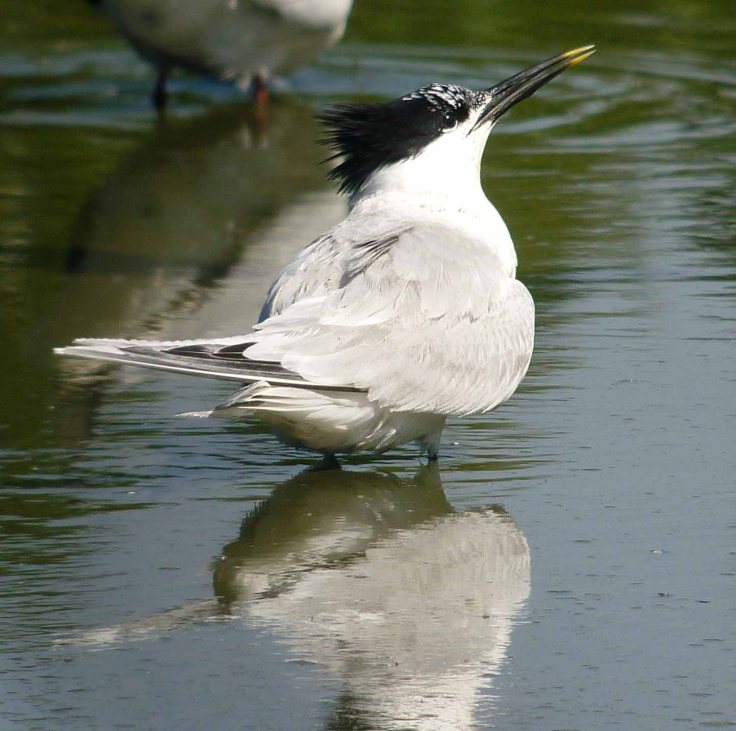
Sandwich Tern

18 June
The forecast was for a sunny dry day but with a cooler wind coming in off the sea,  we headed North into Scotland to look at a few sites, the first stop was at Tantallon Castle where a couple of Grey Partridge were seen briefly in a roadside crop and were calling, nearby I spotted an Osprey circling over the field. We all climbed out at a safe layby and scoped the bird before it climbed high and moved off. We tried to gain a view of Bass Rock and the Gannetry but would have to pay to enter the castle grounds so a short drive up the road gave us a good view of this marvellous sight. The Gannets were flying from the rock to the cliffs where we were watching from to collect seaweed for their nests, they struggled we beakfuls of the weed, a Whitethroat sang on the clifftop bushes.  We then drove through Berwick upon Tweed and stopped at a Tesco for food/comfort, back in the bus and on to Aberlady Bay where we continued on as the tide was well out and then stopped for a scan of the sea at a better vantage point. There were auks, Gannets and a few common waders,the Bar-tailed Godwits in the distant heat haze was the only exception and a party of 5 Common Scoter flew in and around before heading off again.

We loaded up and set off for St Abb’s head for a hike up and over the headland to where the auks were breeding and took a route down a steep set of steps below the headland where we stopped for a short seawatch and eventually back around the hill to the car park.  We had a cool breeze but it was sunny so pleasant enough to find a Northern Brown Argus butterfly. This was a real leg stretcher and when we got back to the visitor centre everyone was certainly ready for a drink and sit down at the cafe.  After this break it was time to get to Lindisfarne for the afternoon, a long walk around the East side of the Island was taken by all but Len and Jean who spent their time photographing the village and castle. We did see a party of Red-breasted Merganser splashing about offshore but the walk provided only common breeding birds plus the orchids. When we got back to the bus we thought it best to get off before the tide cut us off. We finished up at 5.00pm as we were so close to our hotel and rested before dinner.

19 June
Sadly we had to return South again but I think we had seen pretty much everything on offer in this part of Britain and we still had to yet visit Upper Teesdale. Apart from a stop to check on a Buzzard, it was only a Buzzard we made straight for the target area, we saw plenty of breeding waders and their chicks plus a family of Pheasants. A Common Sandpiper was busy on the river as we crossed the bridge and eventually Jean called out that the grouse you see on the whisky bottles were alongside the bus. A male and female Red Grouse with a chick were indeed close to the road. Delighted with this we then headed for the Langdon Beck hotel for coffee and a comfort stop where pair of Spotted Flycatcher were feeding on the sheltered side of the pines. On leaving I heard a few Siskin calling and another check of the stream gave us no Dippers. We parked up for a walk to Widdybank Fell which by now has become breezy and a little overcast. A juvenile Ring Ouzel was on the track and feeding along the verges which proved popular and another Common Sandpiper was seen. At the farm we sheltered next to a trailor and watched Wheatears, Red Grouse and Golden Plover on the hillside, Neil had spotted two male Black Grouse feeding on the buttercups which was great. The population had been affected by the cold winter so it was pleasing to catch up with them today. Nearby Beryl has discovered another pair of Ring Ouzel feeding the young on a wall and foraging in the paddock. All this and breeding Snipe, Redshank, Oystercatcher, Curlew and Lapwing as well as the other species mentioned.

Juv. Ring Ouzel

Black Grouse

It was time to go home and end the trip but we did well and had great weather and birding.

Martin J McGill

1-31 July 2010 blog and sightings

1-8 August 2010 I was in Corsica for the week, trip  report to follow soon…

31 July 2010 A day trip to the New Forest. See the trip report.

28 July 2010 A pair of Southern Hawker were along the back of the South Lake.

27 July 2010 JSL and I had at least 45 Yellow Wagtail feeding among the cattle on the Dumbles at WWT Slimbridge.

Common Tern see below

25 July 2010 At WWT Slimbridge I had a darvic ringed second summer Mediterranean Gull in the morning gull roost, I will follow up the sighting and report back. Plenty of waders still about the scrapes with two Sanderling seen on the morning tide and three in the evening, an adult Turnstone, a Whimbrel and five Ringed Plover were also added to the list. The evening gull special produced a juvenile and adult breeding Mediterranean Gull and c25 adult Yellow legged Gulls. RGB reported a fem/imm Marsh Harrier around the 100 Acre from 0800 and I saw it cruise down the estuary and Dumbles from 0905-0920 where it flushed pretty much everything it flew over. A roost of c40 Yellow Wagtails was very much of note, we saw 17 chasing a Kestrel. I caught and released a Common Tern that was entagled in the 100 Acre early evening whilst checking the colony.

24 July 2010 No birding.

‘Green Sand’
The last week of July usually sees the peak counts of this bird around the WWT scrapes with figures of over 30 not uncommon, a highly mobile bird which makes a bike and decent pedalling speed crucial for attaining an accurate count.

17-23 July 2010 The only birding I have managed has been at WWT Slimbridge where passage waders continue to arrive around the scrapes. On 21st I had three Greenshank, 2 Ruff, 44 Dunlin including two juveniles ( I had my first juv on 18th), five Little ringed Plover, 11 Green Sandpiper and 40 Lapwing all on the Top New Piece alone. A flock of up to 44 Black-tailed Godwit, 20 Redshank and a few Common Sandpipers have also been around. As for returning passage birds a Ringed Plover on 18/19th and  two Snipe on the 22nd were a sign of things to come. I discovered a second Emerald Damselfly on the reserve on the 19th.

16 July 2010 No birding just limping but I had heard that P. Taylor scored with a Storm Petrel on the Severn.

15 July 2010 A very gusty day on the Severn, despite a few birders watching over it not seabirds were noted. 91 Dunlin, 6 Little ringed Plover, a Greenshank, 40 Black-tailed Godwit were the best I could muster. I did spend the night and most of the day in pain with the damaged nerve endings in my foot ‘erupting’ from 0230 in the morning, the sheer delight of having a steroid injection directly into them woke me up though.

14 July 2010 Still a good set of waders around the WWT scrapes and Whimbrel on the estuary. A or the Grasshopper Warbler I had yesterday was reeling at Middle Point.

Ruff two males moulting out of breeding plumage. One of these individuals returns to moult here every year for the last 4/5 years. Also a Redshank in the same image, a juvenile was present at the South Lake this afternoon.

13 July 2010 Best birds logged for me were two Ruff, two Greenshank, 2 Whimbrel, 2 Common Sandpiper, 44 Black-tailed Godwit and a reeling Grasshopper Warbler.

12 July 2010 Highlight of the day was my first Emerald Damselfly for the reserve, possibly a first site record? This was a female.

11 July 2010 A good selection of waders around the WWT scrapes and a decent set of dragonflies seen on the safaris including 2 Scarce Chasers.

10 July 2010 A day at the cricket watching England v Bangladesh. A Common Blue Damselfly landed on my Harriet’s hand whilst watching the game.

Yardy bowls, Anderson fields..

Three ex-England captains…

9 July 2010  A White-tailed Lapwing turned up at WWT Slimbridge, I was called by Dave Paynter to say a visitor had got some video (Mr Giles Diggle) of this bird but when he looked for it had gone from the scrape. Dave was busy with a safari for the Slimbridge school group so I went in to try to relocate it along with Rich Hearn who was looking at South Lake, I  checked all the possible areas and eventually found it on the Top New Piece. The school kids all added this bird to their lifelists and were impressed. This constitutes a first for Gloucestershire and Slimbridge. These images are affected by heat haze and looking through vegetation.

White-tailed Lapwing


8 July 2010 A full day out with JJS in Berkshire and Surrey looking for dragonflies and butterflies. We had a good time of it with 7 Downy Emeralds, Golden ringed, Emperor, Black-tailed Skimmer, Broad bodied Chaser, Keeled Skimmer, Black, Ruddy and Common Darters, Brown Hawker and Emerald, Common Blue, Azure and Large Red Damselflies.

Downy Emerald, Paice’s Wood, Berkshire.

Keeled Skimmer, male.

6-7 July 2010 Up to 15 Green Sandpipers at WWT.

5 July 2010 Back at WWT Slimbridge..more arrivals of post breeding waders, pick was a juvenile Little-ringed Plover on South Lake.

2-4 July 2010 Got back from Madeira at 0100 and was up for 0545 for a trip to Pembrokeshire and Skomer Island, the trip report and images on the trip report page.

1 July 2010 My last day in Madeira was spent aboard the Ventura do Mar, we had a brilliant pelagic, probably the best I have ever been on! Trip report and images on the relevant page.

Madeira and Desertas Islands, Pelagics and endemics 28 June-3 July 2010

Click the link for a selection of images from this trip and the 2009 outing.

http://www.anserbirding.com/photos/svmanager/g28/

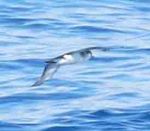
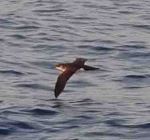
Little Shearwater off Madeira 1 July 2010
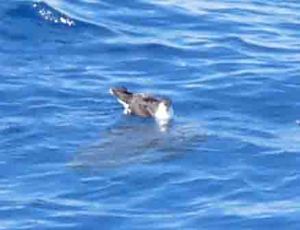
 

Bryde’s Whale
This beast was feeding close inshore off Funchal on 1 July.

Bulwer’s Petrel

Bulwer’s Petrels

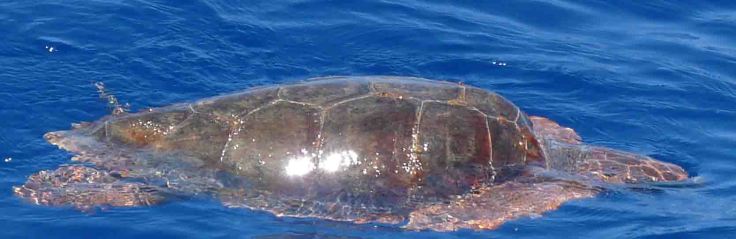
Loggerhead Turtle
One of four seen on the 1 July 2010 from the Ventura do Mar
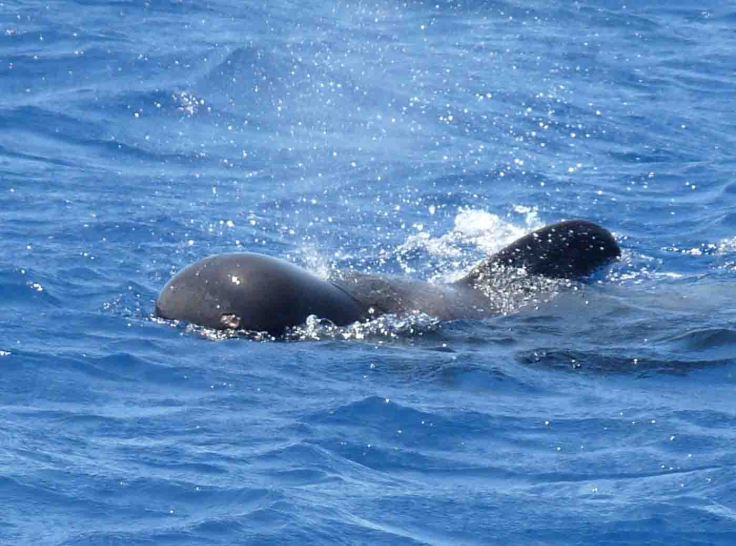
Pilot Whale
Madeiran Petrel at sea 1 July and Manx Shearwater 28 June.
 

Canary, Deserta Grande

Grey Wagtail Santa Cruz

Madeira Endemics and Pelagics 28 June to 3 July 2010

Summary; This tour was almost of repeat of the very successful 2009 visit but with an added six hour pelagic. A group of eight including me travelled to the island with seven of us taking part in all events and tours with one opting to do ‘her own thing’ partly because of having already done it in 2009 and partly wanting to explore Funchal and enjoy the sun. We all did the evening pelagic from Funchal on the 28 June going straight from the airport to the quay to steam out and off the island to find where the wind was and follow it offshore. We returned to port at dusk, ate in a harbour side restaurant before checking into our accommodation.

29 June
Our first full day, it was time for us to sail for the Desertas Islands, we left at 1000 and headed out and across the sound. The wind was blowing through and provided some good seabird watching. Once in the waters off Deserta Grande we tried a chumming session eventually heading into the little harbour and landing ashore. A guided walk around led by Rita was followed by a swim (for some), a rest or digiscoping, basically whatever took anyone’s fancy.

A barbecue was organised by the crew (Jorge, Rita and Jose) and we all settled down for a sunset dinner, the meat and fish were very popular. As it turned dark we watched the seabirds arrive and took another walk around the island, after this the crew returned to the boat and after 30 minutes or so I led another walk around the trail and to the beach taking in all the wonderful calls plus views of petrels and shearwaters on the path. Our crew had set up a tent with ‘bedrooms’ which most opted for but the crew slept on the boat and three of us including me slept outside under a wooden picnic shelter.

The shearwaters became quieter from about 0200 and a few began calling again around 0400. We got up early to transfer back to the boat for breakfast and to sail again back to Funchal arriving at lunchtime. The afternoon was spent differently for all, some taking the cable car to the botanical gardens, some taking a taxi there after a rest, others walking along the seafront. We had an evening meal at a nearby restaurant but had to depart and head to meet our guide Joao at our accommodation. Seven of us set off for the drive up the mountain for a sunset above the clouds and then a walk along the ridge to get into position and await the Zino’s Petrels arrival. Our guide shared his knowledge of these rare birds and tea and biscuits when the birds began to arrive. After enjoying them and the tea and biscuits we returned home at got back to our rooms tired for 0100.

1 July
Up for breakfast at 0745 and down to the boat for another pelagic, this time c6 miles offshore and all took part. We were out from 0830-1430 and it was very calm sunny and filled with wildlife. We tried some chumming and attracted Bulwer’s Petrels and Cory’s but no Storm Petrels it was quite calm out there today. Back on shore I said my goodbyes as did Bettie because were returning home leaving Duncan, Becca, Keith, Richard, Dave and Steve to have another afternoon in and around Funchal. I walked from the airport to Santa Cruz c2 miles to explore some more and got a taxi back before leaving for home.

Richard Tyler has kindly written up the last two days as follows……

2 July 2010

We were picked up by Joao our guide at 08.15 for a day’s exploration of the western section of the island. We drove NW from Funchal to Lombo do Morro. A pair of Trocaz Pigeons were seen in flight as was a Madeiran Buzzard. At a roadside stop with some spectacular views Joao pointed out several species of endemic flowers including one particular orchid. Further along this route we saw some impressive spreads of a large blue echium species known as The Pride of Madeira. A little further west we stopped in an area of pine forest (introduced). There was some good bird activity. We had some close views of a pair of Madeiran Firecrests. Some of the party (myself not included) had good enough ears to hear others calling and singing. Siskins were very apparent and a couple of Chaffinches (madeiran race ) were in full song. In a clearing amongst the trees we saw several species of butterfly including Clouded Yellow, Small Copper, several Graylings and an Indian Red Admiral recognised without hesitation by Keith.

Travelling a little further west we found ourselves on a high plateau with natural vegetation (heather, bilberry and a type of broom). Here we looked for Spectacled Warbler a couple of the party having only brief views. Blackcaps were here as they are in every type of habitat on Madeira. A pair of Berthelot’s Pipits put in an appearance as did a group of Linnets. Moving North and West to Fanal found us in area of Laurel forest with the understorey grazed by cattle.

The views from this area can be quite spectacular but we were hindered by low cloud. The ancient Laurels were impressive some of them covered in lichens and epiphytes. Madeiran Firecrests were seen and heard and we gave close examination to a pair of madeirensis Chaffinches. It was interesting to note that the male in this subspecies seemed to be intermediate between those found in NW Africa (africana) which have an all green back and those in the Canaries (tintillon) which have an all blue back. The madeirensis had an area of green over the upper part of its mantle the rest being blue.

Next we travelled North to the coast at Porto Moniz. Just before our stop here Duncan picked out a Barn Swallow amongst several Plain Swifts. On the coast there were a good number of Common Terns with young. We stopped a little further East for lunch and then travelled inland to a beautiful steep wooded valley (Laurels) near Seixal. Eventually we all got good views of Trocaz Pigeon. We saw at least six birds all in flight apart from one which perched for an extended period giving good scope views. Madeiran Firecrest and Grey Wagtail were also present in this valley as were Monarch butterflies.

From Seixal we travelled back along the cost further East to Sao Vicente. A good number of Common Terns with youngsters were present on the shore. Steve picked out one individual which looked very pale although the light was intense. It did have long tail streamers and a large amount of red to the bill base. We debated as to whether it was a Roseate or not. It then did the honourable thing and flew around with the Common Terns and called which clinched the identification. Once we all got our eye in we could see it had faster wing beats than the Commons. The terns would circle around over the sea and then come and land on the shore again.  It soon became apparent that the one Roseate was a pair, a presumed female begging for a fish from a male who decided to eat the catch himself. The pair then turned out to be four birds when Duncan and Dave realised that they were looking at two different pairs.  A good way to end our day’s birding before travelling back to Funchal.

3 July 2010
Various members of the group did different things on our last morning. Shopping, sightseeing and walking. There were no additions to our birdlist although a second Sparrowhawk of the trip was noted as were several Kestrels and a few more Goldfinches between sightings of the ubiquitous Canary.

 We were picked up from our accommodation by Catarina (Ventura) and taken to Caso do Sardinha the Eastern point of the island looking out to Ponta de Sao Lorenco. Here we made two quick stops. This was quite a dry barren area. From one point we could see both the North and South side of the island. A quick search for Rock Sparrow was unsuccessful. Two Berthelot’s Pipits were seen both with bling.  A kite put in an appearance briefly joined by a buzzard. The kite provided for good discussion and in conclusion we were all happy that it was Black and not Red. Although the bird was well marked on its upper wings and at times the tail looked quite rufous the fork in the tail was always small compared to a Red (at times almost square). It did have a light window in its primaries but it was not “white” as in a Red so compared to a Red there was less contrast to the under wing. With hindsight the bird did not have that long winged elastic flight of a Red Kite. I can’t understand now why some of us (including myself) did not see it as a Black Kite straight away! A final stop at Machico before heading for the airport did not produce any Rock Sparrows or Waxbills but we did see more Common Terns, Grey Wagtails and six Turnstones.      

Species list with comment

Cory’s Shearwater; seen in large numbers perhaps 400 on 28th where rafting and general gathering prior to heading onto the island for the night. Thousands noted en-route to, actually on the Deserta Grande and return route to Funchal. On the island we located a few on the ground, some calling from rocks others on the path. I had one ‘shear’ my head with its wingtip. We found one obliging bird in a sheltered spot where the bin was kept! These birds were vocalising in large numbers after the sun went down, hundreds flying low over us and past us calling as they went. The crossing to the islands provided different conditions for viewing them, the stronger wind allowed them to climb very high above the waves, the calm conditions seeing them flap and glide low and their appearance was of a more marked dark and white bird when there was cloud cover. This species was also seen on the 1 July pelagic with c 200 noted.

Little Shearwater; after thinking we could not improve on a Maderian Petrel at sea I noticed a bird behaving in a untypical fashion in my experience, it was disappearing underwater, plunging, in a flying action before reappearing again, when on the surface I could see it was a Little Shearwater and not a Flying Fish. I shouted to Luis to slow the boat down and bring her around which he did and we all got spectacular views as it peck fed around flotsam and jetsam, plunge dived and mad short flights between feeding bouts. Again it was another quality birding experience. Luis Dias managed to get some decent shots and I got a few which were useful for reference.

Manx Shearwater; during our evening pelagic on 28th June at least three were seen loitering offshore, perhaps waiting to go into their forest nest burrows high up in valley above Funchal. The breeding season is at its end or close to it hence the few sighted.

Bulwer’s Petrel; on the evening pelagic we logged 250-280 on them passing us all heading purposefully toward the Desertas, lots of close views. The crossing to the Desertas gave us 50-60 in total. On the daytime walk we had a look at one nesting in a wall but it was at dusk and at night that we experienced something very different. They began flying around our picnic area as it got dark, we saw them on the ground whilst following the trail on Deserta Grande and watched them dropped directly if somewhat clumsily into their crevice nest sites just a foot or two in front of us.  A few caused us to stop in our tracks and let them waddle off the path, one or two fluttered onto us. I slept outside where they were flying around my sleeping bag bumping into the shelter roof looking for holes and scurrying about on the table. I did not mind being disturbed in this way. The return boat crossing on the 30th June saw us log over 200, the day pelagic on 1 July c230-250 were seen. There were lots of great views of this smashing little bird including some large rafts of up to 24.

Deserta Petrel (Fea’s) On the 29th June we saw between 7-9 individuals in flight from the boat, at least two were very close giving excellent views. Most sightings were in the sound or near to Bugio during the afternoon, I watched two look at our chum slick, passing over a few times and then heading off again. On the 30 June we logged one or a Zino’s on the return crossing which was not far from Madeira island. On the day pelagic of 1 July we logged another Deserta/Zino’s as it flew by again close to Madeira Island and Funchal.

Zino’s Petrel; we were guided to the Pico de Areerio site with Joao and got in position to wait for them. A starry sky and pretty calm conditions allowed us to hear the calls of this bird clearly as they became bolder with time. We could hear their wings as they swooped lower and lower until a pair? fluttered low over our heads on the edge of the cliff, this time the silhouette of the birds could be seen clearly.

Madeiran Petrel; on the evening of the 29th we waited in the dark listening to them calling at the base of the cliff on the Deserta Grande. They seem to be flying higher and following the top of the landslide slope where they are thought to nest. A few silhouettes were probably of this species but we did not use torches to follow them to avoid gulls predating them. Once the Cory’s and Bulwers had quietened down the Madeiran Petrels could be heard easily giving the ‘fingers squiggled rapidly on a window pane’ double note. The day pelagic on 1 July saw us all delighted to see on cross the bow fairly close and in full view as it was so calm, it joined a Bulwer’s Petrel for comparison, great stuff.

Little Egret; one seen in Funchal Harbour on 28th.

Black Kite; an unexpected bird was found by the team that remained on the island on 3rd. This is a rarity for the island and appears to be the 3rd for the island.

Buzzard; seen near Funchal and on the full day tour.

Kestrel; seen commonly around the towns and countryside.

Turnstone; one in Funchal harbour on 30th.

Common Tern; dozens seen around Funchal harbour and a few pairs on Deserta Grande.

Roseate Tern; four found among a tern flock at Machico on 2nd.

Yellow-legged Gull; common around Madeira Island and dozens noted on Deserta Grande.

Trocaz Pigeon; seen by all on the day out around the island on 2nd.

Barn Owl; one was perched on roadside wires as we descended from the Pico back to the villages above Funchal at 0015 on 30 June.

Plain Swift; seen commonly over the towns and Funchal, Keith spotted on coming in off the sea on the 28 June evening pelagic.

Berthelot’s Pipit; a few pairs were seen on Deserta Grande, some coming to drink at a pool.

Grey Wagtail; seen around the town and on most freshwater streams.

Spectacled Warbler; seen on the full day tour on 2nd.

Madeiran Firecrest; seen on the full day tour on 2nd.

Canary; seen commonly around Madeira Island especially in the gardens and also noted on Deserta Grande in small parties.

Also Blackbird, Blackcap, Siskin, Chaffinch, Goldfinch and a parakeet sp. The resident birds were mostly island races.

Other species

Bryde’s Whale; two were seen very close inshore near to Funchal Harbour as we returned to port on 1 July. One allowed some close views showing for about six minutes at a time on and off on the surface and then making a deep dive for about ten minutes, a brilliant end to the boat trip.

Pilot Whale; a pod of c 30 were seen at close range basking on the surface during our crossing on 29th June.

Striped Dolphin; two were seen leaping some way out of the water at distance on 1 July day pelagic.

Bottle-nosed Dolphin; a pod were seen close to Funchal on 29 June as we left for the Desertas a few others were noted whilst crossing and on 1 July day pelagic.

Common Dolphin; a large pod was feeding near to Funchal on 29 June we got close views of them which included a calf. It was unusual to record them at this time of year as they are normally further north.

Loggerhead Turtle; four recorded on the 1 July pelagic, one was spotted by Rita very close to the boat but dived, Keith spotted another which again dived but two together which were picked up by Richard stayed on the surface for us to watch at leisure, yet another brilliant wildlife experience.

Madeiran Wall Lizard; very common everywhere.

This was a very good trip, thanks to all who attended for your company I enjoyed birding with you, congratulations on the ‘find’.

Martin J McGill

Blog at WordPress.com.

Up ↑