South Devon- 20 December 2014

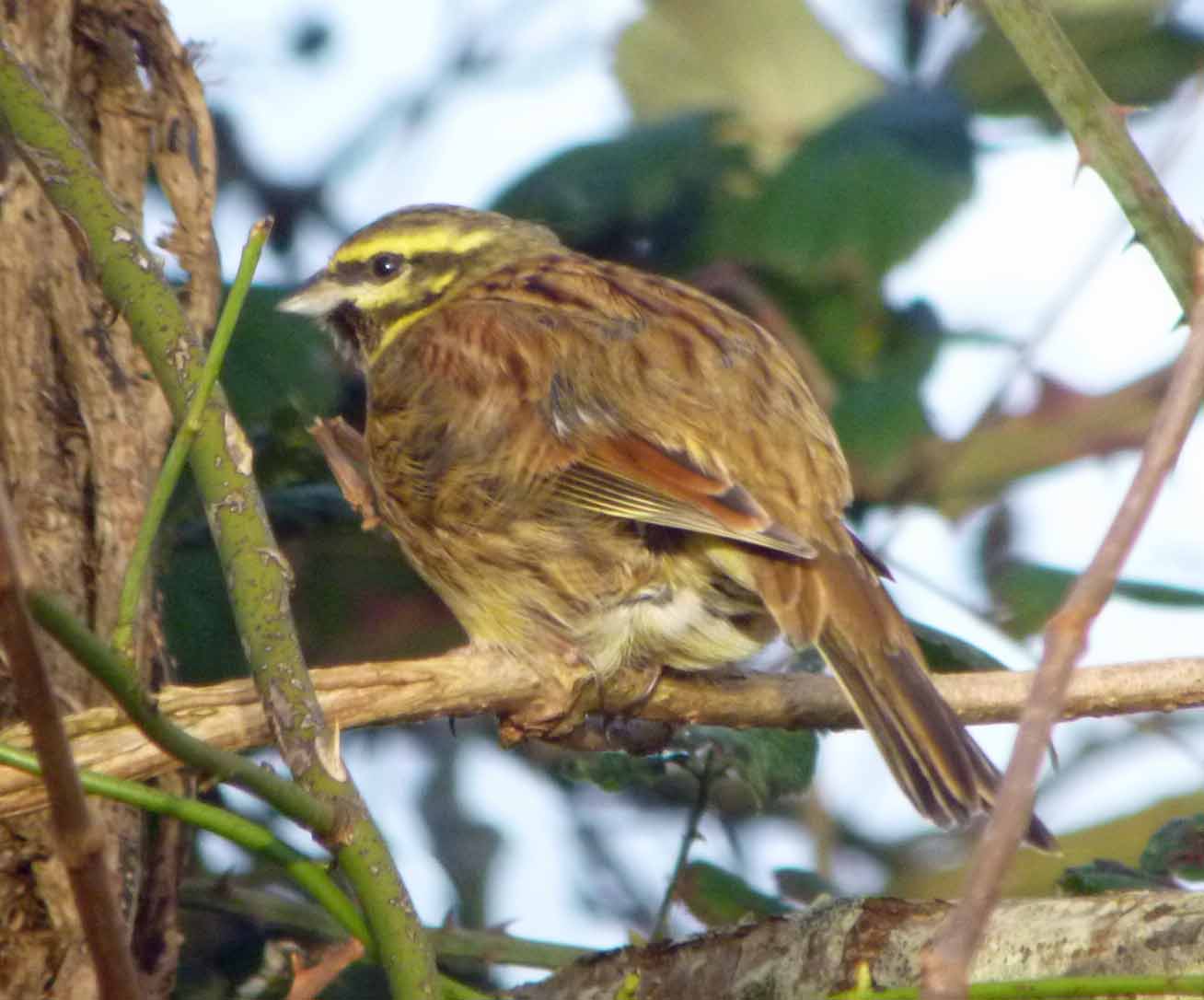
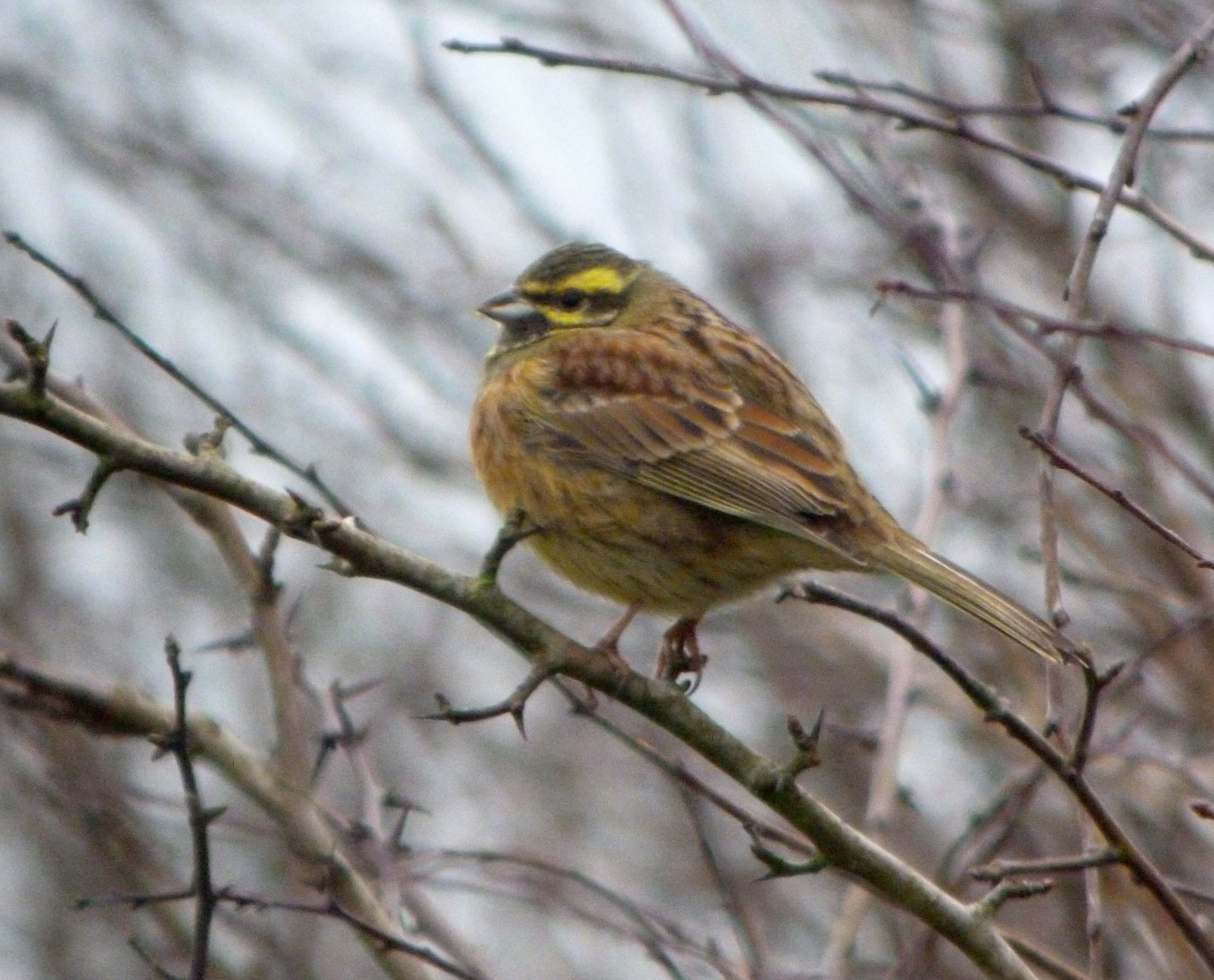
Cirl Buntings– male and pair

Cirl Bunting, Broadsands, MJMcGill Cirl Buntings, Broadssands, MJMcGill

20 December 2014

We left Whitminster at 0700 and headed to South Devon stopping at Exeter services for a short break. A calm and sunny start to the day was ideal for watching passerines, Broadsands in Torbay is well known for Cirl Buntings along with other species that shelter in the valley. The buntings were showing well around the car park with 20+ present, Reed Buntings were also found among them. A range of common species were basking or fly-catching with Chiffchaff being obvious but the real star was a vocal and very showy little Yellow-browed Warbler that we all got to see very well.

A look on the sea revealed a Great Northern Diver fishing off the rocks, a few Shag loafed among the gull flock with the Great Black-backed Gulls dwarfing all around them. Further out a few Guillemot and distant Razorbill flew by on the horizon, a few of the former were diving a little closer in. Colin counted 36 Great Crested Grebe and among them two Black-necked Grebe were found. A small number of Gannet fished offshore.

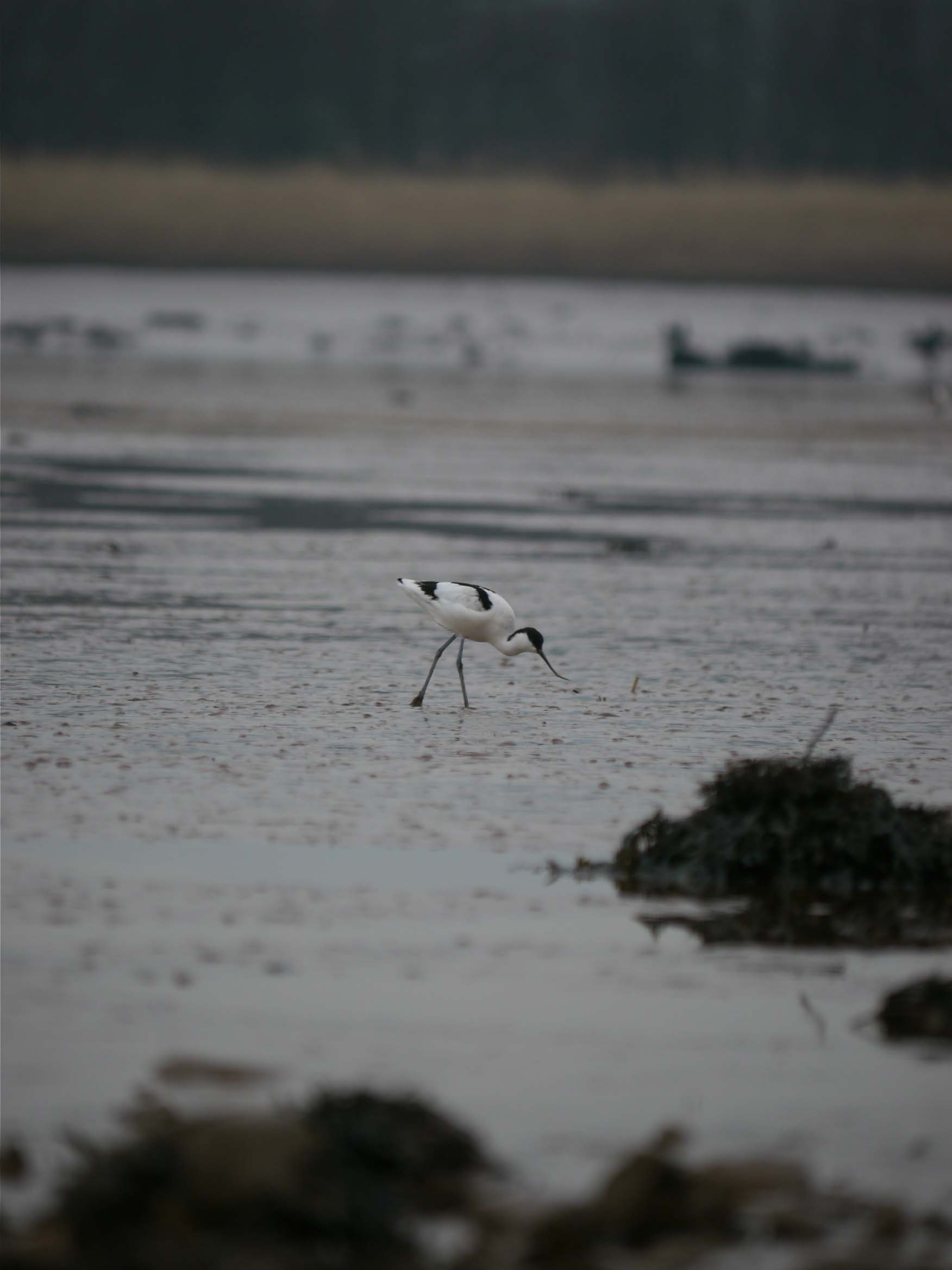
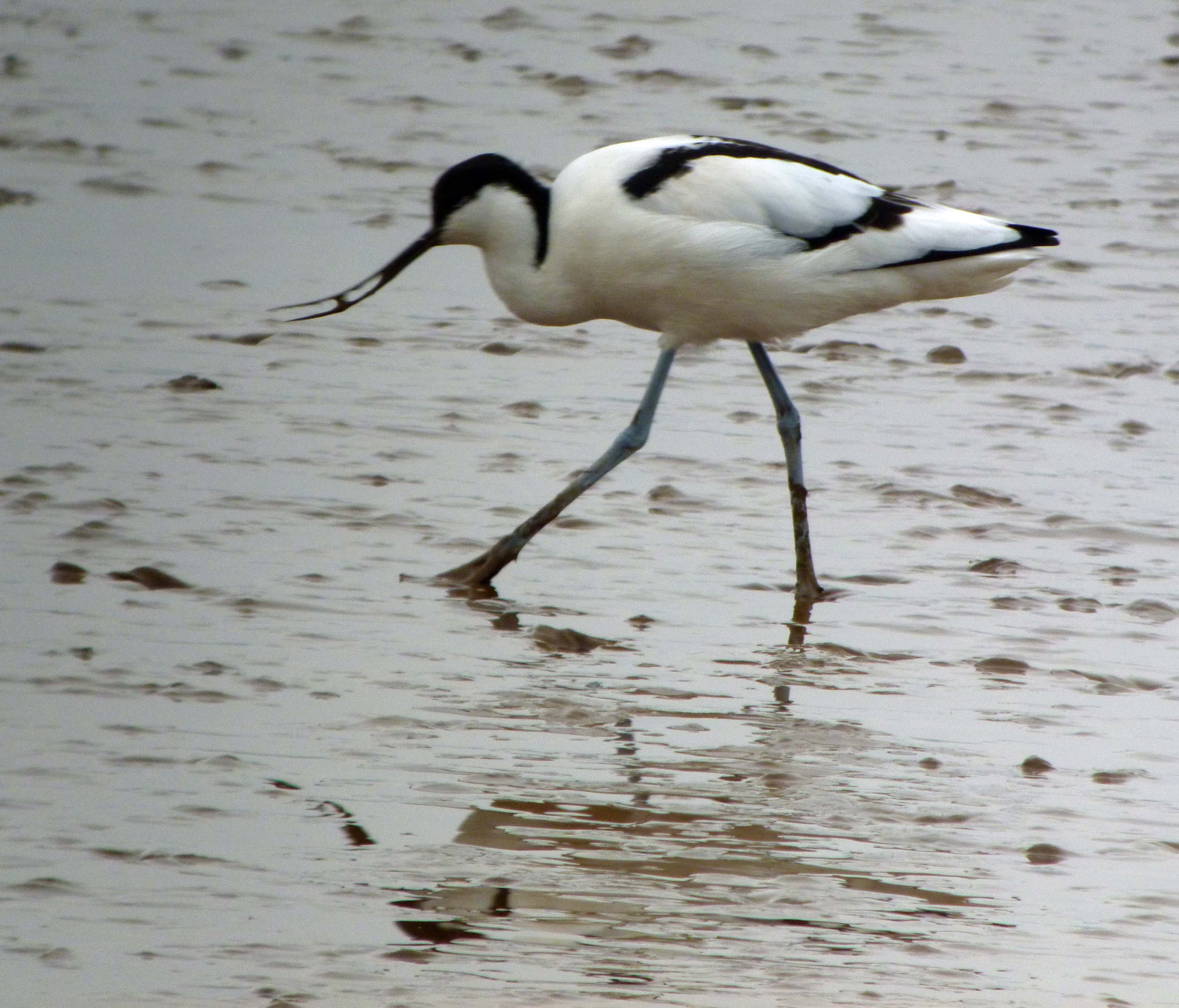
A short drive away was Dawlish Warren with the promise of more birds but an immediate distraction for some was the seaside chippy. This sorted out the sea-watchers from the lunch takers, Colin was off to set up his scope for a scan. We all joined him for a look over the sea. Grey Seal, c 4 Common Scoter and a number of Great Crested Grebe were present, a few Red-throated Diver were picked up in flight or distantly floating. A flock of Shag were also fishing the beach. The biggest surprise was watching a flock of very distant white birds flying in from the east, it took a while to see that they were 11 Avocet. This group of waders eventually landed on the sea off the mouth of the Exe for a while. The eventually took flight and continued westward, perhaps to the Teign or a Cornish estuary, maybe beyond to the continent. Wherever they were going it was great to see migration of this species in action. We headed along the dune path heading toward the point scanning at various spots along the way, we picked up Stonechats, flocks of Dark-bellied Brent Geese and in the estuary a selection of waders, 4 Greenshank being the most notable. Red-breasted Merganser were in the low tide creeks but sadly we did not pick up the wintering Bonaparte’s Gull that was seen off Finger Point. Back on the sea a single Slavonian Grebe was in the mouth of the Exe.

Everyone was keen to get to Bowling Green Marsh RSPB at Topsham not least because 2-3 Penduline Tits had been seen again in the morning so we spent the rest of the day in that area. They did not show whilst we were present but the usual wildfowl and Black-tailed Godwits were on the marsh. From the viewing platform over the R. Clyst a full suite of estuary waders were feeding on the mud. The tide was just turning and the sun setting so the Grey Plover, Bar-tailed Godwit, Redshank, Avocets, Dunlin and Knot were all busy gleaning food. A search from the new viewing screens over the low tide creeks gave us Water Rail, Spotted Redshank, 2 Greenshank among the more numerous Redshank. The sun had now gone a it was time to return home, we got back at 6pm.

Thank you to all four of you that joined me for the day.

Somerset and Devon-1 November 2014

Somerset and Devon day trip

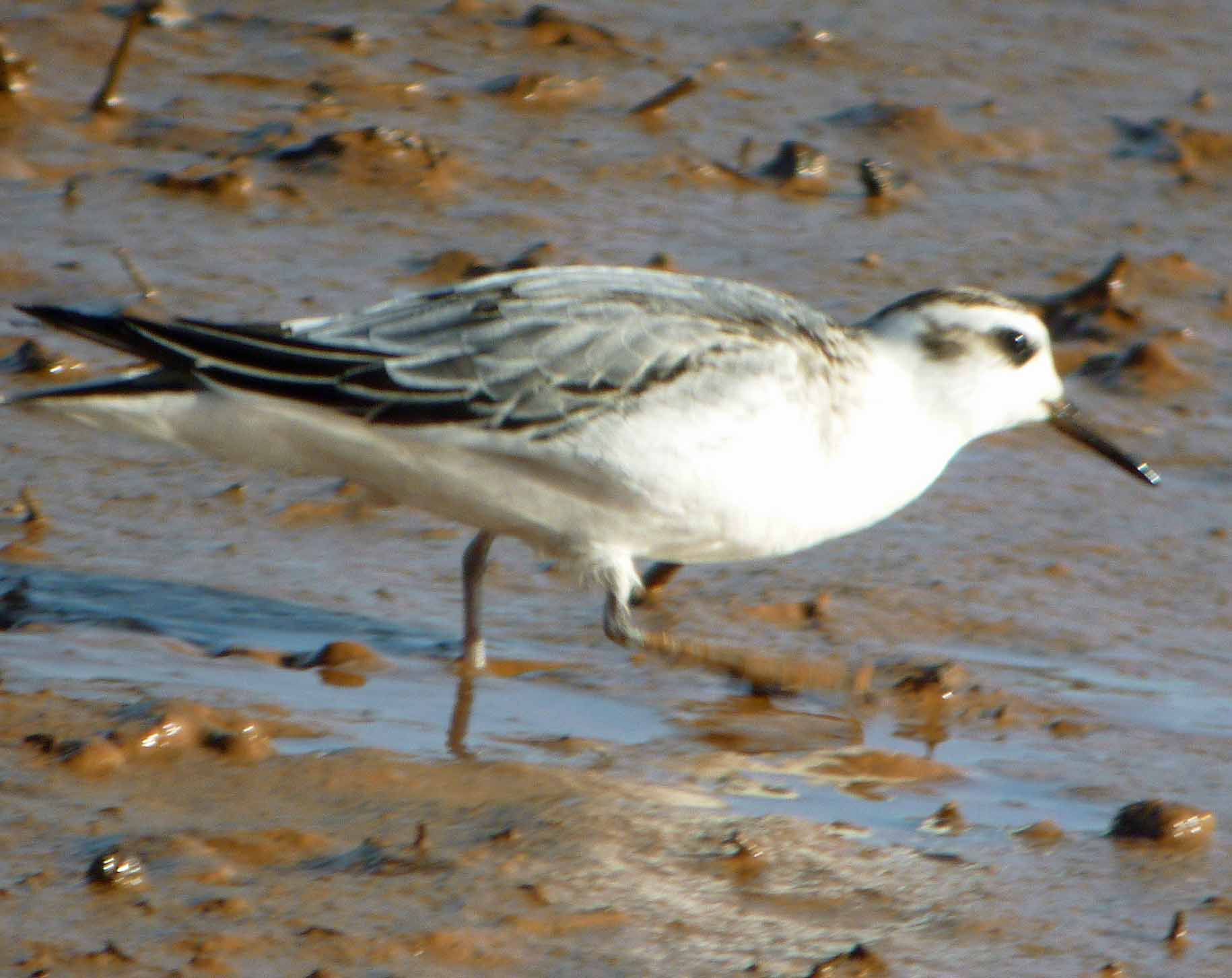
Grey Phalarope (1st winter) Otter Estuary, Budleigh Salterton, Devon

Grey Phal

Grey Phalarope

We all met up at Whitminster for a departure time of 0600 and made our first stop at WWT Steart Marshes. The reserve is fully open and is highly recommended as a birding destination or for a good walk in open country or even to cycle around. Although it was breezy we had fantastic light all day, bright sunshine. Our vantage point over the vast reserve was from the screens adjacent to Mendip Hide, and what a vantage point. Scanning and scoping produced a long list of sightings. We hoped to see the juvenile Pallid Harrier that has been present but were not lucky enough to connect today. It showed brilliantly the day after. The breach on the River Parrett side is fairly new so the relationship with birds and their movements is bound to still be evolving. We noticed that many species arrived through the morning to feed in the creeks as the tide dropped. Flocks of Skylark, Meadow Pipit and Linnet were seen out on the weedy areas, a few pairs of Stonechat roamed the hedges and weeds and flocks of Starlings totalling 1200 passed through during our watch.

It was very productive for raptors, Roberta spotted a Merlin, at least three Kestrel, 4 Buzzard, Sparrowhawk and a Peregrine showed for us, the latter clearing the area. Large flocks of Dunlin moved across the site from Stert flats to the Parrett. The tidal pools and creeks held at least 9 Little Egret and 3 Grey Heron but pick of the leggy bunch was a Great White Egret, this was being chased by a heron and was even flushed by the Peregrine. Flocks of Lapwing came in, 24 Golden Plover flew over and 2 Ruff appeared on the wet mud.

Off in the distance some dedicated scope work picked up 7 Brent Geese flying out of the Parrett and a female Red-breasted Merganser that flew around not really knowing what it wanted to do. Small flocks of Black-tailed Godwit were also noted. I heard later that nearly 300 Avocet were also on the Parrett, very impressive. We all enjoyed this visit very much and will definitely be back.

Moving on we then headed to Devon to Budleigh Salterton and the mouth of the R. Otter. A showy 1st winter Grey Phalarope had been present for a week and we were soon watching it feeding very close to us on the mud. A very smart little bird. A couple of Ringed Plover jostled for the best island to roost upon. A few Wigeon and Teal were present on the small fresh marsh along with the gull flocks and out to sea we noted Gannets on the horizon. Dunlin, Redshank and Curlew were also present. It was very windy on the coast so after a check with everyone we decided to head to Seaton in hope of some sheltered birding.

A short drive and we were as Black Hole Marsh wandering to the Tower Hide to view across the marshes and Axe estuary. Large numbers of gulls were loafing on the sandbars and channels. A ringed juvenile Great black-backed Gull appears to be from a S. Norway project, I await details. Black-tailed Godwits were accompanied by a Bar-tailed Godwit, 4 Little Grebe and a variety of duck added to the experience. On the walk back to the car we watched a Chiffchaff sheltering in the ditch.

One last look over the sea at Seaton produced a skua sp chasing the Kittiwakes. The light was fading so we called it day arriving back at 1840hrs. It was a good day out, thanks to all for your company.

Martin

Gull details below.

Resightings of a Colour Ringed Gull

Thank you for your report of a CR-ringed Gull. Under you will find the details. In the event the bird is dead and you still posses the ring(s), we kindly urge you to send (them) to us. Resightings of our CR-ringed Gulls could be reported to Lista Ringing Group, Box 171, 4558 Vanse, Norway, on E-mail: clifu@c2i.net or the WEB page http://www.ringmerking.no/cr.

This list of ringingdata and ring reading data is intended for personal use only. If you want to publish data from this list please contact us before publication;

For birds ringed in Norway;
Morten Helberg at email morten.helberg@bio.uio.no

For birds ringed in Denmark;
Kjeld T. Pedersen at email ktpedersen@snm.ku.dk

CR-Code Black ring with white code: JU180 LBNW(JU180);RBM
Ringing Centre Stavanger Museum (Norway) Ring number 3023069
Species Great Black-backed Gull  Larus marinus
Sex Unknown Age Pullus

Date Place Coordinates Observers Days/km/°
01.07 2014 LILLE STEINSHOLMEN, Farsund, Vest-Agder, Norway 58°02’40″N 006°53’36″E Olsen, Knut Sigbjørn
01.11 2014 Tower Hide, Black Hole Marsh, Axe Estuary, Seaton, Devon, Great Britain 50°49’03″N 003°03’33″W McGill, Martin 123/1028/222

Western Slovenia- 5-12 August 2014, Wildlife and more trip report

I have visited Slovenia on two previous occasions, it is a fantastic destination. This trip was strictly a family holiday but I usually go out a few times early in the morning or get pass for an afternoon or so. We stayed at four locations and visted many of the famous local attractions such as Postojna caves and Predjama Castle plus the WW1 trenches and historical sites. Walks in the mountains and gorges, Etno music festival, hiring bikes and rowing boats and swimming in the sea and lakes also featured but wildlife is never far away…

My trip report follows.

5 August
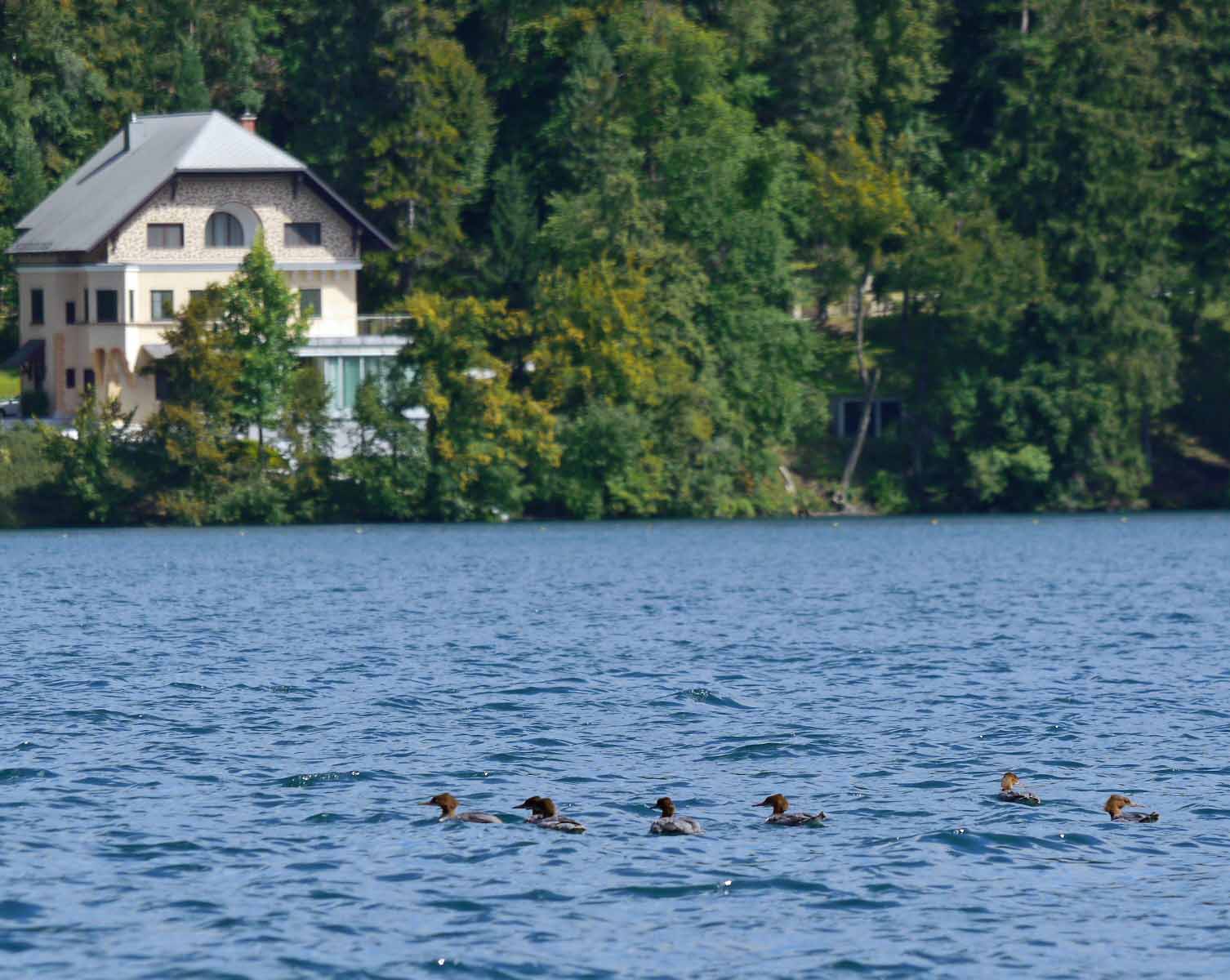
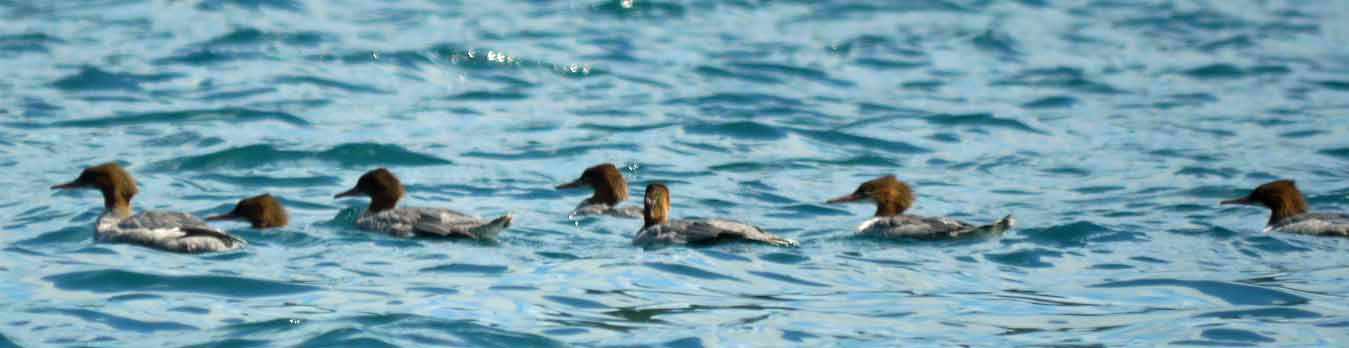
Drove to Stansted Airport and flew with easyjet to Ljubljana, hired a car through Sixt and went on our way. The usual flocks of Hooded Crow and Starling were seen on the way to Bled. We checked into Penzion Bledec where we were to stay for the next three nights. A wander down to the lake we experienced a light rain shower, the only one of the week. A stop at a familiar bar for a beer and soon after we were hiring a rowing boat. Although not actually using the sport rowing lanes I did reach Otok island in quick time passing 7 juvenile Goosander and a flyover Hobby which was scaring Swallows and House Martins. Mooring up I walked around the island which had a very tame Spotted Flycatchers and flocks of Goldfinch and Chaffinch. The interpretive signs displayed wildlife and I was impressed with an underwater shot of Little Grebe from the crystal clear Lake Bled. Short of time due to promising the attendant that I would be on time we rowed back rapidly and was ready for another beer. A Kestrel and Peregrine were seen over the imposing Bled castle.

6 August
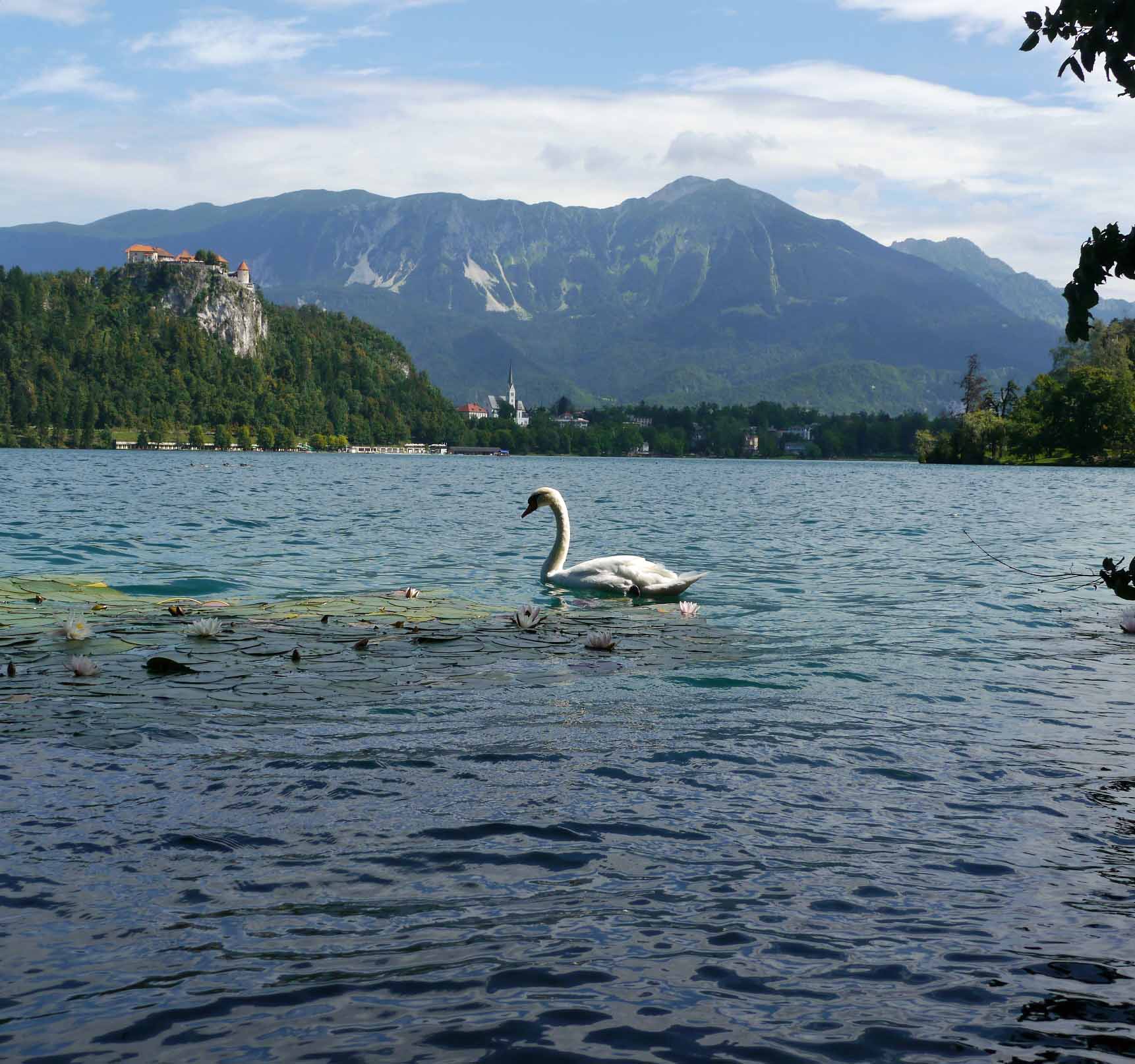
A warm sunny, time to hire bikes and cycle around Lake Bled and back. I saw the 7 Goosander again plus 4 Mute Swan, plenty of Coal Tits and Buzzard and Jay. A Scarce Swallowtail patrolled the sunny banks at the West end.

Goosanders on Lake Bled
Goosander on Lake Bled, Slovenia_edited-1

Goosander on Lake Bled, Slovenia, MJMcGill (1)_edited-1

Mute Swan, Lake Bled and Bled Castle

Mute Swan on Lake Bled, Bled Castle (4)_edited-1


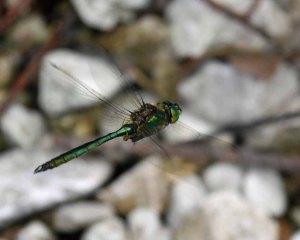
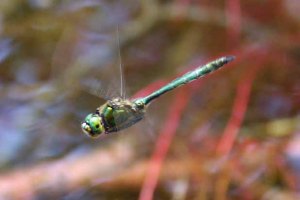
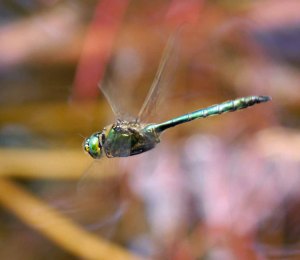
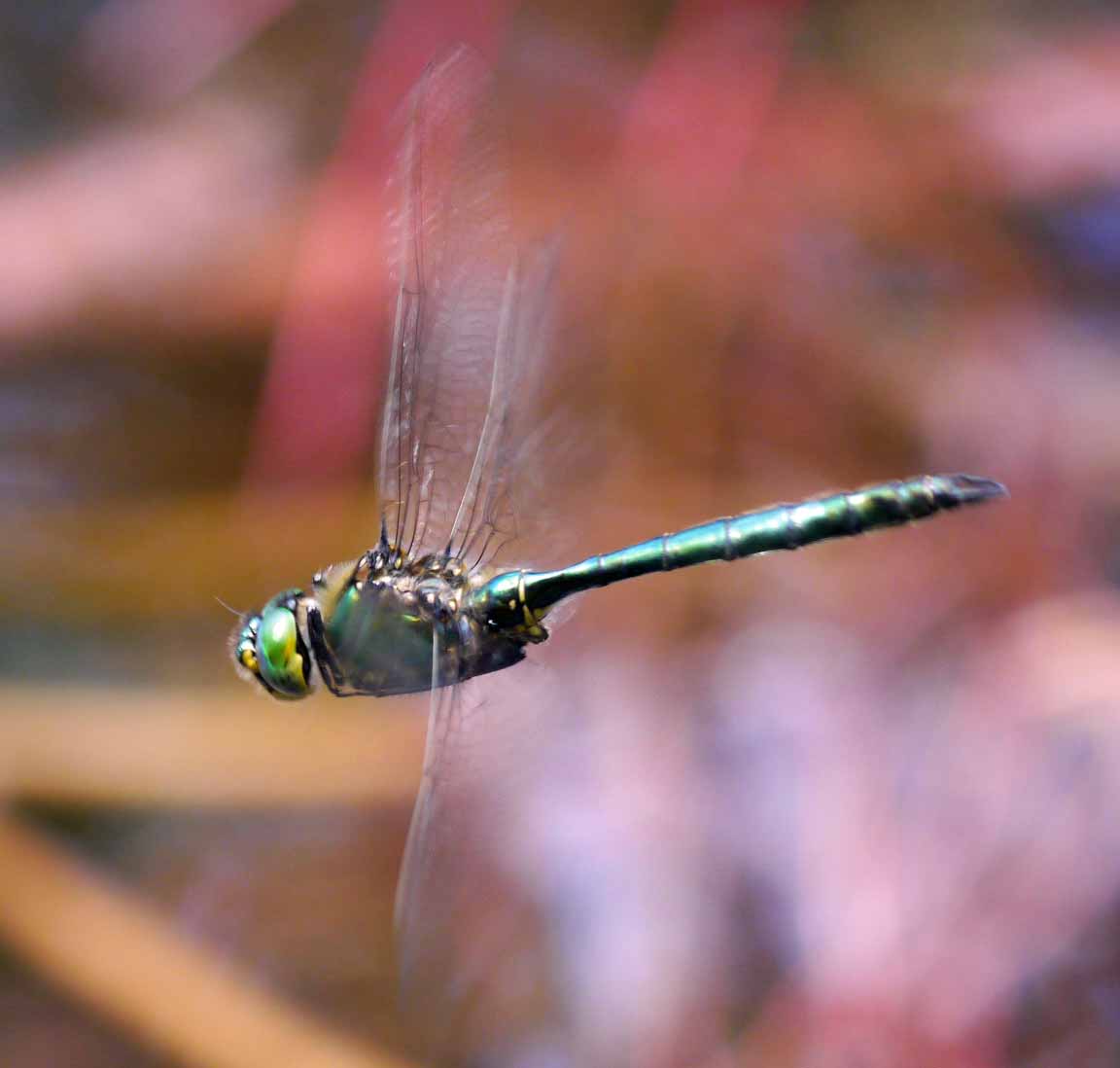
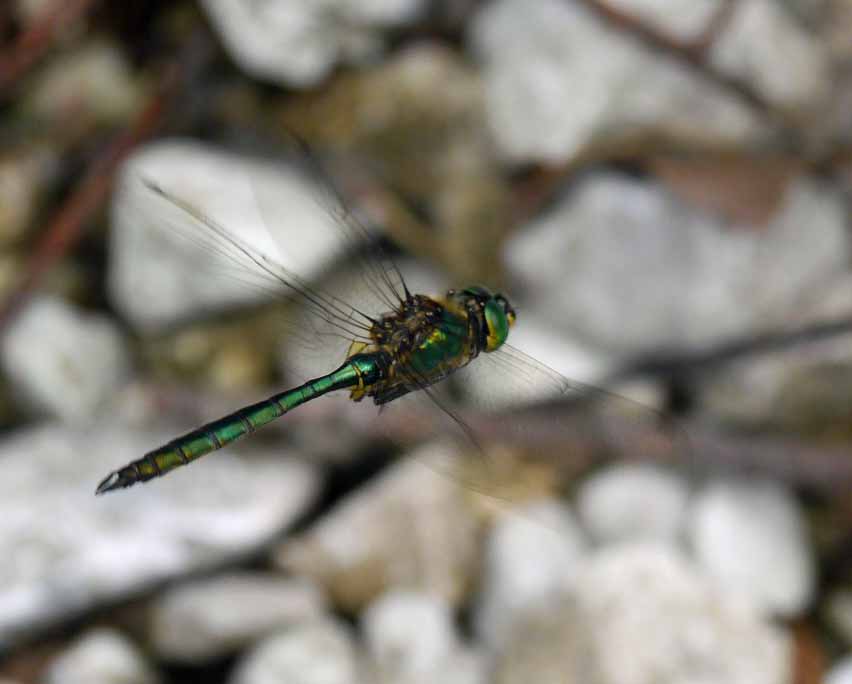
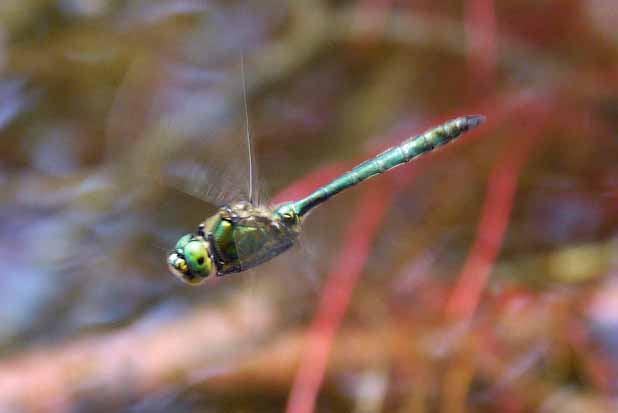
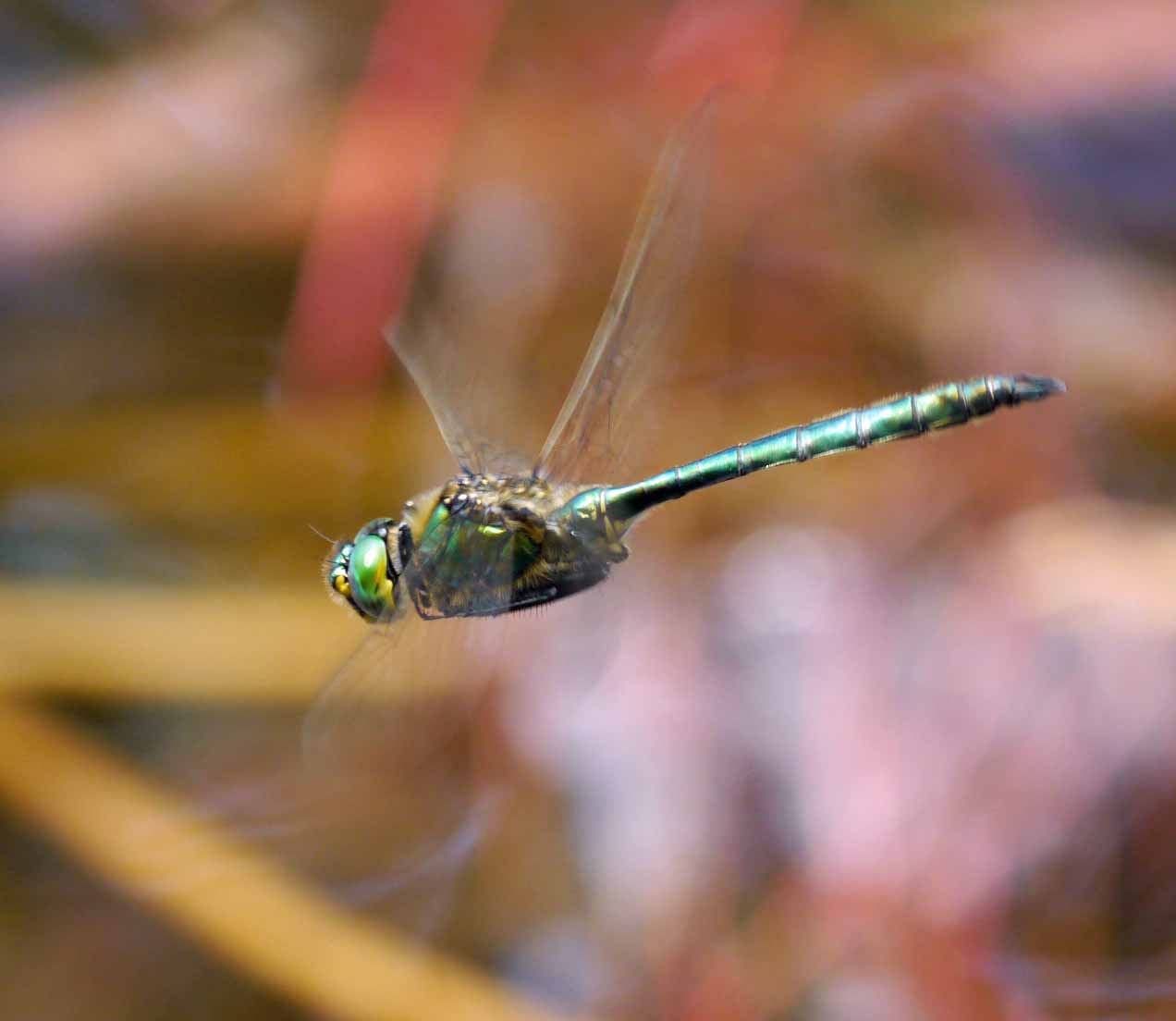
Afternoon was spent at Lake Bohinj where we swan with the fish in the cool, clear water surrounded by forest and mountains. I saw a single Teal, a few Marsh Tits but was distracted by dragonflies. Emerald dragonfly sp were whizzing along the beach. They took some stalking and patience to photograph but I studied them long enough to work out their behaviour. Any fallen tree in sheltered bays seem to attract them and they held territory. I was along the southern shore of Lake Bohinj near the west end. In the village of Bohinj Bistrica I noticed a heronry with unfledged young in pines above the supermarket.

Brilliant Emeralds
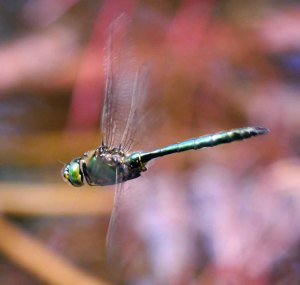
Brilliant Emerald Somatochlora metallica, Lake Bohinj, Slovenia, MJMcGill 06-08-14 (8)_edited-1 Brilliant Emerald Somatochlora metallica, Lake Bohinj, Slovenia, MJMcGill 06-08-14 (15)_edited-1 Brilliant Emerald Somatochlora metallica, Lake Bohinj, Slovenia, MJMcGill 06-08-14 (17)_edited-1

Brilliant Emerald Somatochlora metallica, Lake Bohinj, Slovenia, MJMcGill 06-08-14 (3)_edited-1

I was going to make a special visit to Berkshire for this species in July but never had the time. I could not wish for better views of this smart insect.

A return drive to Bled took in the scenic route via the Pokljuka plateau and a coffee stop where a few butterfly species were seen on the hay meadows. A small finch with an unfamiliar call flew over and rested in a pine before heading off again, it may well have been a Citril finch. Back at Lake Bled I had good views of a Hawfinch perched in trees above the casino, it flew off over the shopping centre calling.

7 August
Just outside the Penzion Bledec  I wandered a very short distance up the path to the castle. A ‘Black’ Red Squirrel was on the track, I tried to get my children to see it but it had disappeared so we turned to come back down when my daughter found a Garden Dormouse on the path, a proper little spotter. The woods had Nuthatch, Great Spotted Woodpecker and Coal Tits. Black Redstart sang from the rooftops, in fact every village, town, barn or even woodpile in Sloveina seemed to have Black Redstarts. We travelled to Klagenfurt to spend the morning in Austria’s 5th largest city. The afternoon was spent back in Slovenia, the family swan in Lake Bled, I went back up onto the Pokljuka plateau to investigate some bogs that I had been to before. The sites are known as Veliko Blejsko barje and Barje Sijec. Crossbills were present, I heard Nutcracker, Chiffchaffs were numerous and I was soon distracted by dragonflies. I also saw a Roe Deer run across the road.

Barje Sijec
An upland bog within the forest as viewed from the platform
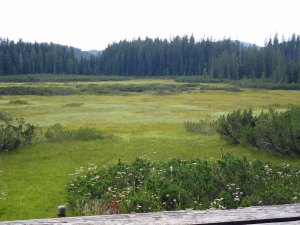
Barje Sijec, Pokljuka, Slovenia, MJMcGill

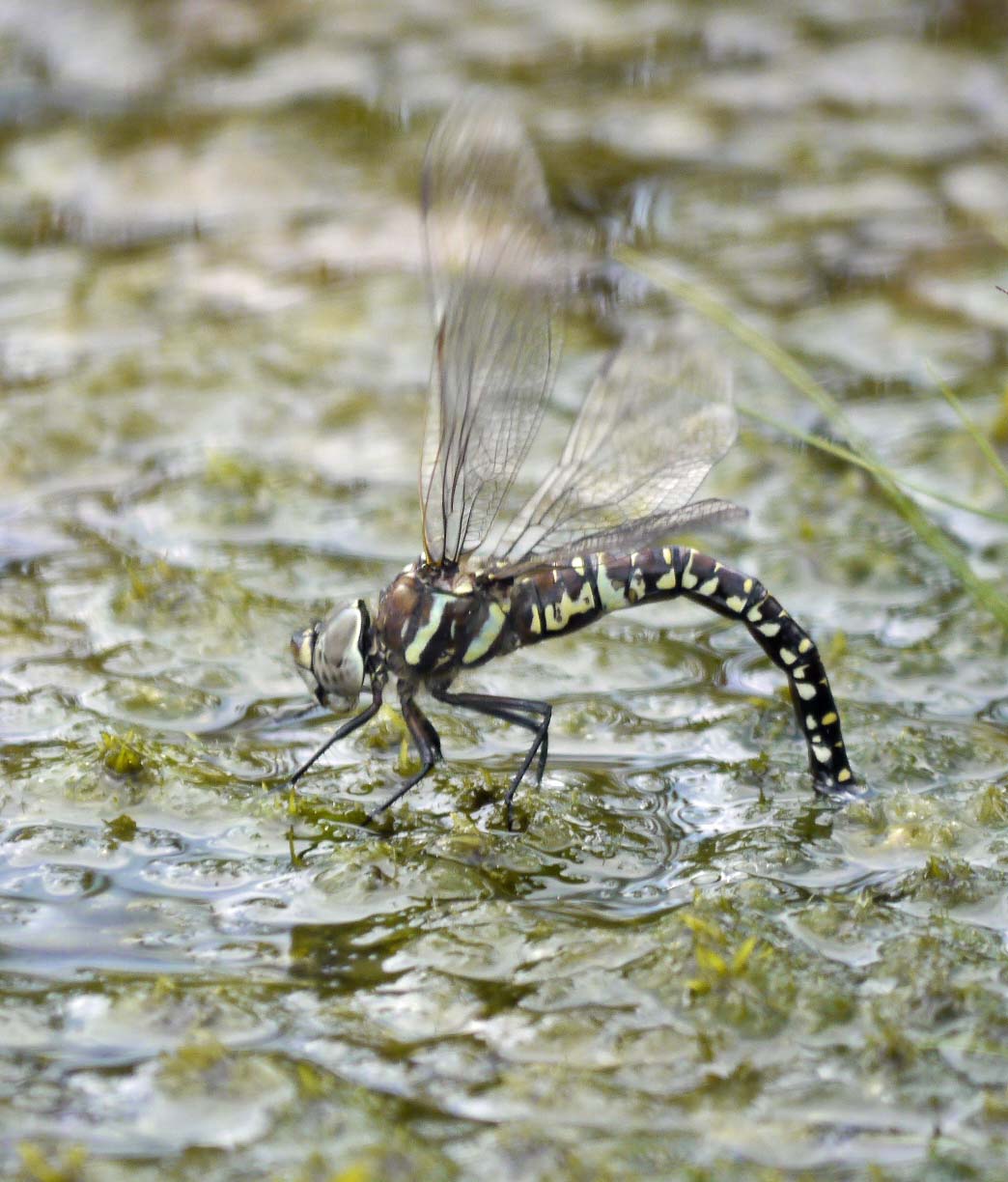
Common or (Moorland) Hawker
Males and female were present.
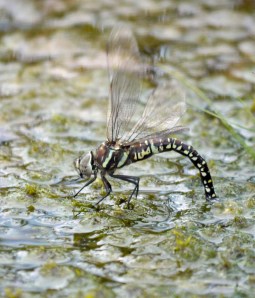
Common or Moorland Hawker, Blejsko Barje, Pokljuka, Slovenia, MJMcGill

Niobe or Dark Green Fritillary
I still need to have a close look at some pics. My wife has some on her camera which look like Niobe.
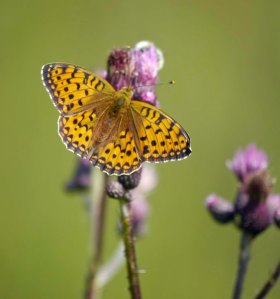
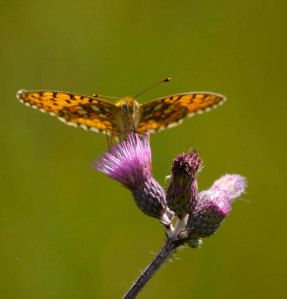
Niobe or Dark Green Frtillary, Barje Sijec, Pokljuka, Slovenia, MJMcGill Niobe or Dark Green Fritillary, Veliko Blejsko, Barje, Pokljuka, Solvenia, MJMcGill

Northern Emerald
These insects did come and hold a hover near if you stayed still, it was still a challenge to try to get a shot.
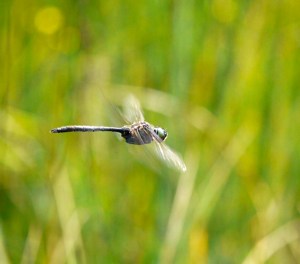
Northern Emerald, Veliko Blejsko Barje, Pokljuka, Slovenia, MJMcGill 001 Northern Emerald, Veliko Blejsko Barje, Pokljuka, Slovenia, MJMcGill

I made the most of the warmest part of the day and headed back around 5pm to meet up with the family in Bled. I waited for them outside a bar and basked in the sunshine with a beer. That evening we all went for a hike up the dry riverbed of the Pokljuka gorge and subsequently visited a restaurant at Zatrnik. The wooded limestone gorge had Crested Tit, out of the gorge Buzzards were alert atop trees as the hay cutting was in full swing. The meadows in Slovenia are marvellous, low intensity farming, most steeper slopes in the fields are still cut and raked by hand. The whole field is cut in sections not all at once hence Corncrake still breeding in this country. I did not feel good on this walk, I was sweating and actually became dizzy watching a dragonfly that repeatedly circled me in the gorge. I am sure it was a Southern Hawker. Up on the slopes to the plateau opposite the restaurant the meadow opposite was rich in butterlflies but I had been struggling to hold it together. A good meal was forced down but it was clear I was not well, I think my hunger and resultant eating unwashed fruit earlier in the day (that was purchased in Austria) may have given me a bug. The journey back to Bled and all night were pretty awful. Could have done without it.

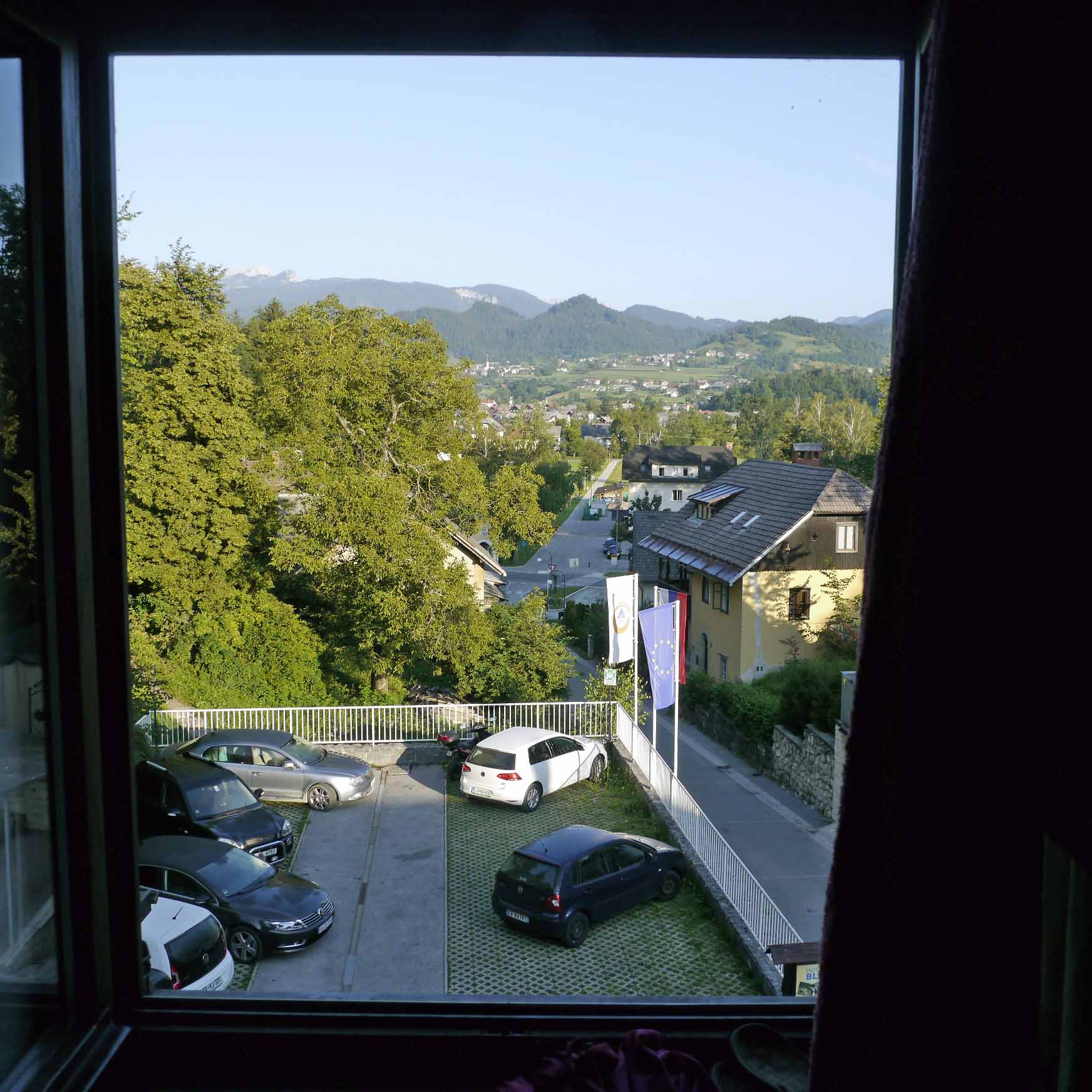
View from Penzion Bledec
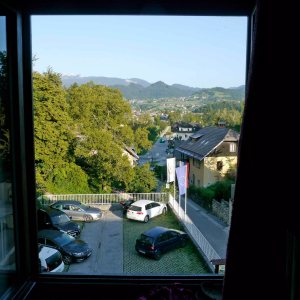
View from Penzion room, Bledec, Bled_edited-1

8 August
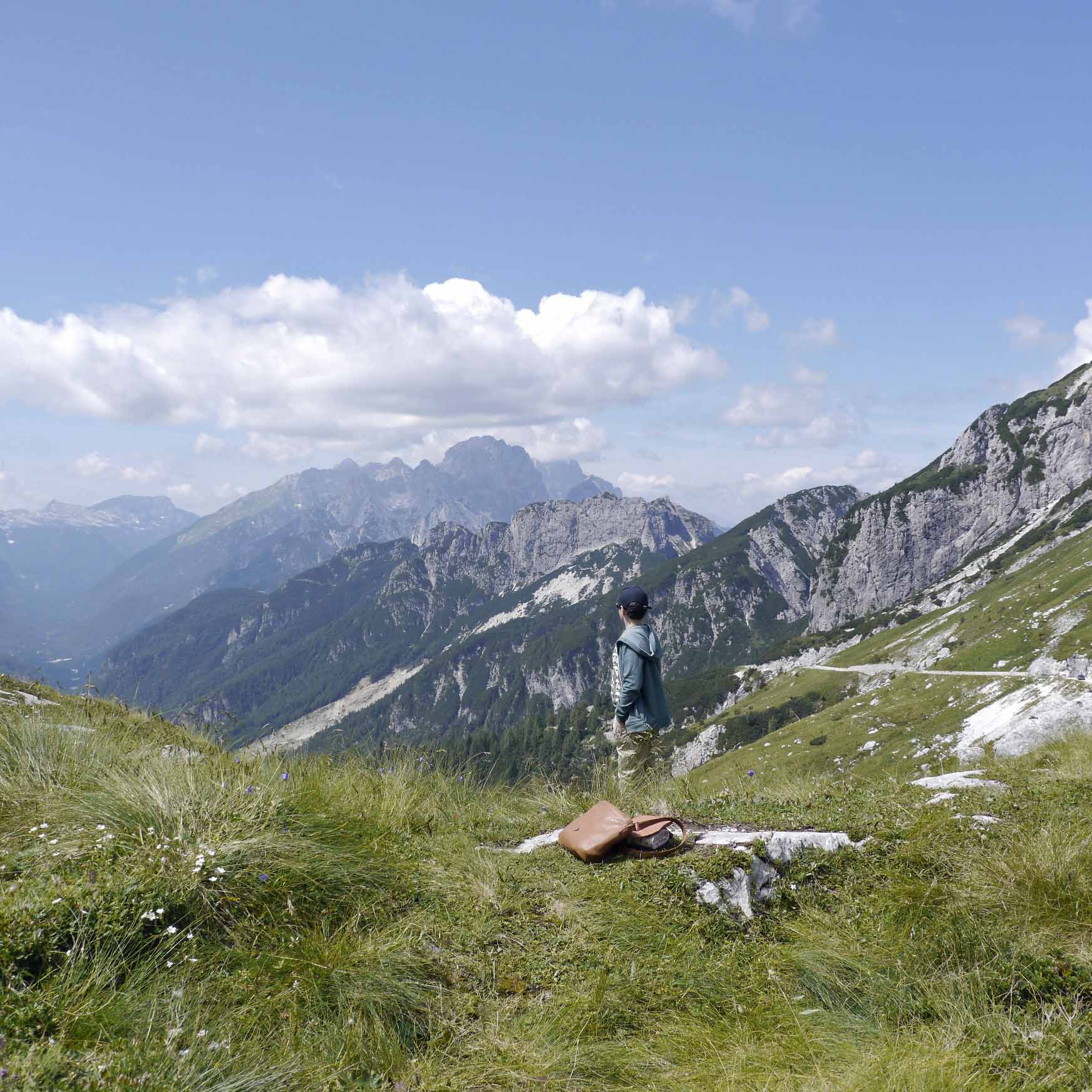
We were to move on to new accommodation and leave Bled for the mountains. I had no energy left, could not drink or eat so stopped in Kranska Gora to get something from the pharmacy. I abandoned my plans to use the Dom na Vitrancu chairlift to explore Ciprnik. We pressed on passing through Italy to reach Mount Mangart where I was called upon to drive the narrow tarmac road to the near the summit. It was stupendous up there, great views and birds too. I gave everything I had to reach a ridge where two Golden Eagle were passing at eye height but just collapsed in a heap half way up. Nothing left in the tank, my family carried on and enjoyed the eagles without me. I did note Water Pipits, Crossbills and Raven as well a Alpine Chough but gave up on Snow Finch.

View from below Mt Mangart summit
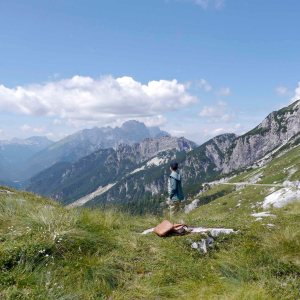
Joe, Mount Mangart, Julian Alps, Slovenia (1)_edited-1

Back down in the valley we stopped at the Fort at Log Pod Mangartom but I just slept in the car. Our next stop was at our accommodation (Jelenov breg Pod Matajurem) at Avsa, Livek near Kobarid. A mountain top farm on the Italian border, idyllic for all of us. Farm animals for my daughter to feed, views, peace, quiet and a comfy little house for us to stay in. The food was from the farm, fresh, local and hearty but I was still in a bad way and spent most of the time here asleep. We would go back anytime the family that run it were lovely.

9 August
I was woke by the sound of a Mallard at 0500 and got up to find out it was an alarm clock my daughter had set on her ipod. Naturally it never woke her! I felt more human and stood out on the balcony looking at the views and sunrise over Mount Krn with my wife, Harriet, she went back to bed and I decided to head for the mountain. A long winding drive ensued as I dropped down into the valley and back up the other side. Parking up and setting off I was soon birding. Juvenile Red-backed Shrikes were in the scrub just above the treeline and Water Pipits up on the boulder strewn slopes. I climbed for an hour and was specifically searching for Rock Partridge but never located any. The south facing slopes are perfect for them, a peaceful place, difficult to envisage to horrors of the mountain top front line (Soca or Isonzo front) played out in WW1 where thousands of men died fighting in freezing conditons, it is said the mountain was lowered by the heavy shelling. The mountains still give up sad remains to this day.

I went back for a breakfast and managed to eat something, to have juice and coffee before we set off for another day out and place to stay. We explored the Kobarid area. The museum here is excellent, the town very pleasant. We walked the Soca river route and investigated the WW1 trenches and positions carved out from the limestone karst. The river up stream of the old Napoleon bridge is crystal clear and has a suspended bridge which allows even better views, nearby the Slap Kozjak waterfall was well worth visiting. I noted and attempted to photograph as many butterflies as possible but some are just too quick. A Poplar Admiral was on a buddleia but flew off into the Aspen woods. A full day with little driving was enjoyed followed by a really good pizza in Kobarid on the main street and more exploration to dusk. A sombre look around the WW1 Italian war memorial, over 7000 souls are remembered here, the opening of which was attended by Mussolini. A perfect still, warm evening watching from our balcony finished the night off but I was restless. Another attempt to see my target bird was on the cards early next day, I never slept well thinking of it.

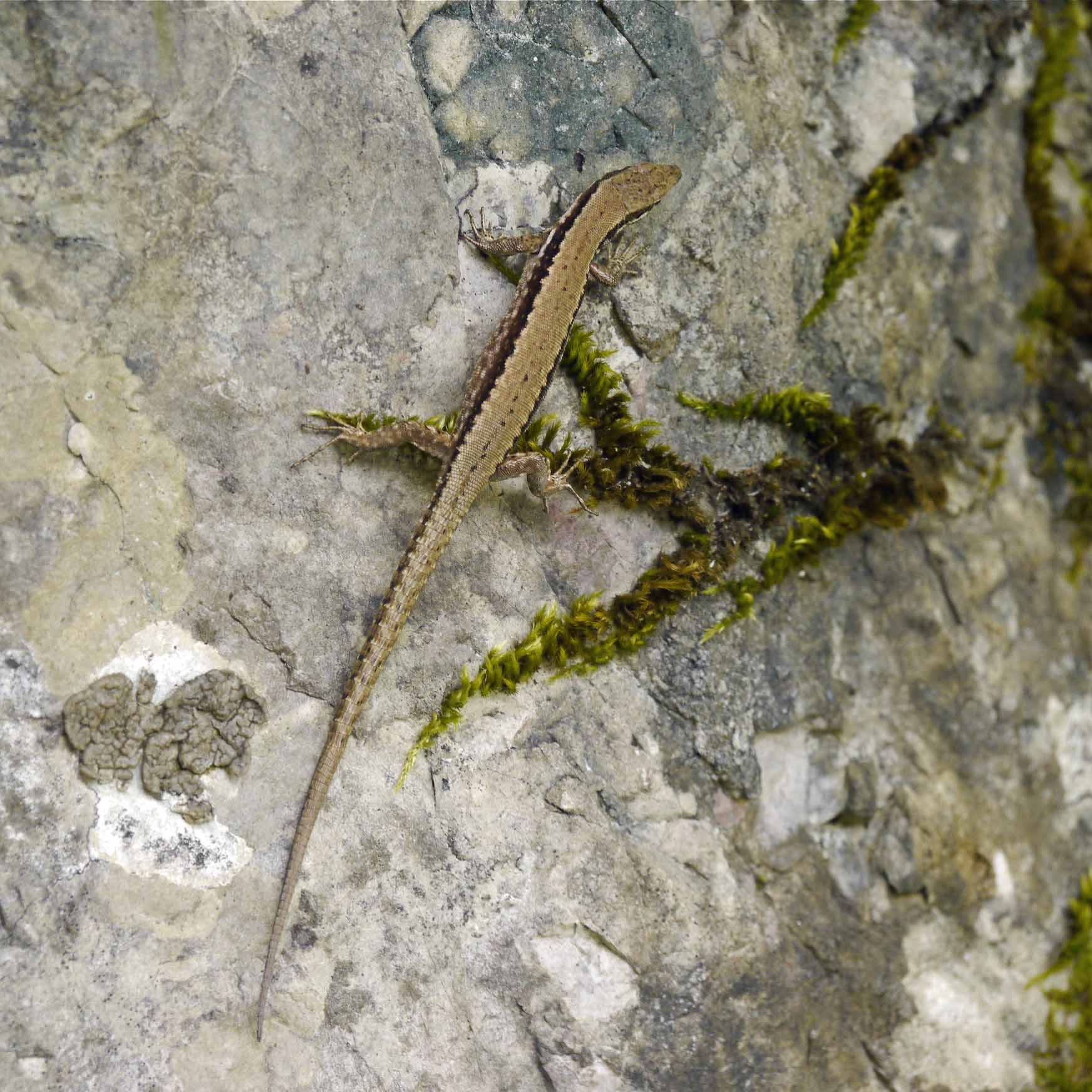
Soca Valley Lizard and blue butterfly enjoying the salt (sweat)
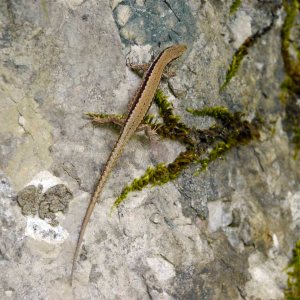
001, Lizard sp, near Kobarid, Slovenia (1) 001, blue butterfly sp, Soca Valley, near Kobarid (1)

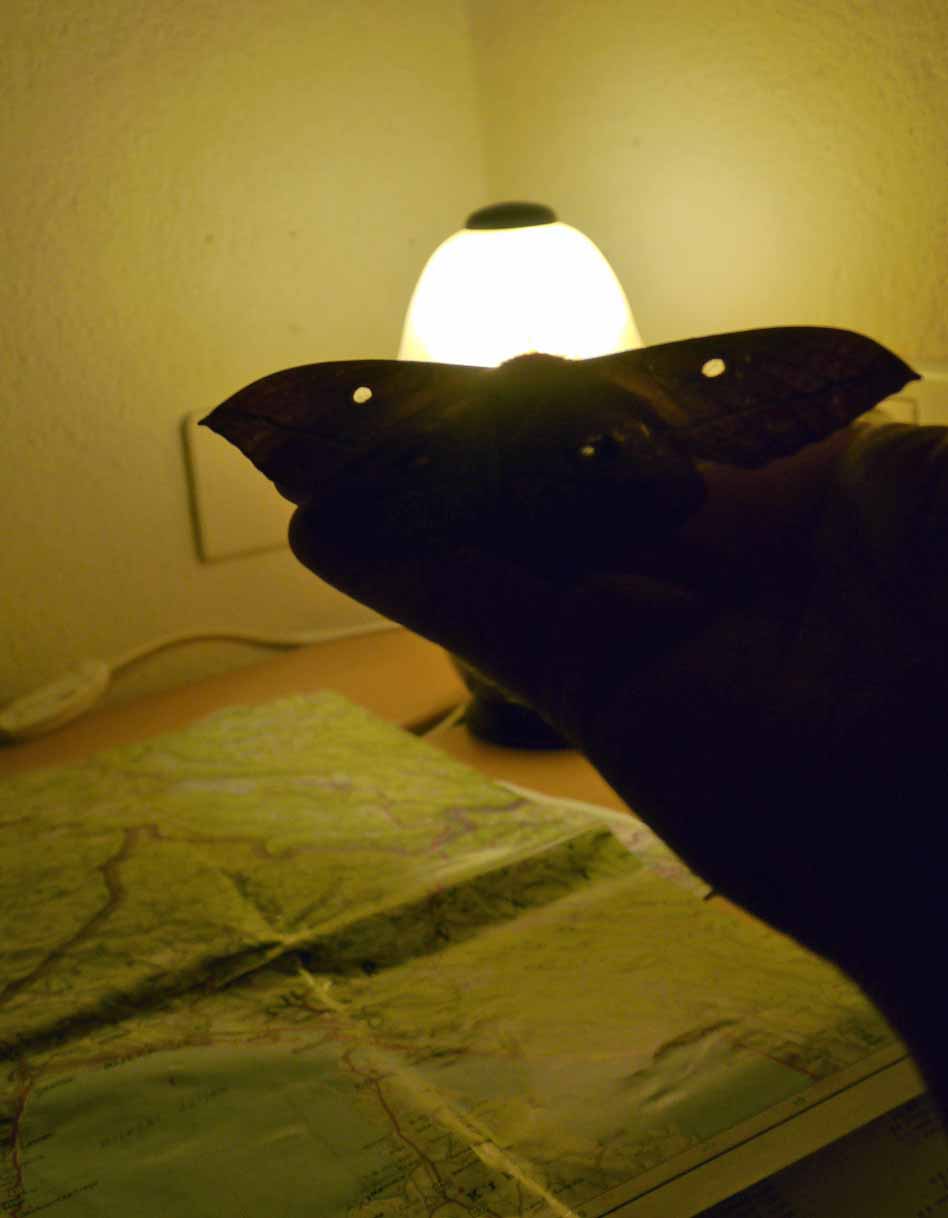
Emperor Moth
This amazing moth came into our apartment at Tourist Farm Kranj at Kosec, my daughter intially called out that a bat had entered the room! The spots on the wings were clear which led me to think it could be used to attract or ward off predators with moonlight filtering through.
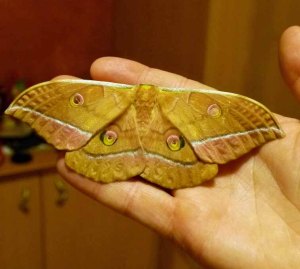
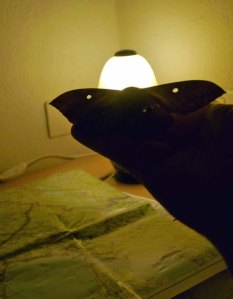
Emperor Moth, female, Saturnia pavonia (27)_edited-2  001, Emperor Moth, female, Saturnia pavonia (1)

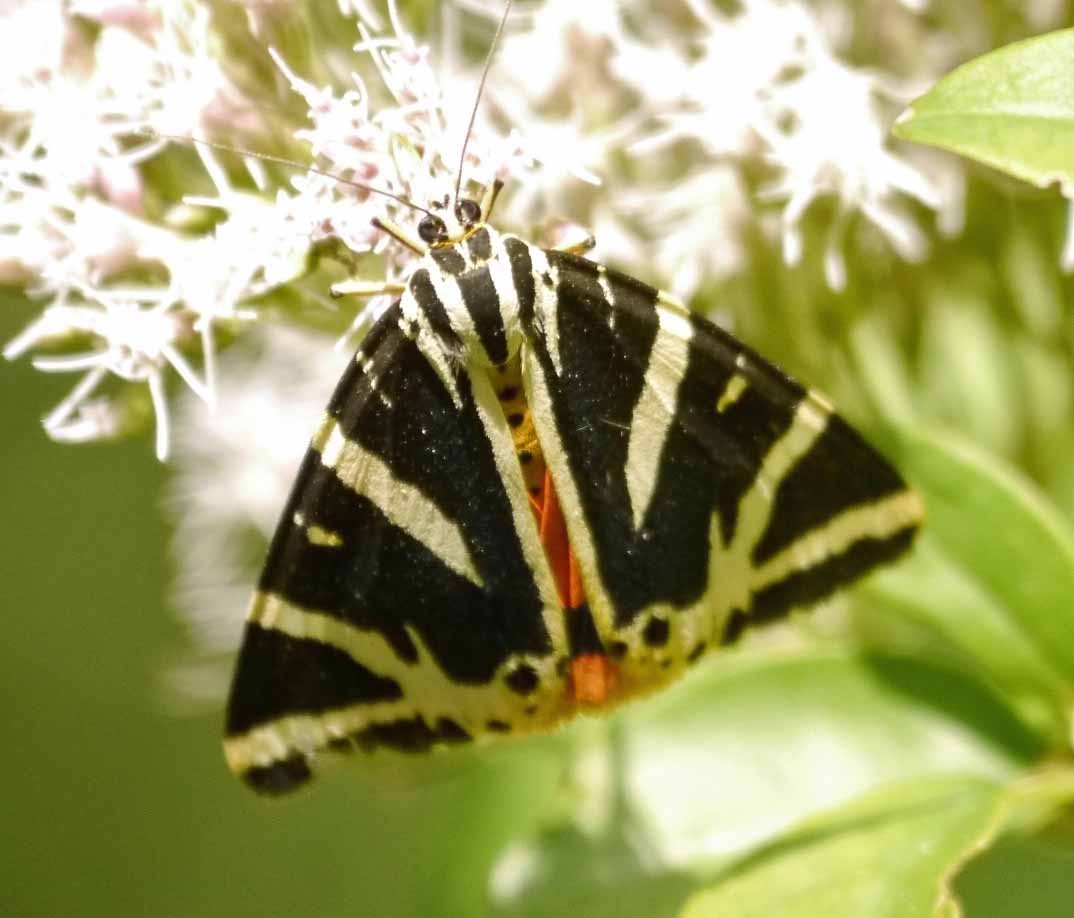
Jersey Tiger moth along the Soca Valley path
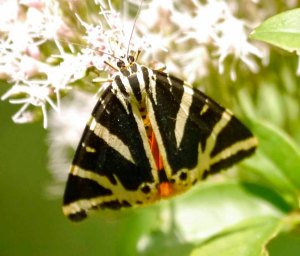
Jersey Tiger, near Kobarid, Slovenia (1)_edited-1

10 August
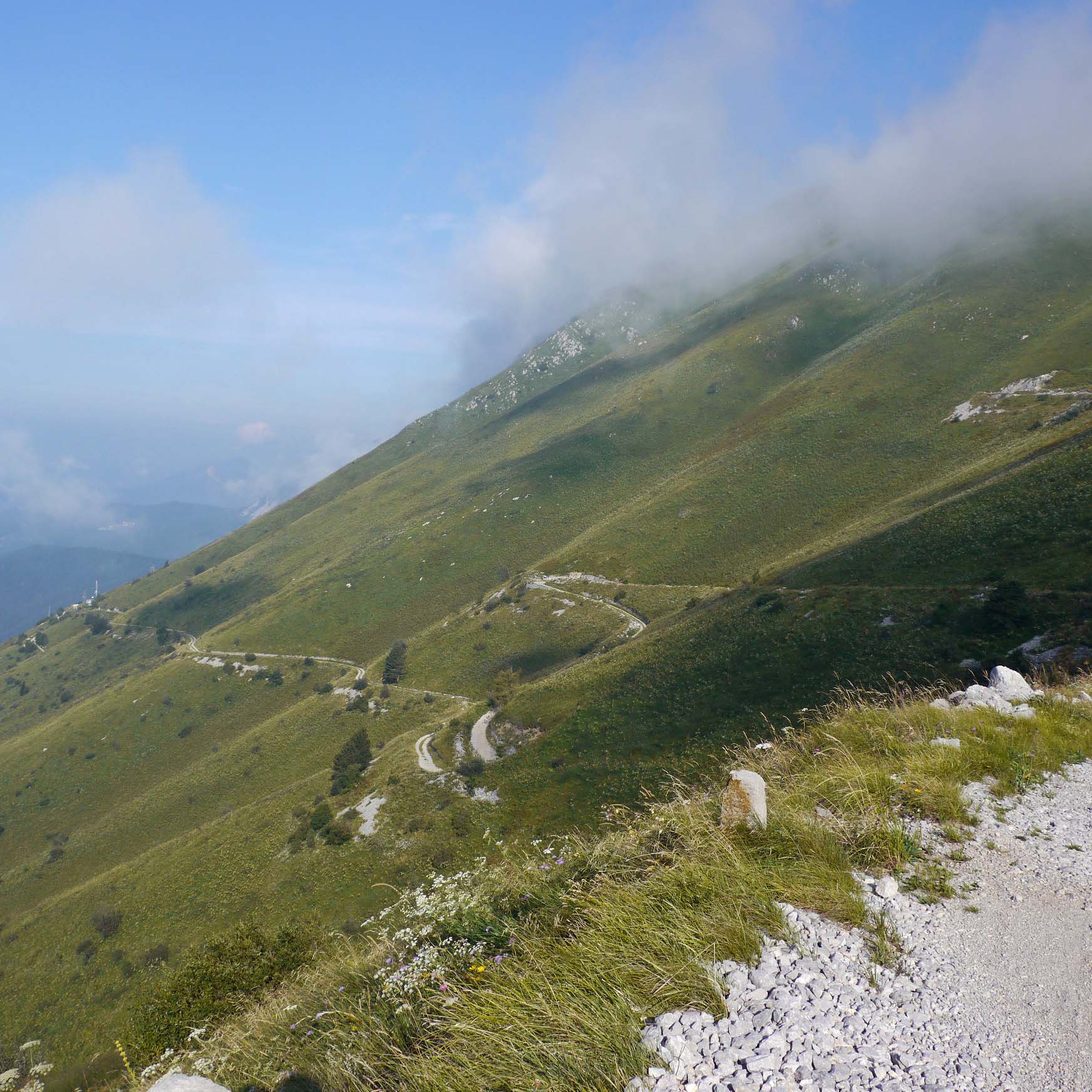
Up and out early to get as high as possible into the mountains. I plumped for a climb up to Breginski Stol as I know it has a population of Rock Partridge. They are threatened across their range and in decline in the Julian Alps too, yet another bird in trouble. This species has given me the slip in the French Alps as well as in Greece and previously in Slovenia. All attempts to see it were in winter or late summer and half-hearted due to so many other birding distractions, it is not a great time to look for them, calling birds in Spring are a better way of connecting. The Rock Partridge is a true mountain species, trying to see them is a bit like the effort and skills needed when looking for Ptarmigan. I was here, it my main focus and I was determined as it would be another year before I could try for them again.

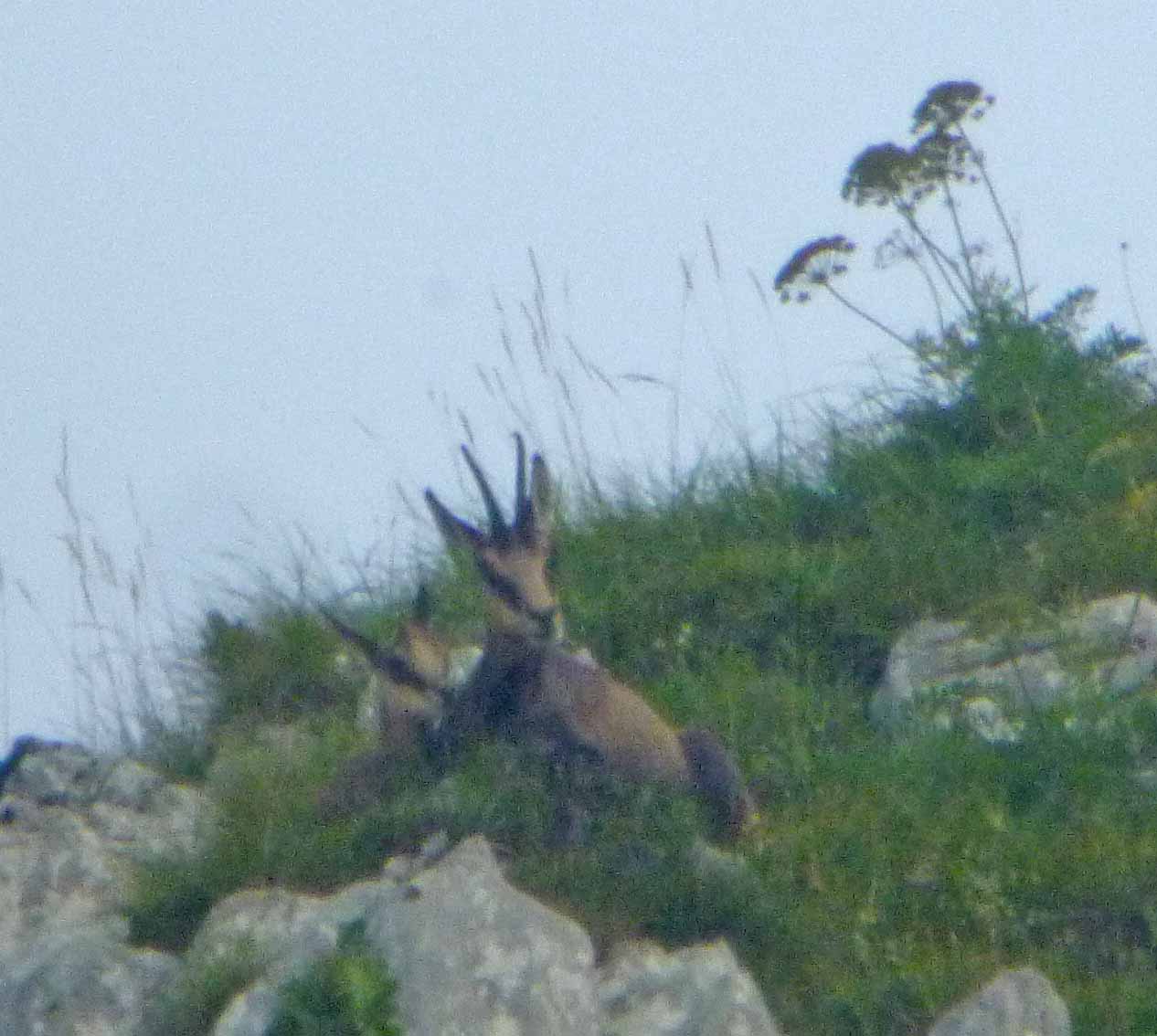
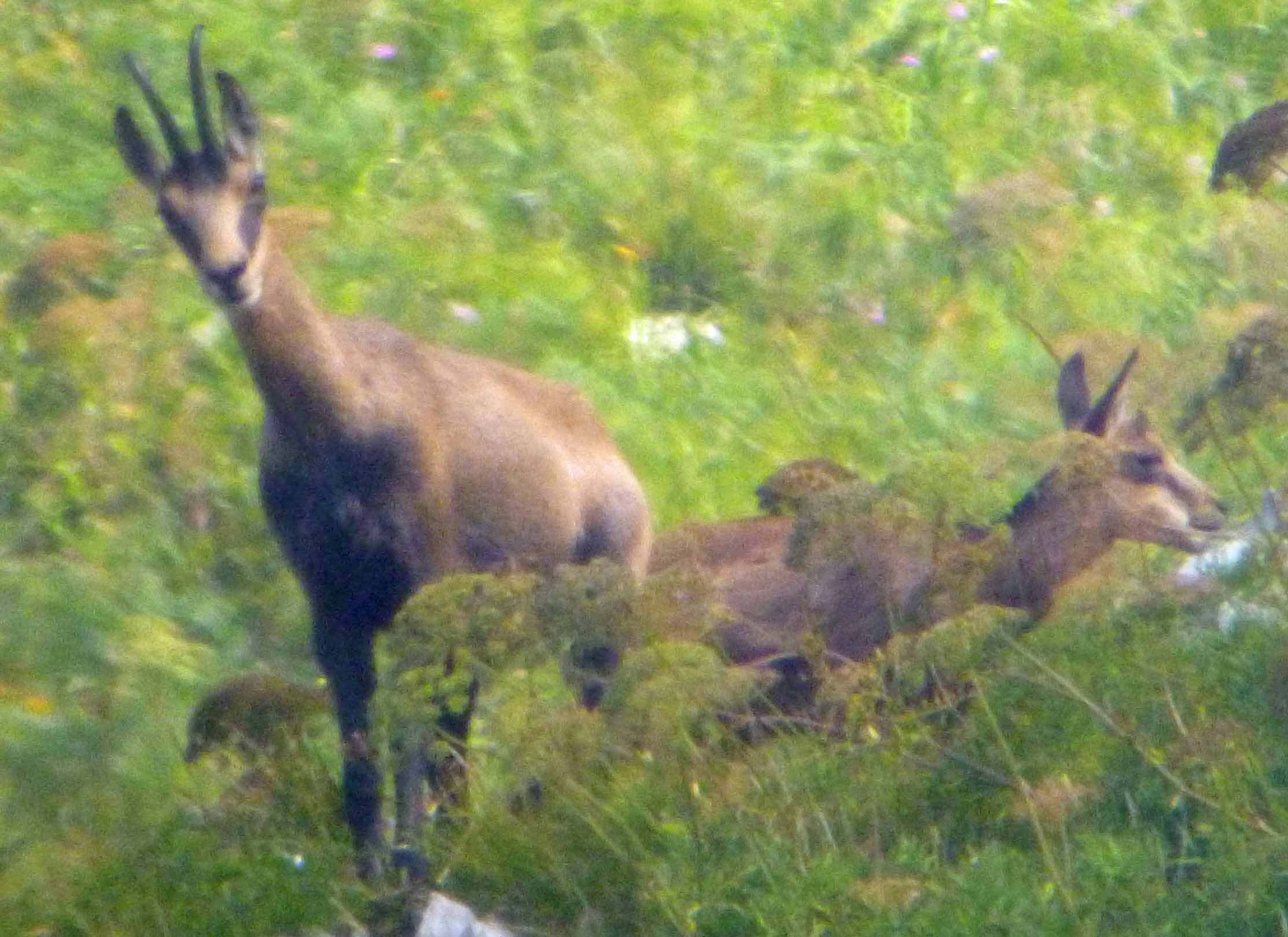
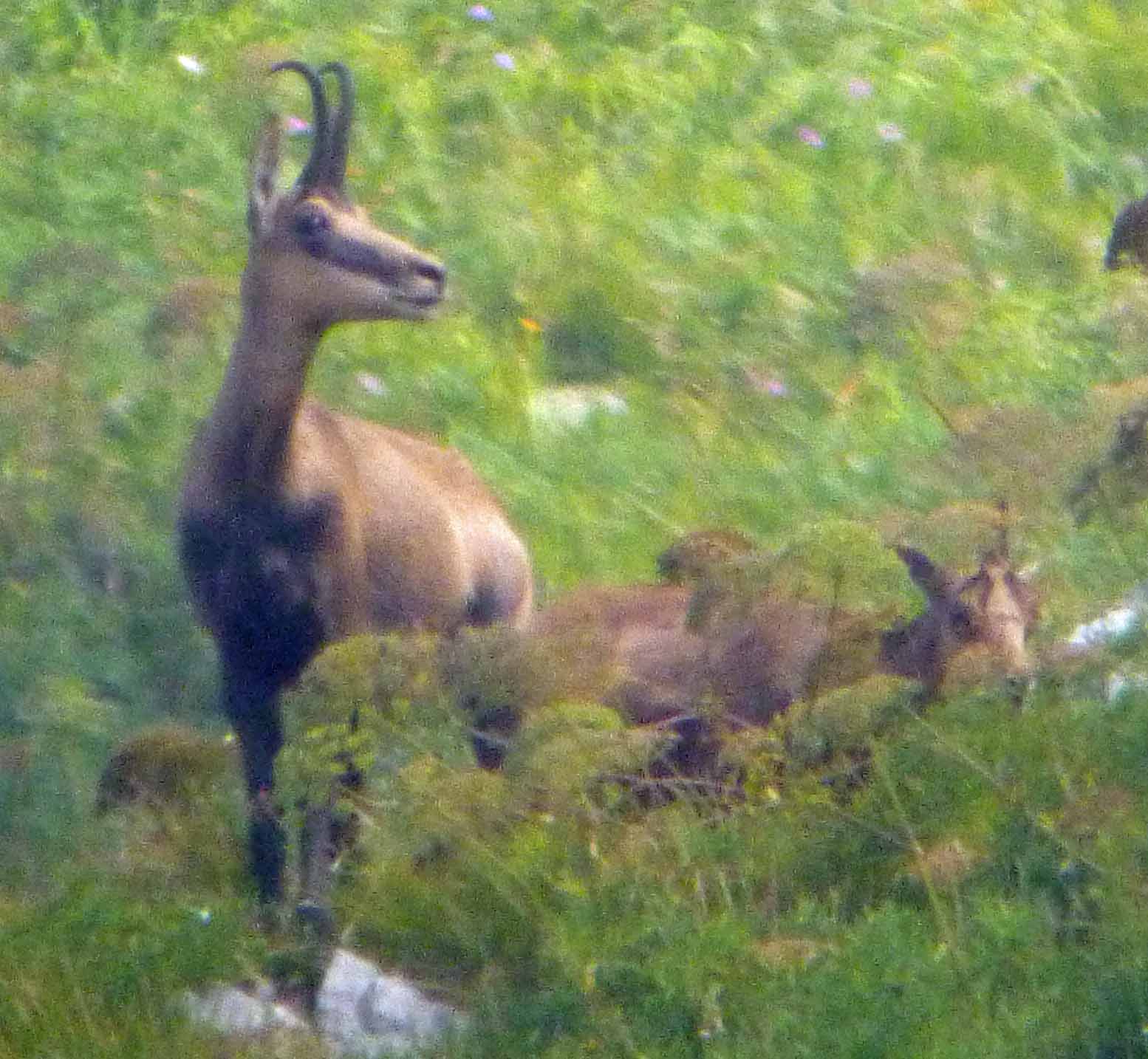
I drove up from the road and parked off the track then setting off on foot. I tried to ignore birds on the way up until I reached above the treeline where the scrub appeared. A Pied Flycatcher and many Spotted Flycatchers caught my eye, flocks of warblers appeared with numerous Great and Blue Tits. Chiffchaff and Blackcap were common but a Wood Warbler was a nice find. Plenty of Red-backed Shrikes were around, mostly juveniles but an adult male as well. A juvenile Cuckoo showed a few times, Jays were below over the woods and c8 Kestrel and 2 Buzzard soared over the steep slopes. During my regular sweeps across the boulders and crags I spotted two Alpine Chamois, a very welcome surprise.

Alpine Chamois

Alpine Chamois, Breginjski Stol, Slovenia, 001, MJMcGill Alpine Chamois, Breginjski Stol, Slovenia, MJMcGill  Chamois, Breginjski Stol, Slovenia, MJMcGill

Resuming my search I saw that on the dry stone walls and boulders were c 6 Rock Thrush, all were juveniles. This was a real purple patch but was being distracted, I then heard the call, I was among Rock Partridges. carefully scanning and stalking it was clear up to three birds were calling above and below me but they went quiet. The long grass, thorny stunted bushes and good camouflage allowed them to see me before I could scope them. I carried on past where one was near the track and got above them. I caught sight of one trundling along the slope, it knew it and took off flying past just below and around the cliff out of sight. At last I had seen the Rock Partridge as cloud rolled in and shrouded the area, absolutely no chance of digiscoping it or them but it was still very good. I waited as the sun got hotter burning off the mist and could now look at the view.
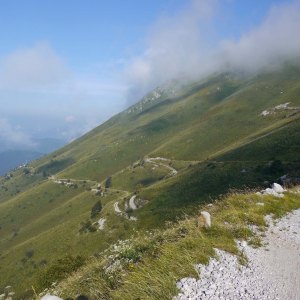
Views from below summit ridge of Berginjski Stol, near Kobarid, Slovenia (2)_edited-1

Coming back down made me realise how far I had climbed, I checked out every creature as I descended.

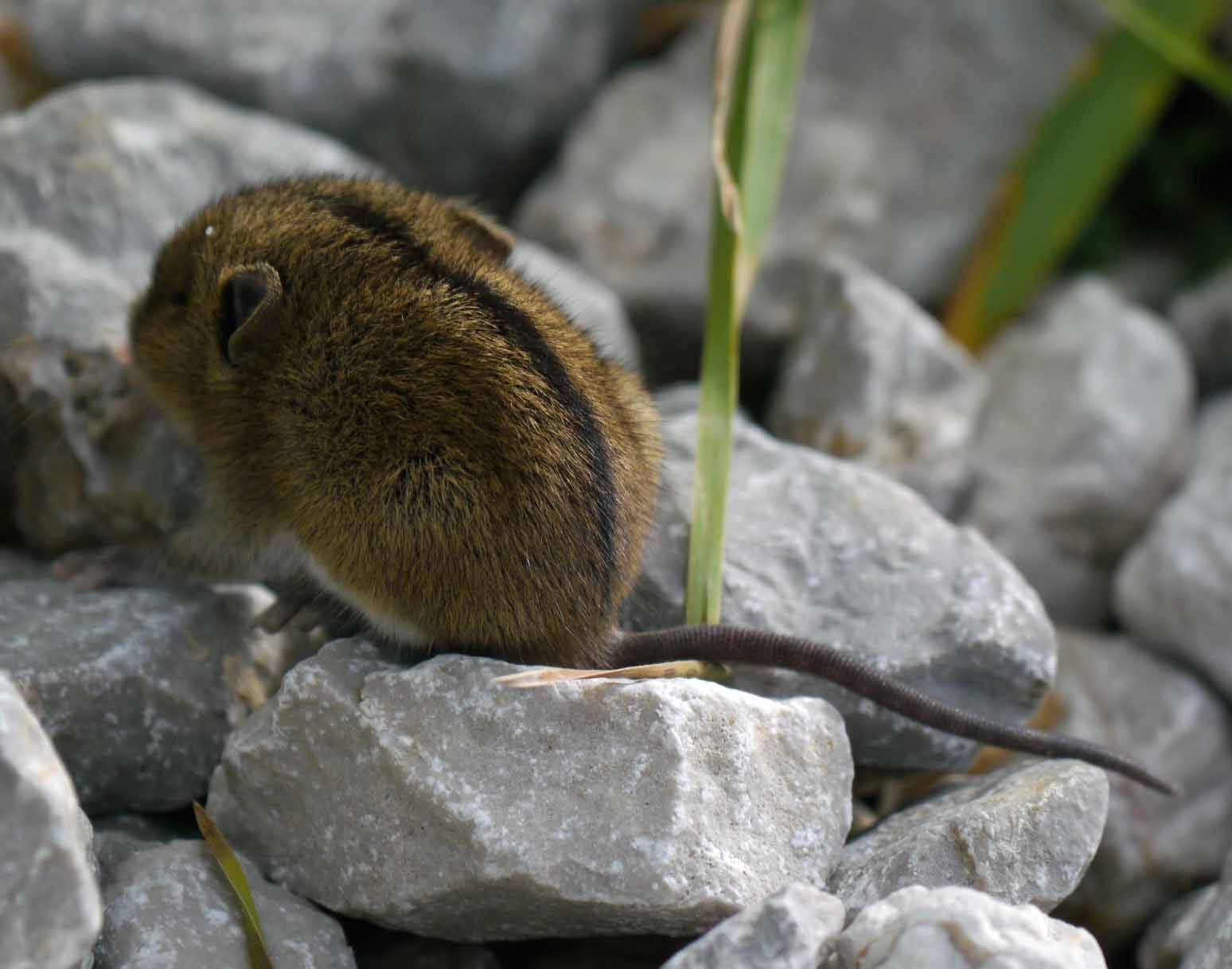
Striped Field Mouse
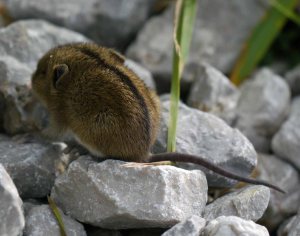
Striped Field Mouse Apodemus agrarius, Breginjski Stol, Slovenia, MJMcGill (6)_edited-1

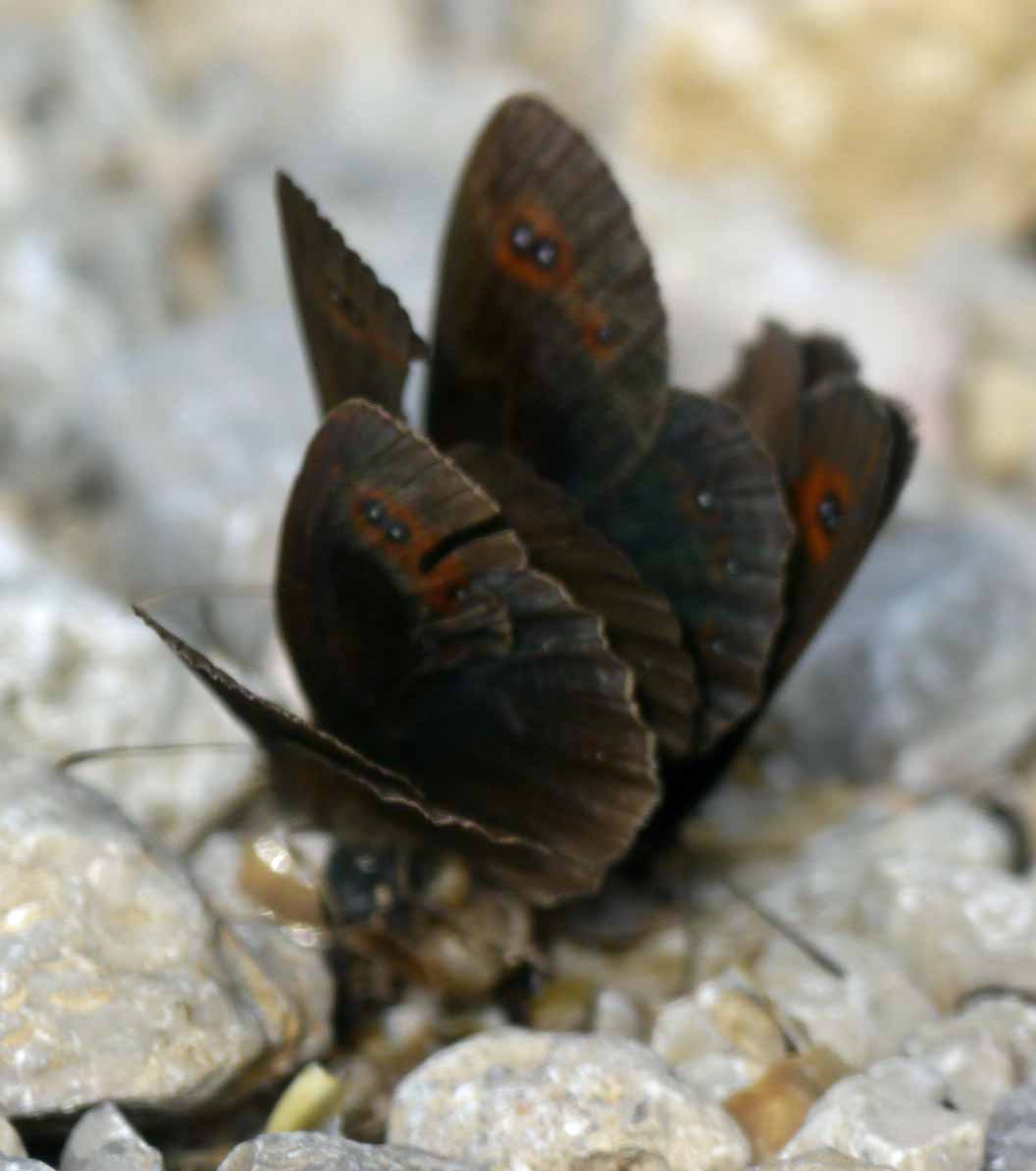
A selection of butterflies

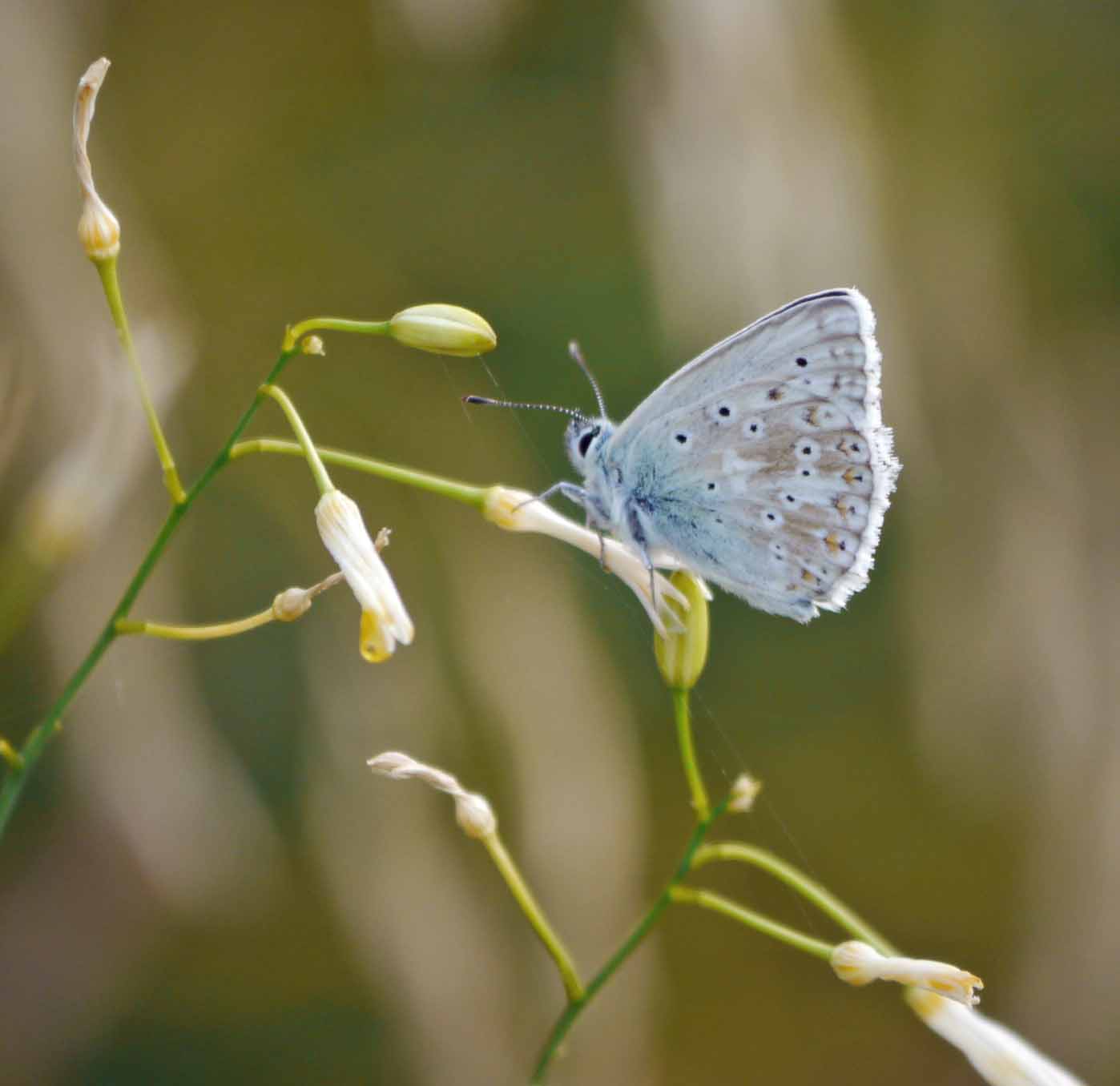
butterflies, Breginski Stol 001, Marbled White procida form, Berginjski Stol, Slovenia (1)_edited-1 Breginski Stol butterfly Breginski stol 001, blue sp, Breginkski Stol, near Kobarid, Slovenia, MJMcGILL

I was so late for breakfast it was an early lunch and we had to move on. This time to travel through the Karst region to Piran and Portoroz on the coast and then back to our last place of stay for the last two nights. We broke up the journey with a stop at Stanjel, it was hot. On the coast we swam in the sea and had a meal on the seafront in the picturesque Venetian style Piran. Mediterranean Shag and Mediterranean Gulls were duly noted including juveniles of the former swimming among the bathers, a good photo opportunity to those in favour of risking their camera. A few wetland sites including saltpans are situated close together but I never had time to explore them. We arrived very late at our last place of stay.

11 August
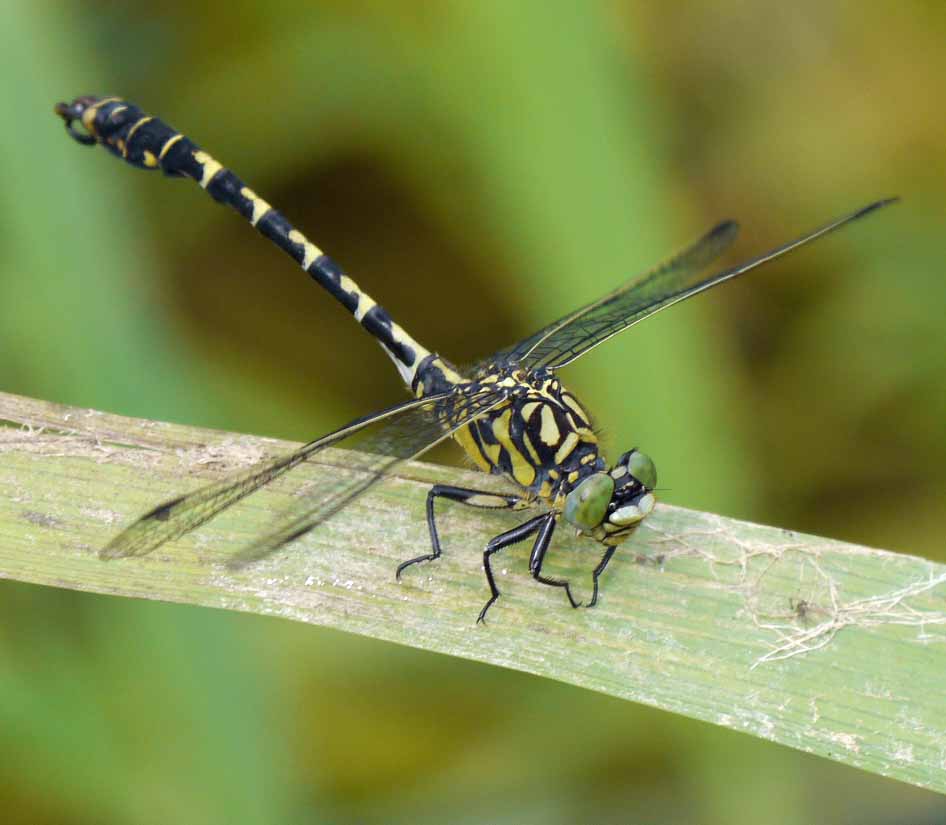
Waking up at our tourist farm I looked from the balcony, Black Redstart was around the barn and and saw an Emerald sp Dragonfly, I ventured out and had a closer look at the stream, it had a selection of dragonflies and was full of fish. The mystery dragonfly turned out to be a Balkan Emerald, this lowland stream at Hrusevje (Turisticna kmetija Hudicevec) is within the species range. I recorded a few more species before having to get going again.

Green eyed Pincertail
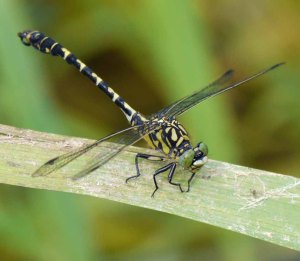
Green Pincertail, Slovenia, MJMcGill

It was another full day out so we visited the Predjama Castle, the marvellous Lake Cerknica (which deserves a full day out rather than an hour or so), Postojna caves to see the Olm or Proteus, a salamander that lives in the darkness of the deep caverns. Back on the surface we headed for Mount Nanos, a drive up the slopes and tracks produced a lot of birds. A depression on the plateau was experiencing a fly ant or other insect flight and it was alive with birds flycatching. Wheatear, Chaffinches, Marsh, Great and Blue Tit, Hawfinch and warblers were all at it. A little further up I found a Pied or Collared Flycatcher with other birds but was flushed by a passing 4wd. In the open country I saw a raptor on a rock above, it was a Golden Eagle and eventually joined another on the wing. Tw0 Hobbies were also catching insects. On the way back down the mountain I stopped for a Woodland Grayling on the road.

Great White Egret, Lake Cerknica
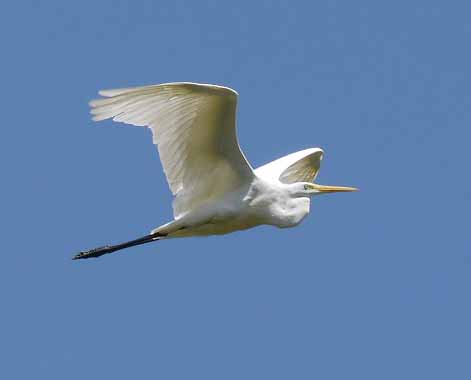
Great White Egret, Lake, Cerknica, Slovenia, MJMcGill (1)_edited-1

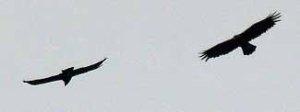
Golden Eagles over Mount Nanos

Golden Eagle, Mount Nanos, Slovenia, 11-08-14 (1)_edited-1

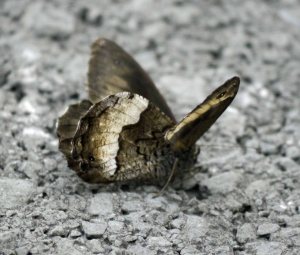
Woodland Grayling

Woodland Grayling, Mount Nanos, 11-08-14, MJMcGill (5)_edited-1

12 August
Had to head out to fuel up and get some cash to pay the farm but stop at the entrance road and walked along the stream looking for dragonflies, a Wryneck was on the grass verge and flew up into the trees. This was the last of my birding as we were off home today. We spent the day in Ljubljana before flying back to Stansted with easyjet.

A selected list of birds

to be completed

Some notes on butterflies

to be completed

Martin J McGill


Western Isles, the Highlands and NE England, 23-29 May 2014

Left to right-Me (Mart), Nige and Neil (Smarty)

Applecross Gang, Neil, Nige and Mart

23 May 2014

This trip was something of a last minute job thrown together,  I joined Neil Smart and Nige Warren in booking some time off and we formulated a plan over a brew one Sunday morning. I was up for Morocco again, where sandals and a t-shirt but Nige and Neil were keen on heading North. We all just wanted a little adventure, a break. I needed to test myself back out on the road and experience long days after what has been an extremely difficult year. It was a good call as it worked out less expensive than going abroad as I for one was on a tight budget. I went with the flow and we booked a car for a couple of days time. A late start on the road due to me being chauffeur to my wife and her friends (a birthday promise delivered) and taking my car to the garage.

We picked up what turned out to be a BMW 3 series touring, auto gearbox and very comfortable to drive and loaded the gear at my place. Off we went making up a plan as we went up the M5. The weather looked good for a fall so we all decided to head to the East coast, we stopped at a Travelodge near Hull for our first night on the road.

24 May 2014
Up with the lark we headed to Spurn/Easington and birded the area, it was not leaping but we were seeing Brent Geese and waders on the estuary and Neil had a Grasshopper Warbler. We moved on up the coast hearing later that Red-breasted Flycatcher had been seen and tried to locate a Temminck’s Stint site with no luck. Our next stop was a fry-up in a café after which we stopped at Filey North Cliff CP. Rainy conditions and easterlies were full of promise as we enjoyed Eiders, Scoter, Sandwich Terns and Guillemot and Razorbill below. We were soon watching a very smart male Red-backed Shrike that had been found earlier, it was bee catching below us.

Red-backed Shrike, male

Red-backed Shrike, Filey NCCP, 24-05-14, MJMcGill, 001 Red-backed Shrike, Filey NCCP, 24-05-14, MJMcGill

The rain set in and we climbed back in to head further North via Cleveland. A stop at our latest destination at Hummersea was for an Icterine Warbler but we elected to park in a rain soaked clifftop gateway. The weather made us recline and nap for 30 mins to allow it to let up. The shut eye re-programmed our brains but looking out it was still grim, despite to monsoon the bird was still being reported and there was also a Woodchat Shrike to boot. On with the wet weather gear and out to stumble along a track in a pea-souper. We arrived at the end of the track and immediately hear the Icky singing away. It was belting out a song, ‘singing in the rain’. We all got views of it when it made feeding forays. Nige wandered off down the track to look for the shrike and saw what he thought was a Richard’s/Tawny Pipit but off it went into the murk. It began to clear a little but we wanted to get on the road so did not linger for the shrike which showed not long after we left. A long drive to Aberdeen followed with only a Marsh Harrier over roadside fields somewhere in Cleveland to add to the list. We stayed at Aberdeen airport Travelodge, making plans as we went.

25 May 2014

Another early start in the poor weather with our first stop the Ythan estuary, poor weather but cleared enough to really enjoy the great birding here. The terns, Sanderling flocks and local King Eider were all soaked up along with the rain. Arctic, Common, Little, Sandwich and a couple of Roseate Terns were compared.

Royal King Eider having a kip

KIng Eider, Ythan,

Leucistic or just a pale phase female Common Eider with a more normal specimen

Eider, contrasting females, Ythan, Aberdeenshire

One of two Roseate Terns

Roseate

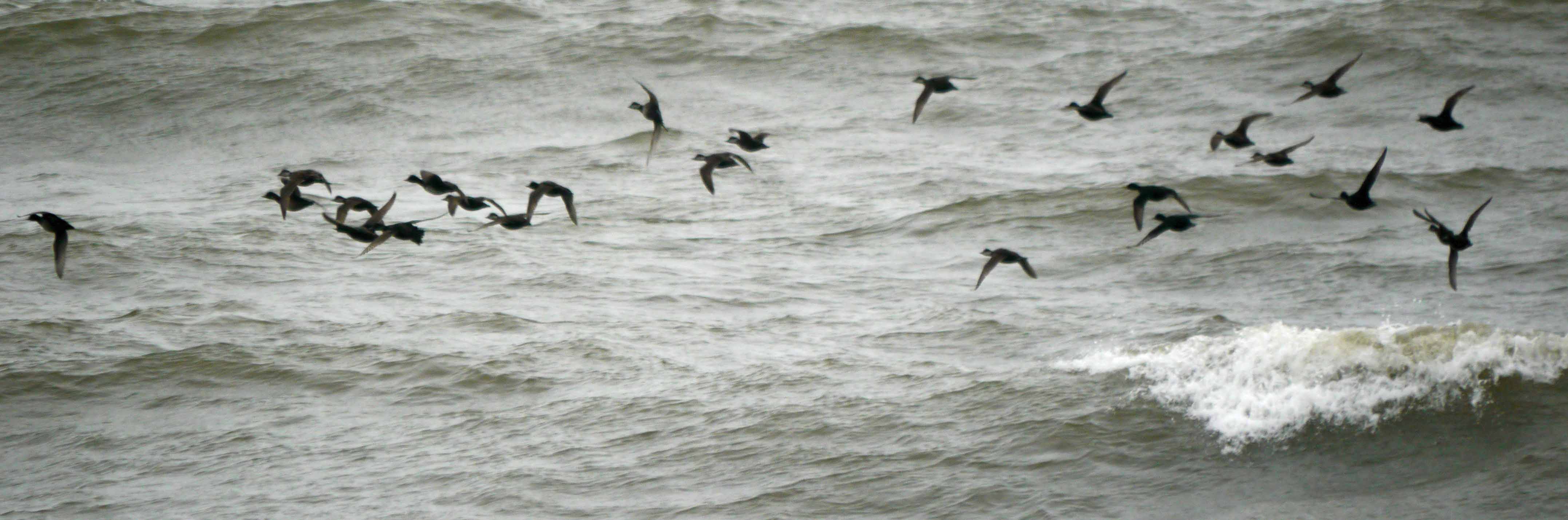
Back down the coast we walked from Blackdog to Murcar watching seabirds flying by and settled to get into a Common Scoter flock, they were all so busy doing everything a Scoter could do in a heavy swell and above a feeding area against a tide, there should be a specific name for a scoter flock, a scooter maybe? Sifting through the throng and ever changing, shape shifting flock we managed to pick out two big-headed male Surf Scoters and 6 very fine Velvet Scoter. A few Red-throated Diver were on the sea or moving through too.

Common Scoter fly-past
They look like they are having fun

Common Scoter flypast, Blackdog

Enough of rain, it was time to take on board soup in a roadside eating house, head to Inverness and then West along the North shore of Loch Ness. The sun came out and the scenic drive was spot on. A few stops for bird sightings, fuel for us and the car and scenic views our next birding destination wasto be  the high pass to Applecross. Before we climbed up the mountain, fortunately in the car, we saw a couple of Pink-footed Geese with the Greylags by the bridge. A roost of Oystercatcher and Curlew were on this small estuary. At the top the views were pretty good, the mist would close in on our target area but clear away again. We walked up the slope toward the radio masts and sat down against the rocks to scan a likely area. Immediately a Ptarmigan appeared in my scope as it scratched about on the steep, rock strewn slope.

Nige closes in on me to scope the Ptarmigan

Nige Warren up in theApplecross mountains

Ptarmigan settles down to rest, it never moved after doing this so we left it be

Ptarmigan, Applecross, MJMcGill

A selfie with my birding mates, looks more like a defensive position or partridge covey! No sneaking up on us.

Scanning for Ptarmigan


We still had a way to go to reach our destination and had to reach the Isle of Skye and Portree to seek out a Bed and Breakfast. We stopped for a chippy tea at Kyle of Lochalsh and were all suffering from indigestion after bolting the grub down. It was a shame we were so hungry and on a budget as Portree had lots to offer in the way of eating. The local hostel was full so we found a bed and breakfast with friendly landlady and then went out for a couple of pints of Guinness. Views around the town and the sunny, still harbour rounded off a long but rewarding day.

26 May 2014

A slightly later start at 0700 to make the most of a monster breakfast and it was straight to the ferry port of Uig, checked-in, loaded up and on the deck for a seawatch on this 2 hour crossing. It was very productive, lots of Puffin as well as commoner auks but the real highlight was Minke Whale. This beast actually breached twice in what was probably a fishing lunge, actually came out of the water before crashing back in, awesome.

Minke Whale breaching– Image captured by Neil Smart

One hell of a flying fish! I know, I know it is a mammal

Minke Whale, Uig-Lochmaddy, Neil Smart

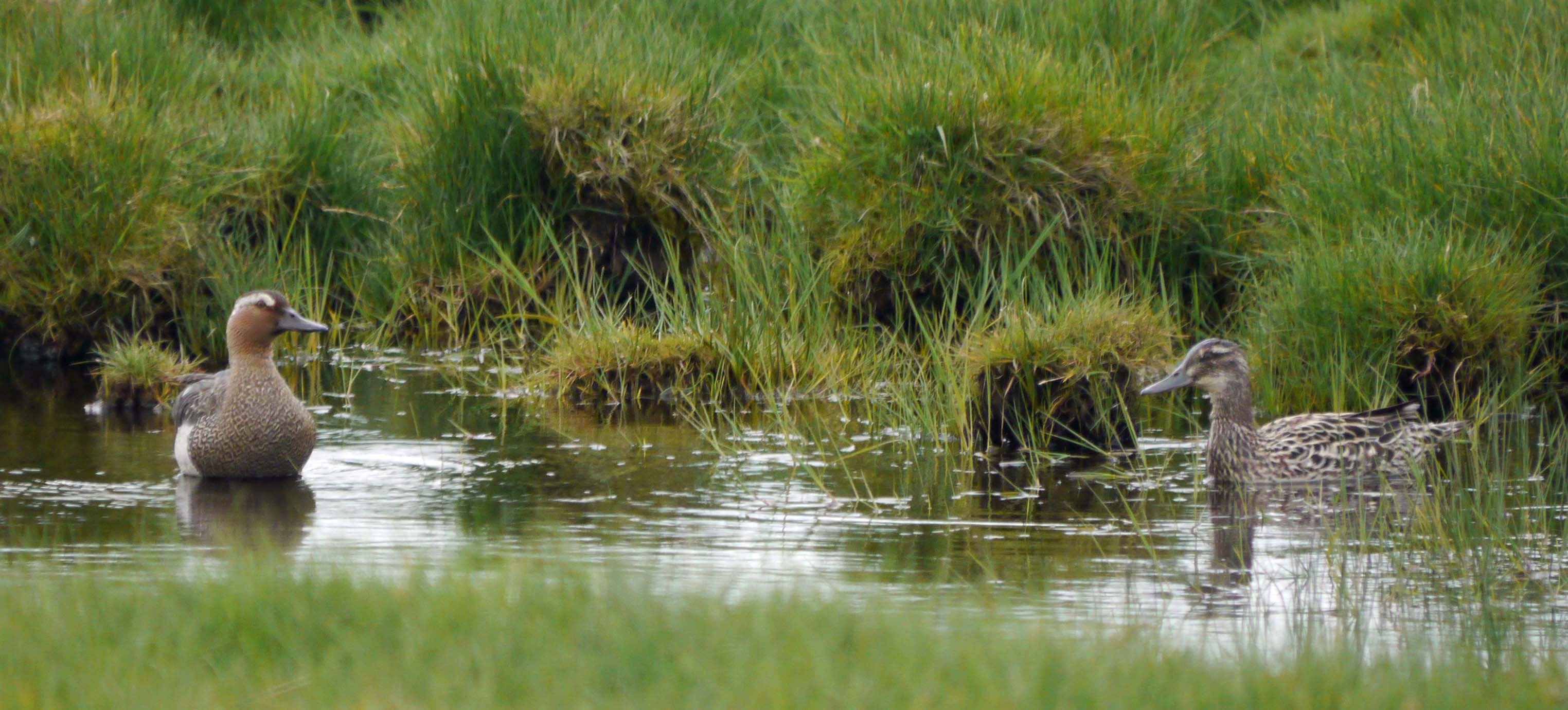
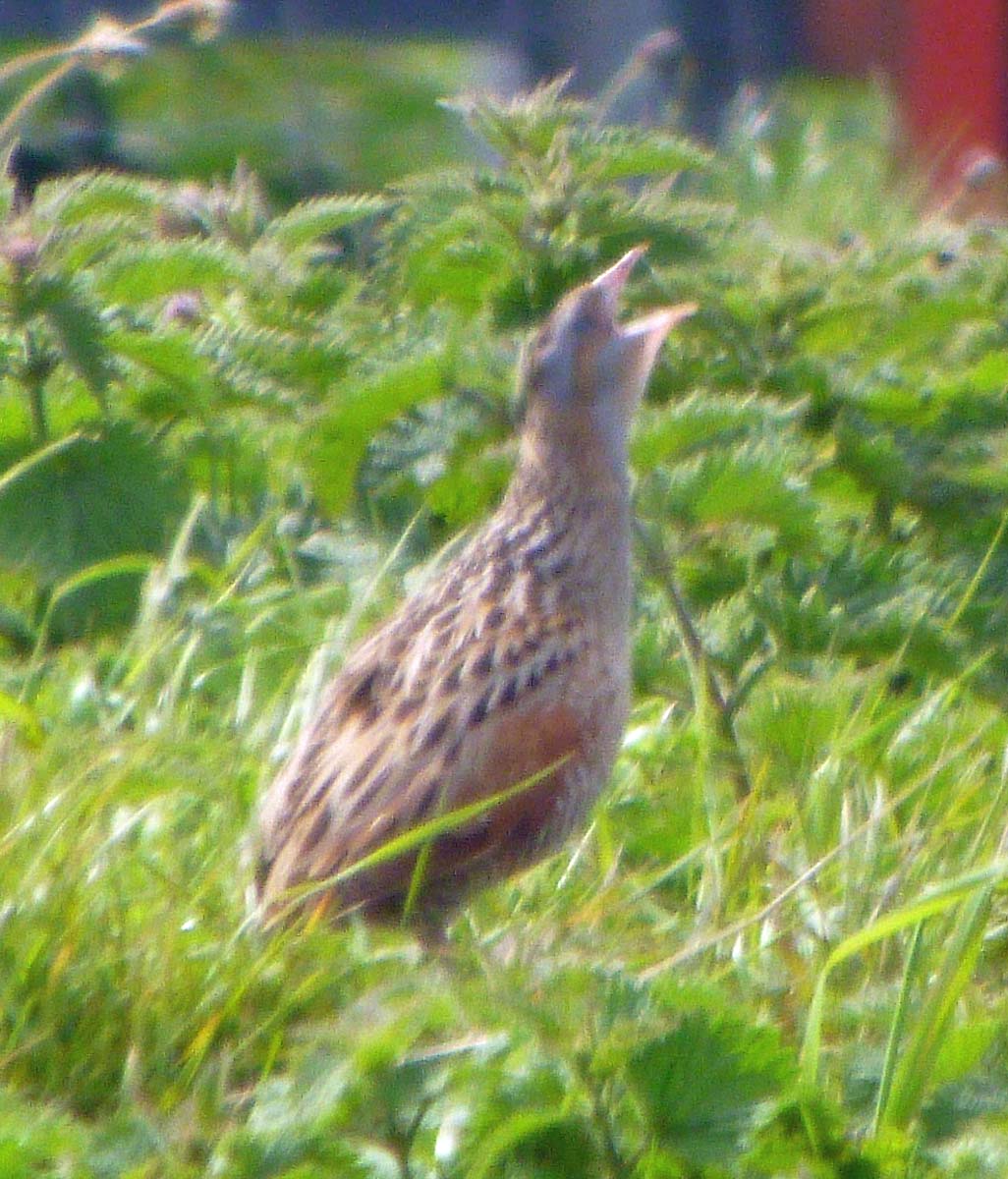
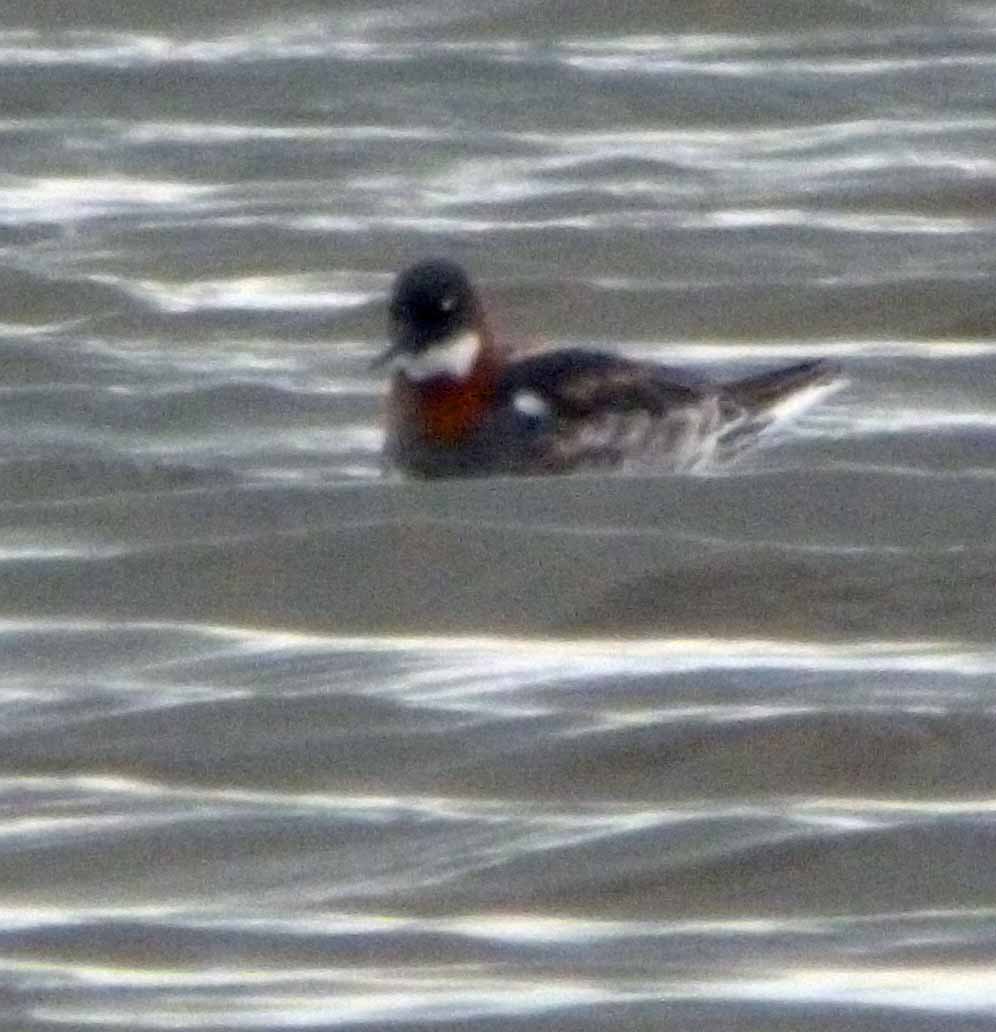
A few Black Guillemot and a pair of Red-throated Diver were in the Lochmaddy harbour as we arrived on North Uist, soon after disembarking we booked into a hostel nearby and secured our bunk beds for two nights. With that all sorted we popped into the  stores for food and then went birding. Our first target area was RSPB Balranald where we had great views of Corncrake singing whilst the farming activity carried on all around. We explored the N part of the island for the rest of the afternoon stopping at many beautiful places and likely spots, too many to name. Calling in at Grenitone we explored a fenced willow/alder area. A few Willow Warbler sang and sallied after insects and we all studied differents spots. I was well pleased when a male Golden Oriole appeared on top of the bush next to me before flying up the slope and perching in full view. I called to the lads but they could not hear me, so I walked back to find them. It took a bit of time but we all saw it well as it zipped about in the low canopy or made flights into the open. We headed out to Benbecula for the early evening and took a coastal track as the tide came in on the N shore, more excellent views of waders ensued be they on passage or local breeders, it is warming to see such healthy numbers. On reaching tarmac once again I pulled away over a bridge and saw what appeared to be the eye stripe of a Garganey out of the corner of my eye. Reversing back down the road to check I was seeing properly and sure enough a smashing pair of these summer ducks were showing very close to the road as they fed in a ditch. The end of the road at Aird was a beach and rocky point with a large gathering of gulls and Sanderling in the seaweed. An 2nd summer Iceland Gull was among them. Following the coast road we stopped at Stinky Bay and looked through the masses of Sanderling and gulls, in the fields/dunes inland at least 5 Corncrake were in full song. As we had already seen them very well today we focussed our efforts on searching for a reported Snowy Owl back on N Uist. The rest of the evening was spent looking for it and seeing Short-eared Owls, Hen Harriers and passerines but it turned out the Snowy Owl was a Shortie! We saw the same chap next day who admitted getting it wrong, I guess to an inexperienced watcher the brilliant light on a fully illuminated Short-eared Owl was pretty mind blowing. A bit more pottering about and it was time for an evening meal at the Lochmaddy Hotel.

A pair of Garganey

Garganey, Benbecula

Some more images from the day follow.

Corncrake near Balranald

Corncrake

Dunlin singing on saltmarsh, Benbecula
The bay beyond was full of waders

Dunlin on S.Uist saltmarsh, N Bay.

Dunlin singing

Dunlin on S.Uist, singing bird, SUist.

Machair- Ard un Runair
Easy on the eye

Machair, Ard un Runair

Hen Harrier cruising-Sollas, North Uist
We enjoyed many encounters with these stunning raptors.

Hen Harrier, Sollas, N Uist, MJMcGill

27 May 2014

Up for yet another early start, no slacking and we headed along the N coast of N.Uist, a stop to search the dunes around Sollas, the small plantation at Grenitone and the slopes and hills inland produced a hunting Merlin plus great views of hunting Short-eared Owls. We stopped off at a Golden Eagle nest site watch point near Sollas and had distant but OK views of the birds and a chat with the guardian who told us of the Minke Whale washed up nearby. We also saw three Cuckoo chasing around, one being tail-less and rather odd looking. The lure of lekking Ruff and lots of waders at RSPB Balranald drew us back to this bird rich area and we once again heard calling Corncrakes, another look on the nearby beach gave us a 1st summer Glaucous Gull.

Moving on south we drove to Benbecula and spent awhile watching 5+ Red-necked Phalarope on a freshwater loch, nearby a further two were feeding in the surf on the beach at Stinky Bay with Sanderling for company. Our next destination was Pollycharra at the S end of South Uist but we stopped off at any areas with cover on the way to search. From the the point we scoped the sea and the Island of Barra. A Great Northern Diver drifted on the slack water and the views and sunshine were just perfect. A coffee stop later and it was time to continue exploring various stops on the way back north. We scanned the beaches around Staoinebrig which had large creches of Greylag (nice to see them doing so well all over the islands). Numerous Sanderling were running up and down the beaches. One colour ringed individual, as it turned out later, was marked in Mauretania the previous winter. Also in the smelly insect rich seaweed was a Little Stint as well as Dunlin. Nige was on scope duty and located pair of Golden Eagle over the hills inland.

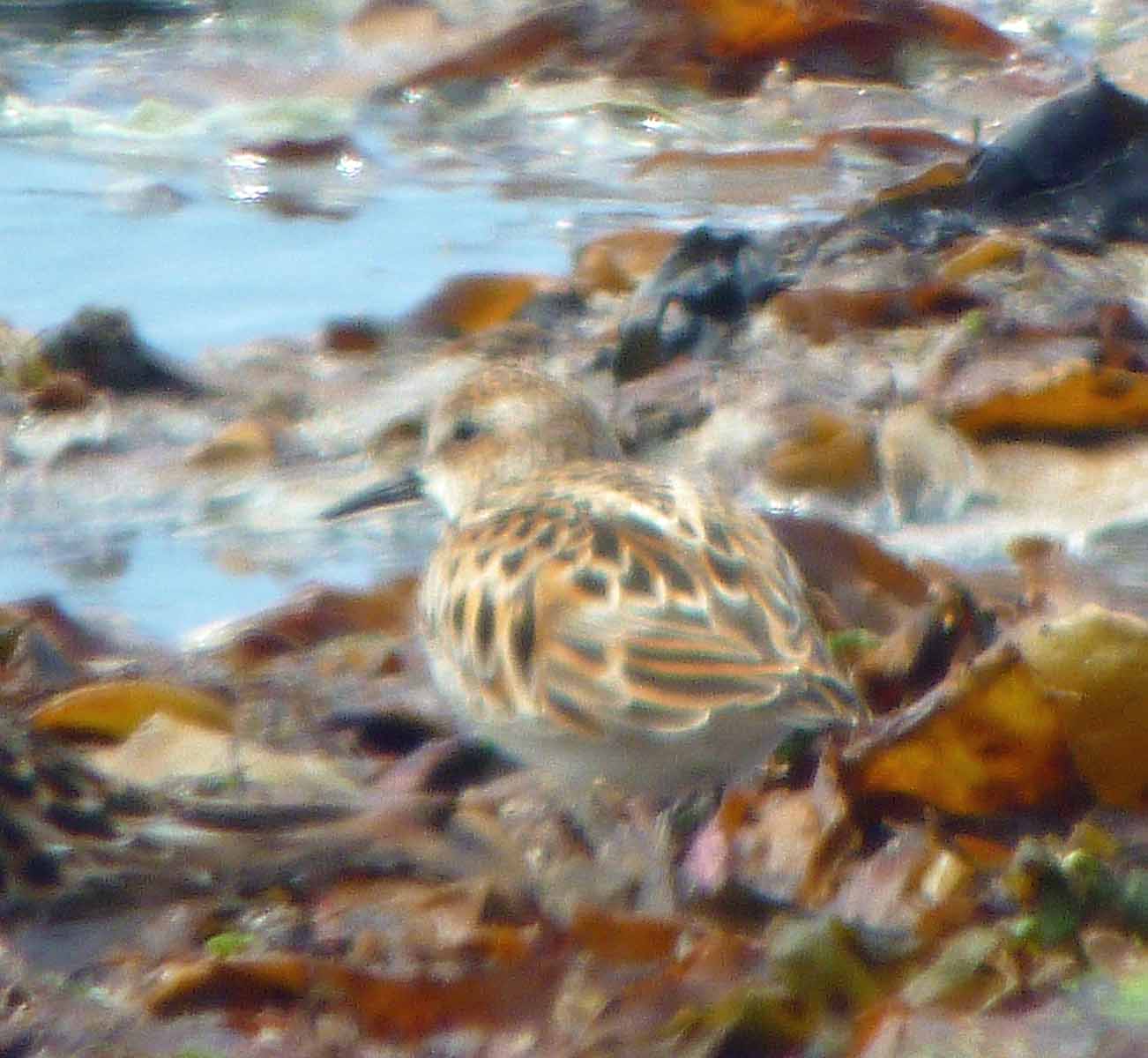
Little Stint

Little Stint, S Uist, MJMcGill Little Stint, S Uist, MJMcGill, 001

Nige and Neil study a breeding plumaged Great Northern Diver with Barra in the distance

Nige and Neil

On Benbecula we called in at Aird again and saw 1st summer Glaucous and second summer Iceland Gull on the sea, the Garganey was lacking the female mate but showing well on a roadside pool. Heading back inland a White-tailed Eagle flew over the car, we followed it, or at least tried to. Whilst stopping to scan we had intimate views of one of the ubiquitous Redshank. The eagle chase took us to yet another new part of the island.

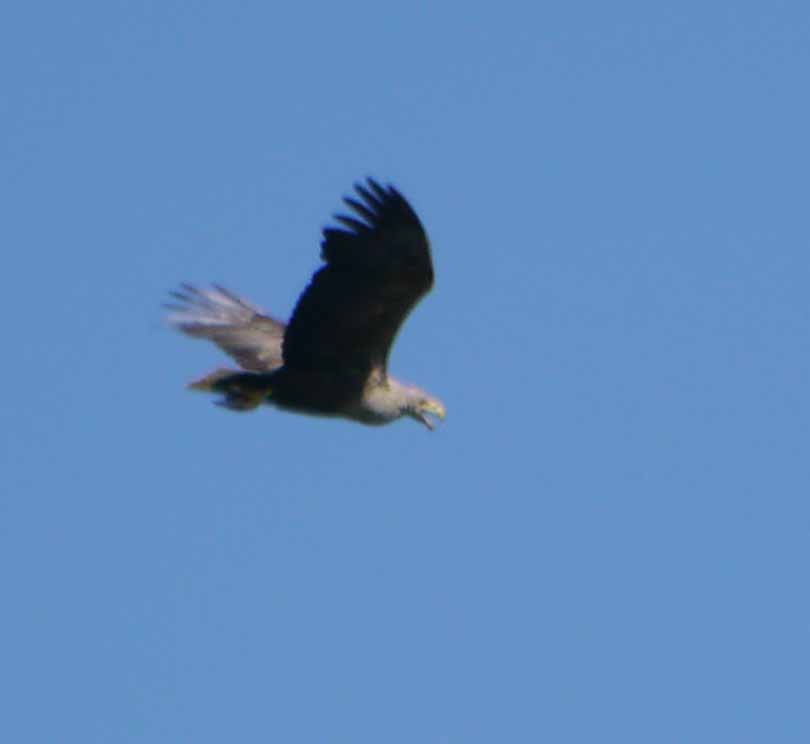
White-tailed Eagle

White-tailed Eagle, S Uist, MJMcGill, 27-05-14

Redshank

Redshank, Benbecula, MJMcGill

Short-eared Owl
We were seeing them everywhere we went!

Short-eared Owl, Grenitone, N Uist, 28-05-14, MJMcGill

Short-eared Owl, Grenitone, N Uist, 28-05-14, MJMcGill, 001

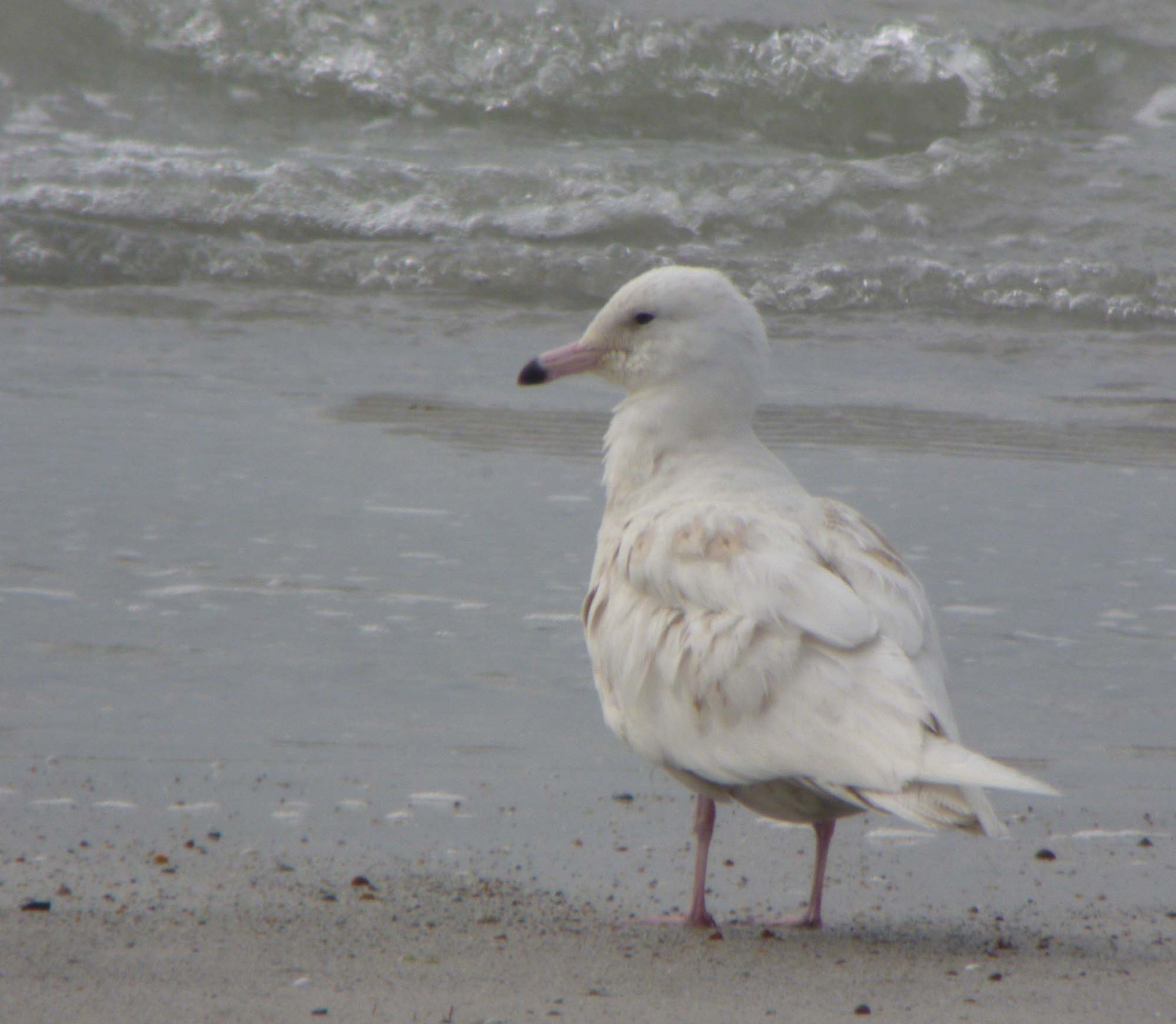
First summer Glaucous Gull, Ard un Runair

Glaucous Gull, first summer, Ard an Runair, N Uist, MJMcGill 27-05-14

Glaucous Gull, first summer, Ard an Runair, N Uist, MJMcGill, 27-05-14, 001

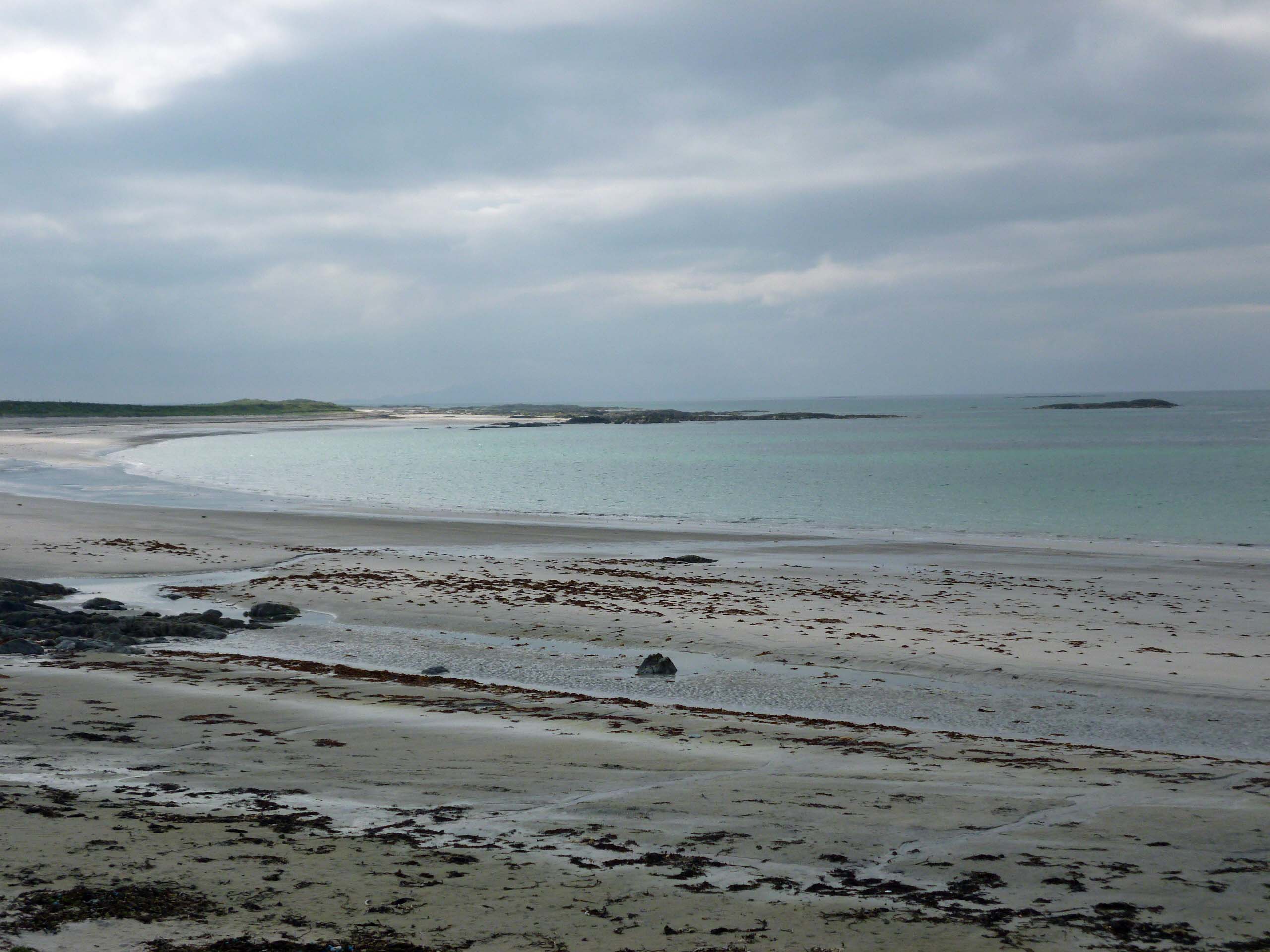
Ard un Runair, the bay

Red-necked Phalarope

Red-necked Phalarope, Western Isles, 27-05-14

Our last stop of the day was still bathed in sunshine, heading back toward Lochmaddy we turned off onto the long winding track out to Lochportain with Wheatears along the way. Getting out to search a likely spot Nige located some very confiding Twite. We scanned a nearby low ridge and had great views of Golden Eagle in the evening sun as well as more Hen Harrier and Short-eared Owl action.

Twite

Twite, N Uist, 27-05-14, MJMcGill

28 May 2014

Another day and another early start, first stop and search the bushes at Grenitone before a brief look for a Blyth’s Reed Warbler that was singing near the Sollas CO-OP, it was also a breakfast stop. No luck with the warbler so back to looking for our own birds. A look around various places on the Berneray road and another Great Northern Diver was seen. Many of the houses on the way had decent cover for migrants, we saw Buzzard and common species of bird only. A search of one roadside plantation produced a Spotted Flycatcher and more Song Thrushes.

We had to be on the 1130 ferry so had a café breakfast and hung around the harbour in readiness, the Red-throated Diver pair were still offshore. A peaceful sea was quieter that our outbound journey a couple of days before but we saw a few seabirds including Great Skua following a trawler and another Minke Whale. Better views of Black Guillemot were had as the ferry entered Uig Harbour.

Black Guillemot

Black Guillemot, Uig, MJMcGill, 28-05-14

A long drive back across Skye and into the Highlands was broken up by a visit to Alt Mhuic near Spean Bridge to look for a special butterfly. As well as seeing the target insect (a lifer for Neil and I) we had stunning views of the area in nice weather. Nige saw a Golden-ringed Dragonfly and Neil and I saw a dragonfly that looked to be a hawker but eluded us. Back in the car and on we went to eat up some more miles.

Chequered Skipper

Chequered Skipper, Allt Mhuic, 28-05-14, MJMcGill, 001

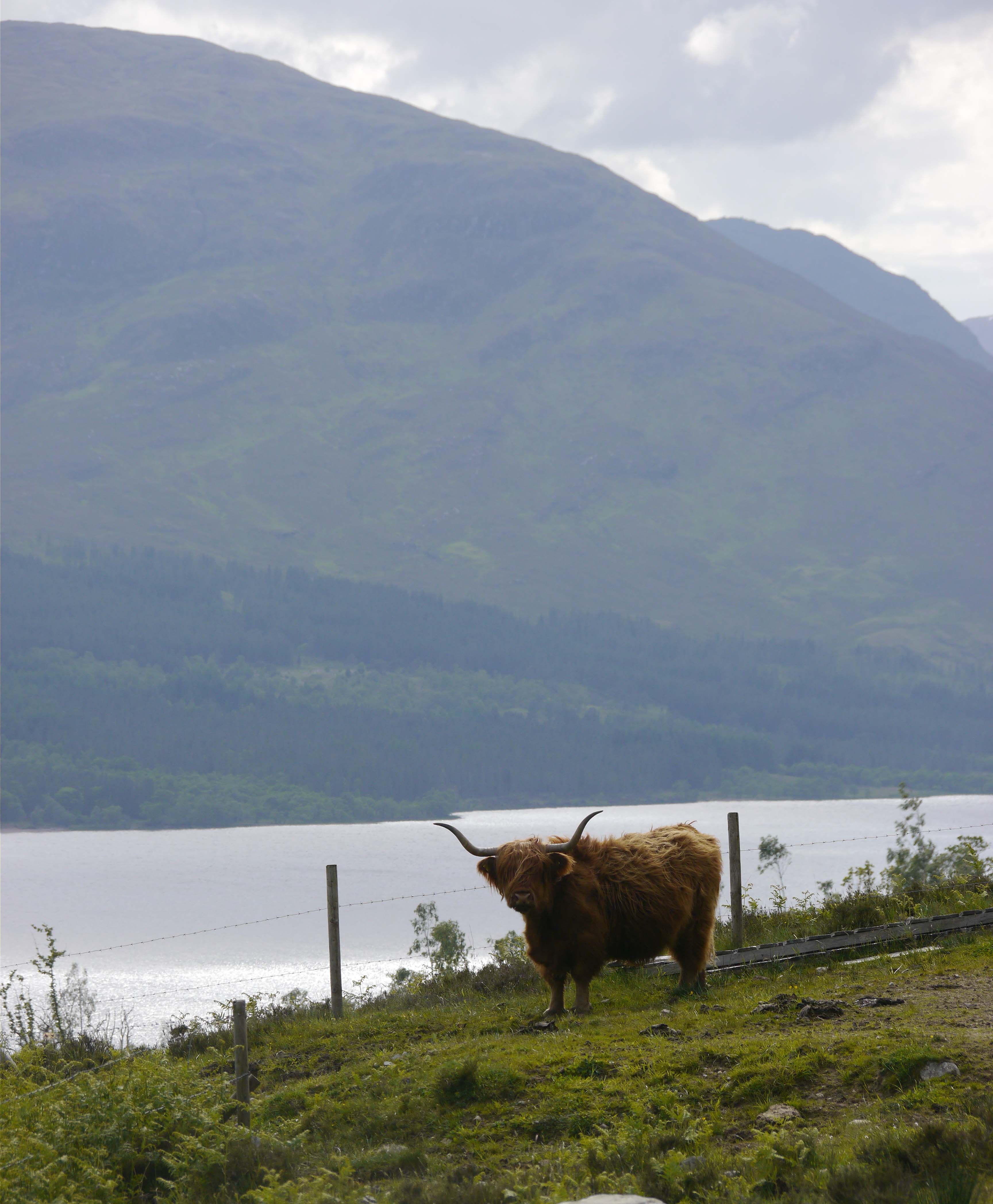
Highland Cow

Highland Cow, Alt Mhuic, MJMcGill

Back on the road we called in at Insh in Speyside logging a Crested Tit family feeding their young. We never had time to do much more and wanted to carry on home, another two hours south and we arrived to spend the night in Milnathort, Perth and Kinross. A few beers in the Village Inn with Jubs (who put us up, but had no food) and a starter, main course and pudding which consisted of a single packet of mini Cheddars was not what we had planned as sustenance, I guess it does not hurt to miss a meal now and again and gives me a chance to moan about it.

29 May 2014
A later start and lazy breakfast the next day only left time for a leisurely drive back to Gloucestershire to conclude our rather busy but excellent trip.

Martin J McGill
*Having wrote this up months later I may have forgotten something, I certainly have not mentioned all the birds we logged and to be fair it was a lot. The Western Isles are rich in birdlife. I will add any updates subject to my birding companions thoughts and comments.


Forest of Dean, 14 December 2013

I was pleased to have a group of seven birders in my company, we set off at the arranged time of 0800. There was lots of talk of Two barred Crossbills in the car so I thought it best to begin the day on the Serridge Ridge near Brierley. They had been showing here on occasion during the week with up to 17 present. Out of the blue on nearing the destination on the last big hill my car went into limp mode (dropping speed and power). I continued to Brierley where I had to make arrangements for assistance from the RAC. The group set off up the hill to the ridge with me catching up after making the call. As with the previous week Brambling were present in numbers among the Chaffinches in the beech mast. Coalt Tit were all vocal as they harvested the same bounty. A Treecreeper played hide and seek as it moved from trunk to trunk. Looking for the target birds we heard Common Crossbills and Nuthatches calling with lots of frustrating flyover parties of the former. These birds simply disappeared into the dense plantation. I had to head back to the car to meet the RAC to get a diagnosis.

Nothing came up as faulty on the car computer and re-starting it showed that the engine light was now not lighting up. No chance of pinpointing it this time. I started the car, drove to the garage and filled it to the brim just in case it was fuel related. Parking up I set off to join the group again who were making their way back to me, sadly the Two barred Crossbills never showed whilst we were present but appeared later in the day. Meanwhile I waited and heard Hawfinches calling so investigated where it came from. Two Crossbill flew out of the wood calling along with c40 more birds. This looked good…I walked slowly along the track and located 10 Hawfinch on the treetops. These birds were enjoying the scant sunshine on offer taking the chance to preen. The group eventually caught up with me and I spent the nest half hour trying to get the birds in scope view for all, one at a time various views were gained.

It soon transpired that there was a large flock and the birds were moving about in the canopy and across the track. I counted them as they crossed back, two flocks passed low over in a short space of time which made up a total of 47. At least 4 were still calling from the larches and skipping through the branches. A minimum of 51 Hawfinches! It was brilliant to see so many, perhaps an invasion year for this species as well as the Crossbills.

A pair of Raven cronked and crossed the track giving glimpses, a Marsh Tit called deep in the wood as it and a couple of Goldcrest showed near the car. On taking the advice of the RAC chap I decided to head straight home from this point. It meant ending the morning half an hour earlier than planned but with the lure of a Desert Wheatear at Severn Beach it seemed to go down well. The journey home went without any problem and the fault has not re-surfaced, on various advice seems to be the Air flow meter. It is not a great time of year to be bothering mechanics as things are closing down for Christmas, I will get it replaced. Thanks to the group for their patience and understanding on the day, I was not going to charge but appreciated the ‘cover the fuel’ gesture from everyone. I will be repeating this outing in January to give it another go.

Forest of Dean, 7 December 2013

Crossbill, male, Serridge

Crossbill, Serridge ridge

The day started at Brierley in the Forest of Dean where we were greeted by plenty of calling birds. It was overcast but most crucially still so any movement was a bird and calls carried. We walked along with a tit flock with the usual suspects and were soon watching Brambling as they came out of the plantations to feed on the ridge. Many gave scope views before dropping to the ground. Siskin were seen throughout the morning, small flocks were regularly seen flying over along with a few Redpoll. A flock of c30 Crossbill flew through the plantation but were lost to view. I saw three Hawfinch flying along the ridge but they did not hang about. Eventually we located a party of up to five Crossbill feeding and enjoyed great views. Moving up and over the Serridge ridge we began a search of the larch plantation, Lewis Thomson was already on site and had been watching 7 Two-barred Crossbill, he kindly got us onto them, sadly they were obscured and eventually took flight but did call regularly whilst among us. A further 20+ Common Crossbill were in this area and we got more prolonged views as they fed. This party sent ‘helicopter’ seeds raning down on us as they prised cones open.

We left for a comfort stop and a coffee at Parkend passing c 40 Manadarin on Cannop Ponds before heading for Crabtree Hill. A party of c20 Lesser Redpoll feeding around the lake as well as Coot on it. Walking up the heath I located the Great Grey Shrike, it was festively settled on a christmas tree and busy hunting prey. We all had scope views but backed off, this to prevent interupting it, short winter days do not provide the birds with many opportunities for feasting. A smart bird to end the day with.

West Hampshire and East Dorset, Heaths and Coast, 23 November 2013


Bar-tailed Godwit, Poole Harbour, Dorset, MJMcGill

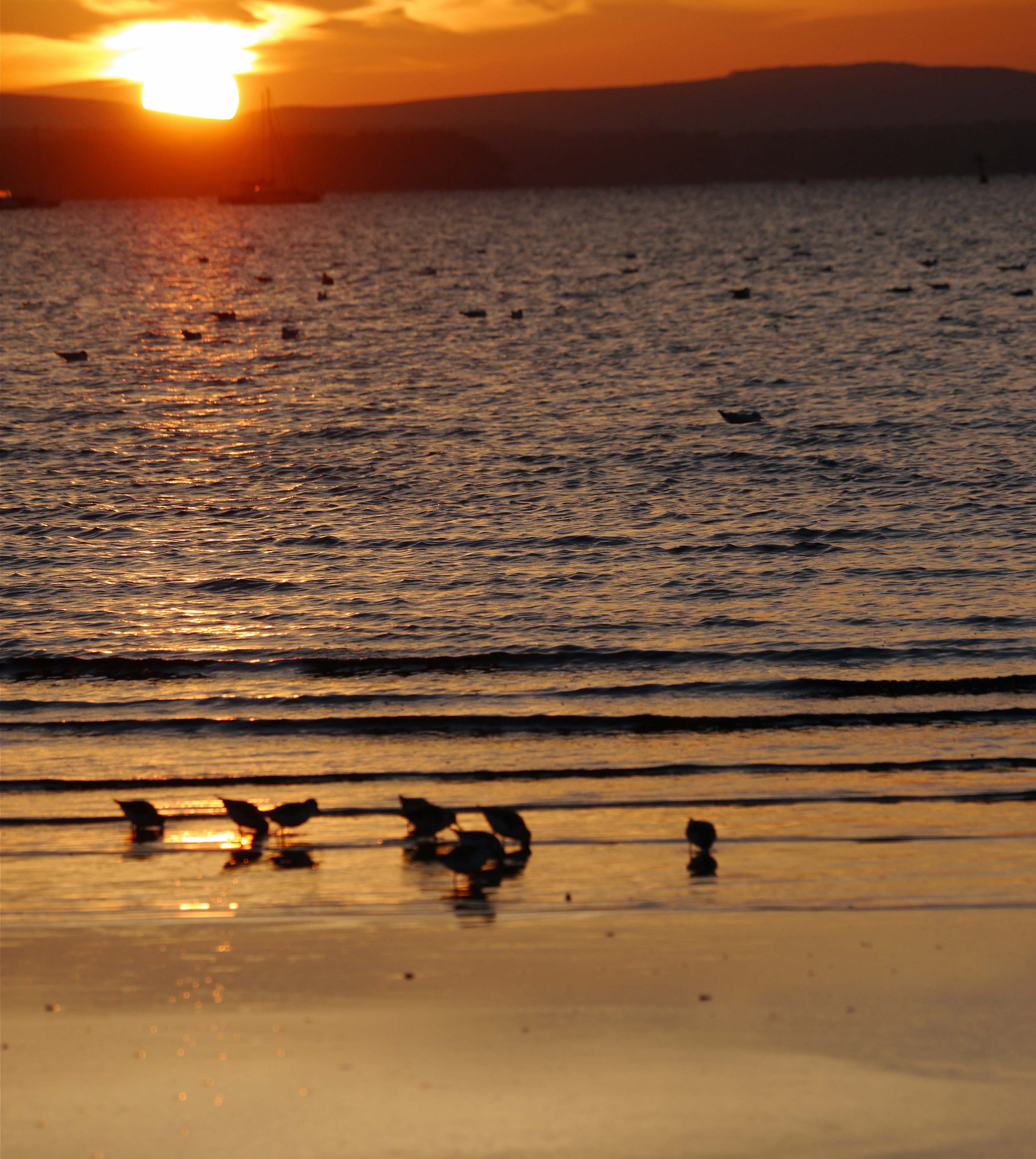
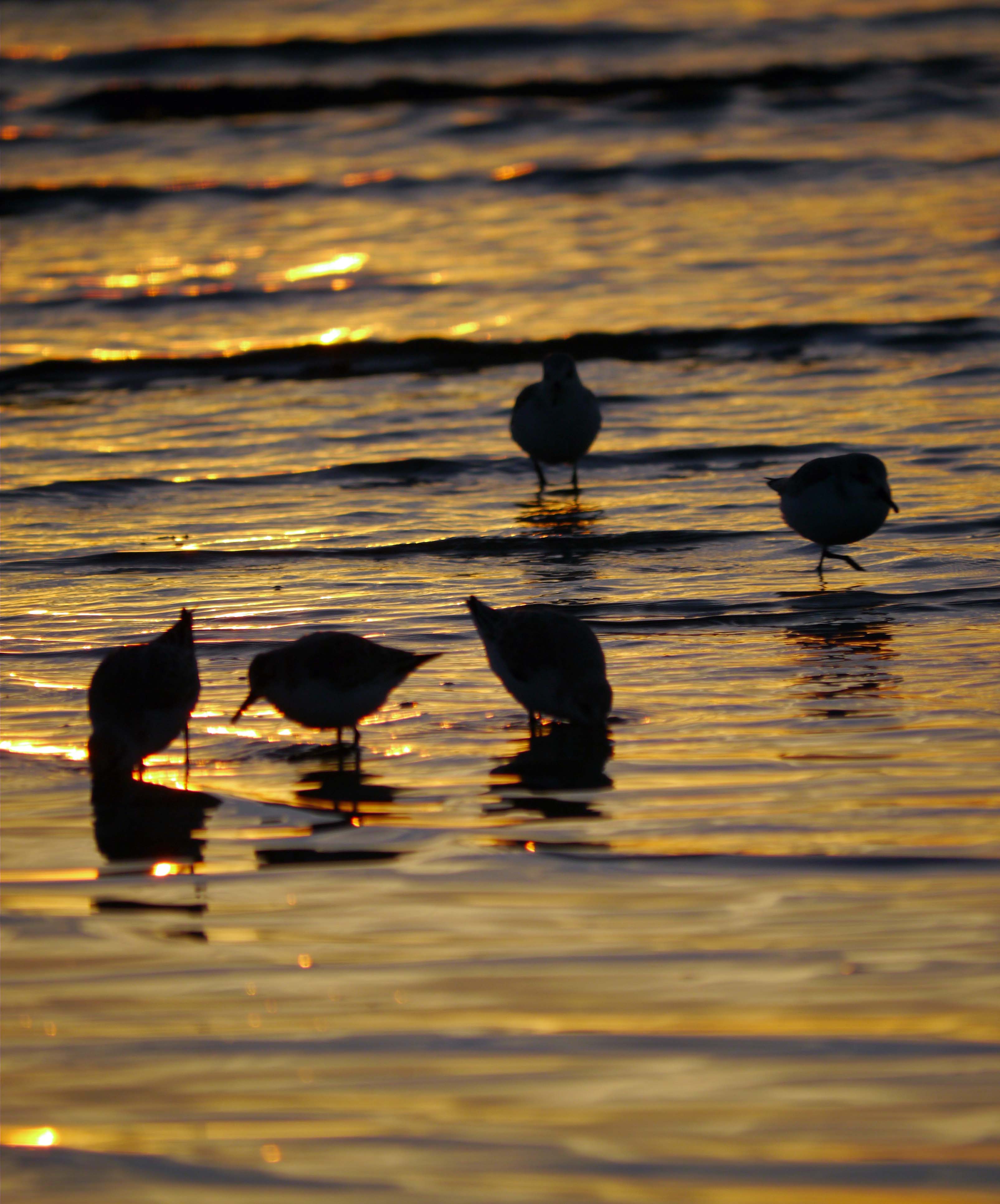
Sanderling sunset, Sandbanks, Dorset, MJMcGill

Sanderling, Sandbanks, Dorset, MJMcGill

Six of us (Roberta, Jeanne, Ruth, Colin, Keith and myself) travelled down south with Bob and Neil making their own way and meeting up with us. Two Red Kite were seen on the way after we made a second stop (first at services) in the New Forest at Slufter’s Inclosure. There had been a Parrot Crossbill seen on and off during the week. Soon after arriving a flock of c12 Crossbill flew over and alighted in tree tops, they did not show for long but neither did they have a Parrot Crossbill with them. Searching the woods produced at least three Great spotted Woodpecker and more brief Crossbill views. Time up we headed to Keyhaven and enjoyed a variety of birds including the Brent Geese flocks, not so many as had been here of late and no sign of the Red-breasted Goose. This bird, I found out later, had moved to Pennington Marshes along with most of the Brent. It was sunny which helped as a cold breeze  was coming from the north. Turnstone, Little Egret and Rock Pipit were all very tame. In the marshes Grey Plover, Black-tailed Godwit, Dunlin, Ringed Plover and Shelduck were all seen.

We decided to head for Poole Harbour to try our luck at this rich birding site. Crossing via the Sandbanks ferry we managed to leave Roberta on shore (most went for a loo break when waiting for the ferry to arrive). It is not a problem as they are regular and a short hop. Whilst waiting we had a party of Sanderling and c6 Shag. I think I had a Slavonian Grebe but the huge outbound ferry caused it to dissapear. Re-united we park up and walked across the heath to view the harbour. A Dartford Warbler scolded us but only showed briefly for some, it continued to call but I think the cold breeze kept it low. The harbour was busy, plenty of Red-breasted Merganser, Great Crested Grebe, Wigeon, Shelduck and Brent Geese, lots of waders and a few scarcer birds. Great Northern Diver and Eider were notable but we were all keen to see the visitor from North America…a juvenile Surf Scoter feeding with Goldeneye. Most of the group walked the shore whilst I moved the car to a pick-up point. I did see a female Dartford Warbler in flight when heading across the heath to meet them.

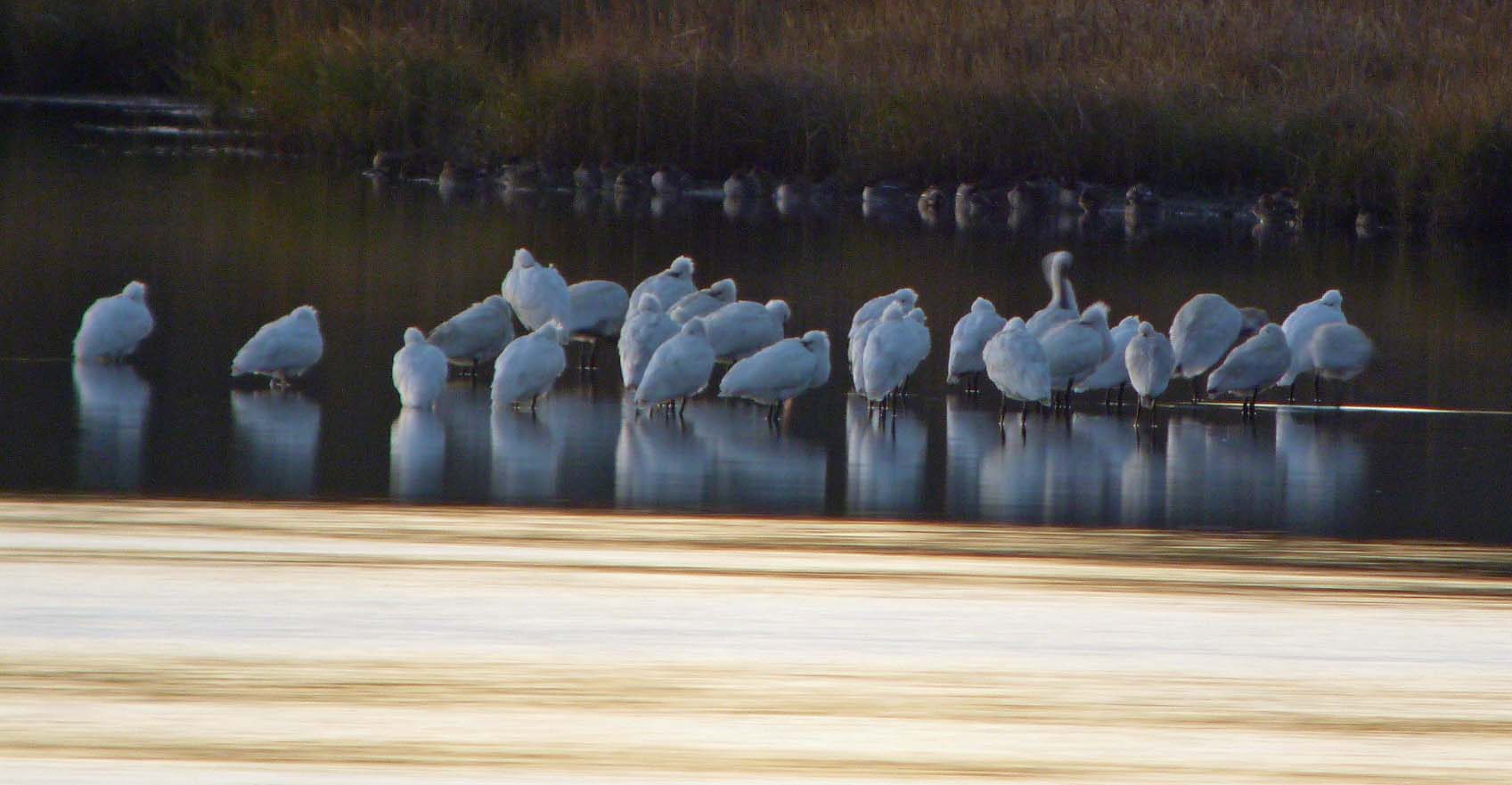
Back across on the ferry and we were enjoying an amazing sunset along the Sandbanks road. A flock of Bar-tailed Godwit and Sanderling fed among the Black-headed Gulls until the tide fully flooded them out. Magic stuff, the cameras were all out to record the moment. A swift dash across town, I was glad I knew my way around Poole as we were soon enjoying a mega flock of Spoonbill at Holes Bay. A good end to the day.

A flock of 27 Spoonbill in Holes Bay, Poole
Just caught up with them at dusk, the sun had gone down.

Spoonbill flock, Holes Bay, Dorset

Eastern Algarve, Portugal and Huelva Province, Andalucia, Spain 24-30 October 2013

Eastern Algarve 25-26 October 2013

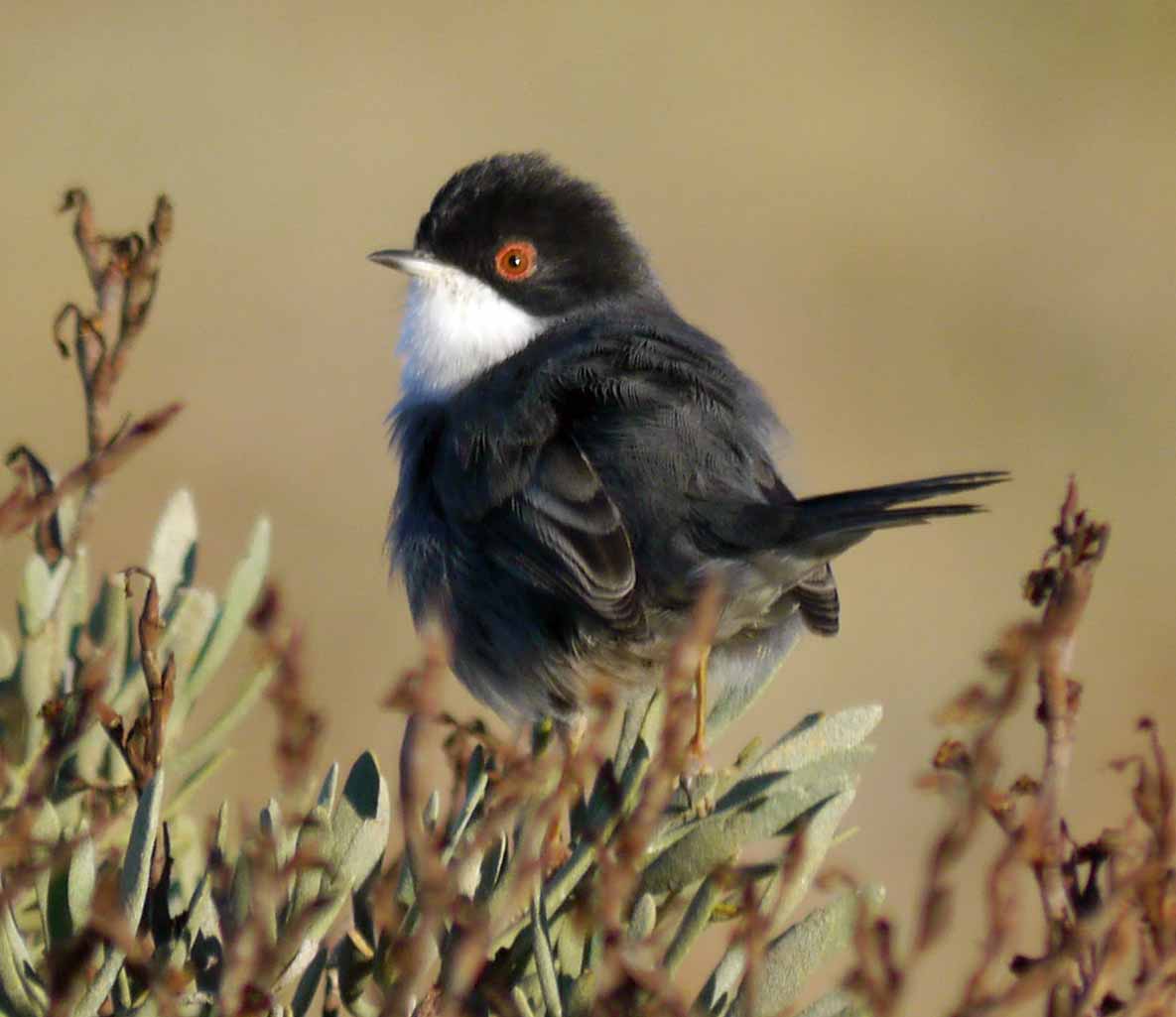
Sardinian Warbler, Tavira, Portugal, 30 Oct 13, MJMcGill 001copy

Male Sardinian Warbler-common bird of the region
All images MJMcGill


Ria Formosa-Quinta de Lago

A welcome family holiday, was late in the year due to my weekly hospital appointments (long story) during the spring, summer and autumn. We spent two nights at Quinta de Lago, one night in Seville (Seville province), a night in Galaroza, Spain, two nights in Castro Marim back in Portugal with day trips back into Spain.

An evening arrival to Faro in wet weather the night before never allowed any birding but we settled into an apartment in Quinta de Lago and a noodle and rice dinner from the local Chinese takeaway. It rained all night and most of the day, very heavy at times and caused a bit of flooding. I went out early to check out some pools and saltpans I have been to before, all sites are well known to birders. First birds of the day were Azure winged Magpies, flocks are constantly on view in this part of Iberia, flying across the road in mobs. Arriving at Lagoa de Sao Laurenco and adjoing saltpans I was greeted by a Caspian Tern, a few were about including a juvenile begging for food. On the lake were Little Bittern, egrets, the intoduced Black headed Weavers, plenty of Gadwall, Little Grebe and Coot plus Purple Swamphens, Pochard, Tufted Duck, Mallard, Great Crested Grebe and gulls drinking including 2 Audouin’s. On the golf fairways 2 Glossy Ibis, Black tailed Godwits, White Storks and 3 Snipe fed. Hoopoe, Serin, Sardinian Warbler, Spotless Starling, Crested Lark, Stonechat and Zitting Cisticola were abundant and formed the daily species line up for the rest of the trip. Grey Plover, Dunlin, Spotted and Common Redshank, Common Sandpiper, Greenshank, Turnstone, Bar-tailed Godwit, Curlew and Whimbrel were all noted. Marsh Harrier, Kingfisher and Sandwich Tern were also seen.

We spent the afternoon in a very wet, rainy Vilamoura Harbour where a Common Tern fished.

I returned to Quinta de Lago later when the sun came out as did the birds. One of the highlights was watching a Black-winged Kite hunting in flight and from the tall trees to the east of the lake (open area with line of tall trees, bird favoured one with two storks nests in it). The kite was still present next morning in the same area. Lots of birds came in to roost at dusk including the Black headed Weavers. A selection of images are shown below.

Hoopoe sheltering from rain, Quinta de Lago (3) copy Bluethroat, Rio Formosa, 25 Oct 13, MJMcGill copy Glossy Ibis coming in to roost, Lagoa de Sao Laurenco, MJMcGill copy

Images above
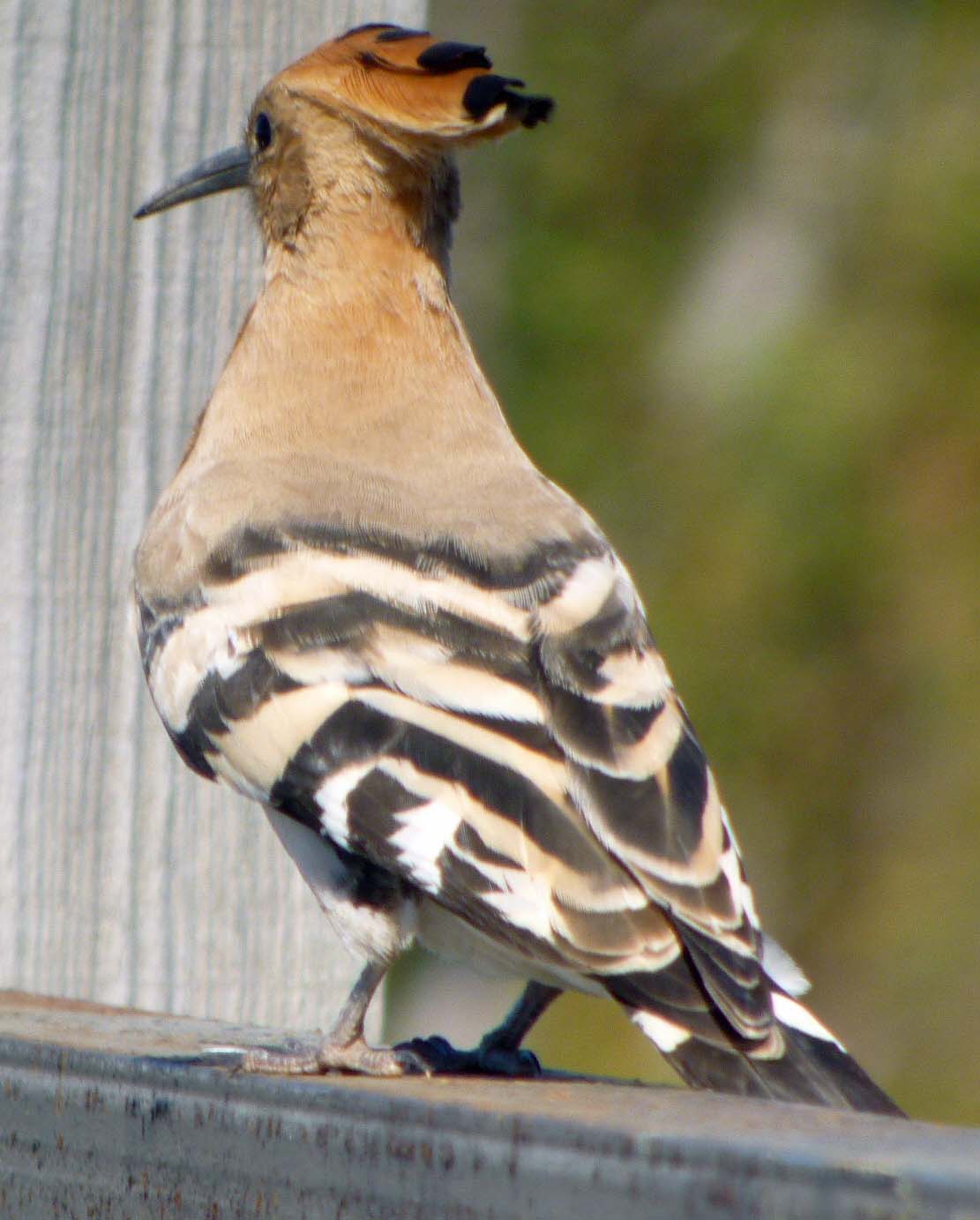
Hoopoe sheltering from torrential rain using the bushes above the wall as an umbrella. They are very common in the Algarve and provide the classic call as an audible backdrop. I was surprised how many Blackbirds were present, migrants from the north?
Bluethroat– this is a dull 1st winter bird, they are a common wintering species in the saltpan salicornia scrub. I did see some blue throated adults including a bird that appeared to have a lime green ring on the right leg. I noted at least eight. The adult males were busy chasing off territory intruders.
Glossy Ibis– at dusk at least 50 came in to roost at Lagoa de Sào Laurenco along with hundreds of egrets.

Little Bittern at dusk, Lagoa de Sao Laurenco, MJMcGill (3) copy Purple Swamphen in the rain, Lagoa de Sao Laurenco, MJMcGill copy Sunset Bar tailed Godwit and Little Egret, Quinta de Lago, MJMcGill copy

Images above
Little Bittern– I saw at least three, mostly in flight but this bird came out at dusk.
Purple Swamphen-ten plus were busy ripping up roots of the bullrushes.
Bar-tailed Godwit and Little Egret on the saltpans at sunset.

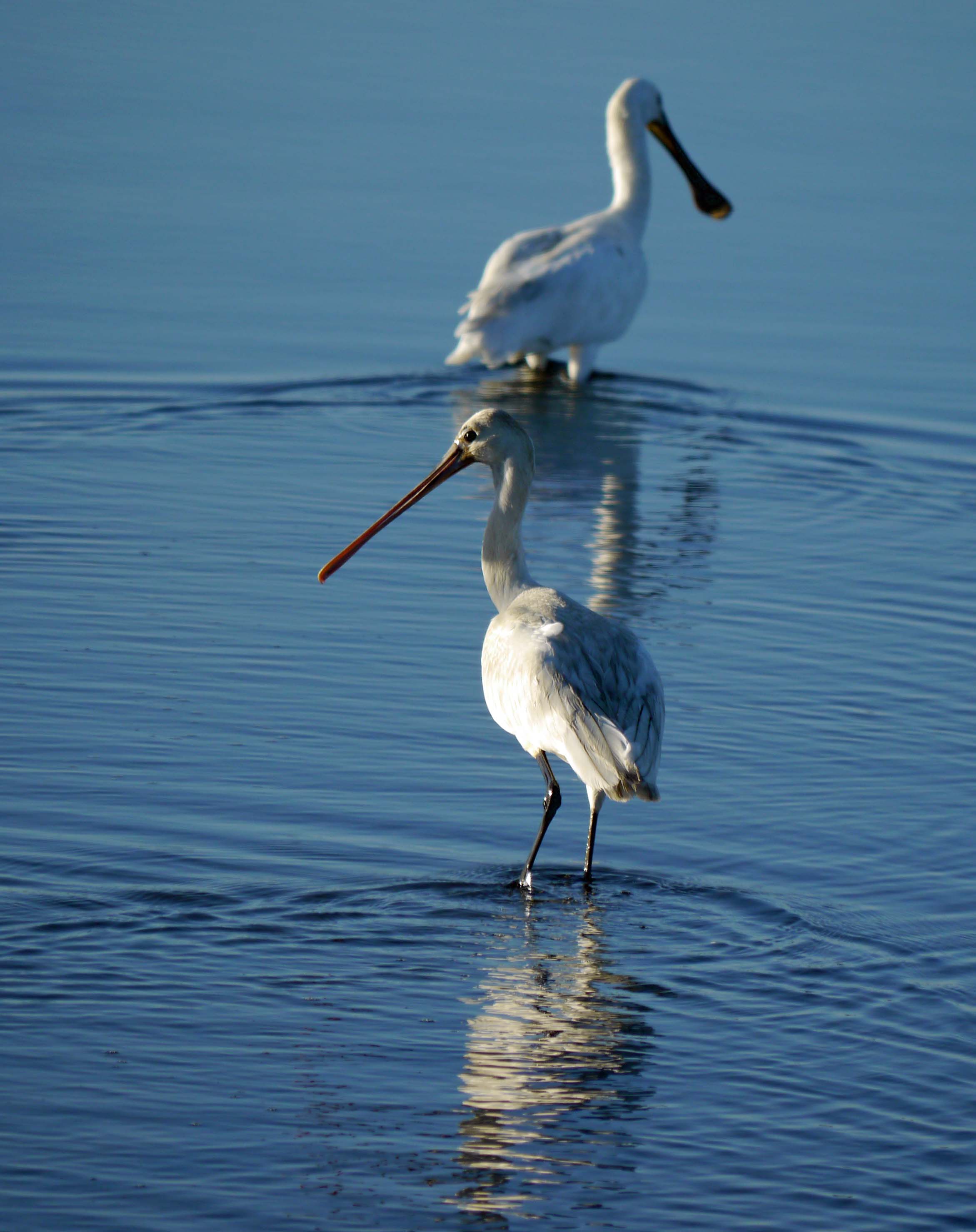
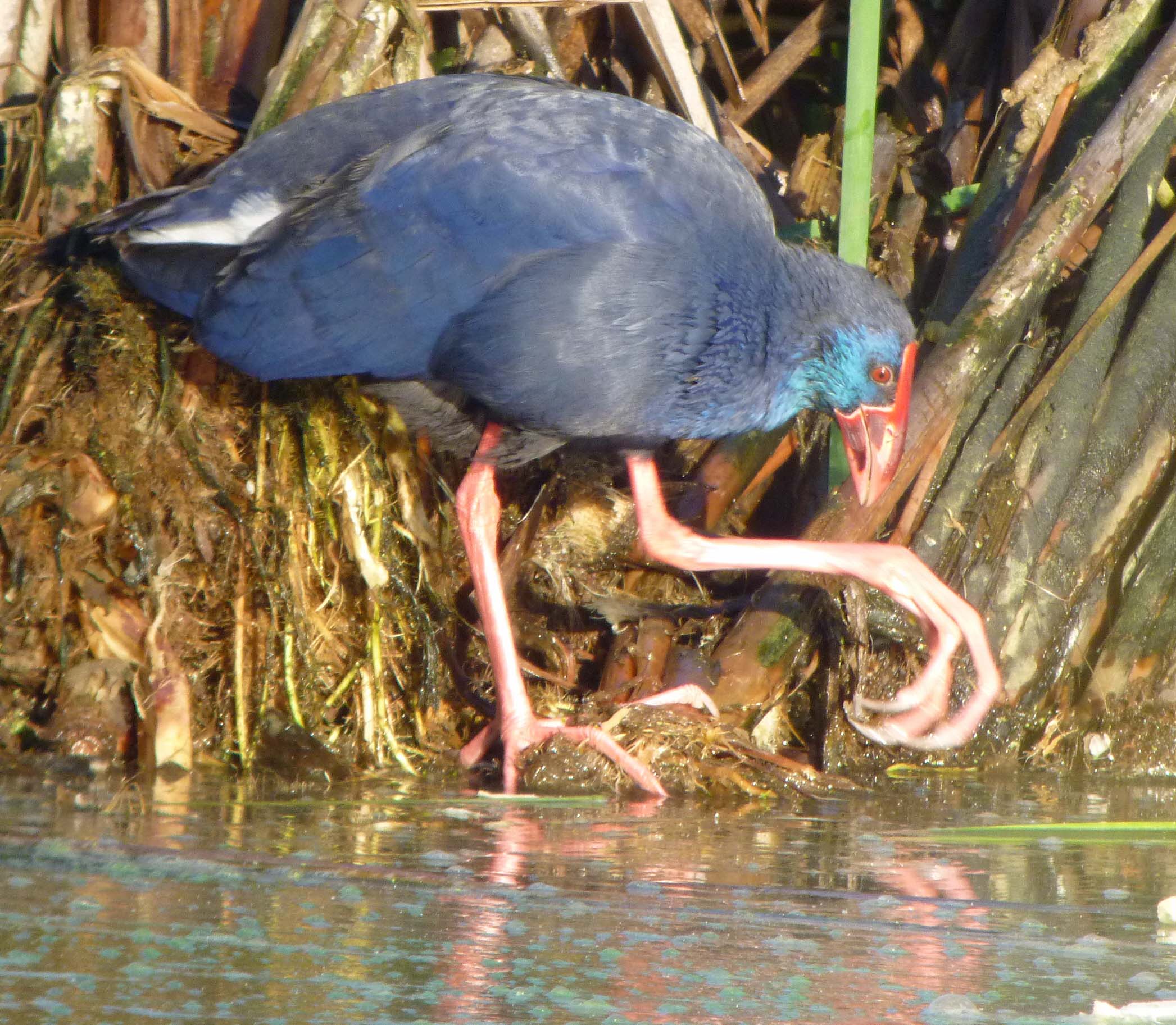
Spoonbills, Quinta del Lago, 26 Oct 13, MJMcGill copy Purple Swamphen, Quinta de Lago copy

Images above
Spoonbills and Purple Swamphen.

26-27 October
We left Quinta de Lago (saw 2 Red-rumped Swallow near Tavira) and used the small car ferry at Vila Real de San Antonio to cross the Guadiana to Ayamonte, Spain. The first time I have arrived in Spain from the water. An afternoon, night and morning in Seville was all about food, architecture and historical sites but I did see what was probably a Lesser Kestrel over the cathedral/Giralda at dusk and parakeets were everywhere. Tapas bars and a visit to the stupendous Alcazar and Museo were the main focus. I was somewhat distraught to find out the football match between Seville and Osasuna was a midday kick off. I saw the away team coach arrive in the morning as we stayed in a hotel next door. I believed it to be an evening kick off otherwise I would have got a ticket. The atmosphere and sound in the stadium was amazing to hear. Seville won 2-1. On the way to our next accommodation in the Western Sierra Morena we stopped off in the Zufre, Sierra de Aracena. Griffon Vultures soared above and Crag Martins fed around the church. It was hot and sunny and this was a great Tapas stop, also good for butterflies.

27-28 October

Galaroza
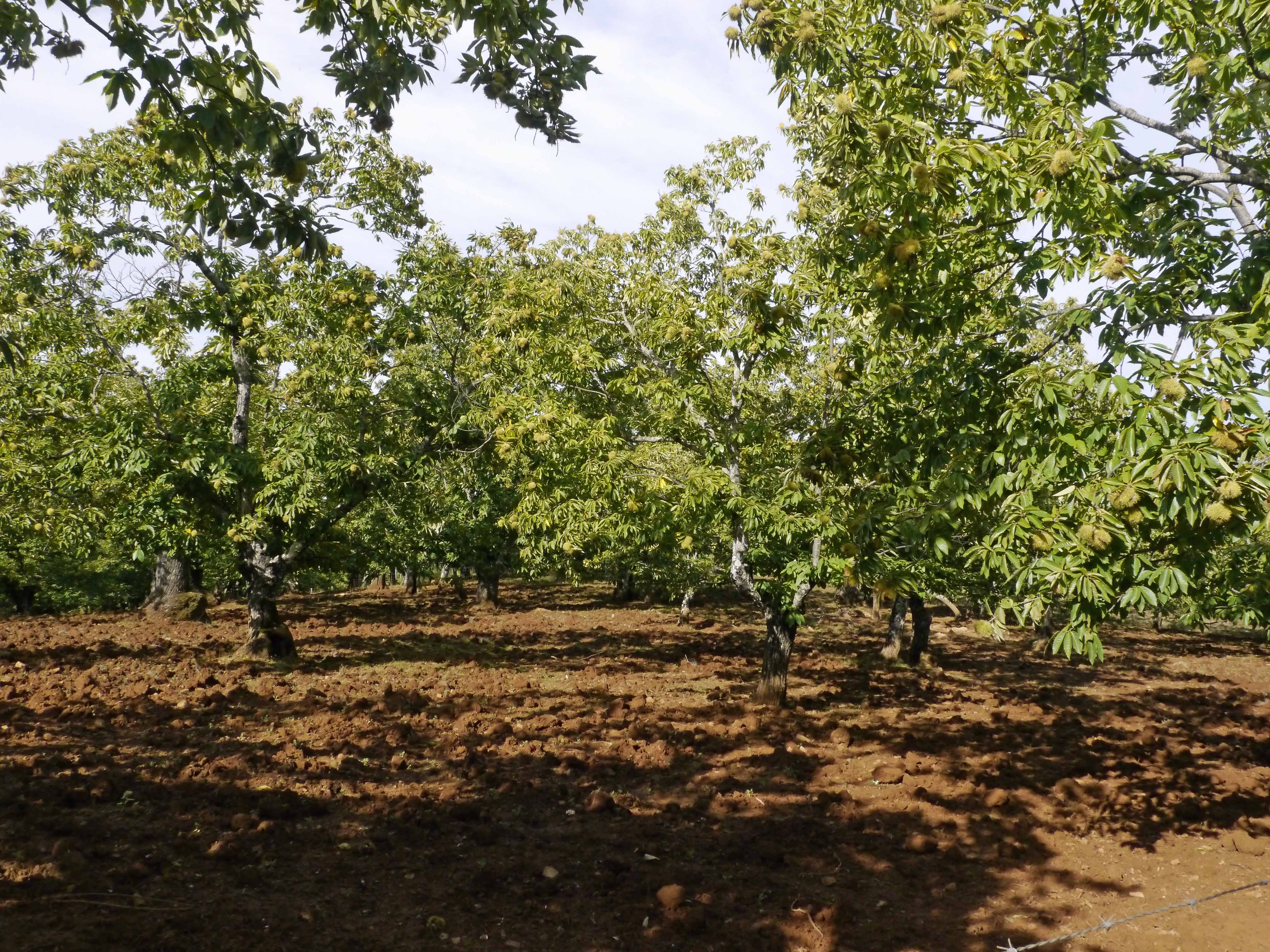
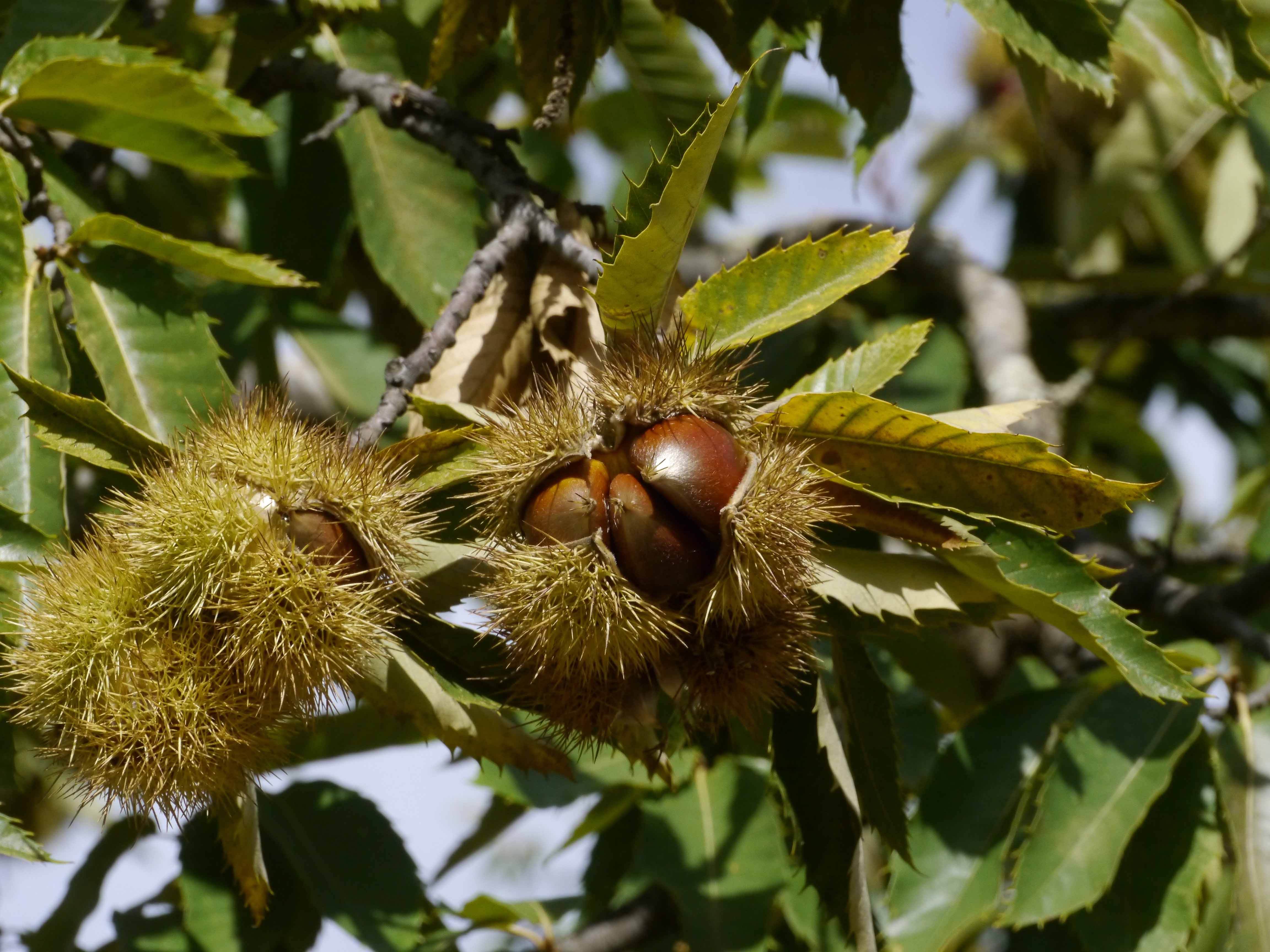
A night in a chestnut coppice forest was a new experience, it was a very rural place in a traditional cottage. Often the only sound, apart from birds was of chestnuts (castãna) falling to the ground. I did wonder if this word had anything to do with castanets and found after investigation they were indeed made from chestnut wood and look a little like them. We spent the night next to the chetnut wood open fire roasting chestnuts. This tree was dominating our days, we saw plenty of chestnut sellers in Seville and lots of families collecting them en route. A few Woodlark were in song around the woods and other notable birds were Cirl Buntings, Firecrest and Griffon Vultures.

Chestnut forest, Galaroz (4) copy Chestnut forest, Galaroz copy

Images above– Chestnut coppice with ploughed soil below. Most of the forest had an understory of scrub but this image shows the trees better.

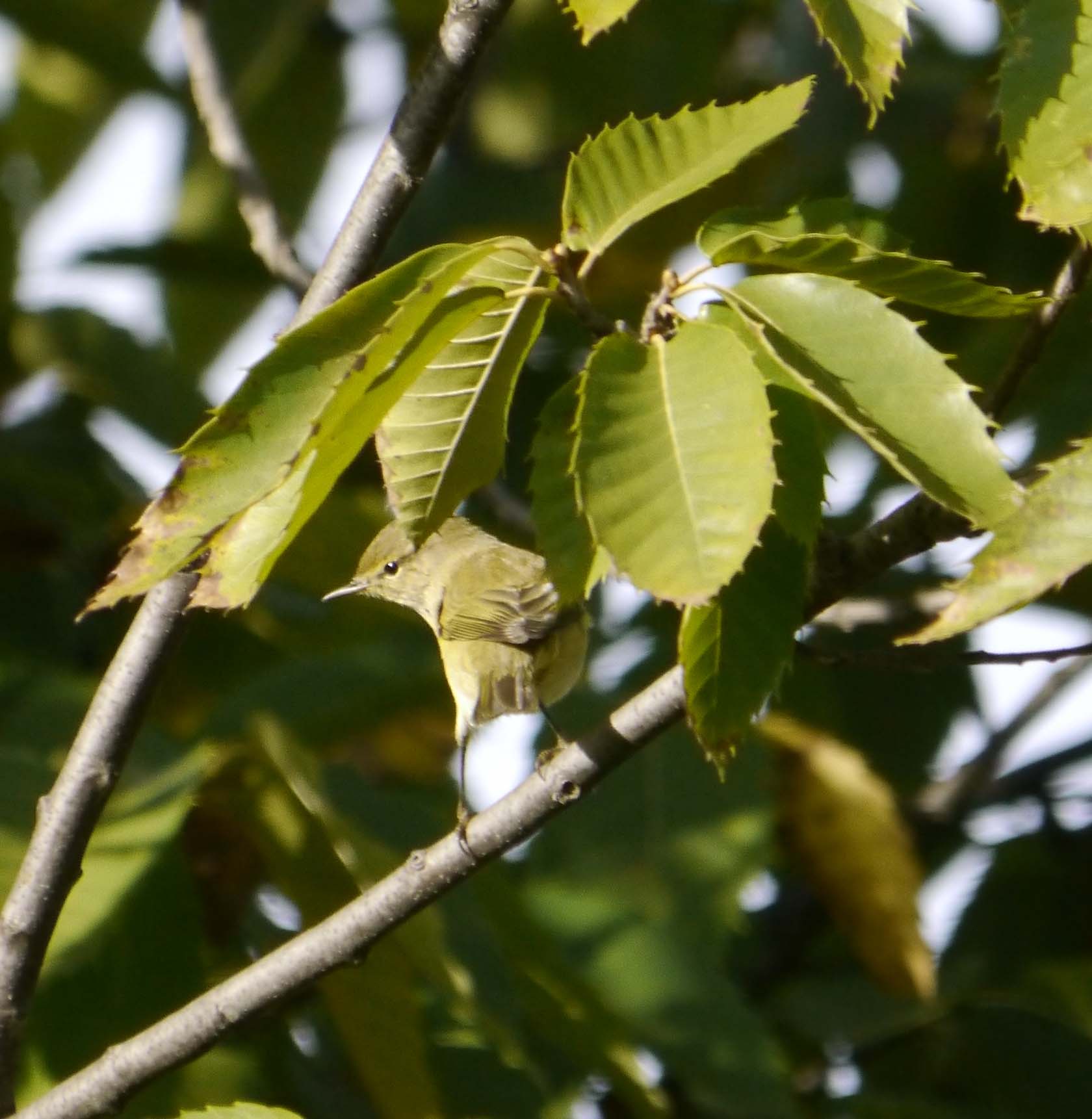
Chiffchaff in the Chestnuts
A greenish bird with a short rapid hweet call.

Chiffchaff, Galaroz, Huelva, 28 Oct 13, MJMcGil copy

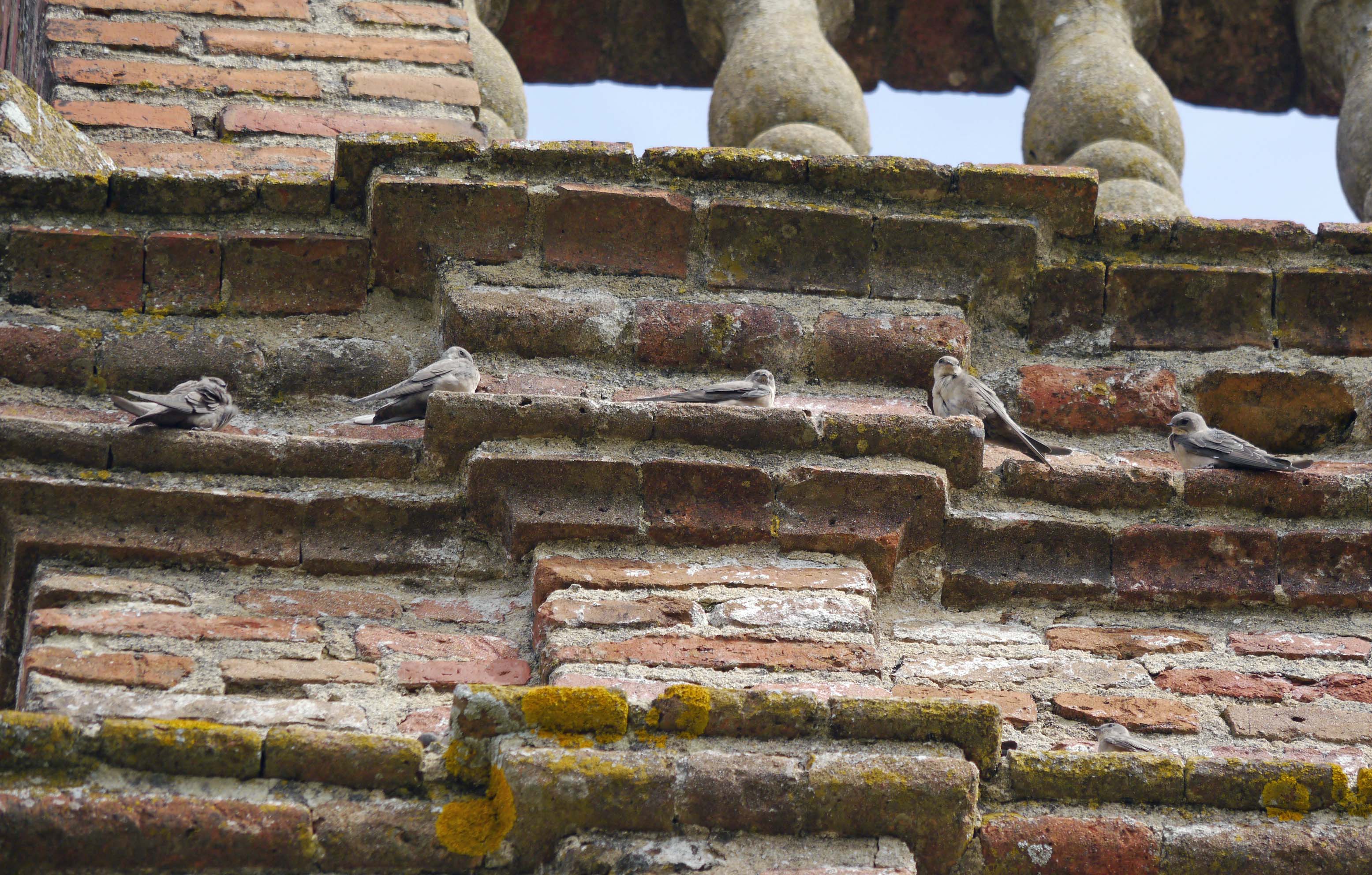
Images below– Crag Martins play around the marvellous Mezquita at Almonster de Real.

Crag Martins, Almonaster la Real, Huelva, 28 Oct 13, MJMcGill copy Crag Martins, Almonaster la Real, Huelva, 28 Oct 13, MJMcGill (8) copy

29 October
Castro Marim salinas, Portugal and Odiel Marshes, El Portil Lagoon, Punta Umbria beach, Huelva, Spain
It is so easy to pop across the border for a few hours or the day. I went out for an hour in the morning, spent the afternoon at Huelva and a quick visit to El Portil. We had lunch on the beach at Punta Umbria where I saw the only Southern Grey Shrike of the trip as it flew west. El Portil had Flamingo, waders, Black-necked Grebes and a Black and Whiskered Tern as well as duck including Pintail in numbers.

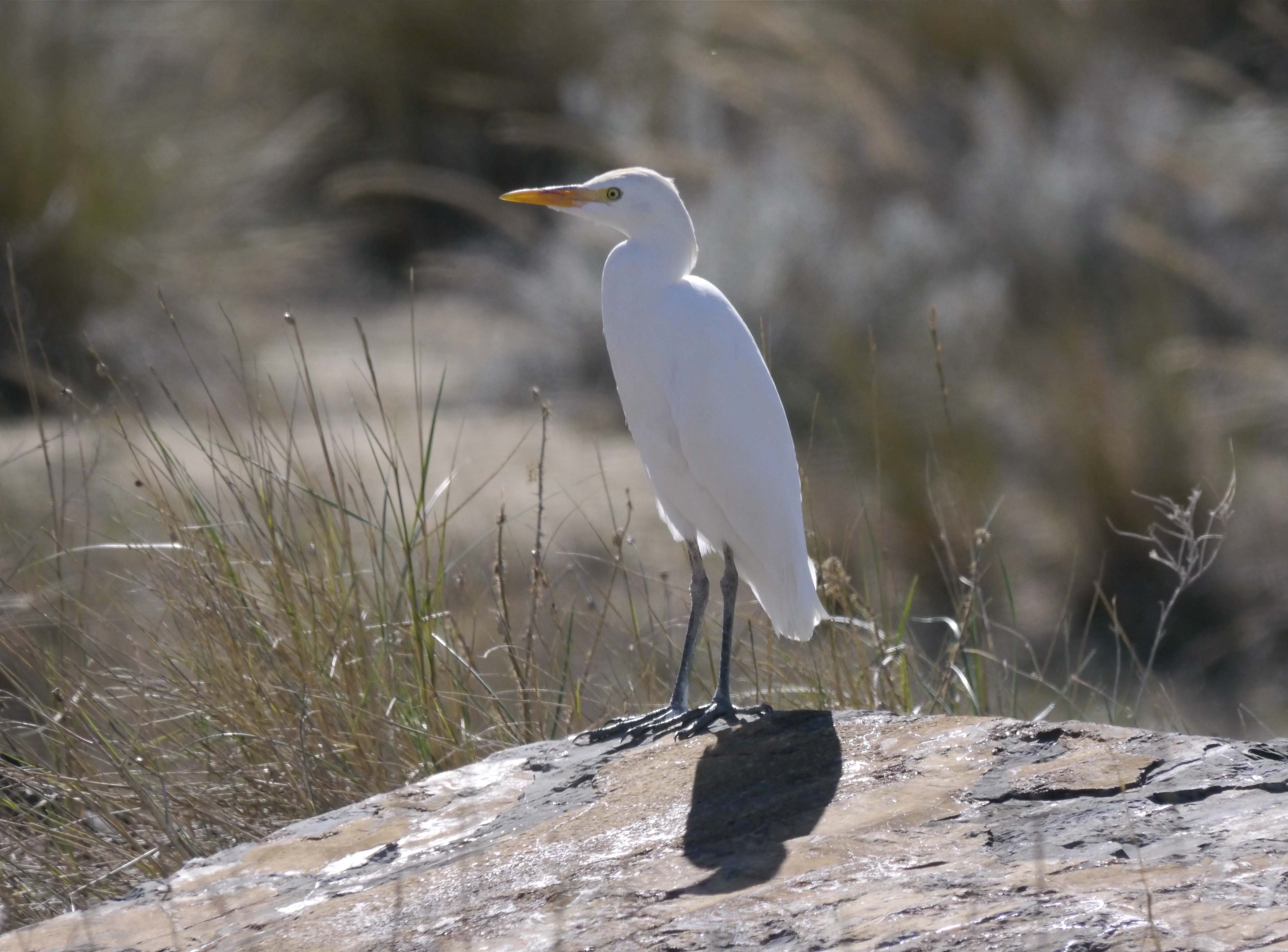
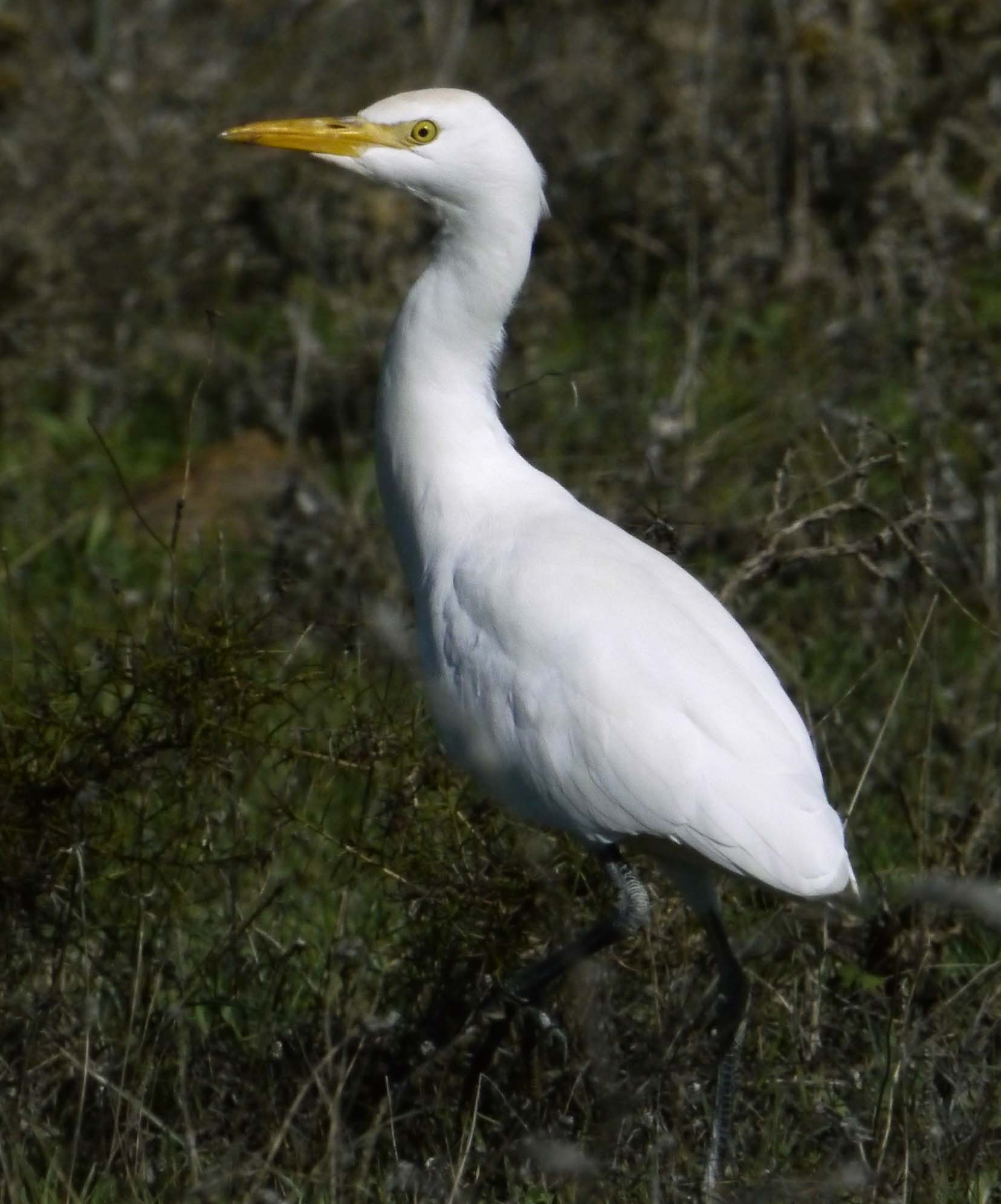
Cattle Egret, Odiel Marhse, Huelva, MJMcGill (2) copy White Storks scrapping, Castro Marim, MJMcGill

Cattle Egret and squabbling White Storks (above) at Castro Marim

Caspian Terns (below) Odiel Marshes, Huelva.
At least six were fishing the creeks and channels with the visitor centre area being best for viewing them. I watched one mobbing an Osprey.

Caspian Tern, Odiel Marshes, Huelva, MJMcGill (2) copy Caspian Tern, Odiel Marshes, Huelva, MJMcGill (4) copy

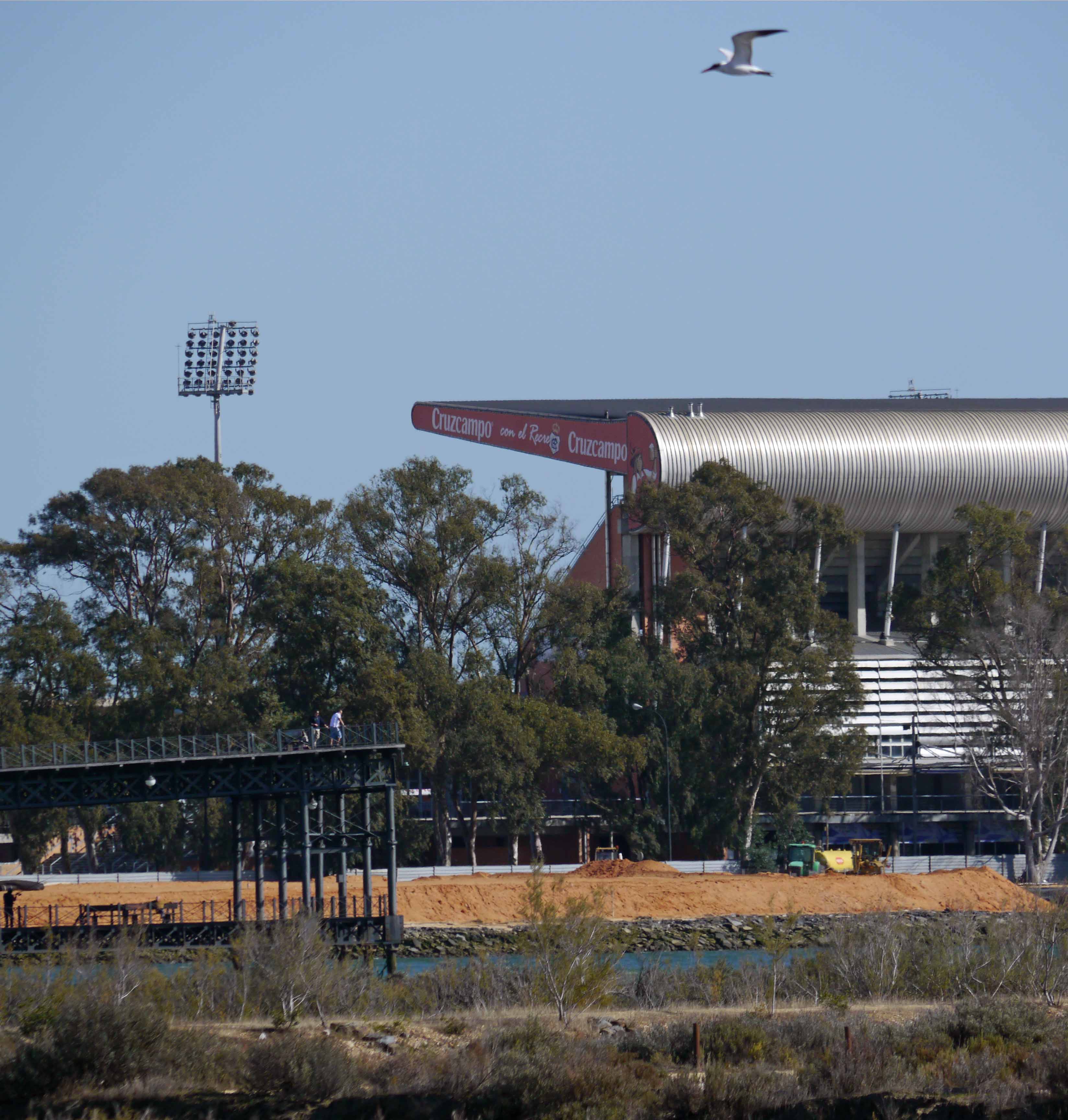
Caspian Tern flies past Recreativo FC ground. Where Spanish football began in 1889.

Caspian Tern, Odiel Marshes, Huelva, MJMcGill copy

Cattle Egret (below) Odiel Marshes, Huelva

Cattle Egret, Odiel Marshes, Huelva, MJMcGill

Hoopoe (below) delightful to see them regularly especially from the car.

Hoopoe, Odiel Marshes MJMcGill

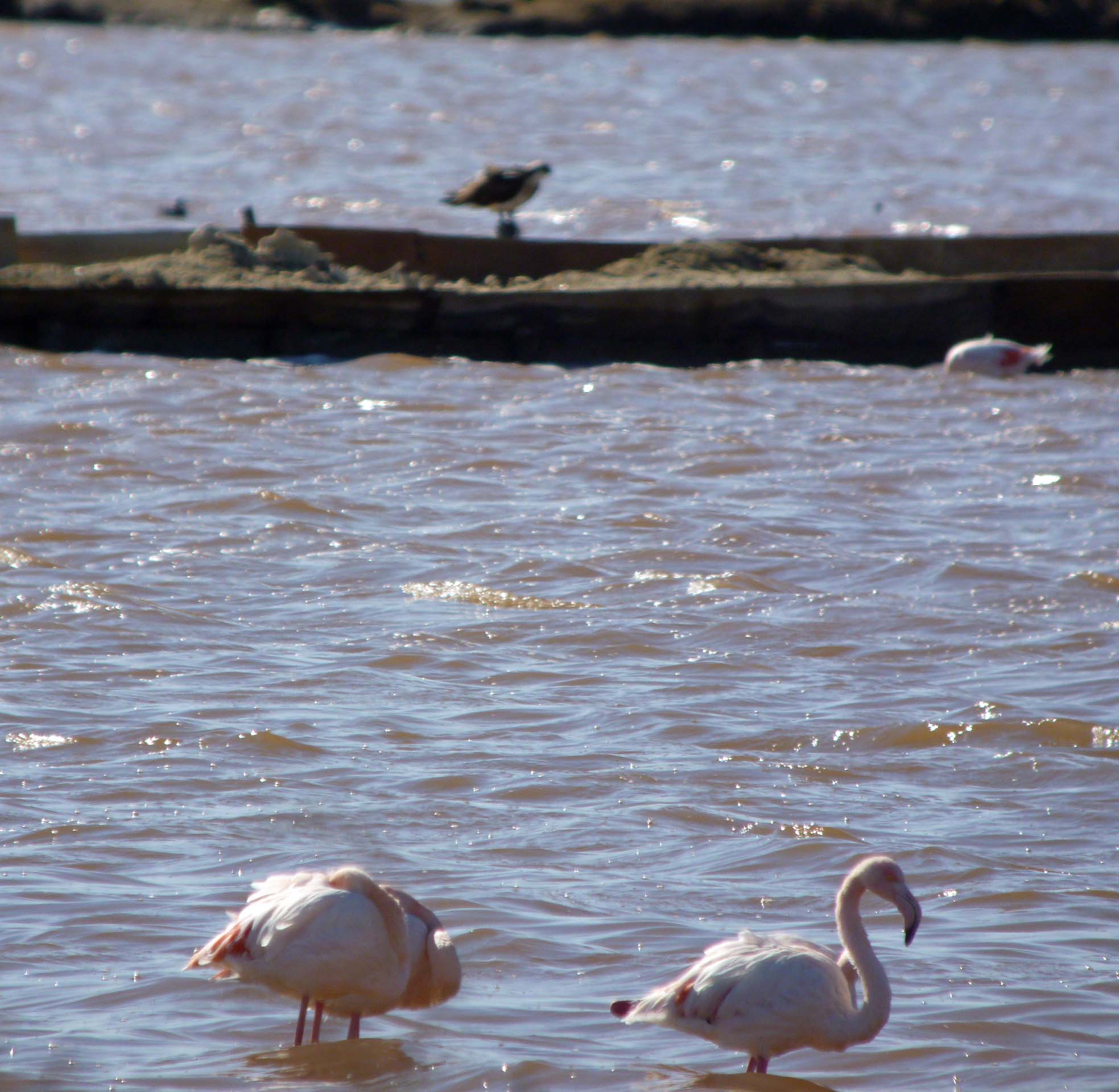
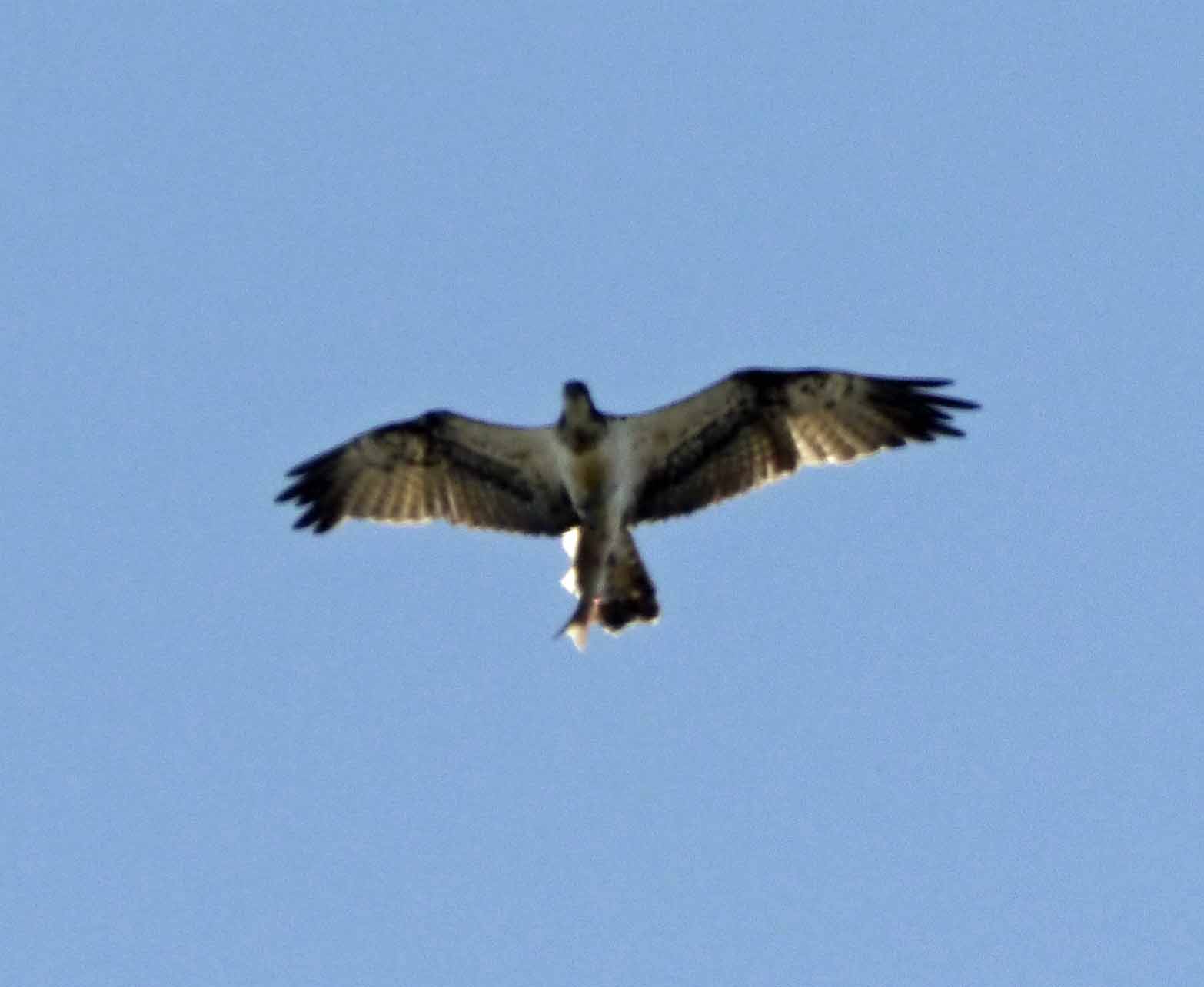
Ospreys (below) were re-introduced to the Odiel Marshes. They show very well as they hunt for fish or perch on exposed places with a view. I saw at least four. The image with Greater Flamingos also shows a Black-necked Grebe, dozens were on the salinas. I also searched the creeks which had plenty of waders roosting at high tide but only the longer legged species. The smaller waders were out in the salinas somewhere but began appearing as the tide dropped. This site is probably better at low tide for variety of species and close views.

Osprey, Odiel Marshes, Huelva, 29 Oct 13, MJMcGill (5) copy

Osprey, Odiel Marshes, Huelva, 29 Oct 13, MJMcGill (4) copy Osprey, Odiel Marshes, Huelva, 29 Oct 13, MJMcGill (3) copyOsprey, Odiel Marshes, Huelva, 29 Oct 13, MJMcGill (7) copy

Shovelers and Stilts, Odiel Marshes, Huelva

Shoveler and Stilts, Odiel Marshes, Huelva copy

30 October
Castro Marim castle gave excellent views over the salinas, a great way to see where the action is and work out a plan. I was not really out birding but saw Marsh Harrier, White Storks, Booted Eagle, Lesser Kestrel over the fort, Crag Martins and plenty of familar species.

Tavira, Portugal A last afternoon out after eating in the town and exploring was to the Ria Formosa and saltpans of Tavira. Flocks of Flamingo, Mediterranea Gulls, Avocets, Black-winged Stilts and other wetland species were to be seen but the highlight was a ringed (but unreadable) Slender-billed Gull adult. Bluethroat, Sardinian Warbler (below) and close wader watching at lower tide. I noticed small boats doing trips along the tidal creeks, they allow close and quiet access to birds on the sandbars and mudflats, well worth a go for photography.

Greater Flamingo, Tavira, Portugal (2) copy  Sardinian Warbler, Tavira, Portugal, 30 Oct 13, MJMcGill copy

Forest of Dean-16 March 2013

0700 departure from Whitminster and returned by 1410.

Highlights from Forest of Dean 16 March 2013

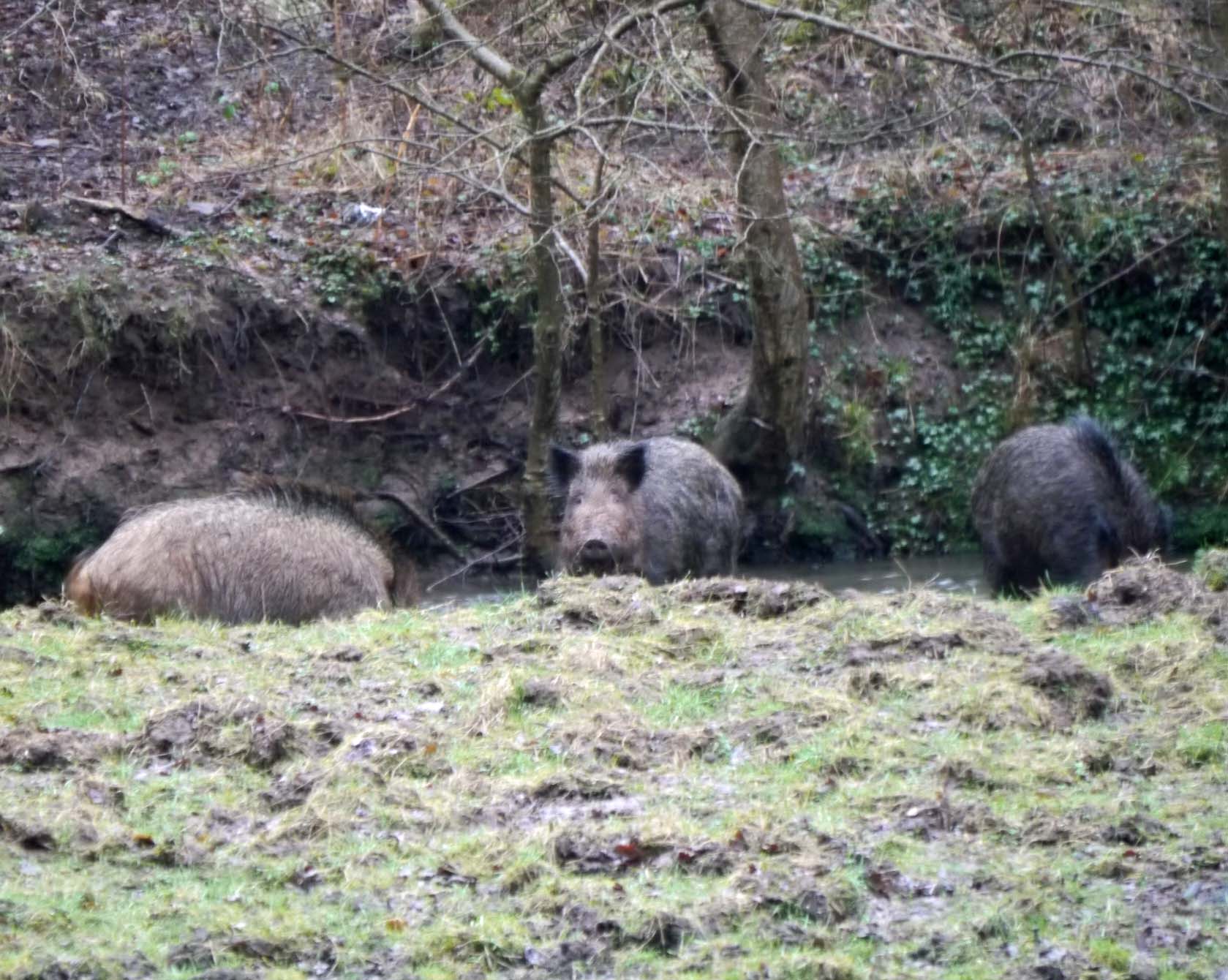
Wild Boar- 5 at Wenchford

Wild Boar, FoD

Dipper- a pair at Wenchford
Hawfinch-6 at Parkend Church and 3 at Brierley

(note, if looking for them, please be Hawfinch wise, they are shy and generally need a bit of space. Most great photos are taken from hides/cars with lots of preparation, usually it is not possible to get too close without the use of a scope or being patient with binoculars)

Brambling- 40 at Parkend Church.
Mandarin-pair at Wenchford, 12 at Cannop Ponds.
Little Grebe- 5 at Cannop Ponds and 2 at Woorgreens.
Marsh Tit- one at Cannop Ponds
Kingfisher- one along Cannop Brook.
Siskin- seen at New Fancy View (NFV), Woorgreens and Yew Tree Brake in full song.
Lesser Redpoll- one over NFV and c 12 at Woorgreens.
Raven- 2pairs at NFV, 5 at Woorgreens and 2 at Brierley.
Goshawk- a female displaying and showing well around 1030 at NFV.

Goshawk NFV
Crossbill- a flock of c45 flew over Crabtree Hill heading toward Cinderford
Goosander-one male and 4 females at Woorgreens
Stonechat-male at Crabtree Hill

Also noted…Buzzard, Green and Great spotted Woodpecker, Goldcrest, Pied and Grey Wagtail, Coal, Blue and Great Tit, Cormorant, Greylag and Canada Goose, Tufted Duck, Coot, Mallard, Song, Mistle Thrush, Redwing, Nuthatch, C Crow, Rook, Jackdaw and more.

We had a quick look for Whooper Swan at Walmore Common and for the Waxwings at Newnham on Severn but no success.

Thanks to Ruth, Morris and Colin for your company and humour.

Martin J McGill
South Devon and a Somerset sunset, 2 March 2013

Avocet on the Exe Estuary mud off Topsham

Avocet on the Exe, MJMcGill
Cirl Bunting and Avocet

Cirl Bunting, male MJMcGill Avocet on estuary mud MJMcGill
Rose-coloured Starling-Exminster

Rose coloured Starling- Exminster 2 March 2013 MJMcGill
Starling roost-Ham Wall RSPB
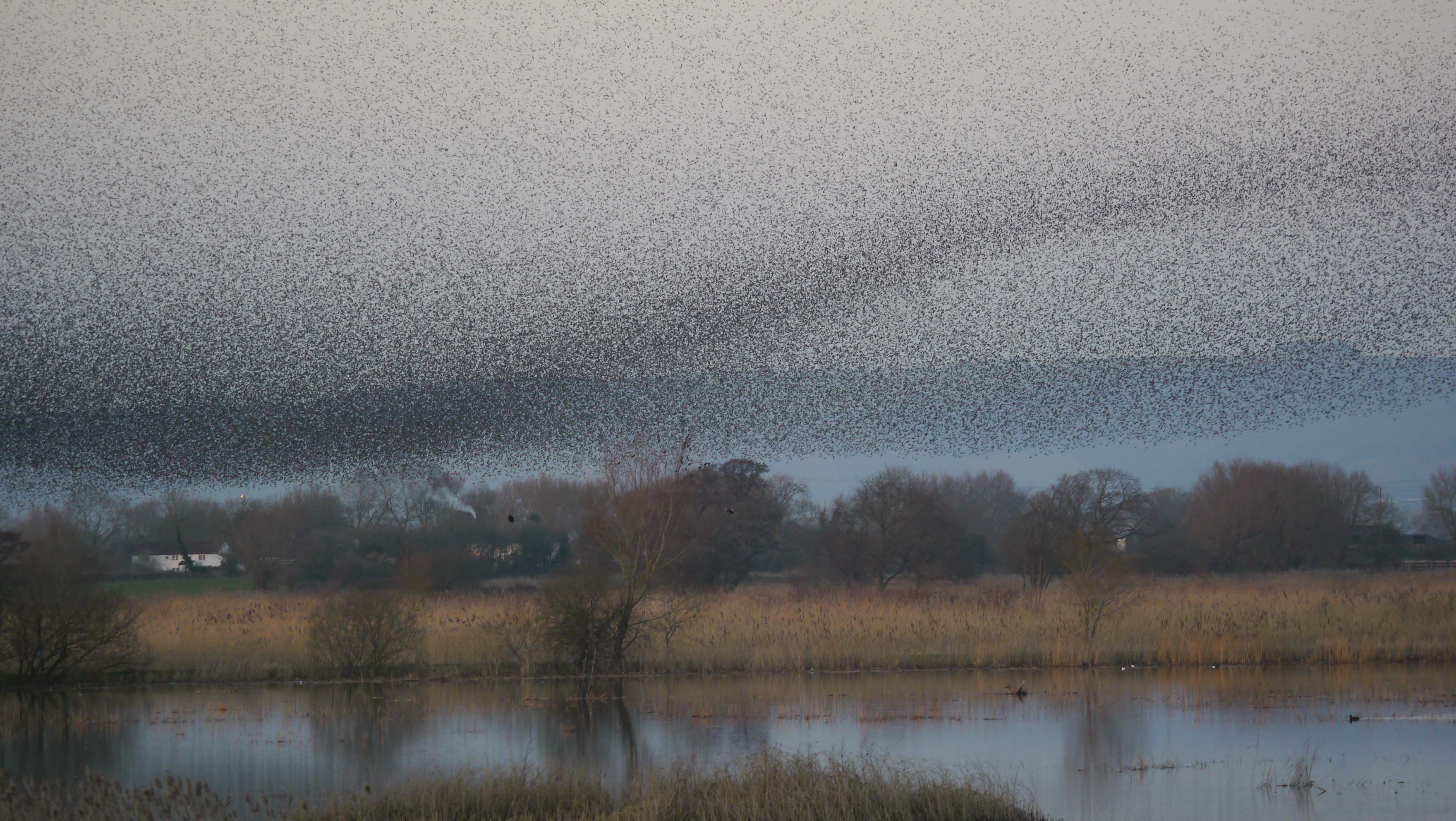
Starlings over Ham Wall RSPB, MJMcGill
Five of us set off for a visit to South Devon with the question of target birds were raised en-route, it was clear that Cirl Bunting was a priority. I have made a few visits to S. Devon before and seen this species well at Exminster but I felt it best to try a site with a better chance of seeing them in numbers. A cruise along the N side of the Teign to check over the stubble for finch flocks produced none so I looked for Labrador Bay RSPB armed with directions from the friendly Teignmouth Railway Station staff. Soon after arriving at the cliff top car park and reserve we were watching a flock of these charming buntings in the hedges, about 30 were to be found in the area.
Having convincingly ticked that box and all having lovely views we went off through Dawlish to the Exe and adjacent wetlands. At Cockwood we stopped to look at Greenshank among the Redshank flocks, a single Turnstone and nearby a flock of close Dark-bellied Brent Geese with Curlew and Oystercatcher also feeding on the golf course turf. Many of these species have probably fed and roosted in this spot for thousands of years so the recent addition (relative to time) of a golf course has not put them off. I hope they are allowed to continue to do so.

The north side of Starcross offered a flood pool with Shelduck, Wigeon, 3 Black-tailed Godwit, Curlew and another Greenshank with Redshank. A few Meadow Pipits fed on the grass. Returning to Cockwood, we crossed the bridge when Val spotted a Kingfisher perched on the bow of boat, the tide was dropping and it was trying its luck. A stop nearby to scan over the estuary and Shutterton Creek produced three distant Little Grebes, around 20 Red-breasted Merganser, a couple of Shag including one stood on the wreck alongside the Cormorants for comparison.

Heading back upriver we crossed to Topsham, parked and walked down to Bowling Green Marsh RSPB. First stop was at the viewing platform at the mouth of the Clyst. Avocets, Redshank and another comparison of Black and Bar-tailed Godwits could be made. At least seven Goldeneye were out on the main channel. A flock of Dark bellied Brent flew over and landed on the estuary mud. On the seawall at Topsham we enjoyed more views of sifting Avocet and the waders including Grey Plover. Five Red-breasted Merganser were in the creek.

A stop at the hide added Snipe, Pintail, Gadwall and Shoveler but the draw of Waxwings had a searching again. Soon after we were watching a flock of at least 38 as they raided berry trees in a back garden adjacent to the river Exe. We had great views above us and it was a treat listening to the calls of these smart birds for 20 minutes or so. Another short drive to look for the wintering Rose-coloured Starling at Exminster resulted in great views of it as well as a pair of Brambling.

It was time to make a decision, search for American Wigeon at Darts Farm or try our luck in sunny Somerset. Everyone was keen to head for the latter so we transferred to Ham Wall RSPB. A lovely sunny end to the day was on offer as we walked out along the wall. Lots of wildfowl were present and Great Crested Grebes were paired. Bitterns were booming, a pair of Marsh Harrier floated about over the reeds causing panic. Large flocks of Lapwing, five Little Egret, a single Curlew and a variety of wetland birds entertained while we waited for what turned out to be a spectacular Starling roost. Other birds present at this reserve during this weekend included Great White Egret, Pied billed Grebe, Ferruginous and Ring necked Duck. It would be worth a return visit at some time. Thanks to Bettie, Val, Anne and Keith for your company on a pleasant and bird-filled day out.


Blog at WordPress.com.

Up ↑