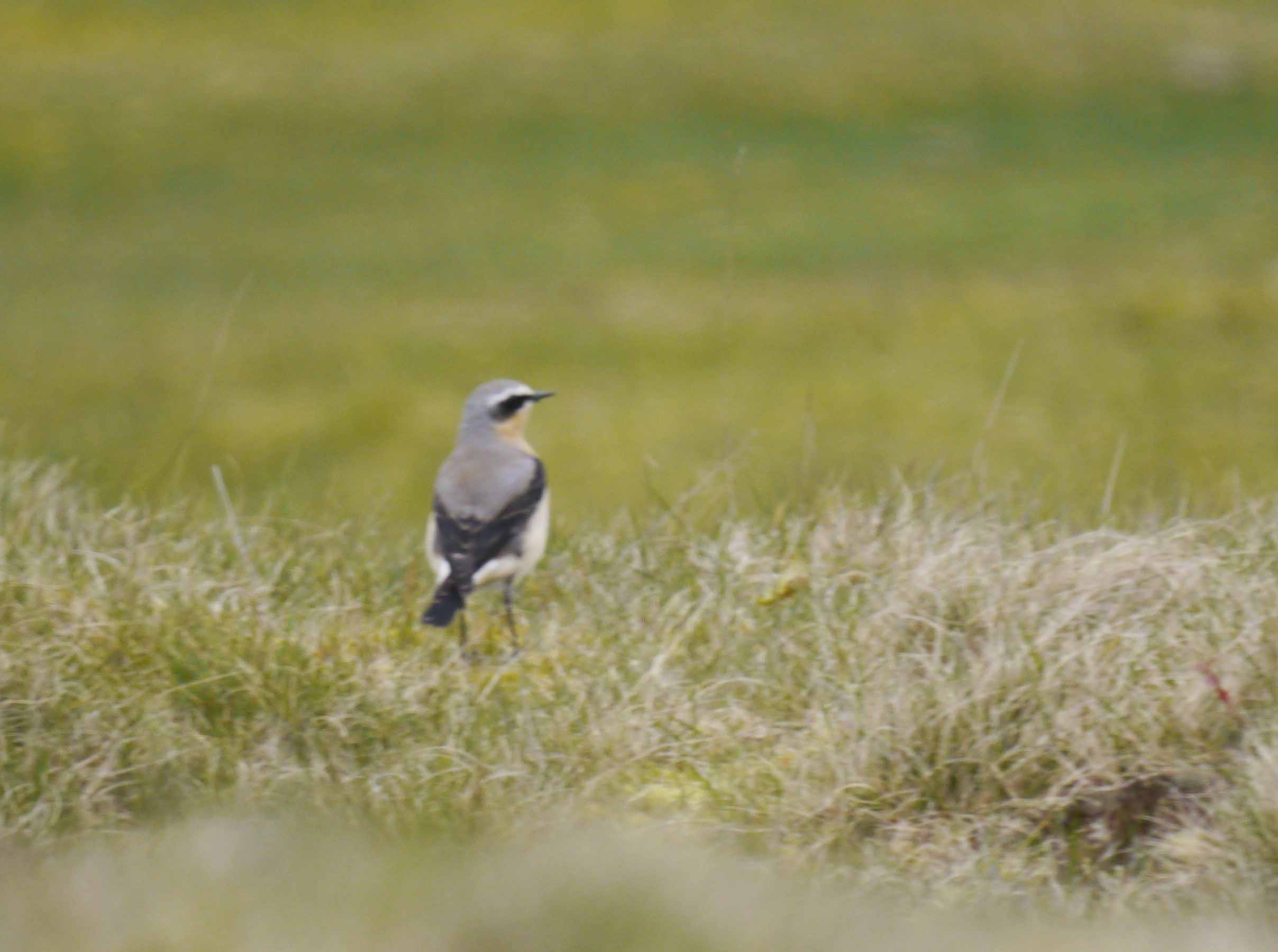
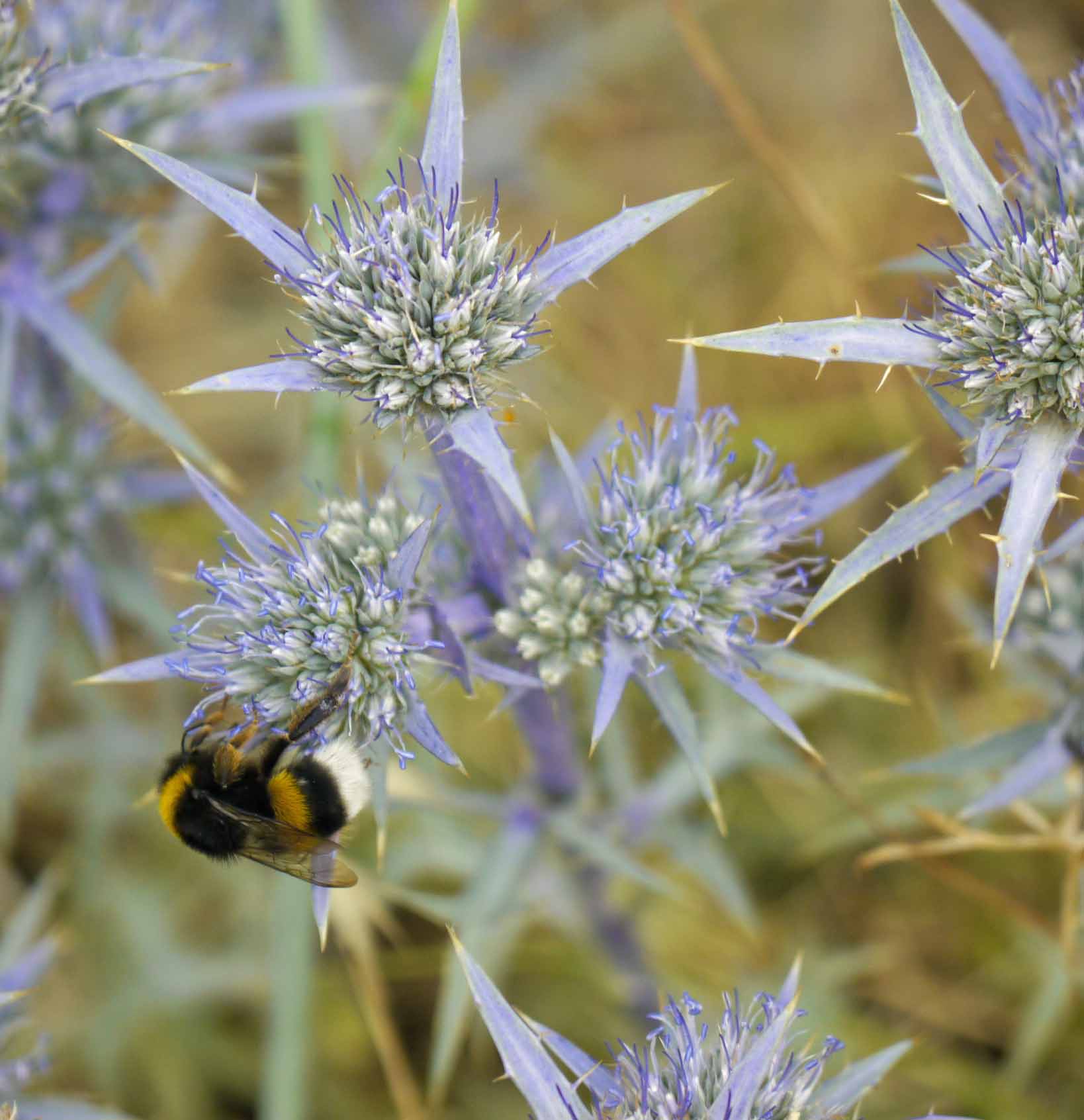
Middlebere and Arne RSPB, Dorset, 29 September 2017

Five of us departed at 7am, we took a cross country route through some pretty awful weather that had been forecast, it was due to clear by mid morning which thankfully it did. The most notable ‘car birding’ species on the way was a Red Kite perched on a fencepost adjacent to the road. We arrived at Middlebere raring to go at 1045am and walked down the lane toward the hide.

The hedges and fields were buzzing with birds, plenty of Chiffchaffs were zipping about in the foliage with a few Goldcrest  among the tit flocks. Large parties of Goldfinch and Linnet were harvesting food from the dandelions, perhaps a last juicy meal before the dry seeds of winter dominate their diet. A Marsh Harrier hunted over the reedy areas with a couple of Kestrels for good measure.

At the hide we had missed the Osprey, it had caught a fish and was no doubt hidden away in a tree enjoying it’s meal, the programme to establish a population in Poole Harbour through releases is very encouraging.

We settled in at the hide, a call out of “alright Martin” led to an old birding/football playing friend Simon, he also joined us (WWT, Birds Russia) on the Spoon-billed Sandpiper expedition to Chukotka, Far Eastern Siberia in 2011 where we shared some amazing moments birding in the ice and snow and dodging Bears etc. A catch up and exchange of local bird information in the hide followed as Simon is also a wader enthusiast. As it happens the hide contained a variety of friendly, helpful  and informative birders with a sound knowledge of Poole Harbour making for a pleasant visit.

Out on the Middlebere ‘lake’ (actually a shallow estuary channel) we scanned the mudlfats and creeks with the autumnal heathland backdrop (of Arne RSPB). The birdy carrot that was dangled came in the form of a juvenile Stilt Sandpiper which had been seen earlier but was not present now. This stray had been seen at Lodmoor, Weymouth and Lytchett Pools proving how mobile it can be.

No sign of it but no matter as the creek was full of waders, Black-tailed Godwits, a couple of juvenile Ruff, flocks of Redshank and Avocets, 2 Dunlin, 3-4 Spotted Redshank, 8 Knot, Grey Plover and Curlew were all seen well. Plenty of Little Egrets and Grey Heron were also seen and a lone sleepy Spoonbill.

After a spell in the hide we decided to relocate. The walk back produced a bathing Dunnock with Chiffchaff for company, half a dozen Stonechat were fly-catching from the scrub and a couple of skulking Dartford Warbler were heard and briefly seen.

A short drive away was Arne RSPB where we had lunch in the car. A variety of routes were on offer but we chose the Coombe Heath trail as it offered views of the Middlebere channel. First stop was at a small pond to see the magnificent Raft Spiders, they looked superb on the dark water. Checking the gorse carefully revealed 100s of spiders and webs. Colin is going to do some research and hopefully report back on some of the species we encountered, I certainly wouldn’t want to be an insect trying negotiate my way through that silken ‘minefield’.

Raft Spider

Raft Spider, Arne RSPB, MJMcGill

Back up on the heath looking down into the channel gave us more views of the waders, many had moved up with the tide. A panic saw godwits and Avocet flocks flying up stream with no other species for company but returned with the Stilt Sandpiper as they headed downstream. We eventually relocated the godwit flock that contained 8 Knot and I picked up the Stilt Sandpiper on the shore.

Whilst talking everyone in onto the bird it walked in among the godwits and was hidden, we couldn’t see it at all, forty minutes checking the waders at our three favoured locations followed, it couldn’t be seen and I was the only one who had seen it, was I making it up!

One last look through the godwits on the dropping tide and there it was, out in the open, feeding with the Knot and finally giving everyone a decent view with favourable light. A little bit of relief for me to prove I wasn’t seeing things, this smaller North American wader was easily lost among its larger companions and was probably asleep during the earlier search. It was also great to watch five Little Egrets form a feeding co-op, all walking in a line to push the fish ahead in the channels.

Phone-scoped image of the Stilt Sandpiper among the godwits

Stilt Sandpiper, Arne RSPB

A pleasant walk back to the car park offered another hide and seek Dartford Warbler, mostly hide,  at least the Green Woodpecker showed well in the same area earlier. Another short drive away and we checked some pools at a local boat year (that allowed temporary access) for a Red-necked Phalarope that had been present recently (at one stage it also had a Grey Phalarope for company). A few Canada and Greylag Geese were seen as well as Kingfisher and Reed Buntings, the highlight was a flock of 11 ‘Jackdaw bothered’ juvenile Ruff on the water meadows. See pics below.

Ruff juvs 2

Ruff juvs

That was it for the day, over 50 species seen, I was glad of a decent drive home and we were back by 7.40pm.

Thanks to Barbara, Anne, Colin and Ruth for joining me.

Martin

Norfolk and the Suffolk Brecks, 17-19 May 2017

Broads, beaches and birds

An early meet and start to make our way through the traffic and heavy rain allowed us to reach our first natural birding stop of the day. The rain had eased but not the anticipation, this was more of a twitch as not a single one of us wanted to miss an opportunity to study a ‘trip’ of breeding plumaged Dotterel that had once again this year gathered on the fields near Choseley Drying barns, now a regular stopover.

We first spotted them as a Marsh Harrier flew over and flushed the party of eight, the birds flew about before disappearing into dead ground out of view. Patience and scanning was rewarded, Dot re-found the birds at the far end of the field so we all moved to a better spot near the road to watch them feed. The Dotterel looked marvellous, females being the brightest and in neatest plumages as this species has a role reversal, the males undertake incubating and tending the young.

Dotterel Dotterel 2

What a great start, one of the reasons this trip was timed on these dates and hard to top despite some great days to follow  it turned out to be the highlight of the trip for all. We also noted Whitethroat and Yellowhammer along the hedgerows before a loo and brew stop at Titchwell RSPB.

The rain still fell but we walked out to the superb fresh marsh to see what could be found, a Bittern boomed, up to five Marsh Harrier could be seen over the reeds. Cetti’ Warbler blasted out song and a pair of Bearded Tits gave us rainfall forgetting views atop the reeds. Reed Buntings also ignored the wet stuff and sang on. The hide offered shelter and more good birds.

Bearded Tit 2 Bearded Tit

Two male Ruff in breeding plumage, small numbers of Dunlin, Sanderling, Ringed Plover with a Turnstone, Barwit and Redshank and larger flocks of Black-tailed Godwit and breeding Avocets. The Black-headed Gull/Common Tern colony also had a few Mediterranean Gulls hanging about. Red crested and Common Pochard were in the deeper water and a brood of bold or foolhardy Shoveler ventured from the reeds. Back on the seawall we saw a breeding plumage Grey Plover and Little Egrets on the salt marsh. A wander about the car park and wood was productive for birdsong but it was as we were leaving that a Lesser Whitethroat and Common Whitethroat sang,  the former showing well as we were in the car.

Moving on our next stop was at Cley next the Sea at the NOA watch point to search out an Iberian Chiffchaff, this subtle bird gave itself up immediately but was initially silent, it did decide to sing for us to confirm id. Singing Blackcap, Reed Warbler and Common Chiffchaff were also present. A short drive away was the Cley and Salthouse NWT reserve so we scanned over the marshes from the car park seeing a variety of typical wetland species before heading back to Hunstanton to check in and settle down for the night or have a drink and meal before retiring.

We all woke to a sunny and warm day, no rain. After a 0730 breakfast we loaded up and drove down to the Broads. First stop was at Potter Heigham for food supplies and soon after a long walk in the sunshine. We passed singing Whitethroats, Chiffchaffs and Willow Warblers along the hedges, woodland and broadland path.

One of our target birds for the day was a long staying Savi’s Warbler and it was singing nearby but sadly didn’t show for us. Looking over the Rush Hills scrape we abandoned birds for the magnificent Swallowtail butterfly that was showing off!

Swallowtail, Hickling Broad, MJMcGill

A brisk walk along the bank watching  plenty of Common Terns and Marsh Harriers were seen plus 2 Buzzard,  3 Hobby, 1-2 reeling Grasshopper Warbler and up to 5 bugling Cranes as they soared over Hickling broad. Another of the days target birds loomed into view, a giant Caspian Tern flew past.

Approaching Potter Heigham marshes we noted two Whimbrel, breeding Lapwing and got more great views of Marsh Harrier. The floods were busy with wetland birds,  a drake Garganey was pick of the ducks. A Black-winged Stilt made a short flight and came in to view briefly and the place was alive with Avocets. This new site warranted more time and exploration as reports of Spoonbills and Little Stints on the far marsh would have been a welcome addition. We retraced our steps at a slower pace seeing another Swallowtail and many other butterfly species including Small Copper, Painted Lady and Brimstone.

Once again the Caspian Tern appeared, this time it flew back and forth giving all good views over Hickling Broad, it was good to see this often difficult to catch up with species, they are well known for being mobile and heading off on long feeding forays. Another wait for the Savi’s Warbler simply proved it was taking a break. The Reed Buntings and Sedge Warblers could still be seen and heard.

Caspian Tern 2 Caspian Tern 3 Caspian Tern

Back at car we made the short drive to a busy broadside cafe for a break and sat out in the sun for a coffee and cake, one attendee also had an ice-cream. Refreshed we headed back toward North Norfolk stopping at Weybourne, Kelling Quags and Salthouse with another short scan from the Cley and Salthouse NWT car park. Plenty of birds seen. We tried our luck with drive-by listening on Salthouse Heath for Nightingale but they were having a rest, nearby at Wiveton bridge we watched a lovely Barn Owl hunting in daylight. A well timed stop for an early-ish evening meal at the Anchor at Morston provided a very good meal and allowed time to get to an evening session with Nightjars.

Barn Owl 1

A short stop to watch a pair of Grey Partridge was a must but we arrived at Wolferton on time to walk out to Dersingham bog. We had over forty fly-pasts of Woodcock with many of them being close encounters, it was raining but it didn’t put us or the Woodcock off. The Nightjars weren’t flying but up to seven churred from the trees, it was still a wonderful experience before ending the birding day, we got back to the hotel late and probably fair to say we were all ready for bed.

Our final day arrived breezy and showery, after loading up we stopped nearby at Hunstanton cliffs, the Fulmars put on quite a show on the strong updrafts, a stalwart Whitethroat sang it’s heart out on the cliff top. We headed along the coast to Thornham Harbour where Curlew, Redshank, Grey Plover, Meadow Pipits and flocks of waders were out on the shore, a Peregrine harassed them briefly. It was nice to see flocks of Brent Geese still around, maybe sensibly they were in no hurry to get to the Arctic circle just yet. Gannets mooched about offshore.

Another stop of Brancaster beach was made hitting home how cold and strong the wind coming in off the North Sea was. A couple of Med Gulls flew over calling, more Dark-bellied Brent Geese were on the saltmarsh and a Great-crested Grebe was the best bird on the sea. It was sensible to leave the exposed coast so we headed toward the Brecks to finish of the day.

First stop was at an undisclosed site, Stone Curlew was nesting, Stonechats on show and Mistle Thrush quite visible. A short drive away was a chance to scan wires and explore the lanes for Turtle Dove without luck, a stop at another heath allowed time for a walk. Stonechats, Yellowhammers and Great -spotted and Green Woodpecker were all heard. Another pair of Stone Curlew was seen at the nest with a pair of Woodlark also giving great views. It was a great end to the birding before leaving for home and a drive back to Gloucestershire.

Stone Curlew, MJMcGill

I’ve had great feedback from everyone who attended, thanks for the pleasing comments, it was a good trip with plenty of excellent birds.

Martin J McGill

Grousing in Denbighshire, 6-7 April 2017

Who’s hiding in the heather ?

Red Grouse and heather

A= Red Grouse

Having decided that a trip to N Wales could be of interest to an Anser group I began making some plans. A date was selected and after some adjustment to the original plans most of met at 2.30pm, with another along the way, this allowed time to reach the hotel and do a bit of birding before dark.

We stopped off just E of Telford along the way to listen out for an Iberian Chiffchaff, our visit was brief and the lost migrant was not in the mood to sing despite Willow Warbler and Common Chiffchaff singing away. Sparrowhawk, Buzzard and Kestrel all soared or displayed over the wooded site, Little Grebe trilled from the pond but best of all was an incubating Mistle Thrush on the nest. This was spotted by Ruth who proved rather alert, calling out birds during the trip.

We left in the sunshine but some cloud was rolling in as we reached our final birding destination for the day. The western slopes of Cyrn-y-Brain gave us a few birds as the sun set, it was quite chilly though. What was probably a Red Grouse was seen in flight by some, there were plenty of Meadow Pipits and a couple of pairs of Stonechat in the heather and gorse. Best bird was a Goshawk that arrived from some distance away and flew along the hillside giving us glimpses as it went through.

A comfortable night with a pub meal at the Hand Hotel rounded off the night before bed as we had an early start. Up well before the lark in the dark and we had assembled to make our way to the Black Grouse lek site, this being the main focus of the trip. Passing below the Eglwseg mountain a Tawny Owl flew across the car and landed in a tree to give us all views albeit in silhouette.

Up on the moor it was only just getting light, we could hear the display calls of the Blackcock, taking great care we birded using the car as a mobile hide. A lek of seven males came into view but we heard more. Moving further up the mountain we settled on another lek where up to 17 birds gathered. This species is very interesting to watch and also listen to when displaying and battling for dominance. This wonderful experience is essential for all birders as long as it doesn’t disturb the birds.

It was zero degrees so a frost had formed but we were so lucky to have a sunny dawn, the birds looked superb. Everyone had decent views so we moved on to a spot where we could scope them from distance and look over the area. A Curlew bubbled in the distance.

Red Grouse were also calling and displaying among the heather but some also flew up and glided down. Male Red Grouse pursued each other through the heather with their combs blazing. Meadow Pipits were numerous and we had closer views of Black Grouse near our watch point. It was simply superb but we had a date with our breakfast. Taking in the lek once again we tore ourselves away to a decent full ‘Welsh’ and a hot drink or two. The breakfast room looked over the River Dee and up to the Castell Dinas ruins which was a bonus. Ruth saw Grey Wagtails and two Mandarin on the river.

After recharging with a good meal we headed back out to carry on birding up on the moor. The grouse still performed, both species giving us great views. Scanning from a watch point a female Hen Harrier came through giving us all excellent views as it hunted over the heather. A selfish but typical Ring Ouzel dropped in from high and disappeared into a valley without letting anyone else see it.

Hen Harrier

Hen Harrier

We carried on stopping and scanning from the car to the Eclusham mountain seeing more Grouse. Another good vantage point and grassier area near the farms gave us five ouzel imposter Blackbirds, three smart Wheatear and a selection of other birds. Ruth called out a raptor that whizzed through, it was a male Merlin hunting pipits but the view was brief.

Wheatear

Wheatear

Fortunately we had another encounter with the male Merlin as he had isolated a Meadow Pipit, the small passerine was looping and stalling to prevent capture by the raptor. It’s a technique often used by pipits and larks, the outcome wasn’t known but it was a close and spectacular encounter.

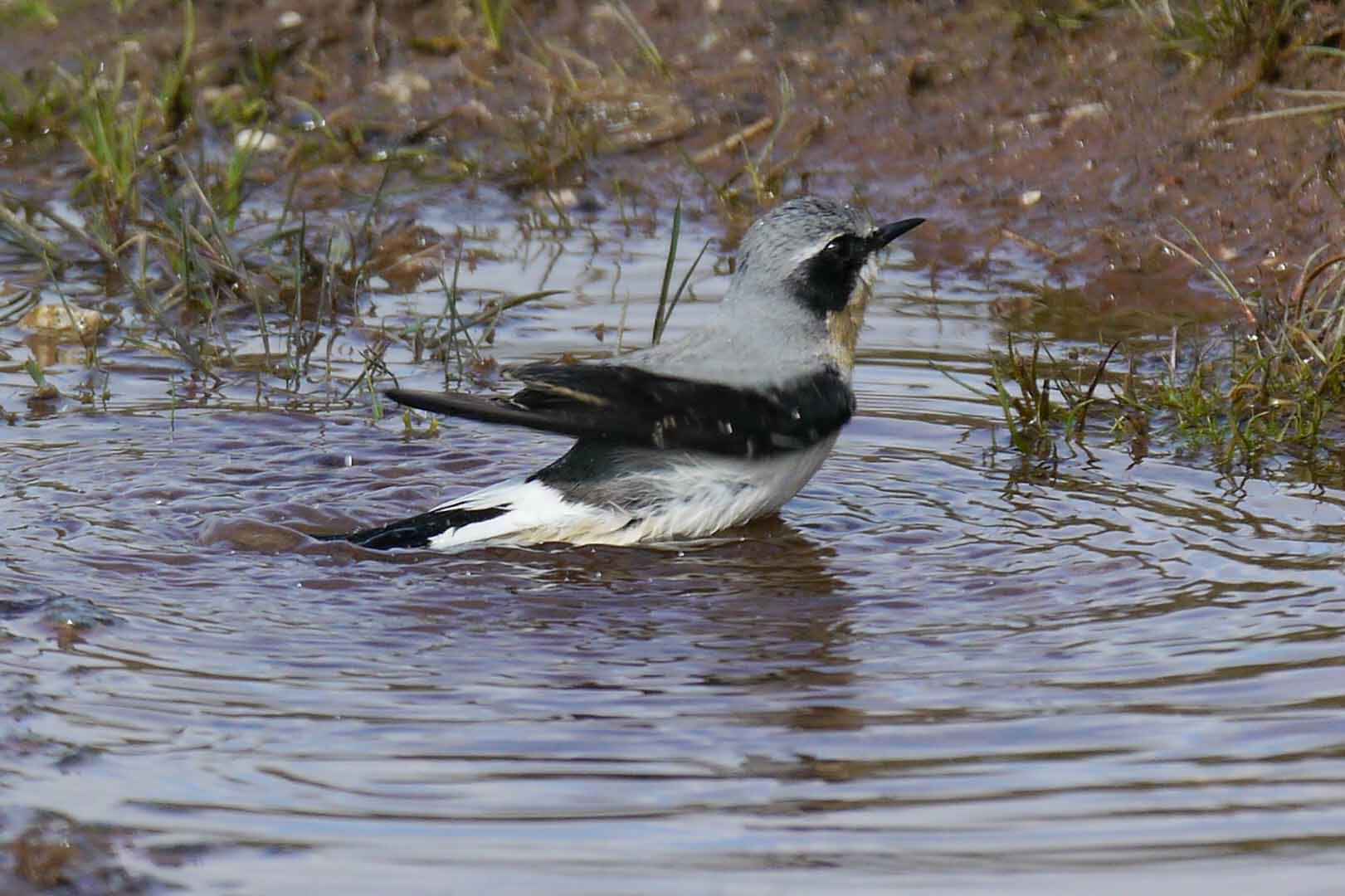
Moving down to the woods and valley we stopped to watch a Goshawk soaring before it dropped into the woods. A Redpoll was flying about calling. A few more stops were made in the warm sunshine with a near predicted Peregrine on the cliffs (the sixth raptor species of the trip) and pairs of Buzzards above Eglwseg. Willow Warblers, Chiffchaff and Green Woodpecker were seen and heard with alternative views to the ruins of Castell Dinas. A Wheatear bathed in a puddle next to the car with another on the slope nearby. This ended a brilliant morning, just about perfect birding.

Bathing Wheatear

Wheatear, male bathing, Eglwseg

We called in a Llangollen and then began our journey home across country, it may have been prudent to keep up to date with news as a Night Heron was showing at the Venus Pool but even without this bird we had done rather well.

A great trip and thanks to everyone who joined me.

Martin J McGill

South Devon, 24 March 2017

A cold and grey day dawned, all six of us were not put off in the slightest.

Our first stop of the day was at Powderham Church where the first bird of the day award went to two Cattle Egrets. This winter, especially late winter/early spring has seen an influx of this species involving record numbers in the SW. Our egret du0 had a couple of Little Egret and a flock of sheep for company. Walking down t0 the railway bridge we used the height advantage to scan the Exe at low tide. Flocks and small parties of Dark-bellied Brent Goose, Shelduck, Dunlin, Curlew, Bar-tailed Godwit, Grey Plover, Redshank, Pintail, Wigeon, Teal, Red-breasted Merganser, Great Crested Grebe, Little Egret, Cormorants and various gull species were on show.

Next stop was nearby at Powderham park where c15 Sand Martin fed over the pools, Shelduck and other common wildfowl were also roosting or perhaps sheltering from the cold NE wind. We made a couple of stops at Cockwood/Starcross to scan the estuary. Highlights included 3 Greenshank, a drake Goosander, 2 Shag, 2 Slavonian Grebe and Turnstones among the wader flocks.

Moving on to Dawlish Warren we had a short lunch stop and then scanned the sea from the seawall. A party of 3 and 6 Common Scoter, 2 Great Crested Grebe, a few Shag, two flyby Fulmar, Guillemot and a Red-throated Diver were noted albeit distantly. The six scoter flew in closer which gave us a better view. Parties of Meadow Pipit and an alba wagtail flew in off the sea. Turnstones did a tightrope walk act along the groynes.

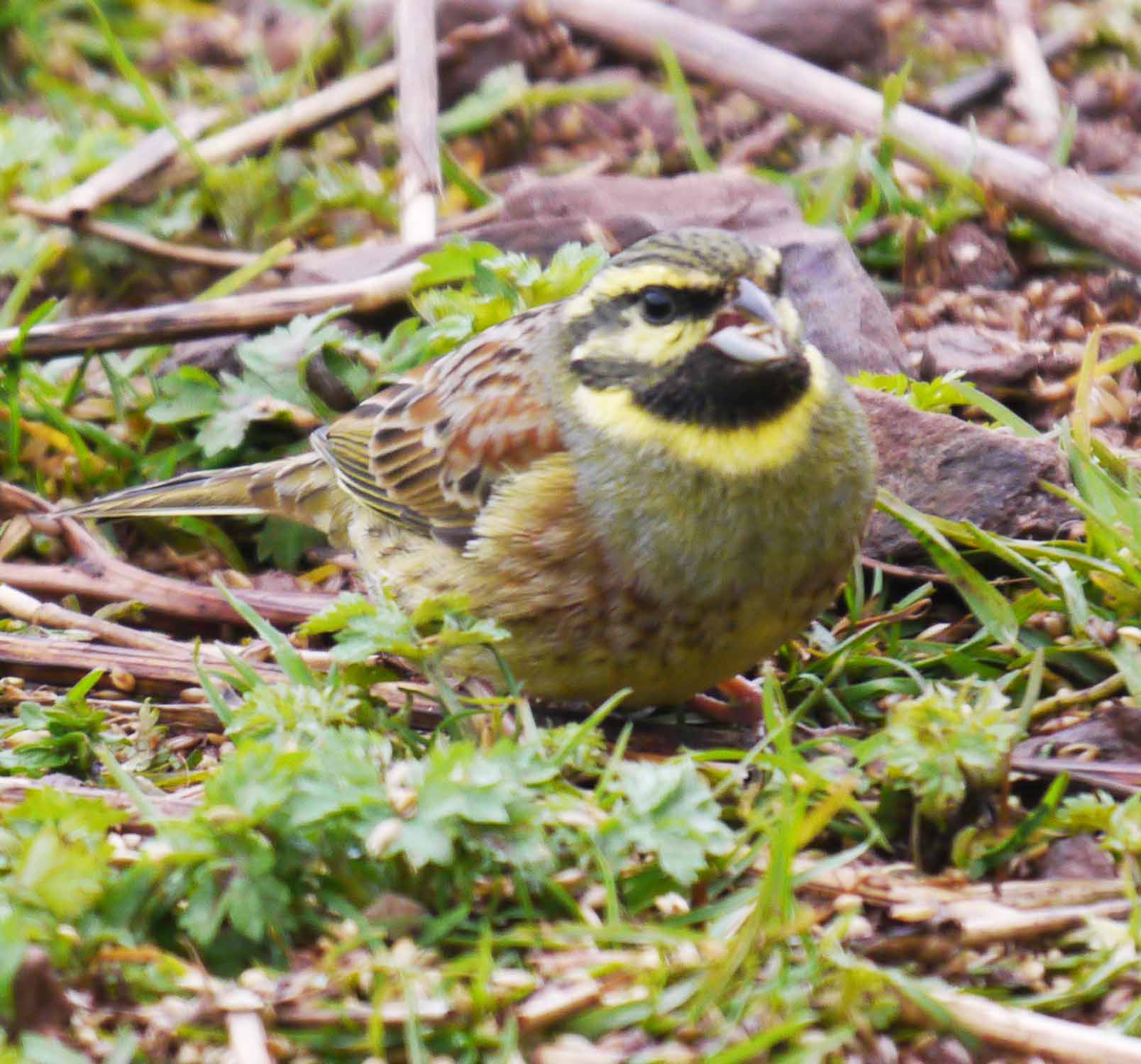
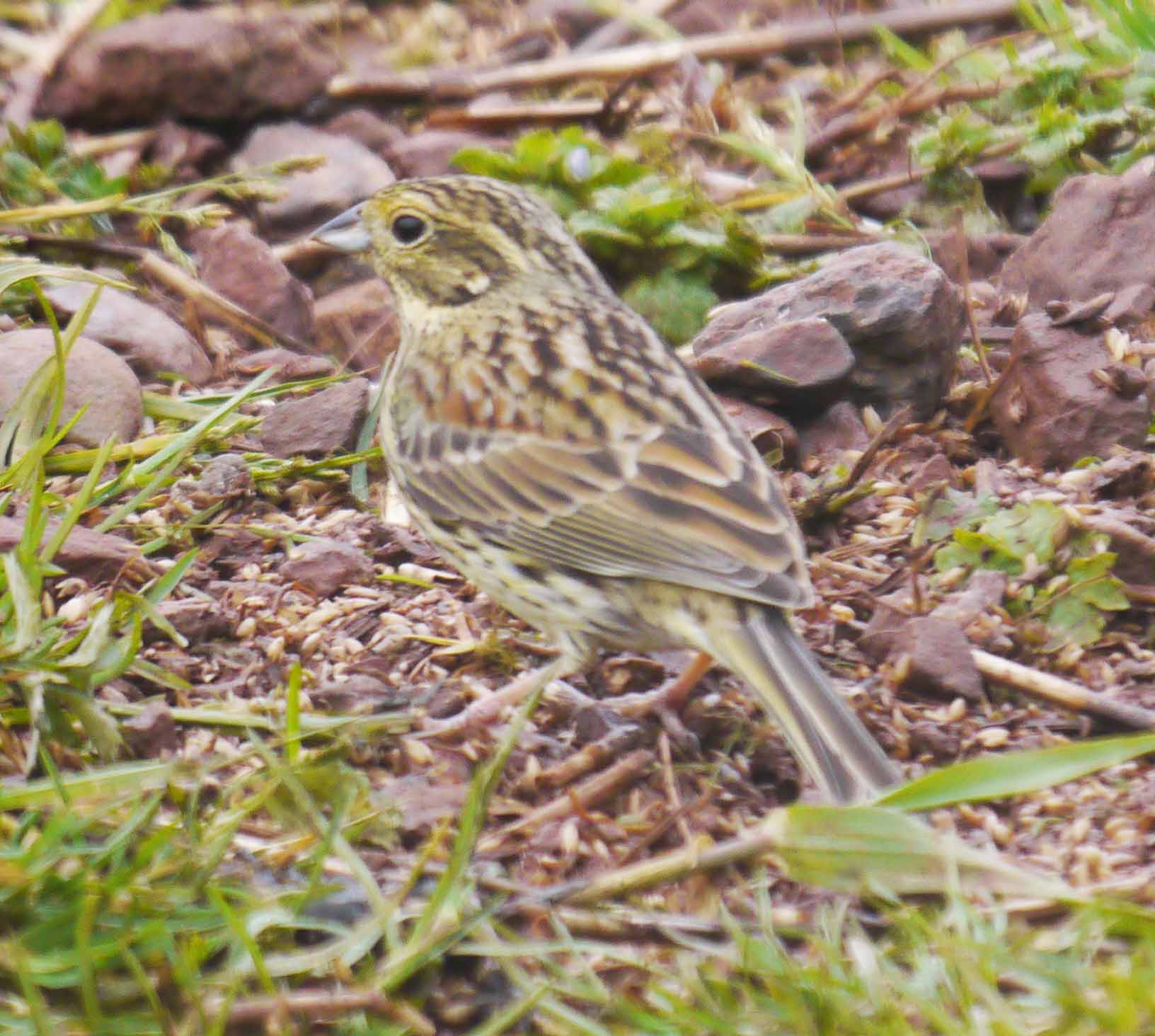
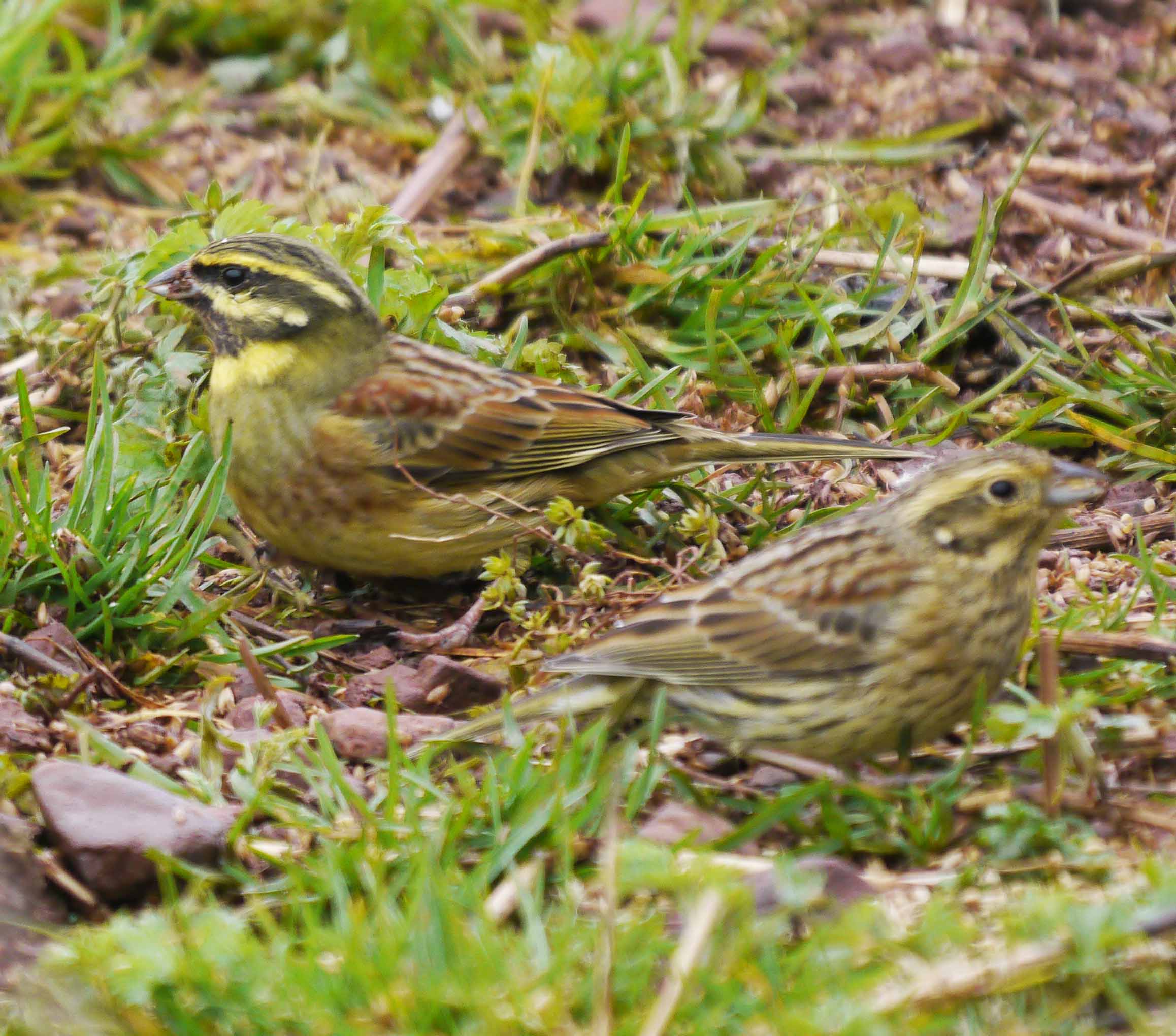
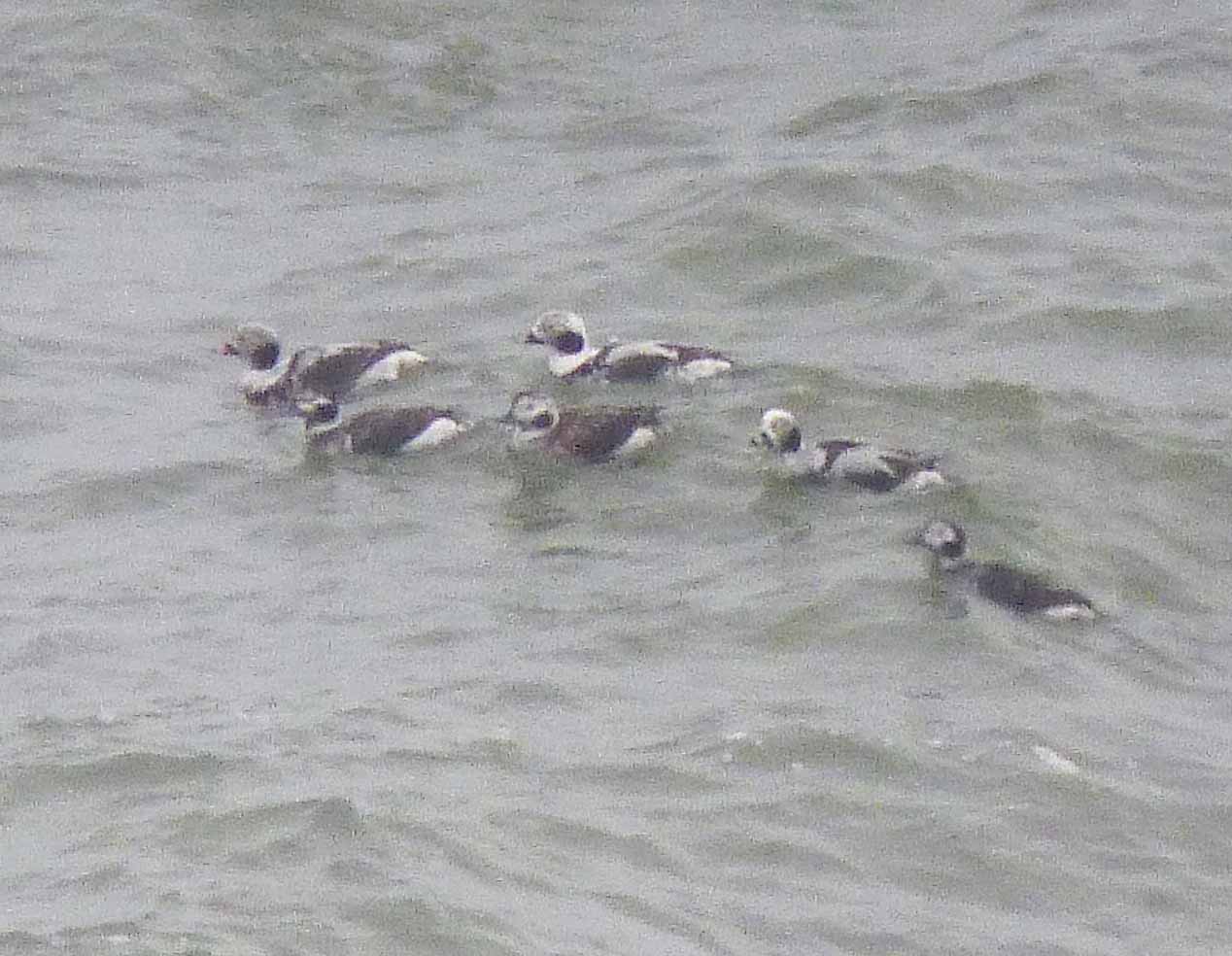
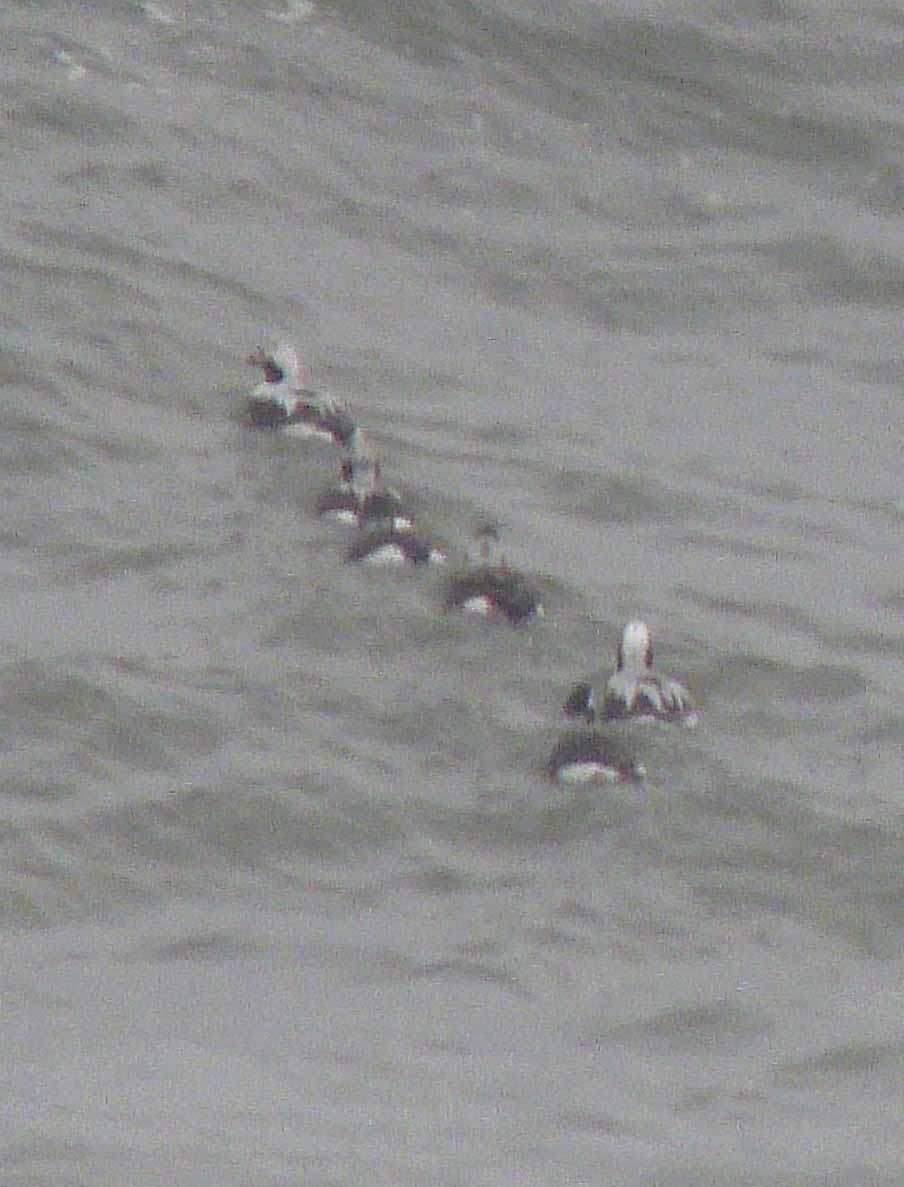
A short drive beyond Teignmouth and we were able to park and then scan the clifftop fields at Labrador Bay RSPB, we located a flock of 25+ Cirl Bunting as they fed close to the hedgerow. It was great to watch them and listen to the contact calls. A nervous flock of Linnets proved why when Sparrowhawk went through. A few Chiffchaff were also grubbing about in the fields and hedgerows for insects, no doubt newly arrived. From the lower path we enjoyed listening to singing Cirl Buntings and watching a pair of Kestrel below us. Attention was drawn to the sea, a party of six Long-tailed Duck, 111 Common Scoter also harboured two larger and darker 2cy Velvet Scoters. A few Gannets streamed by and  Peregrine had a look at us before it cruised along the cliffs.

Back up at the car park we saw a Sparrowhawk over sea before it headed inland. A group decision was to reject plans to look for the Humpback Whale that was resident in Start Bay the preceding month. It had got itself tangled in crab pot ropes a couple of days before and needed a rescue party to cut if free. It wasn’t seen the day before so we stuck with the birding.

Our last stop of the day was at Bowling Green Marsh RSPB which also had c30 Sand Martin as well as 4 Little Grebe, Teal, Wigeon, Mallard, Shoveler, Black-tailed Godwit flock, Redshanks, a Green Sandpiper, Sparrowhawk and calling Cetti’s Warbler. At the Clyst viewing platform we had a large flock of Redshank but it was clear many of the wader species had departed for the summer, especially the Avocets, we saw none!

To top the day off the group saw their first two Swallow of 2017 in sunshine as I was off collecting the car.

Thank you to all who joined me, it was a very good day out. Some images of the day follow.

Martin
Cirl Buntings at Labrador Bay RSPB

Cirl Bunting, Devon, MJMcGill 2 Cirl Bunting, Devon, MJMcGill, 4 Cirl Bunting, female, MJMcGILL Cirl Buntings, Devon, MJMcGill

Long-tailed Ducks in Labrador Bay

Long-tailed Duck, Labrador Bay, MJMcGill LTDUCKS 4 LTDUCKS, 3 LTDucks 2

LTDucks

Velvet Scoters (1s male and female, top two) with Common Scoter

Velvet and Common Scoter, Labrador Bay Velvet and Common Scoter

Forest of Dean, 4 March 2017

Another late winter ‘FoD’ visit saw nine of us meeting up (many thanks to Keith for giving Jeanne a lift). It was a fine chorus that greeted us, numerous Song Thrush, Robin and a variety of tits singing and calling. Coal Tits and Nuthatches were seen down to ‘our level’ thanks to some seed. A Mistle Thrush was busy collecting moss from the upper branches of an oak, something insulating to add to its nest.

Out on the field we had good views of the flocks of Redwings along with the common thrushes. With a little patience and quiet stalking a couple of Hawfinch were located, unfortunately these birds were very secretive and refused to show for us. Great spotted Woodpecker was also noted.

We relocated to take in a walk up to Crabtree Hill, our first birds were a pair of Crossbill atop the larches, we had reasonable scope views before these birds dropped in to feed out of view. Goldcrest were singing in the firs and many pairs or small parties of Siskin were mobile as they flew over or stuck to the canopy. A trio of Redpoll stopped for a short time in the top of the trees but flew away before we could ‘scope’ them. The finches were not going to make it easy for us!

At the trig point we scanned the heath, our target bird was present as we watched the wintering Great Grey Shrike from a safe distance, this is a popular bird, I must thank everyone for accepting scope views only, we had left it the whole heath to hunt in peace. A Reed Buntings was also skulking in the gorse and grass before flying off over us. A distant Goshawk soared over the valley along with a Buzzard. Four Lapwing flew down the valley in the distance.

We wandered back to take in a refreshment and comfort stop in Parkend. A take out coffee and cake was followed by a walk through the woods and a search of the stream. The brook was in spate after heavy rain the day before, we couldn’t locate any Dippers but a Treecreeper gave us good views. Back at the car a flock of 6 Hawfinch flew over us and landed  in the canopy, one or two showed through the branches until they all flew back over us and away.

Moving on to New Fancy View a female Goshawk flew across the road just after leaving the village but only for the driver (me), at the viewpoint it was rather busy with people so we went for another woodland walk with a few common species noted (a party of Raven the pick of the bunch) before we dropped in at the Cannop Valley. Grey Wagtails were about the ponds and a Cormorant came in.

Out in a nearby clearing we picked up a Sparrowhawk and another Crossbill flew up the valley. Back to the car for a short drive to the upper pond where we located Mandarins on the flood puddles in the woods and a Marsh Tit was added to the list. The weather was closing in with a heavy shower so we all decided to head home and take in Walmore Common on the way.

The ditches held a few Wigeon and Teal with Grey Heron and a pair of Mute Swans but the wintering Whooper Swans had probably moved on. We had run over on time getting back to Whitminster by 3pm, this concluded the extended half day out.

Thank you to all who joined me

Martin

Poole Harbour and Purbeck

4 February 2017

Weather forecasts didn’t look good for much of the week but with 24hrs to go the storm fronts had whipped through the English Channel and opened up the possibility of a good day ahead. Seven of us met up, some at Whitminster. We departed with a Blackbird, Song Thrush and Robin dawn chorus at 0700am. We met up with others on the way south down the M5.

A singing roadside Corn Bunting forced a reactive and brief layby stop on the Wiltshire/Dorset chalk downland. Although we could only hear the bird we soon spotted a pair of Stonechat, a Red Kite and Roe Deer and a few released Red-legged Partridges before moving on.

Out first stop was to take on the flooded lane and fields to visit RSPB Lytchett Fields which is situated on the north shore of Poole Harbour. The viewing area over the first pool held two Water Pipits, a few Teal and we heard a calling Water Rail. A female Marsh Harrier hunted over the reed bed shore of Lytchett Bay and distant Avocet, Curlew, Wigeon and Shelduck could be seen on the mud.

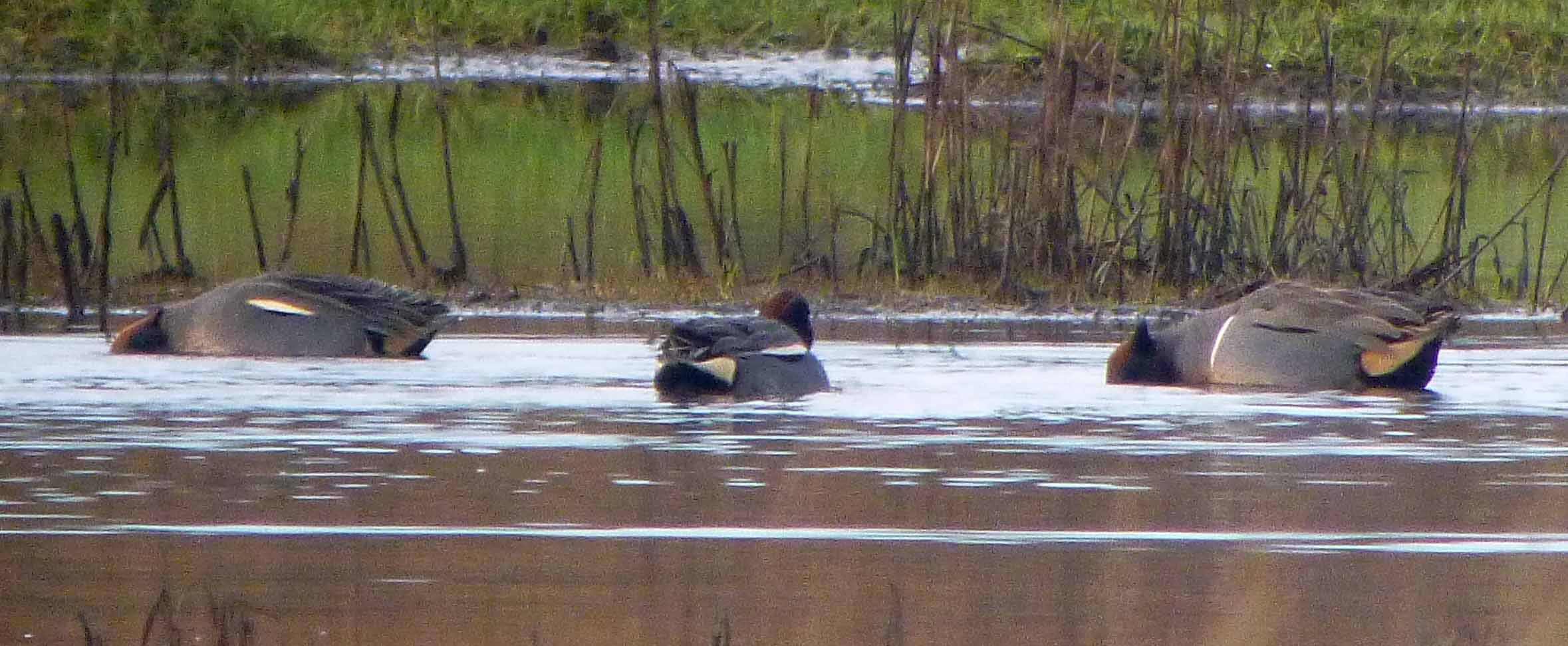
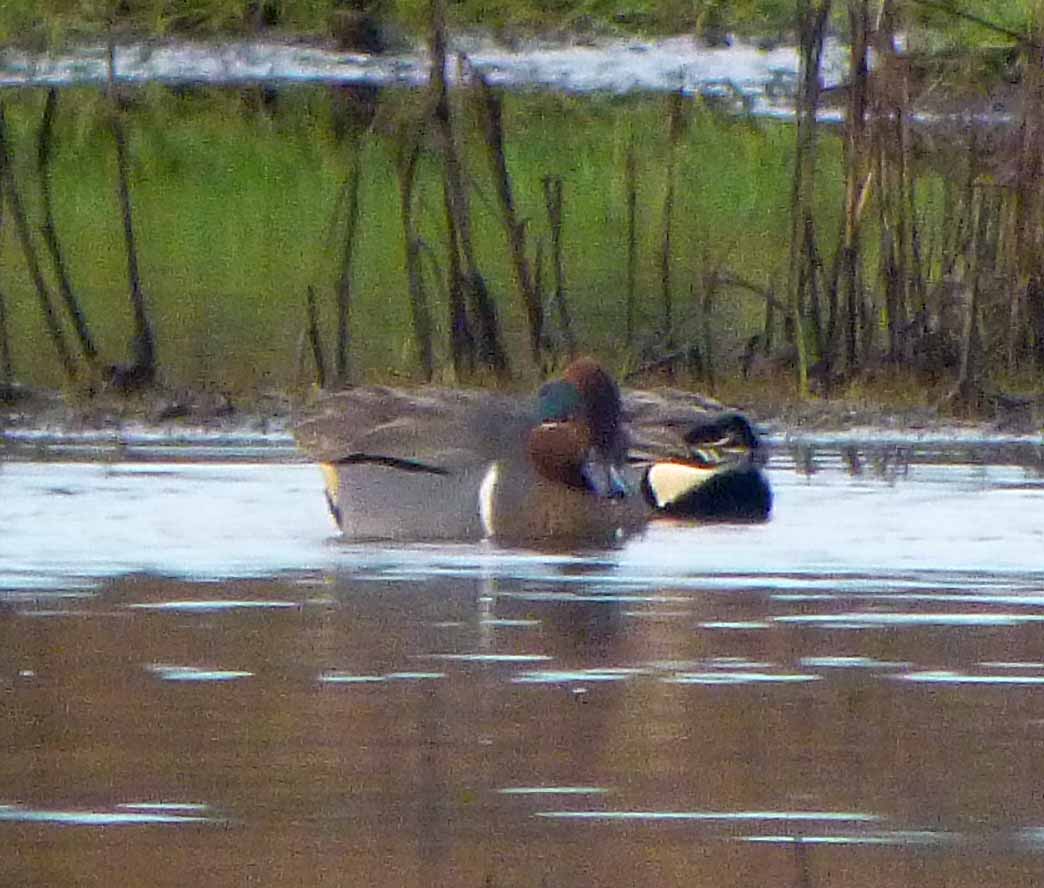
Moving on to the viewing areas overlooking the newly excavated pools we noted a Green Sandpiper in a ditch (JV) saw a Dartford Warbler in the gorse. At the viewpoint a bonus male Green-winged Teal was among the Teal flock. The Lapwings had a single Black-tailed Godwit for company. A Stonechat and a Long-tailed Tit flock were appreciated.

GWT 1

gwt 2

GWT 3

Keen to catch the tide our next stop was at Upton CP, the park grounds had plenty of singing and calling passerines including Nuthatches. After a hot drink and snack we made our way to the shore of Holes Bay where the waders were roosting. A large flock of Avocet could wait it out in deeper water with the ducks however large numbers of busy Dunlin and Black-tailed Godwit were pushed in closer, a strange leucistic godwit sported a white head and shoulders which stood out.

Smaller numbers of Redshank and Curlew were also seen in the saltmarsh as well as Pintail, Gadwall and Shelduck, a few Little Grebe were also spotted. It actually felt warm in the strong sunshine in this sheltered part of the park.

Our next port of call was the chain ferry at Sandbanks, the ‘voyage’ didn’t last long but it was nice to be out in the sunshine. I saw two Black-necked Grebe, one in the channel and the other in Shell Bay. A quick unload of the ferry meant we had to gather everyone up at the toll, soon after we stopped at a good spot for Dartford Warblers.

A short walk from the car and we were soon watching two of these tiny long tailed warblers as they posed on the gorse and heather. Well done CC for being alert. A Sika Deer ran across the path as we walked to a better spot to scan Poole Harbour. Goldeneye, Red-breasted Mergansers, Great Crested Grebe, Brent Geese, Grey Plover and Knot were all seen.

Another short drive away was the Studland Middle Beach, a calm sea gave up at least six Black-necked Grebe, three Great Crested Grebe, two Great Northern Divers, a few distant auks (probably Guillemot) and 11 Common Scoter (inc 2 adult drakes). Two Mediterranean Gull circled offshore.

Moving on to the Arne moors we spent the rest of the day scanning from the high ground of Slepe Heath looking over Hartland Moor to Corfe Castle and back across the reeds of the Wareham Channel to Swineham Point. Our patient efforts gave us Marsh Harrier,Green Woodpecker (on call), flyover Meadow Pipits, Linnet and Great spotted Woodpecker and Greenfinch. Another Dartford Warbler from the scrub. The Grey Herons began heading off to roost which was a handy signal for us. We didn’t get to see our final target bird of the day, no Hen Harriers appeared, it was still a good day full of birds in a lovely part of Dorset.

Thank you to everyone who joined me for the day out.

Martin
North Norfolk 7-9 December 2016

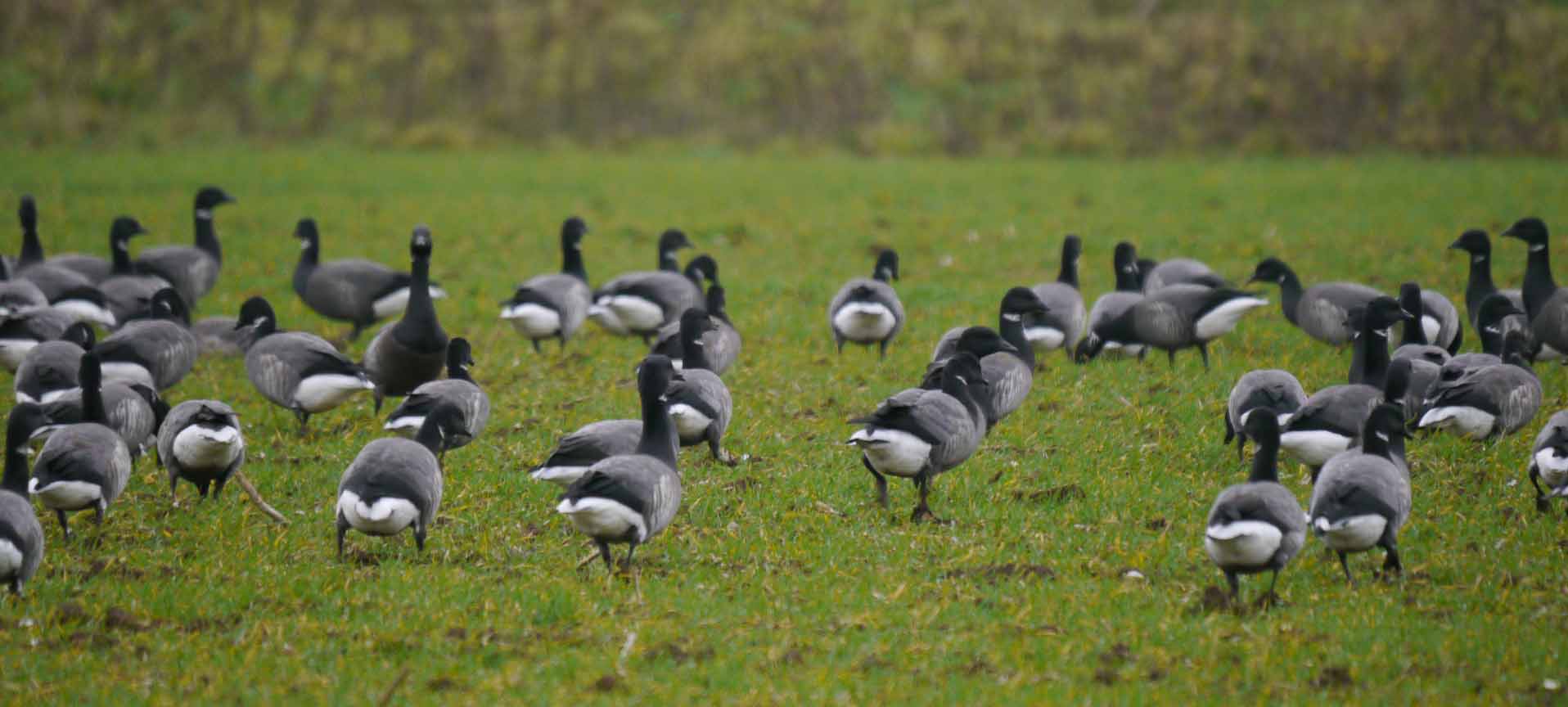
Dark-bellied Brent Geese near Burnham Overy

Dark-bellied Brents, Norfolk, MJMcGill

7 December 2016

We all assembled early in the morning, all of us ready and raring to go birding in North Norfolk once again. A stop or two to take in a brew and a rest stop along the way was welcome,  we did pass a few birds along the way, pick of the bunch would have been the Whooper Swan flock. The first birding stop was at Burnham Overy, a walk down the hill from the coast road to link up with the seawall path. This route took us past flocks of Pink-footed, Greylag and Dark-bellied Brent Geese, among them a few Barnacle Geese grazed. Marsh Harriers hunted over the marshes between here and Holkham NNR, these raptors were often responsible for putting up the flocks of Lapwing and Golden Plover.

Reaching the seawall we passed flocks of busy Dunlin as well as Redshank and Grey Plover. At the dunes we headed along the beach looking for an autumnal leftover, a long-staying Issabelline Wheatear. Fortunately a flock of 20 Snow Bunting dropped in and gave us great views as they moved up and down the beach and fed on the strandline. A good search of the beach and adjacent dunes did not reveal the target bird, it was getting very breezy so we headed back enjoying the open, wild scenery and birds.

At the guest house we received a warm welcome with tea and cake. After a wash and change what followed was a team effort putting up the Christmas tree! I couldn’t claim to have helped out but it was up and ready for decorating in no time, a first for an Anser trip. Our hosts may have meant it as a jovial comment but at least it saved them a job. A good meal followed in one of the local Dersingham pubs and we were all ready for an early night.

8 December 2016

Breakfast was leisurely and was enlivened by the skeins of Pink-footed Geese heading from the Wash inland for the day. We made our way across country toward Docking, North Creake and Burnham Market to look for flocks and connected with a few groups here and there. It wasn’t long before we were at the Lady Anne’s Drive where we saw Wigeon and Snipe in the fields and were soon heading out to the beach, BW was last to set off and noted a Grey Partridge in the field next to the drive.

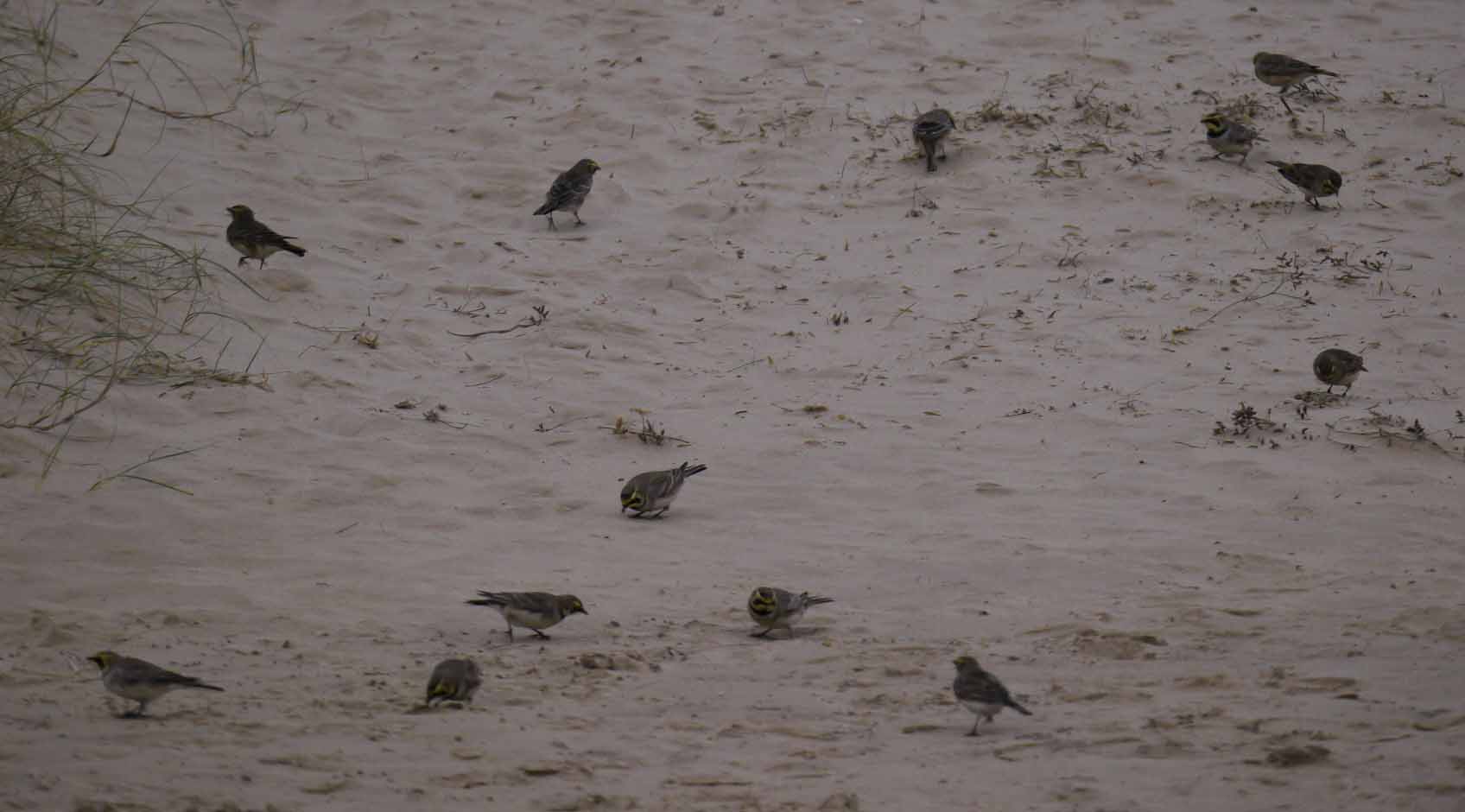
Out on the salt marsh between the dunes and woodland belt we searched for our target bird, 19 Shore Lark flew in toward us and landed nearby, the flock scuttled across the sand gleaning seeds as they went.  It is always a treat to spend time with these charming birds and there was no hurry to leave them. It has been a brilliant winter for this species in the UK.

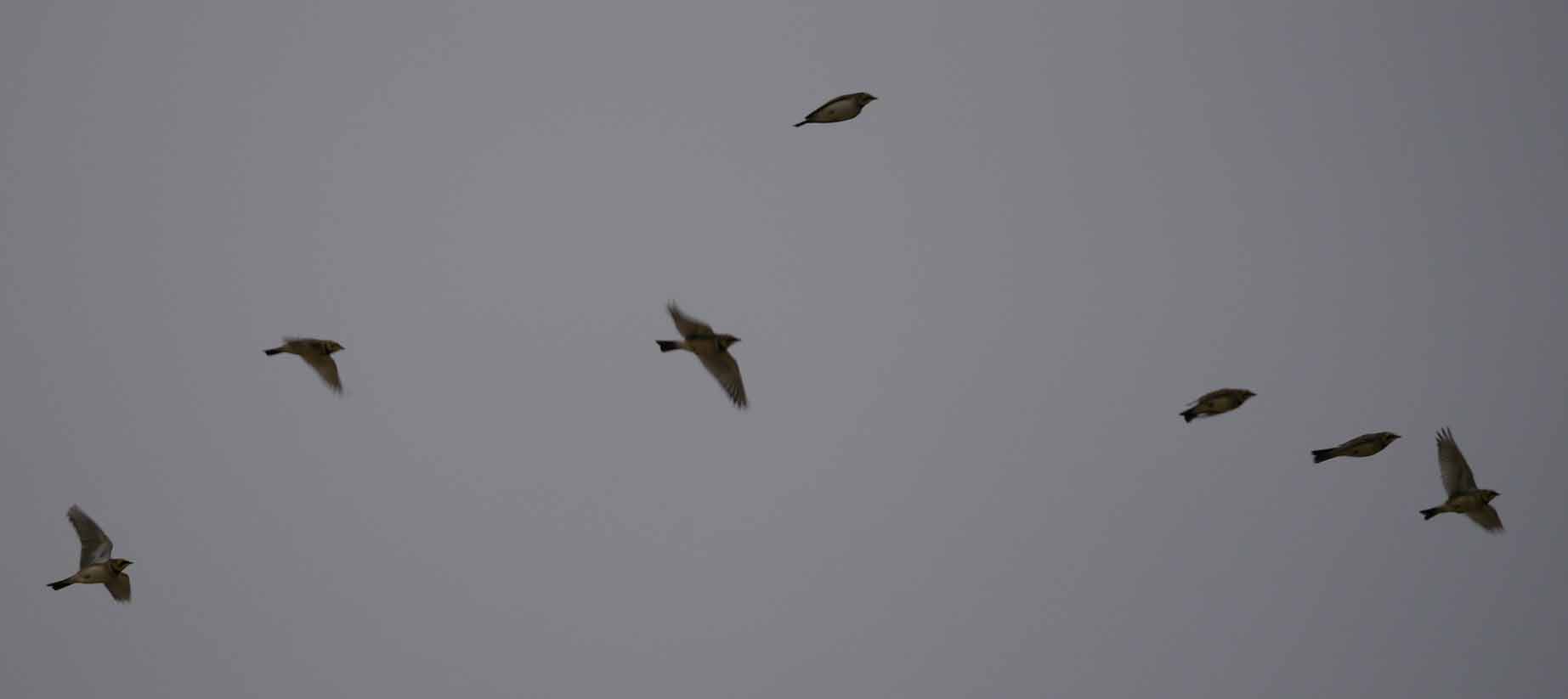
Shore Larks

Shore Lark, Holkham, MJMcGill

Shore Larks in flight, MJMcGill

Shore Lark, Holkham Bay, MJMcGill

Eventually we walked the short distance to the beach to make full use of the high tide to scan for birds. Out on the sea we logged Great Crested Grebes, a fly by Great Northern Diver as well as a few Red-throated Diver. A flock of c25 Velvet Scoter were fairly close in, a larger flock of Common Scoter with 15+ Velvet Scoter were further out with 4 Long-tailed Duck. Heading back through the Holkham Gap we took time to scan the mobile 400 strong Linnet flock, four Twite showed themselves to us when the flock settled on the beach.

Moving on quickly we wanted to catch the high tide period at Titchwell RSPB beach so we didn’t stop to take in many of the birds on the way. KL spotted a Kingfisher as it fished unconcerned by our presence from WW2 pill box. Reaching the beach as soon as we could was a good strategy, we enjoyed a great hour or so going through the birds that drifted past, many were close in. A few Red-throated Divers and a Black-throated Diver were seen well plus Great Crested Grebes and a hide and seek Guillemot. The birding was great, at least 25 immature/female Velvet Scoter were joined by 45+ busy Long-tailed Duck including some brilliant adult males. An adult male Common Scoter with two females, a few Red-breasted Mergansers, c 20 Goldeneyes and c8 Eiders also bobbed about in the waves, further out a flock of scoter were mostly Common but also contained more Velvets. Quite a show and among the best ‘sea-ducking’ for many years.

Wandering back we were able to enjoy the many freshwater dabbling ducks, Little Grebes, Grey Plover, Bar and Black-tailed Godwits, Dunlin, Avocets and  Shelduck. Once again KL alerted the group saying she had seen a raptor with a white rump and suspected a harrier. A short wait and it appeared again, we watched a female Hen Harrier as it hunted the dunes and saltmarsh before flying high to the east. More Marsh Harriers were seen over the reed bed on the return walk.

With a bit of light to spare we tried our luck at Thornham Harbour and at Holme next the Sea for a dusk Barn Owl but it was just too windy and was now getting dark, time to head for our accommodation in Dersingham. The evening destination was a ‘Pub of the Year’ in Snettisham for a meal and a drink to celebrate a good day.

9 December 2016

Another morning and another Pink-footed Goose fly-by breakfast, replete we loaded up the car with our gear for a drive inland searching for geese inland, when able to stop and scan safely we settled on a large flock of Pink-footed and Greylag Geese, although no other species were seen we could at least appreciate the birds in full view and without causing them to take flight.

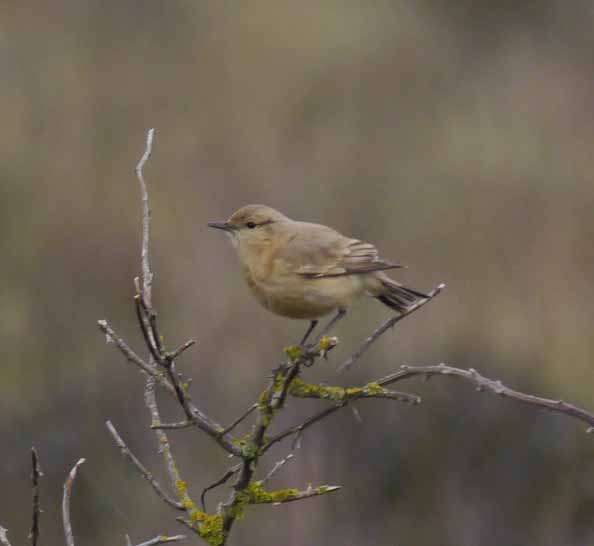
We decided as a group to try our luck back at Burnham Overy Dunes again, another good birding walk this time from the harbour to Gun Hill followed, a thorough search delivered Stonechats and a few thrushes but it wasn’t until we nearly gave up when NS found the Issabelline Wheatear feeding between the saltmarsh and dunes. We spent a good while enjoying it, taking in the features until everyone was satisfied. This is still a very scarce bird in the UK and unusual to see one in the month of December.

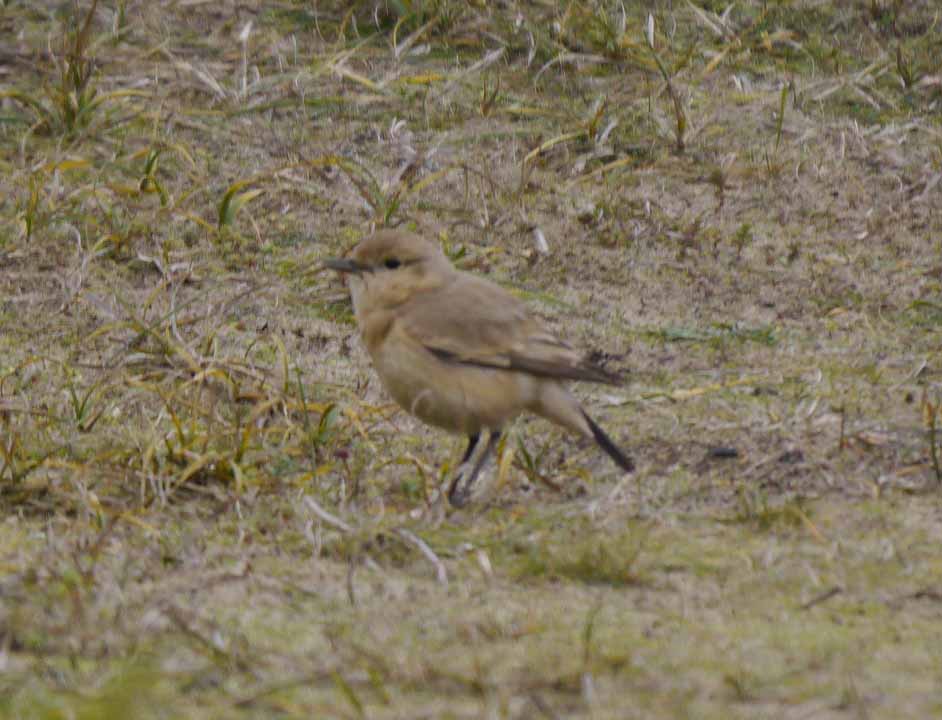
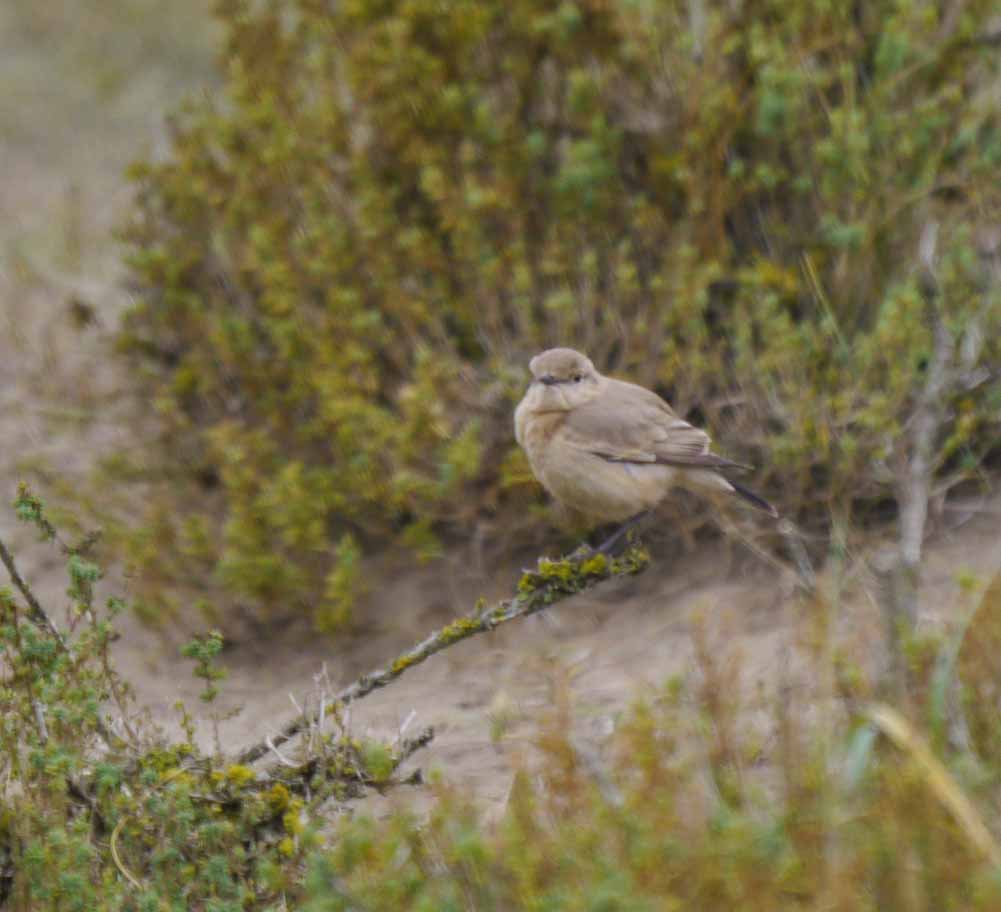
Issabelline Wheatear at Gun Hill

Issabelline Wheatear, Gun Hill, 9 Dec 16 MJMcGill

Issabelline Wheatear, Gun Hill, 9 December 16, MJMcGill

Issabelline Wheatear, Gun Hill, MJMcGill

As it was our travel day back home we discussed various birding possibilities but we could only manage a short stop at Choseley Drying Barns. A Rough-legged Buzzard had been reported, we could only find a very white Common Buzzard in the location where the RLB was last seen so it may have been a case of mistaken identity. It was busy at the barns with farm machinery so this concluded our birding for this trip other than seeing dozens of Egyptian Geese near a roadside pond.

Thank you to everyone who joined me on another successful visit.

Martin


Catching up with chat and a Stonechat

Bob Radford and I set off in good spirits during a horrendous Friday afternoon trip to Lancashire, it was a six hour journey! We made the effort to visit the NW to catch up with Graham and Jeremy at the formers home and have a night out in the excellent Burscough Bridge public houses. On Saturday we had tickets to join the travelling ‘Gasheads’ (Bristol Rovers supporters) at Boundary Park, home of the Latics (Oldham Athletic). Bob is an avid Oldham fan so we had some fun with the football banter. All of us could have done with an earlier bedtime!

After a highly favourable 0-2 win for the Pirates (Bristol Rovers) we dropped Graham and Jeremy back, had a snack and said goodbye, Bob and I made a late decision to head to the East coast so we booked a room in Hull, ate an Italian meal and settled down for a much needed early evening. We stayed at the functional Gril Campanile Motel, had a continental breakfast surrounded by Blackbirds, tits flocks and Goldcrest and were soon on the road early for Kilnsea, We parked up in breezy sunshine and took a look at the sea. 2 drake Eiders and 4 Gannet went N, Red-throated Divers were heading S.

We briskly walked the three miles from Kilnsea to Spurn Point seeing various birds on the way, the light would be better on the way back so we didn’t linger. At the point we searched the Sea Buckthorn and dunes for the interesting Stonechat reported the day before. This active bird could well be a Stejnenger’s Stonechat, a far eastern representative of the Saxicola group. Initially it was hiding, we spent the time scanning the Chiffchaffs, Goldcrests, Reed Buntings and watching thrushes such as Redwing and Fieldfare drop out of the sky.

Putative Stejnenger’s Stonechat at Spurn Point
I was struggling to digi-scope this mobile bird, there were plenty of photographers present that will undoubtedly produce detailed images.

Stejneger's Stonechat poss, Spurn, 23 Oct 16, MJMcGill (3)_edited-1 Stejneger's Stonechat poss, Spurn, 23 Oct 16, MJMcGill (4)_edited-1 Stejneger's Stonechat poss, Spurn, 23 Oct 16, MJMcGill (6)_edited-1 Stejneger's Stonechat poss, Spurn, 23 Oct 16, MJMcGill (7)_edited-1 Stejneger's Stonechat poss, Spurn, 23 Oct 16, MJMcGill (9)_edited-1

Eventually the Stonechat re-appeared and gave us good scope views but it was always on the move, it often towered into the sky to catch flies and never stayed on one perch for long as it ranged the sheltered side of the point. After a good hour or so with this busy bird we wandered back along the peninsula birding along the way. Apparently droppings were collected for DNA analysis, this and the hundreds of photographs taken should help identify the origin.  Dark-bellied Brent Geese, scores of waders, a Northern Wheatear, Great Tits, Blackcaps and commoner passerines were all noted. It was generally quiet especially compared to recent weeks here. Back at Kilnsea we put or feet up, had a brew and a cake in the Blue Bell Café and decided to start back for home.

A very enjoyable sociable weekend with a bit of birding thrown in, thanks to Bob for all the driving and good company throughout.

A forty eight hour day trip! Lincolnshire and East Yorkshire, 7-8 October 2016

Pallas’s Warbler, Donna Nook, Lincolnshire.
What a cracking little entertainer.

Pallas's Warbler 1, Donna Nook, MJMcGill  Pallas's Warbler 2, Donna Nook, MJMcGillPallas's Warbler 3, Donna Nook, MJMcGill

A day out was promoted with a week to go, the night before I mooted making it an overnight stay. All who were keen to attend were flexible, brought an overnight bag. We had a very early start on Friday morning (0530hrs) and set off North up the M5. The decision as to which direction we should head in was made as we reached Birmingham, we turned to the East to meet the many migrants that were still arriving. Over the previous few days an Eastern Crowned Warbler had been showing at RSPB Bempton Cliffs and we gambled on it remaining just one more day.

 with plenty of other birds about if it decided to move on it was to be our first stop. We had our answer well before reaching this East Yorkshire site, the bird had gone but carried on to see what else may have arrived. After passing through the swanky visitor centre we studied the adjacent copse and enjoyed good views of tired, grounded Goldcrests, Chiffchaffs and at least two Yellow-browed Warblers as they fed in the sallows, a few other common passerines were also seen around this site.

A good tristis Siberian Chiffchaff candidate was among the dozens foraging about the site. Five Barnacle Geese flew South and flocks of Redwings streamed inland. It was difficult to ignore the large numbers of noisy Tree Sparrows around the car park, visitor centre and copse, it was brilliant to see so many.

A short drive to Thornwick Bay followed and we took a cliff top walk above the chalk cliffs and stacks, two Wheatear, three Stonechat, a Peregrine and numbers of feral pigeons pretending to be Rock Doves were all seen, Gannets streamed by over the sea below which made the Black-browed Albatross seen a couple of days before something to dream about, sometimes it is all about timing. We didn’t see the Great Grey Shrike that had been seen an hour earlier but it was fairly breezy.

High above the sea cliffs a Short-eared Owl was flapping about being mobbed by Jackdaws, it hung in the air waiting to be allowed to descend and presumably hunt the grassland. At the North Marsh we had great views of a juvenile Taiga Bean Goose in the company of a small party of Pink-footed and Greylag Geese.

Moving on to the lighthouse we joined others who had seen a Ring Ouzel, the field and hedges were full of Redwings and Fieldfares, Linnets,  Reed Buntings, Yellowhammers and Song Thrushes. After looking over the sea and lighthouse fields we loaded again up to head south toward Alkborough Flats to try for the Western Swamphen before dark.

Arriving at the site we overlooked the vast wetland area from a vantage point, the birds were distant but as the conditions were so calm it was possible to hear most of the birds calling. A few Marsh Harrier came in to roost. Large numbers of Avocet, a few Ruff, Greenshank, Dunlin, Snipe, Bearded Tits and other unidentified species busied about in the reeds and on the flood.

The light faded, it was too late to see anything else so we headed back to the car, twenty minutes of information gathering and a group decision to seek accommodation and stay in the East was made. We booked bargain rooms above a busy Scunthorpe pub hotel, checked in and settled down to a drink, bargain evening meal and a pub singer belting out tunes we all know.

We had an early night as we had to be up and out at 0630 to try for the Swamphen again, it was great to watch the sunrise at Alkborough Flats and see the birds waking. Pink-footed and Canada Geese stirred and headed out for the day, Water Rails were bold and ventured out to the open mud. Six Little Egrets left the roost for the creeks, scanning through the waders a couple of Spotted Redshank were seen chasing fish, whilst we all focussed on them the Western Swamphen came out of its roost site and flew across to its chosen feeding site to give us a variety of action views albeit distantly.

Happy with our start we moved off to the Lincolnshire coast with a quick stop at a pleasant tea room for breakfast near North Somercotes, a few late juvenile Swallows still begged their parents for food on the roof. I am glad to say our breakfast was a little more civilized. Getting back to the birding we drove the couple of miles to Donna Nook and walked out along the sheltered seawall scanning the bushes along the route. We racked up 40+ Goldcrest, 5 Redstart, a Ring Ouzel, 40+ Robins, 20+ Reed Buntings, 5 and 6 Brambling, thrushes, pipits and other common passerines including a female Blackcap. Neil spotted two Hen Harrier that were hunting over the rough grassland and a party of Common Scoter from the seawall, as we walked back toward the car park we had more views of passerines and a few flocks of different wader species flying over.

Back at the car park we saw three Blackcap feeding on berries and were soon all watching a stunning Pallas’s Warbler as it hovered to pick insects from the sallow. Yet another party of Tree Sparrows fed nearby. We decided to take on the walk to where a Siberian Stonechat was showing but it wasn’t straightforward to access, we tried a route through the dunes seeing more Goldcrests, Chiffchaffs along the way, the fields held Curlew, Golden Plover and flock of Starlings.

We gave up trying to get to this bird, MOD land and the Sea Buckthorn hedges being part of the reason, we decided to call it day seeing more Tree Sparrows and the Pallas’s Warbler again on the way back to the car, a good drive back saw us back in Whitminster by 5.30pm to conclude this ‘day’ trip.

Thanks to my three eager birding companions for the company.

Martin
Birding notes from Malaga and Cadiz Province, Andalucia, 4-12 August 2016

A relaxing break from work.

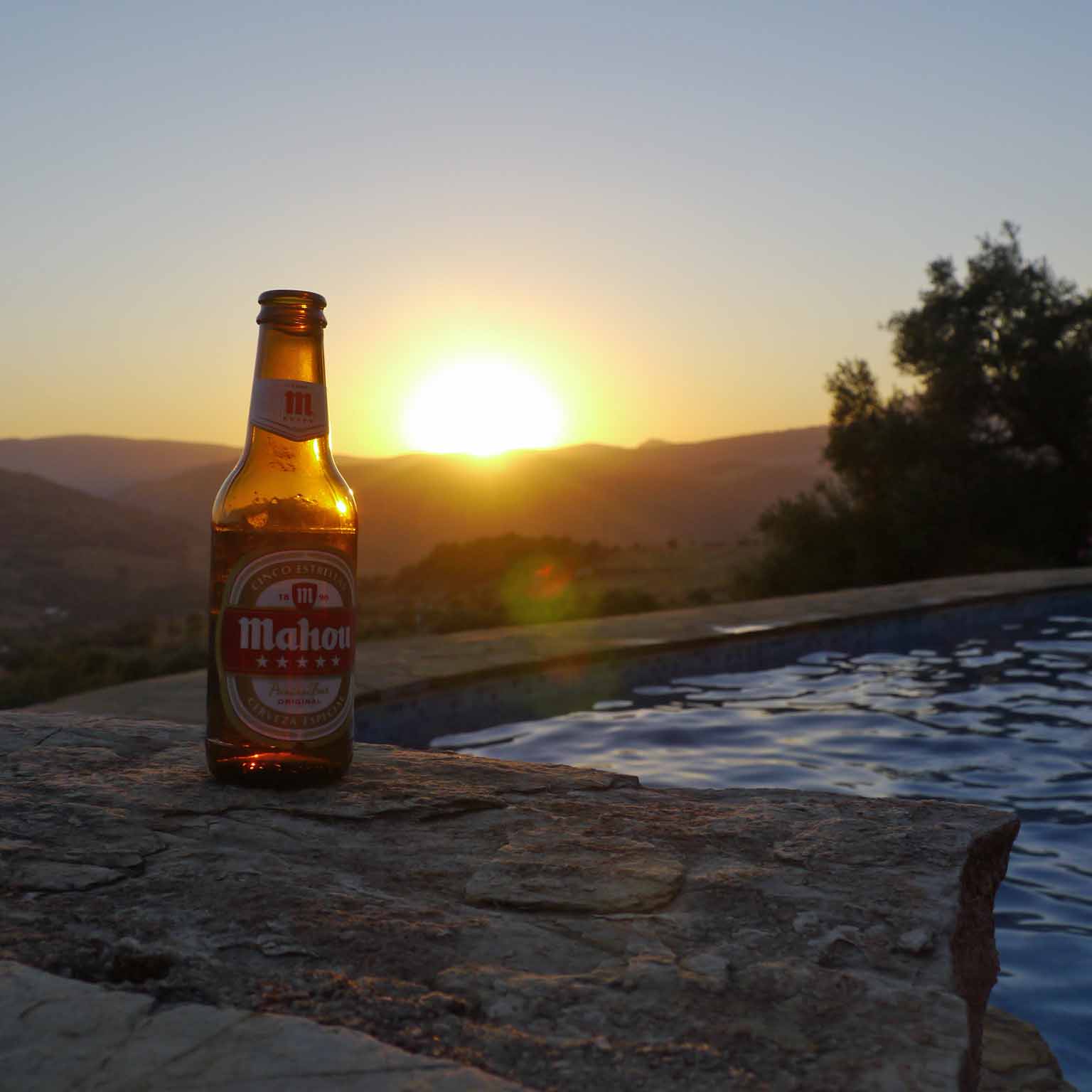
Beer sunset at Villa la Palma

A week spent in two Andalucian provinces that are among my most favourite areas to watch birds in Europe, I just keep going back and love exploring new sites and visiting productive scenic places again.
I have put together some wildlife related notes and images from my family holiday this year that you may enjoy or find useful, although this was not a birding trip I often get a little bit of time to explore in the mornings whilst everyone else is waking or taking their time to get up and about. We rented a quiet villa in the mountains with spectacular views and great sunsets. Despite it being the hottest time of year and birds being in moult, the area still offered decent birding.

I made no real attempt to take pictures, just reacted to what came my way, this trip was all about relaxing and spending time with my family who do put up with me forever being distracted by wildlife. On the flip side I put up with ‘stuff’ too so it all balances out.

 Villa la Palma is near Gaucin, Malaga province, situated on the south side of the Rio Guadiaro within the Serrania de Ronda. The views from the house take in the Sierra de Grazalema on the north side. It is surrounded by Olive groves, woodland and some very steep open grazed fields with livestock the bells of which are among the only sounds you’ll hear, it is one of the sounds of the mountains. Cicadas and crickets also sing, it is a very tranquil place.

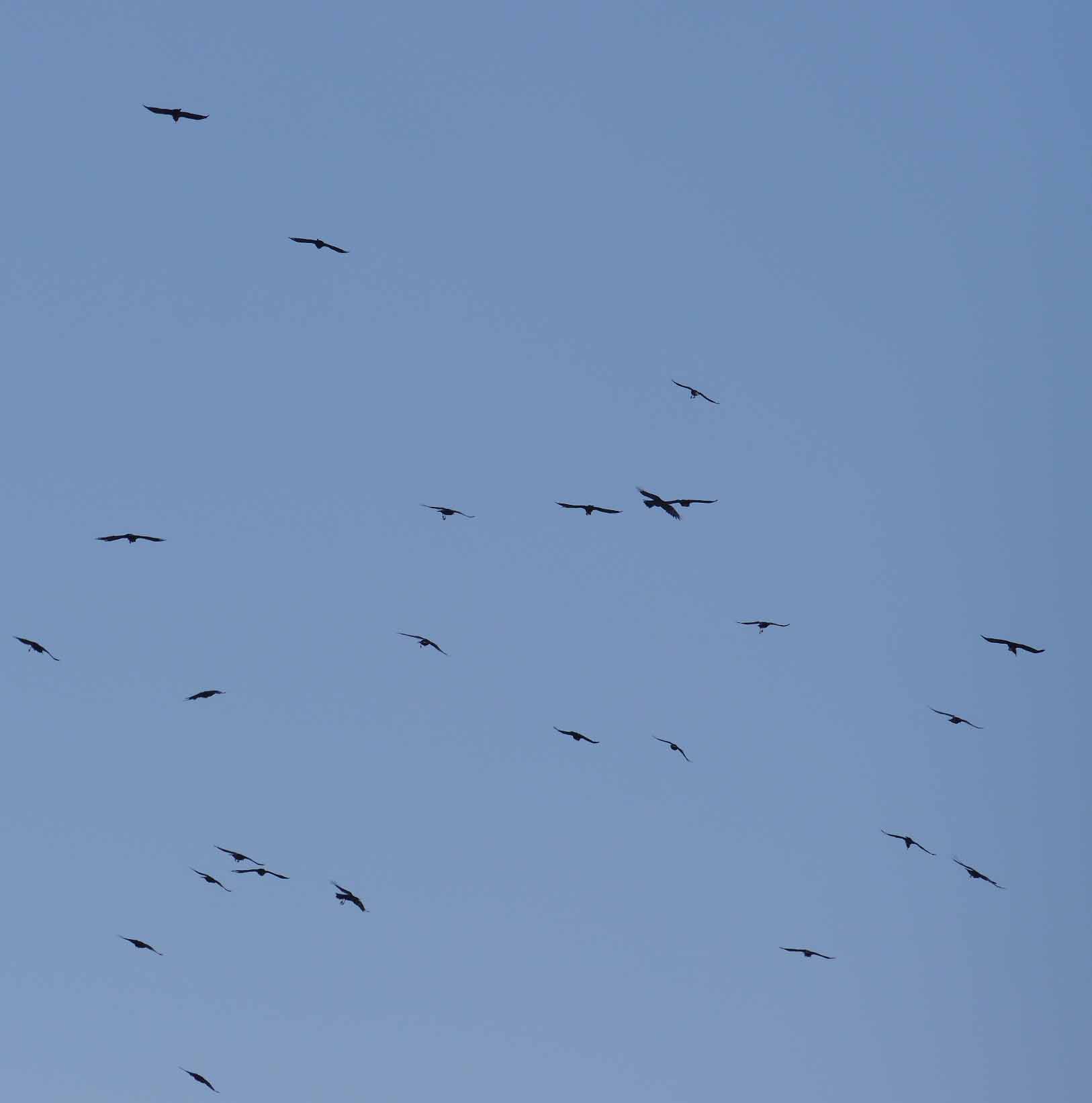
Griffon Vultures were present every day and seemed to be trying their luck at what has been described as a vulture restaurant or feeding station on a distant hillside. I noted up to 50 daily and they did circle very low over the pool at time giving brilliant views. Every single one carefully was checked for the rare Ruppell’s Vulture but I had no luck. I did a bit of research and visited this site, it is reached by turning off on a minor road to Colmenar west of Cortes de la Frontera.

The vulture site was very productive for birds but I did not see any vultures on my visit, it is within a fenced area to prevent ground predators from helping themselves to the food with interpretation and a public viewpoint on a nearby hill. I am not sure if food is being put out or not.

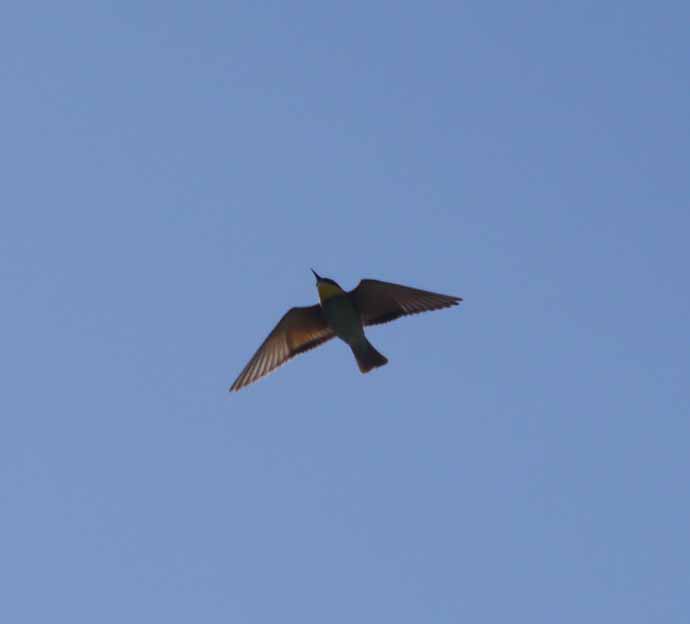
Other daily visitors from the garden were Booted Eagles (a pair were feeding young in the woods below the pool), Short-toed Eagle, Swift, Pallid Swift, Crag and House Martin, Red-rumped and Barn Swallows, Sardinian Warbler, Bonelli’s Warbler and I also saw or heard House Sparrow, Wren, Nuthatch, Serin, Golden Oriole and Blue and Great Tits. Nearby we saw Hoopoe, Alpine Swift (Venta/radio masts), Kestrel and Stonechat. A single Turtle Dove flew through. Best of all was the constant presence of a flock of c25 Bee Eaters with some juveniles among them. This flock gave us regular insect catching displays over the pool as they moved up and down the slopes. I did see two other flocks that went through South, a flock of 50 and 15, they did not stop so they may have been migrating.

Short birding/insect finding excursions were as follows

We visited Ronda to get provisions for the week and had a good walk around the old quarter, 30+ Red-billed Chough, Crag Martins and a Short-toed Treecreeper were all seen, it was a sweltering 40c.

A morning out with my son exploring took us the Jimena de la Frontera area. A slow drive across a country track south of the town took us past open fields, eventually we reached a copse on the edge of a village. We had great views of Stonechats, Red-rumped Swallows, 4 Short-toed Eagle, Little Owl, Woodchat Shrikes, singing Golden Oriole, Melodious Warbler, Kestrel, Sardinian Warbler, Hoopoe and more.

We also walked a stretch of the Rio Horzgarganta from the bridge below the castle seeing Red veined and Scarlet Darters, Violet Dropwing, a bunting sp and a few frogs. It was getting very hot at midday so we headed back to the villa. A repeat visit later in the week was made to climb to the castle and enjoy tapas at a restaurant during the heat of the day, at the castle we added two Lesser Kestrel, Booted Eagle, Crag Martins and Griffon Vultures to our list of species seen.

A morning out at in the cork oak woods on the way to and back from the Vulture feeding station between Colmenar and Cortes de la Frontera was productive. Short-toed Treecreeper, Blue, Great and Crested Tits were roaming in a large flock, many Bonelli’s Warblers were among them. A Dartford Warbler or two hid in the roadside brambles and three Short-toed Eagles cruised overhead. Pretty sure I saw a Rock Sparrow on wires below Cortes de la Frontera on the drive up.

One of my favourite drives takes in circular route with a stop at Grazalema, the Mirador de Boyar and Puerto de la Palomas, we also stopped in Zahara where we found La Gallo bar, this provided us with a great table outside and an extensive range of vegetarian tapas for 2.5 euro per dish, delicious! Birds seen included a smart Black Wheatear below Grazalema village, the mirador was a busy spot, Subalpine and Melodious Warblers, Woodlarks, Jays, Stonechats and  a Hawfinch. At the pass we watched a large eagle sp that drifted off before I could scope it, lots of Griffon Vultures, 30+ Red-billed Chough, Rock Bunting, Black Redstart and more Stonechats.

We visited the excellent Roman ruins at Acinipo and saw a pair of Black-eared Wheatear, two probable Thekla Larks (never looked at them through binoculars) and plenty of Swifts. A few individual Rock Sparrow flew past and a small flock also whizzed through down the hill. A pair of Turtle Dove rocketed through and zig-zagged over me, no doubt seeing any human contact as a potential death threat. I was shocked not to see this species regularly during the week.

Two Alpine Swift were seen over Cuevo de Gato near Benajoan, I have seen flocks of them here before. Worth visiting for the blast of natural air conditioning as the water spouts from the cave entrance. It is very busy with people on a hot August day.

Got to make a special mention to encourage anyone passing to stop at the store in the small mountain village in Algatocin, modest entrance but the place is a cavern full of stock, everything you need and refreshing to see an independent store. The bars and restaurants of these mountain towns were all very good and we did very well for vegetarian tapas pretty much everywhere we tried.

I hope you enjoy the images, they are a nice reminder of what was a great week.


Sunset view from Villa de Palma, Malaga Province


Villa la Palma sunset

Red-billed Chough over Ronda, Malaga Province.

Red-billed Chough, Ronda

Bonelli’s Warbler and Griffon Vulture, Villa de Palma, Malaga Province

Bonelli's Warbler, Villa la Palma Griffon Vulture, Villa la Palma

Juvenile Woodchat, Marchenilla track

Juvenile Woodchat Shrike, Marhenilla, MJMcGill

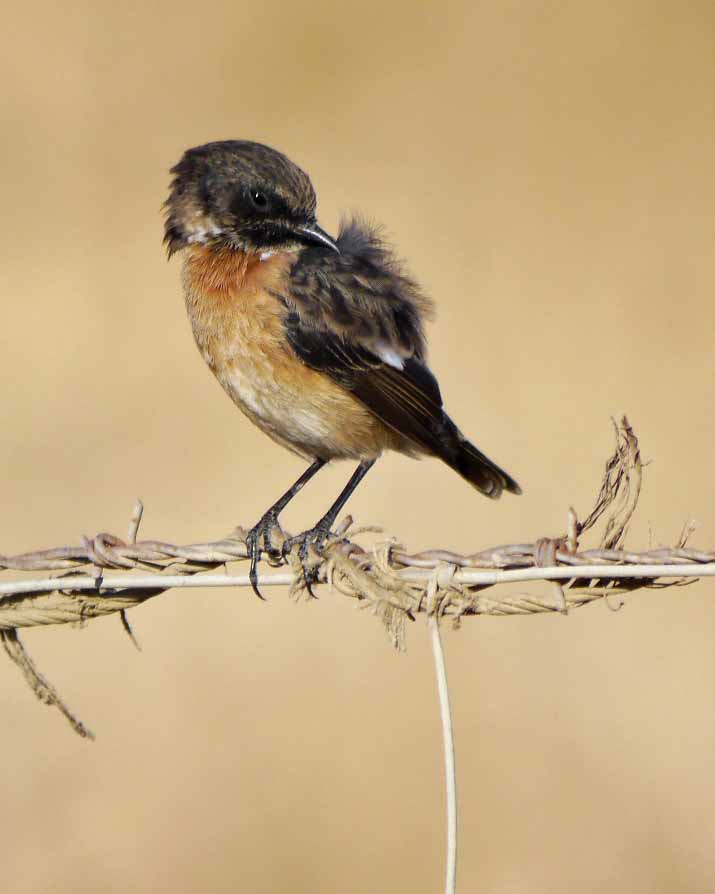
Stonechat, Marchenilla track

Stonechat, Marchenilla, MJMcGill

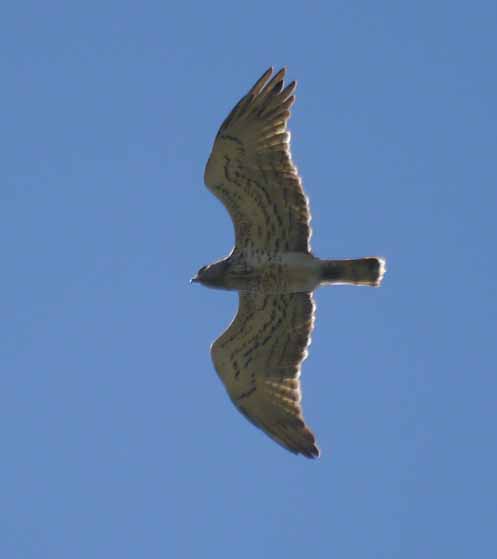
Short-toed Eagles (Marchenilla and Colmenar road)

Short-toed Eagle, MJMcGill Short-toed Eagle, Cortes de la Frontera, MJMcGill

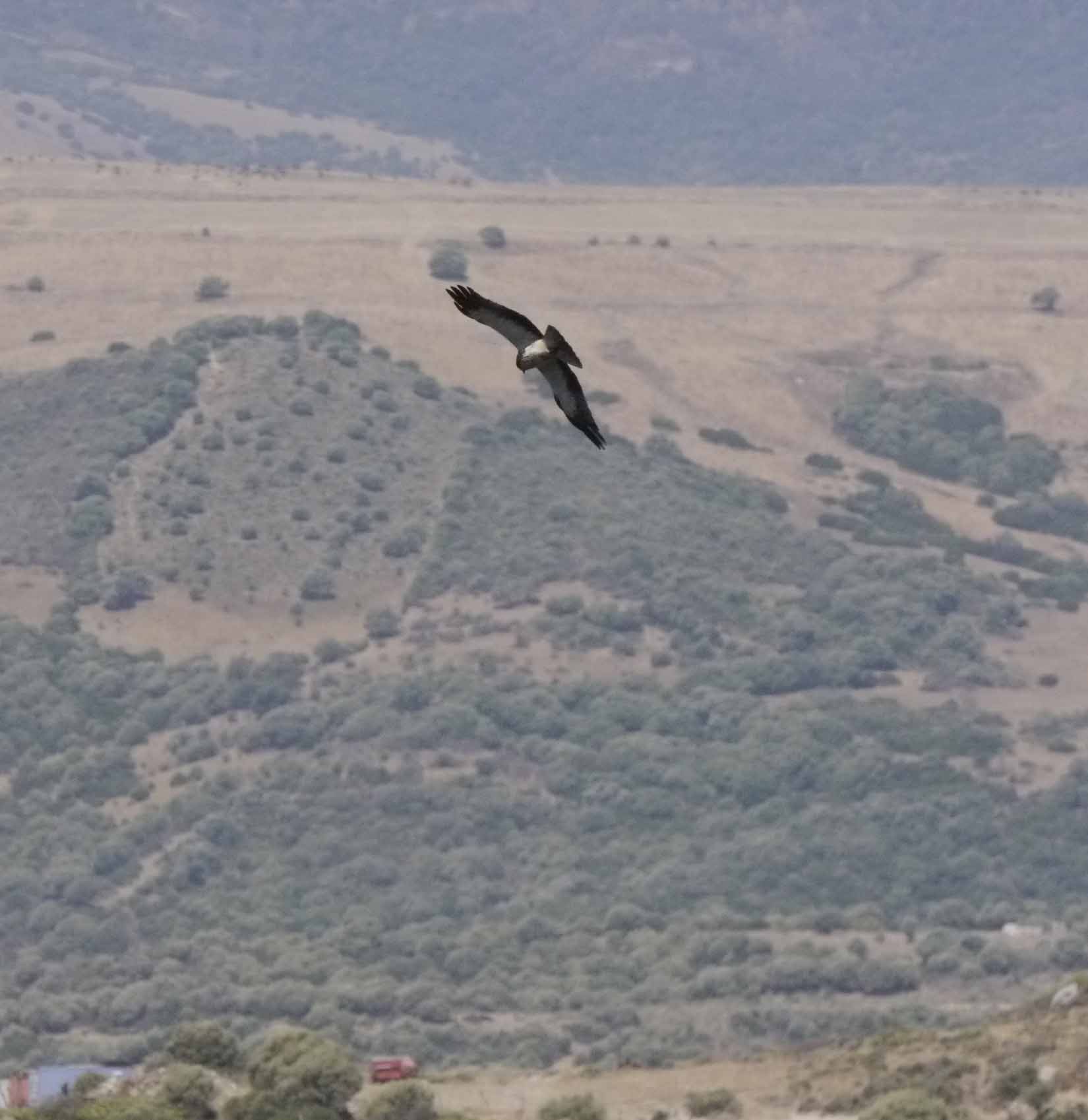
Booted Eagle diving below Casares Castle

Booted Eagle, Casares castle

Weathervane or vultures this way?

Casares weathervane

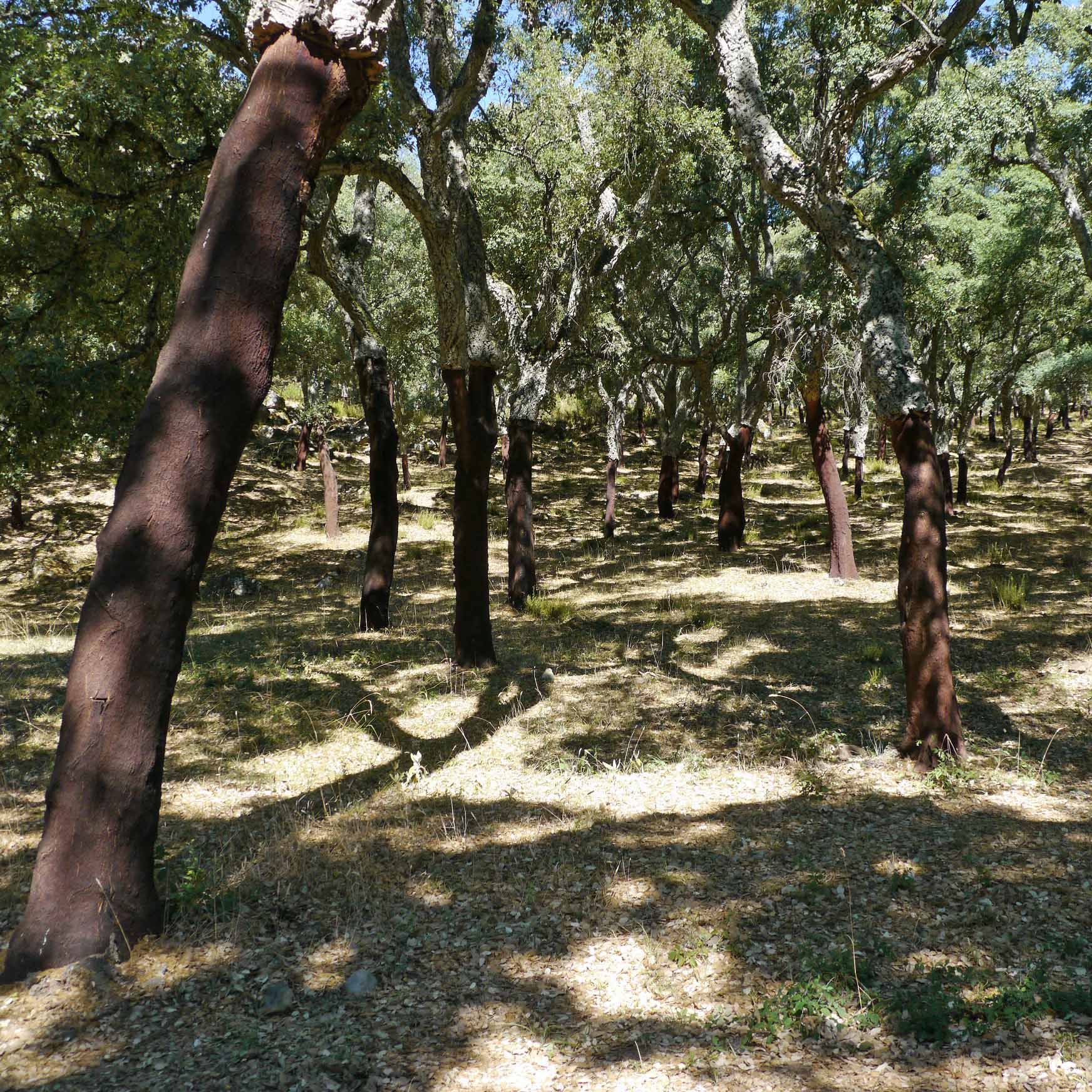
Cork Oak woodland

Cork Oak woodland, Sierra de Grazalema

Bonelli’s Warbler, Cortes de la Frontera, Cadiz Province

Bonelli's Warbler, Sierra de Grazelema, MJMcGill

Bee, Grazalema

Black-eared Wheatear, Ancinipo, Malaga Province

Black-eared Wheatear, Acinipo, Cadiz, MJMcGill

Probably Thekla Lark, Acinipo, Malaga Province

Crested Lark, Acinipo, Cadiz, MJMcGill

Melodious Warbler, near Mirador de Boyar, Cadiz Province

Melodius Warbler, Grazalema, MJMcGill

Woodlark, near Mirador de Boyar, Cadiz Province

Woodlark, Grazalema, MJMcGill

Bee Eater, Villa la Palma, Malaga Province

Bee Eater, Villla la Palma

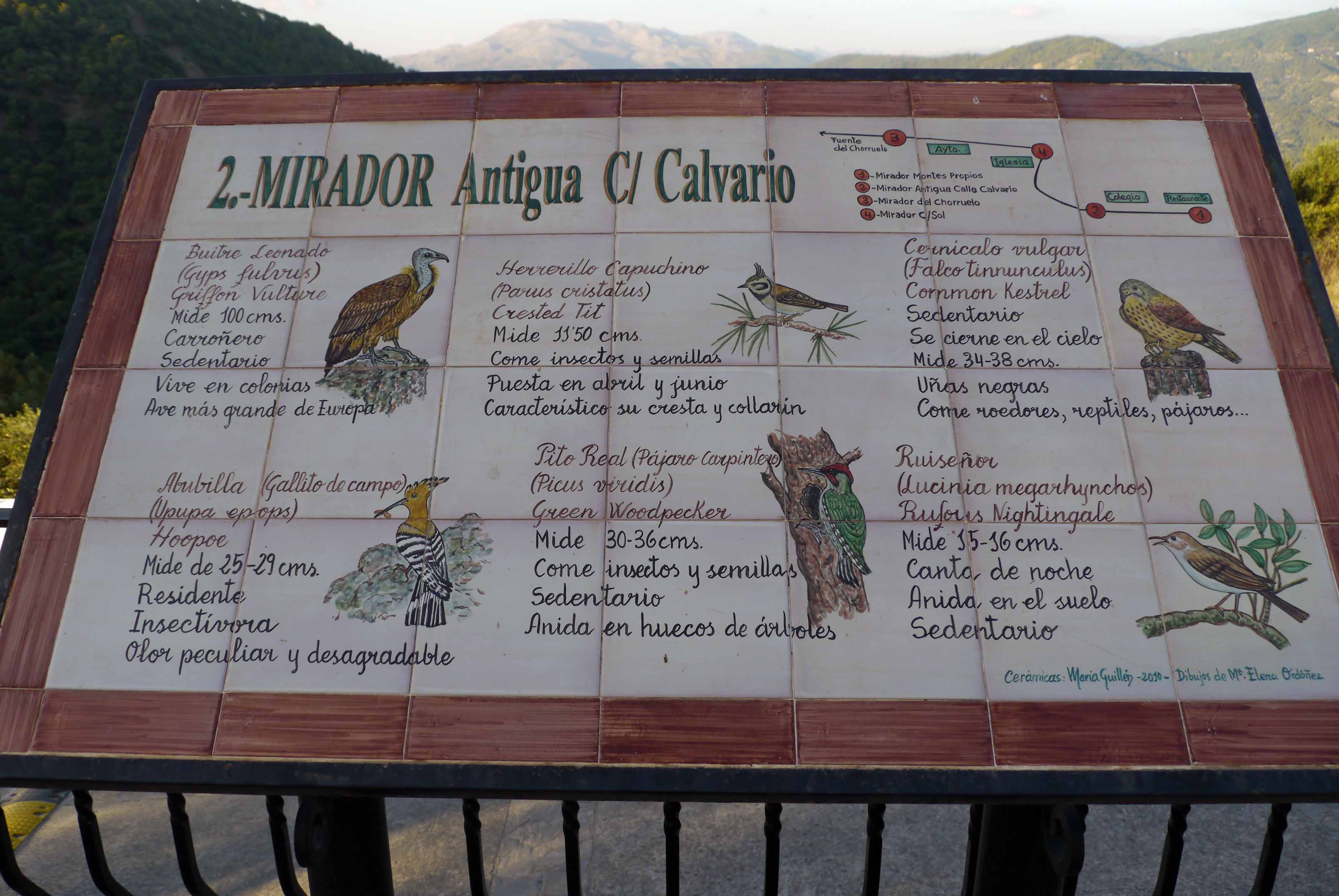
Bird sign, Bennaraba


Blog at WordPress.com.

Up ↑