1-26 November blog and sightings

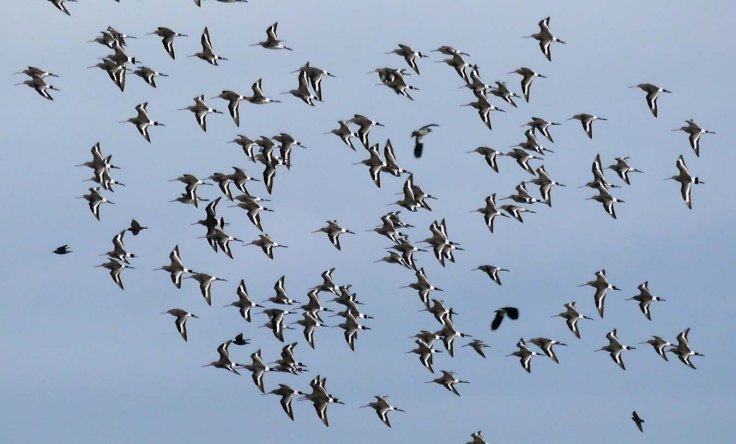
25-26 November 2012 Extremely enjoyable birding on WWT Slimbridge’s Tack Piece. The floods have created ideal conditions for waders and wildfowl and other species too. A cracking flock of 403 Black-tailed Godwit were present including a colour ringed bird that was marked at Seaton LNR, Axe Estuary in February 2012, seen around the Exe Estuary on 25/26 April 2012 before noting it locally.

23 November 2012 A visit to Gloucester to recycle and visit the bank allowed a Waxwing-less tour through town on the way home.

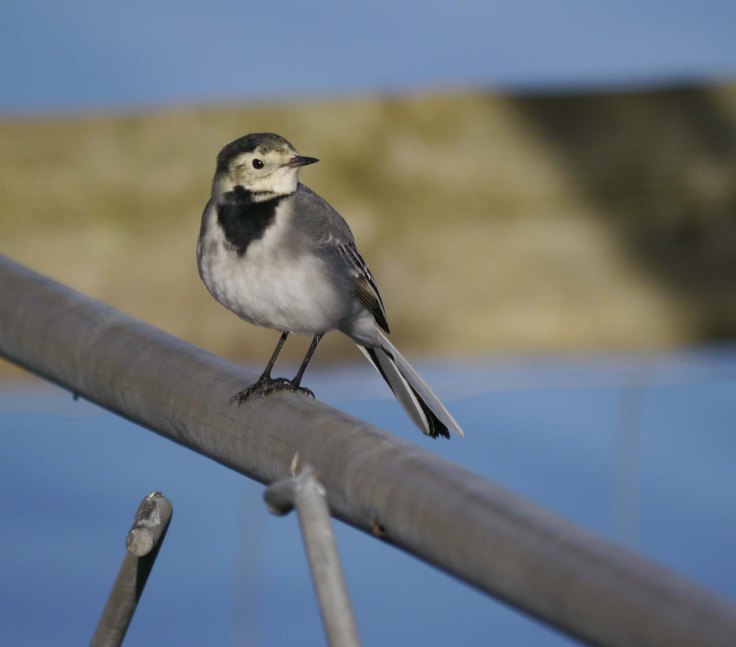
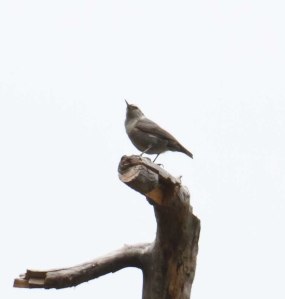
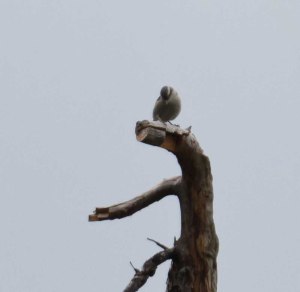
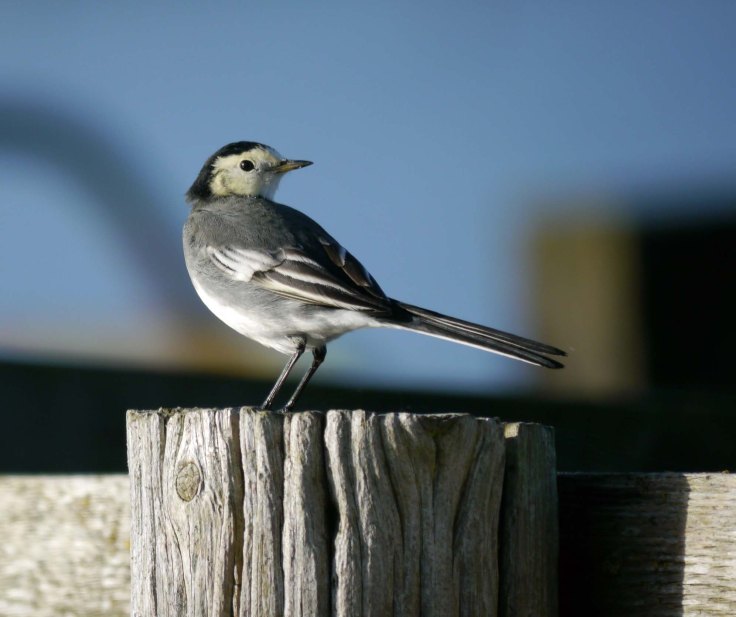
Pied Wagtails
A fine sunny morning in Whitminster tempted me to hang about for twenty minutes and watch the Pied and Grey Wagtails at Fromebridge.

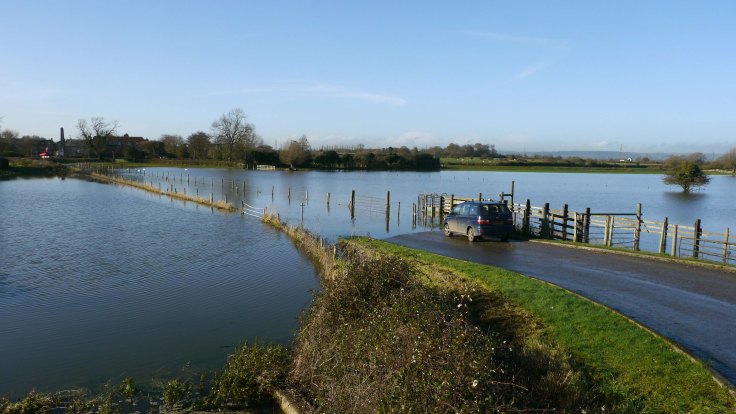
The Fromebridge Mill floods. This sheet of water stretches from the A38 to Saul and may become a wildfowl magnet over the next few weeks. The pub here is currently shut offering a new meaning for watering hole!

E White-fronted Geese
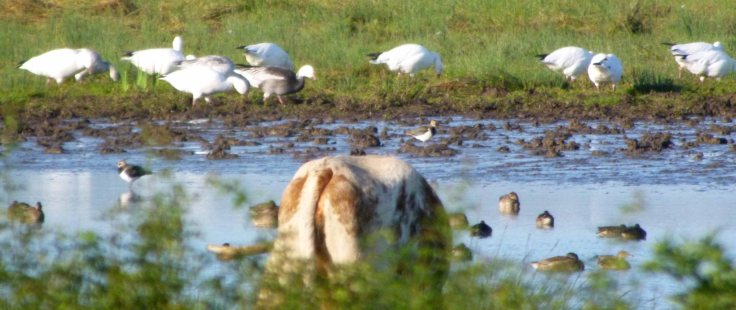
A really slow start for this species this winter. The flock increased to 27 by 26th.

Teal
At least 2000 are present on the New Grounds

Redwing
Large numbers have passed through this month. Often frustrating as they are shy, it is always welcome when you get a good view. Flocks have stripped the berries leaving a few for local or straggling birds to clean up what is left. Perhaps we will see another garden invasion if it snows this winter.

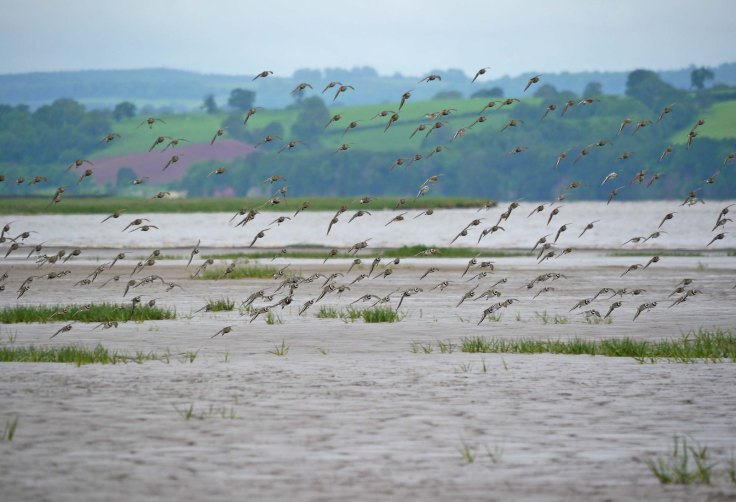
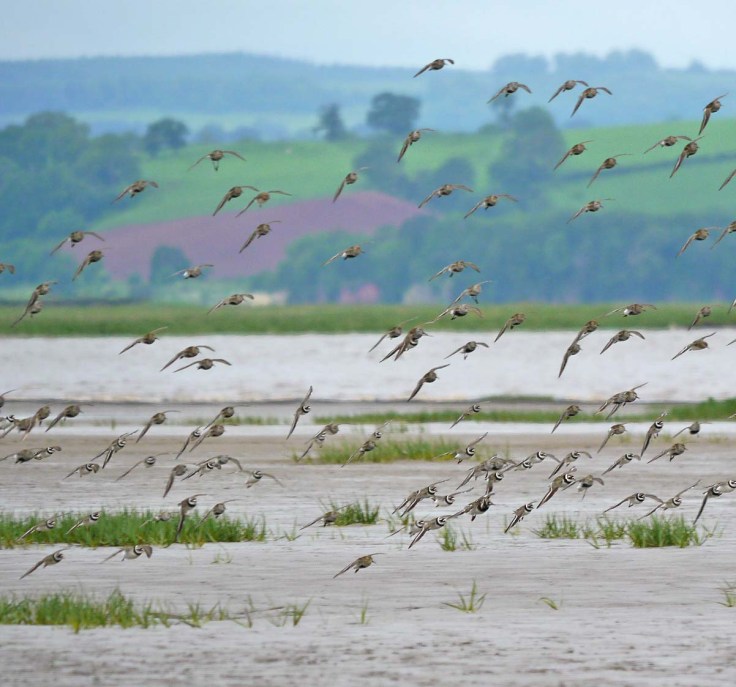
The Golden Plover flock has been building around the New Grounds and reached 1000 birds. Two or possibly three of the flock are retaining partial breeding plumage unless they are moulting early.

‘GoPlo or ‘Geeps’. Can’t help using nicknames.

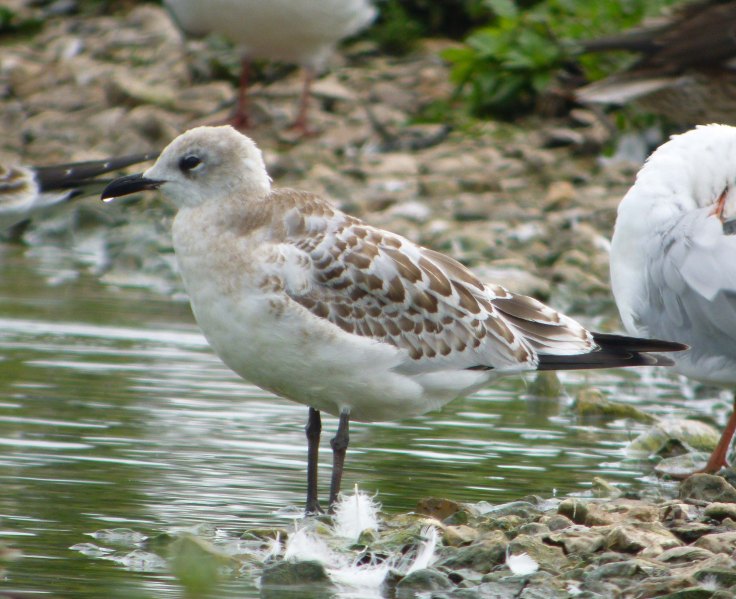
Long-billed Dowitcher with Black-tailed Godwits

6 November 2012 The day started with a little visible migration, after a NE breeze and a frost overnight it changed to a SW with low cloud and light drizzle. As this weather pushed in I found myself getting a bunch of tools together with two of our guys at WWT Slimbridge. I heard a faint pipit call which made me perk up immediately. I looked in the direction of the call but had a hedge in the way at the Top Hut. It flew in from the NE (it may have been on the ground in the boggy field/withy bed area and simply taken off from the Gosling field after calling first) and I managed to ‘get on it’ as it called again much closer and I could see it through the hedge coming my way. As far as sighting detail is concerned it was a silouhette and the same size as a Meadow Pipit. It called again as it went over and continued South down the lane and over the centre. A longer and more drawn out single but not particularly loud call sounding like Ppeeace or Ppeeez.  I made a call on the radio to tip off those staff in the centre to get outside as a Red-throated Pipit was on the way over but it was over the centre by the time I got a reply. Meadow Pipits are flying around the site daily and a variety of calls are heard, I have heard Rock and Water Pipit on site also in recent days. Two Waxwing were seen in the car park on the same morning.

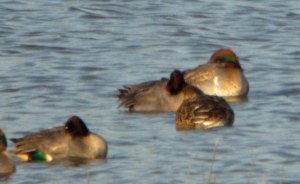
5 November 2012 A hide round at WWT Slimbridge included the usual search through the Top New Piece Teal flock. As on a number of occasions before it once again produced a male Green winged Teal. It did wake up and show itself better before going back to sleep again.

4 November 2012 By employing a little fieldcraft I have to say I really enjoyed a close encounter with two Roe Deer. This wary animal was onto me but was not quite sure.

3 November 2012 A morning and early afternoon out in the Forest of Dean. Trip report soon.

1 November 2012

Little Egret on the WWT Slimbridge, Tack Piece.
This bird has claimed this part of the reserve for it’s feeding territory.

Part of the Black-tailed Godwit flock and play….spot the Long-billed Dowitcher


Exploring Alderney 9-14 October 2102

Alderney 9-14 October 2012

With regular visits to well known islands and migration hotspots every autumn I turned my thoughts to trying a new destination. The French islands off Brittany seemed very attractive but I plumped for Alderney. This island is around 3.5 x 1 mile and offered a variety of habitats and the potential of visible migration, a party of seven agreed so it was organised and booked.

A keen party assembled and including me we made a group of eight birders and all were of course scenery and island atmosphere appreciators also. One partner was an independent Atlantic Wall enthusiast who was to spend his time ‘twitching’ bunkers and defensive positions. We birded around the weather which played a huge part in our first day. The forecast had been great for migrant arrivals, a low sat in the channel, thick mist shrouded the Channel Islands which would not budge, I bit nails, kept checking weather reports and crossed my fingers that we could fly.

The day before we travelled the flights were all cancelled, nervously arriving at Bristol airport we checked in, the flight was sadly cancelled. The fog was not going to move we had to start making other plans. The airline Auringny had agents on the case in the airport, it began to transpire that we could take a ferry in the morning to Guernsey , I asked them to re-arrange the flights from Guernsey to Alderney for the same time next day and we were put on a coach to Bournemouth, put up in a hotel, fed, transferred to the ferry port at Poole early in the morning for a 0830 sailing. We arrived on Guernsey where I arranged a taxi to the airport.

They had no information of our re-sheduled flight but re-acted immediately and began putting us onto earlier flights, only Roberta who valiantly volunteered (there were a few volunteers) to stay for a later (or possibly next day) arrival. We all got to Alderney via the Trislander aircraft by evening. The return journey on 14th was straightforward and very efficient as the weather was great.

The island is fabulous, plenty of areas to search, the ageing forts and defences offering cover for birds and something else of interest, the beaches, coves, headlands, moor, cliffs, woods, golf course, gardens, hedges, pools and quarries all providing plenty to do.

A list of the birds recorded on the island can be found via this link. This is not the list we recorded but everything ever recorded. It would have been quite a trip if it was!

http://www.wildlifeextra.com/resources/doc/misc/alderney_bird_list_2008.pdf

Trip report

9 October 2012

1230 flight cancelled so we were transferred to Bournemouth for the 0830 Poole Ferry sailing. Driving down the weather was horrendous, bad enough for the coach driver and understandable that it was impossible to fly. It was bad luck for all and unavoidable.

10 October
Up at 0500 for an early breakfast and load up the coach ready for the ferry, it sailed on time into the murk of the English Channel. We sailed by Brownsea Island which allowed some great birding. The lagoon held four sleeping Spoonbills, 3 Dark-bellied Brent Geese, 200 Avocets, 200 Black-tailed Godwits, flocks of Cormorants, Little Egrets and lots more. A Great Crested Grebe, Shags and Cormorants were about the harbour and on entering Studland Bay another party of Brent were feeding on the beach. A reasonably close Black-necked Grebe was feeding in Shell Bay as we cruised by.

Heading out around the chalk cliffs we were seeing Skylark and Meadow Pipts heading across the channel, this was repeated many times during the crossing, true visible migration (vismig). Seabirds were noted during the crossing with a total of seven Great Skuas (two in Alderney waters near Ortac), one Pomarine Skua, 30 Gannets, a 1st winter Kittiwake and a few other gulls. Approaching Burhou Island and getting tantalisingly close to Alderney we steamed by Ortac (rock stack) with resident Gannets atop and all around fishing the sea. Even more were to found at Les Etacs rock stack where an even larger Gannetry is situated, more on that later.

Docking on Guernsey the weather began to clear, we were soon at the airport via a taxi ride and after leaving bags we set off for a walk through a nearby valley and followed a coast path. A number of Chiffchaff, Blackcap and Goldcrest were seen as well as a Peregrine that MJ spotted on a rock stack. Plenty of Swallows fed above the cliffs and the sun came out making it rather warm. Back at the airport were to fly in two parties with a last minute change making it seven of us on the 4.10pm flight and one on the 5.40pm flight.

The flight in to Alderney went directly over the Les Etacs Gannetry, they did not mind at all and carried on with whatever they were doing. A short taxi ride and check in at the hotel and we were ready to go for a birding walk.

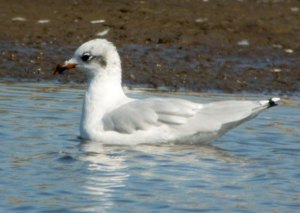
It was a calm evening, the mist from earlier now gone, sun and a light breeze from the east. A few steps from the hotel and we walked into at least three gems…Firecrests accompanied by Blackcaps and Chiffchaffs. Further along the road a few Goldcrest were found. Braye beach was our next stop, scanning the rather attractive harbour a flock of 19 Ringed Plover and a Turnstone were noted with Curlew and Oystercatcher. A roost of mainly Herring and Great Black-backed Gulls with lesser numbers of Black-headed and Lesser Black backed Gulls was centrally placed on the beach. Best of all were a first winter and three adult Mediterranean Gulls among a roost of c25 Black-headed Gulls on the rocks at the east (Mount Hale) end with two Little Egrets.

On the road and rocks a Wheatear hopped and it was soon apparent that large numbers of Chiffchaff were present. About 30 had been logged so far. Following the road to a track beneath Fort Albert we saw about 10 Chiffchaff and a Willow Warbler plus the Blackcap tally had gone up to c20. A couple of likely Ring Ouzel sneaked off whilst the Blackbirds were more obvious. A Kestrel swooped in and dispersed the birds and Buzzard sat on the fence posts. The sun began to drop and we thought it time to head back, a dark thrush was spotted on the wall and my attention drawn to it, a Ring Ouzel showing to everyone but still nervous. It was a productive wander. In the dark we saw a few Wrens and Stonechats on the way back. We ate at the Harbour Lights Hotel where we stayed and all enjoyed the food very much.

11 October

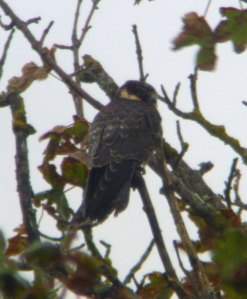
Up for breakfast at 0800, out by 0900 and the overnight weather front and easterly winds got the imagination going. Only 50 yards down the road around the Cotil de Val it was very clear that a large fall had taken place, dozens of Chiffchaff, Blackcap with other species flying over or dropping into the trees such as Chaffinch (40) and Redwing (30) in flocks, lots of Song Thrush (20), Blackbird (12) and Woodpigeon (50) were also noted. Some of the group (Anne and Mick) saw a Jay on the slopes above the town.  A few glimpses of a Hobby eventually turned into a perched view of a bedraggled juvenile. This bird spent the whole day flying up and down the island and was probably the same seen daily to our departure on 14th.

Hobby
Two Firecrest were among the Goldcrest and Chiffchaff in the pine plantation and we logged our first Common Redstart here near the railway and sand/soil quarry. A heavy rain shower made seek shelter under the pines. A couple of Stonechat fed near the beach.

After the rain we set off again to Braye Beach and headed east seeing the Wheatear again and at least three adult Mediterranean Gulls were bathing on the sea nearby and flew to the east end of the beach with the Black-headed Gulls. Across the road on a scramble track our first Whinchat appeared but was chased off by a grumpy Robin, this being a recurring theme of the week. We followed the railway line (not used in winter) and checked the hillside scrub logging warblers as we went. Arriving at the ‘bandstage’ quarry we found it alive with birds, a Ring Ouzel, maybe two, a Redstart, Common Whitethroat, 8 Chiffchaff, 6 Blackcap and plenty of common migrants. Another Redstart flicked along the track. Moving on we checked Mount Hale Battery and footie pitch where two more Whinchats were seen and then Fort Albert where the Hobby was putting on quite a show as it plucked insects on the updrafts. It disappeared now and again, reaching the highest part where a gun position once was this falcon gave me a shock appearing a few feet in front of me on the ground. It swooped around us and darted up the slope below us to our eye line, it stalled a few feet away, a magic view.

The views were pretty special across to the sunny Saye Bay and lighthouse. It was a sheltered spot for a sit-down break. A Small Copper was in the bracken on the slopes and moving on we carried on with the stroll carefully checking everything. The campsite had a weedy chicken run patch where a few pipits sprang. Mick had a Tree Pipit on the fence, I missed it as I was distracted by yet another Whinchat #4 and a few Greenfinches. Another small flock of Starling fed on Corblets Bay beach. We checked the Corblets quarry, now a pond where 5 Coot and 7 Mallard fed, a sheltered area behind a wall held two more Redstarts and a streaky dark brown bird flew a short way and dropped into low brambles below the cliff and fort. Despite surround it a few feet away and waiting, pishing and searching, it never re-appeared.

Redstart


Moving on to the lighthouse another Redstart flew off toward Mannez pond, at the lighthouse a further four were noted with Stonechats and another Ring Ouzel that was initially close. Checking the bushes and gardens gave us more Chiffchaffs and Blackcaps. At the point I had walked everyone far enough trying to make the most of the day. Another sit down rest, Shags sat on the rocks and the tide race looked very dangerous out in the ‘roads’ . I picked up a flock of geese coming in from the east, they were Pink-footed Geese, 21 of them heading to Fort Houme Herbe point and then flying south along the island never stopping. We did point them out to one resident walking a dog.

Incoming Pink-feet

A breezy stroll around the headlands then up onto Longis Common above Mannez Pond, another two Ring Ouzels, maybe three ‘chack-chacked’ from the bushes, one dared show itself a few times in short, nervous flights before diving into cover. We followed a route through the brambles and gorse and dropped to Longis Pond, Water Rail was heard and Moorhen. A Raven, two Kestrel and three Buzzards hung in the wind. A Coot fed on the pool and another Whinchat was on the brambles outside. Another sit down by the sewage works (or nearby Roman Fort, if you like) and the Longis Beach was scanned as well as the bushes and sallows. Little Egrets and Mallard could be seen. We walked back up and over the hill past the golf course seeing Redwings and Song Thrushes and dropped back down to the hotel for the night. Most of us ate at the Mai Thai restaurant, some the Braye Chippy.

Selected species day totals were

Chiffchaff 90
Blackcap 60
Redstart 12
Ring Ouzel minimum of 5
Whinchat 5
Stonechat 14

Whinchat

12 October

A bright and very breezy day saw us heading to Braye Beach and a route following the coast path to view the Gannetry. A Whinchat was in the dunes, a couple of Wheatears, White Wagtails and Meadow Pipits all noted while we sheltered from a rain shower. A Turnstone and Ringed Plover were on the beach with a few Oystercatchers and Rock Pipits. Mick had seen a number of Wheatear in the same area pre-breakfast. At the harbour wall we surprised a Merlin which had made a kill.

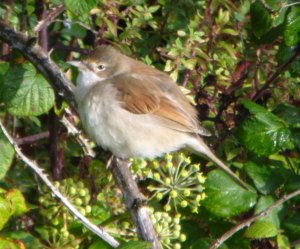
At Crabby Bay a party of 10 Ringed Plover were accompanied by a Sanderling. A sheltered cliff held a Whinchat, Whitethroat, 6 Chiffchaff, 5 Blackcap, Wren, Song Thrush and Dunnock. The blustery Platte Saline beach had two Wheatear and three White Wagtails in the tideline, Mick spotted a grebe offshore which turned out to be a Slavonian. The westerly wind was blowing in onto the shore but underterred we pressed on in the sunshine and checked every nook and cranny until reaching the viewpoint for the Gannet colony. We had passed a few flocks of Linnet (40) and Goldfinch (6) and 4 Stonechat. A Merlin buzzed the finches. The views of the Gannet colony were excellent, bill fencing, squabbles and nests of fresh looking seaweed, rope and netting adorned the stacks. Returning we saw 6 Stonechat together, a pair and 4 juveniles, a family?

Whitethroat
Gannet Colony
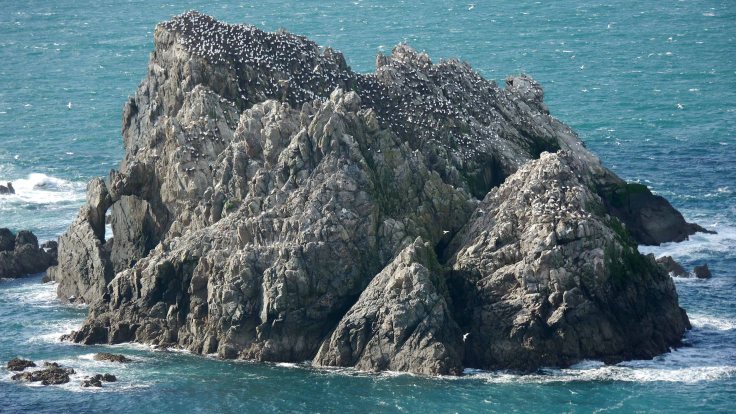
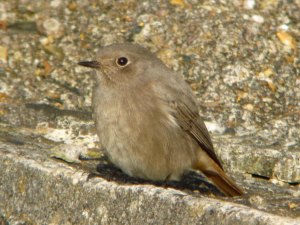
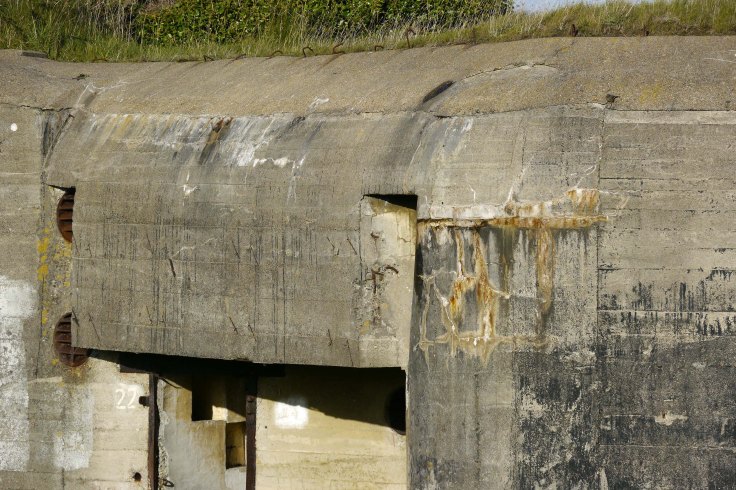
We headed for the airport, a hot drink and a taxi to the other end of the island, back to the quarry near Mannez Pond.  Finding the comfortable and promising hide it was rather quiet here, only a calling Water Rail and a Migrant Hawker of note. Another route up and over Longis Common, we saw the Whinchat here again. Another check of Longis Bay revealed a Black Redstart on a bunker wall, it performed in the sunshine for us.

Black Redstart
Spot the Black Red on the bunker (top right)
We bumped into one of the Alderney Wildlife Trust staff here (James) who told us of a couple of Dark-bellied Brent Geese and a few Hobbies had been around a day or two before. We eventually headed back across the island and back to the hotel but stopped at the ‘bandstage’ quarry where a Ring Ouzel played hide and seek and plenty of warblers fed. That evening most of us ate at Rea’s and all enjoyed the meal. Two headed for the Braye Chippy.

13 October

Another day out birding, this time starting along the lanes on the way to Braye Beach, a few Greenfinch and Goldfinches, Chiffchaffs, Starlings and Goldcrest were all seen. A Peregrine with a few primaries missing soared around the bay, a Raven flew over. On the beach the Whinchat was seen again as was two Stonechat. We walked to the campsite area again passing Linnets and Stonechats, at Saye Bay the Rock Pipits were directly compared to a different bird. It was very windy and eye watering so we had to get into a better position to study this bird. It was being chased around by the ‘Rockits’ but gave good views close by before disappearing. The strong westerlies raised hopes of Buff-bellied Pipit but it was a Water Pipit. A Wheatear and three White Wagtails fed on a nearby beach with Rock and Meadow Pipits. Two adult winter Mediterranean Gulls flew in from out to sea and headed toward the lighthouse. We moved to the next bay where three adult winter Mediterranean Gulls fed around the bouys. The same birds as seen on previous days?

Another walk across the Longis Common to the bay watching two Wheatears and a Raven on the short rabbit grazed turf, a Little Grebe on the pond, followed by a very intensive search of the sallows and the streamside trees revealed two Migrant Hawkers, plenty of Chiffchaff, a brief Firecrest. Mick and Roberta saw a Yellow-browed Warbler when we were searching through the Chiffchaffs high up the valley.  No other sightings were made so we headed back to the garden centre cafe for a sit down and drink. We did see a lot of Speckled Wood Butterflies in the sheltered spots. When I went into the cafe to use the loos Mick saw a Yellow-browed Warbler in the sallows next to the cafe but it was chased off by a Chiffchaff and despite searching we never relocated it.

A walk from here past the Essex Castle and following clifftop paths gave us a Wheatear on top of a car, a neat and tidy Peregrine Falcon, male Sparrowhawk fresh off a kill and approaching the farms 7 Blackcap, 2 Chiffchaff and 12 Pied/White Wagtails. Two Skylark were in the cattle field and two Stock Dove flew over.  It rained again so we sheltered, it was decided that we would drop off the scopes and bags and head for St Anne, the town for an hour. A few Collared Doves and the Hobby were seen before we walked to Platte Saline, Crabby Bay where 3 White Wagtails skipped about, checking Braye Bay it was a very high tide so nothing could be found so we gave up for the day. We ate Rea’s in the evening, great meal.

14 October

Outside the hotel in the morning we noted the Hobby, two Sparrowhawks, 3 Siskin, 3 Long-tailed Tits, 10 Chiffchaffs and 4 Redwing. Two Firecrest were again in the hawthorns and gardens near the hotel.  We had a 0930 flight to Guernsey but Mick saw a Dartford Warbler just as we were boarding the plane, on take off a flock of c20 Lapwing flew up from one of the fields. At Guernsey we remained in the lounge as we had a 1130 flight to Bristol, clear and sunny all went to plan and we arrived back in only 50 minutes.

A very enjoyable trip, great laid back group who all loved the island.

Martin

Species seen/heard on Alderney
Slavonian Grebe
Little Grebe
Gannet
Shag
Cormorant
Little Egret
Grey Heron
Pink-footed Goose
Mallard
Sparrowhawk
Common Buzzard
Peregrine
Hobby
Kestrel
Merlin
Pheasant
Water Rail
Moorhen
Coot
Oystercatcher
Ringed Plover
Lapwing
Sanderling
Curlew
Turnstone
Great Skua
Black-headed Gull
Mediterranean Gull
Herring Gull
Lesser Black-backed Gull
Great Black-backed Gull
Guillemot (MJM only)
Stock Dove
Woodpigeon
Collared Dove
Skylark
House Martin
Swallow
Tree Pipit (Mick only)
Meadow Pipit
Water Pipit
Rock Pipit
Pied Wagtail/White Wagtail
Grey Wagtail
Dunnock
Redwing
Song Thrush
Whitethroat
Blackcap
Dartford Warbler (Mick only)
Chiffchaff
Willow Warbler
Yellow-browed Warbler (Mick and Roberta only)
Goldcrest
Firecrest
Long-tailed Tit
Great Tit
Blue Tit
Wren
Jay ( Anne and Mick only)
Carrion Crow
Raven
Starling
House Sparrow
Chaffinch
Linnet
Siskin
Goldfinch
Greenfinch

1-27 October 2012 Blog and sightings

27 October 2012 Back to work at WWT Slimbridge after a couple of weeks off. I led a Birdwatch morning walk with a few highlights, Brent Goose, Siskins and Redpolls in the Alders, first Bewick’s Swans of the winter and up to 11 E White-fronted Geese.

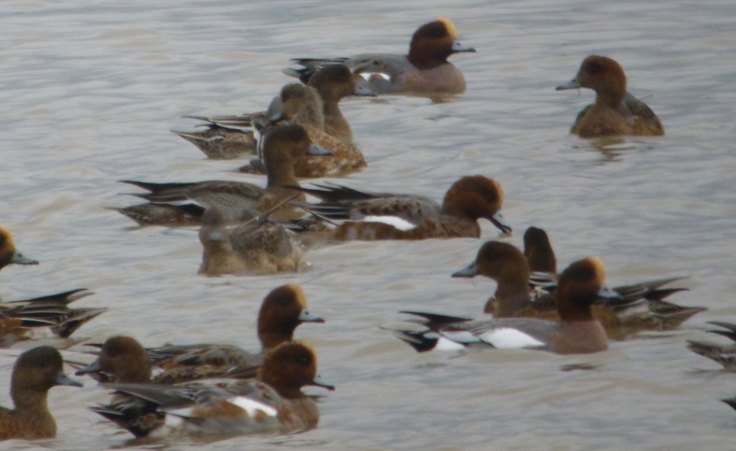
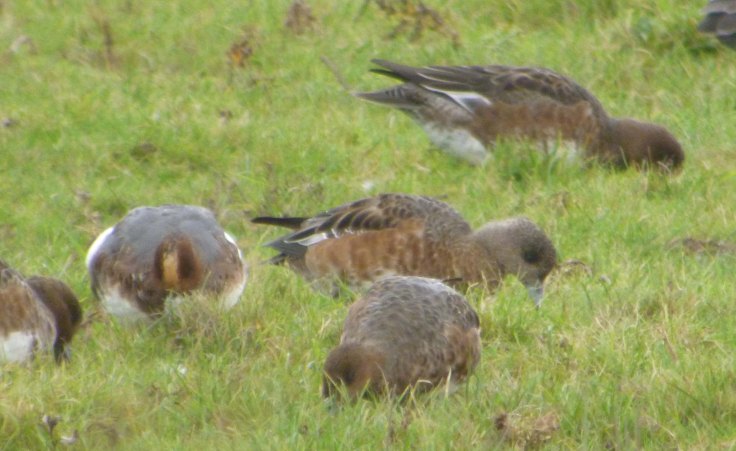
One particularly interesting duck on the Tack Piece led me to try to study it in detail, a female Wigeon showing the features that match an American Wigeon played hide and seek behind clumps of reeds. The usual flushes and panics that re-shuffle the flock meant that I had to refind it among the 600 Wigeon. I managed a couple of views of the underwing with slight lift of the wings it offered but missed a good flap when changing from camera to scope. Here are a few shots of it and I hope to ‘nail’ the underwing tommorow. It could of course turn out to have dusky or peppered axillaries indicating Eurasian and be a write off but from what I have seen so far I feel fairly confident.

Female facing left at the top

From top to bottom, the female in the middle

Top left

26 October 2012 A local walk along the canal at Splatt Bridge in the morning produced my first Goldeneye of the winter. Some vis mig was in evidence before the wind got too strong at 1000am. Bramblings, Chaffinches, Skylarks, Meadow Pipits, Fieldfare were all noted heading North.

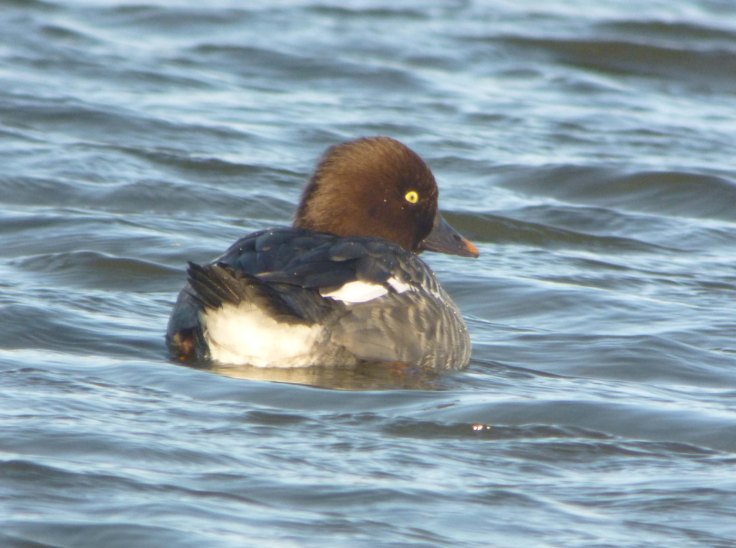
The Goldenye headed toward Frampton Pools and on checking saw it on Townfield Lake where Nick Goatman had seen one the day before. A record of a female on WWT Slimbridge South Lake in the afternoon may refer to this bird touring or a second individual locally

25 October 2012 A walk out to the Severn Estuary in the afternoon produced a bit of visible migration, a late Wheatear on the rocks and 5 Little Egrets on the mud off Hock Ditch.  A half dozen Pochard on Townfield Lake represented the water loving winter arrivals.

15-19 October 2012 A week off to provide cover at home for family matters and get the garden organised for a bird filled winter? No birding all week! The tripod is still in my bag from last Sunday. A pair of Raven flew over the house ‘cronking’ today and a few Jays are to be seen flitting about the village.

9-14 October 2012 A trip to the Channel Islands. Alderney via Guernsey. See trip report.

7 October 2012 Lots of visible migration over the house this morning including 100 Redwings, Jay, Redpoll, 3 Swallow and a Yellowhammer.

6 October 2012 Managed to bag a rarity today in the sunshine, no not Eastern Kingbird but a win at home Bristol Rovers 3-1 against Northampton.

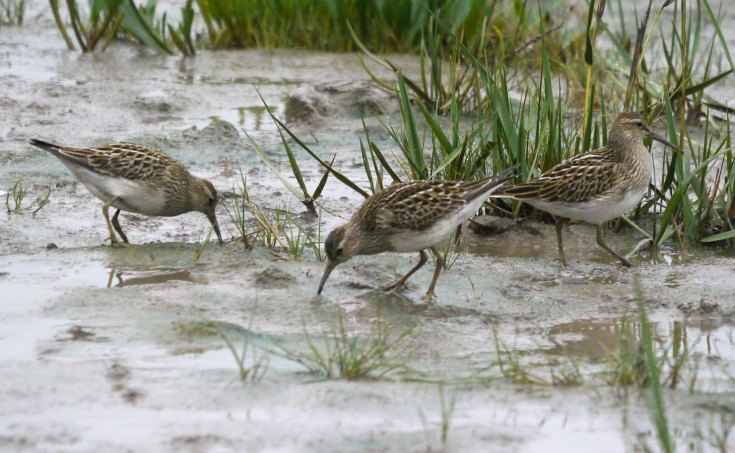
4 October 2012 Another Thursday morning hide round at WWT Slimbridge resulted in the discovery on my 5th and 6th American waders of the autumn. A Pectoral Sandpiper flew in from the NE and dropped onto the saltmarsh of the Severn, Ten minutes later and having been joined by John Budd we watched two waders fly from the same area to join a Lapwing flock, it was the Pectoral and a new Buff-breasted Sandpiper. The previous bird was last seen 22nd September and there has been a lot of turnover of migrant waders since then, this year has been excellent for American vagrants as westerly winds have prevailed.

Buff-breasted Sandpiper flies over to the North
This bird was silent as some guides suggest, the previous bird called all the time, a double call that was unusual, a bit like Turnstone, shrill-ish.

A rather strange sight on the Severn, two Black Swans migrate north. Perhaps not fresh in from Australia.

Dunlin and Ringed Plover over the Severn

1-30 September 2012 blog

A Severn Rainbow above

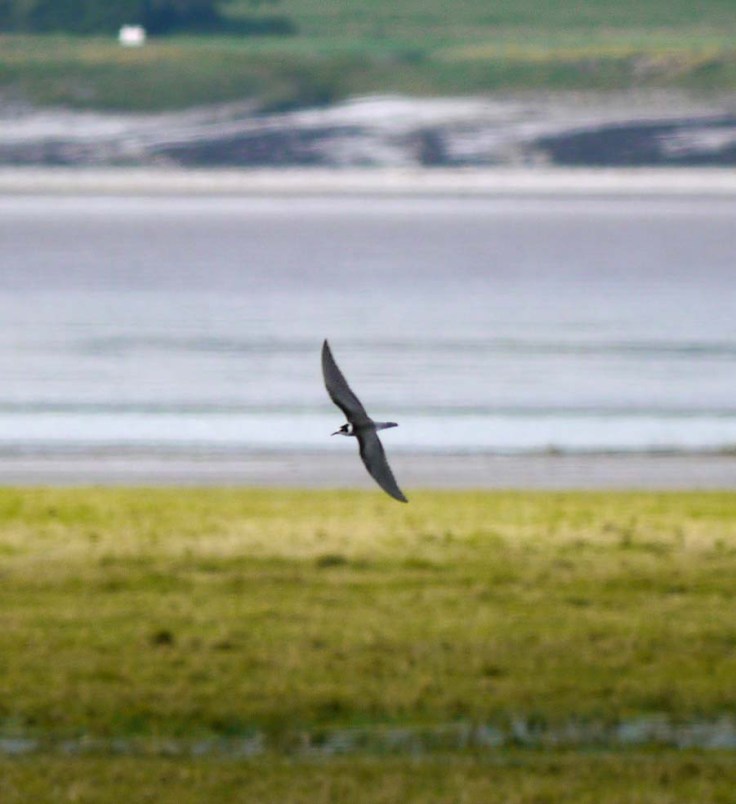
Black Tern (next two images)
Over the Holden Tower scrape, a late record and probably the same bird that has resided at Clevedon well into October.

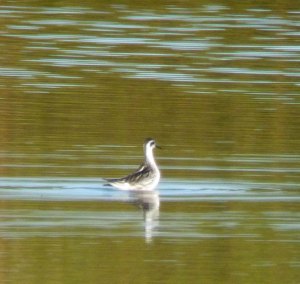
27 September 2012 Whilst doing my usual Thursday morning hide round/water levels check I popped back to the Zeiss Hide at 0900 to count the godwits, as it was a still and sunny morning I could clearly hear a wader calling that was familiar but not typical. Out of the sky dropped this juvenile Red-necked Phalarope. I have seen thousands of these lovely birds in Russia and Iceland plus a good number in the UK  including 5-6 at WWT Slimbridge but surprisingly this is a new one for what is probably best called a ‘personally located list’.

23 September 2012 Back at work and headed out around midday to see if a repeat performance of Buff-breasted Sandpiper and Pectoral Sandpiper was on the cards for all visitors to WWT Slimbridge. No sign of the Buff b..and we searched high and low but a reward in the form of three Pectoral Sandpipers made the drenching worthwhile. Other notable Severn birds were the Rock Pipit, quite early for this part of the estuary and the first juvenile Curlew Sandpipers of the season, by comparison..late. We just have not had the wind direction to drift them to us so far. Other notables were the major N-NE migration of Swallows and House Martins and large numbers of Meadow Pipits.

Pectoral Sandpipers MJMcGill

22 September 2012 Spent a lot of time working in the garden doing essential and tiring stuff, Meadow Pipits heading over all day.

21 September 2012 Had an hour at the 100 Acre and canal. I managed to scope the distant male Common Scoter as it sat off Hock Ditch on the top of the tide, it was very distant. Also starting to really note the last of the summer birds, a Yellow Wagtail, Hobby and Reed Warbler. How long before these birds dry up until next Spring? The four GCP Cranes were feeding in both the 50 and 100 Acres at midday.

Wheatear and WW2 Gun emplacement (Pill Box)

18 September 2012 After hearing a wader calling as it flew by Neil Smart and myself on 16th whilst doing the WeBS count I was convinced it was a Pec. I was fortunate to really get to know this call in Chukotka in 2011, a ‘pprreeett’ sound. Again the next day I heard it at high tide and saw it whizz across the Dumbles only to dissapear in long grass where the Curlew were roosting. This ruled out further investigation over high tide, I asked Mike Smart to check on his way out of Curlew ring reading and mentioned my suspicions of Pectoral Sand to all in the Holden Tower but it was not seen, despite checking scrapes after work I neved saw it either. Today I finally got it on the deck, I was in early to meet Mike Smart (for Curlew ring reading) where it was feeding with a Ruff in a pool near the Top New Piece, it flew around with a Snipe eventually settling in the Top New Piece where I could confirm the id. Sometimes they don’t want to give themselves up easily.

Pectoral Sandpiper, Top New Piece

16 September 2012 I was out on the tide for the monthly WeBS count when I saw a Buff-breasted Sandpiper arrive on the saltmarsh. It was rather nervous and flighty when Neil Smart arrived but dropped in very close to us until the rapid tide moved it and it dissapeared again. Despite searching I did not see it until my lunch break at 1335 when it flew high South past Middle Point calling and dropped into the spartina island far out on the estuary. Gladly it showed again the next day for a few and despite being very flighty on 18th and dissapearing miles upriver out of view…it returned to the Dumbles where it showed until 1430 before dissapearing again. At least a number of birders got to connect with it via escorted walks out to a ‘safe’ viewing spot.

A snatched Buff-breasted Sandpiper shot

14/15 September 2012 Birding interlude, cricket or was it a beer tour to Barry, S Wales. I did note 3 Yellow Wagtail 2 Tree Pipit and 4 Meadow Pipit over Barry Wanderers CC ground along with 11 Pied Wagtail on the pitch during tea. Can’t stop counting birds, shame it wasn’t runs!

13 September 2012

Wheatear

12 September 2012

Swallows
On wires every morning this week and lots of migration noted, in some cases hundreds heading south especially 16th September. Large numbers of Sand Martin were also around. In this image the juveniles can be compared with adults, the former having short tails and duller plumage.

11 September 2012

Spotted Crake
After finishing work for the day I popped into the Zeiss Hide on the way out, I noticed a crake at the back of the scrape, it looked very yellow billed so I took some hurried shots. The bright sunshine was blazing out much of the colour and markings. It snuck off into cover, did not come back out so I went off to pass on the info to staff and visitors. Heading back and staying with birders that Dave P had collected from South Lake we never saw it again and I left at 1810. I checked a few times over the next couple of days along with others but it had gone or remained hidden.


9 September 2012

Starlings catch a sunrise ride on a handy lookout post. I love stuff like this.

Two Garganey and a Mallard
I alway’s get a kick out of Garganey spotting whatever species they are with and have done every autumn since 1988.

8 September 2012 Loving the sunshine, true cricket weather but alas the season has finished. I shall ignore football for another week or two, allow Bristol Rovers to get organised. I had a day on my own catching up with sorting the garden out and other stuff. I set the feeding station up with a variety of feeds and sat back and watched. Coal Tit was the first this year and a Greenfinch and flock of Goldfinch are popping in. A flock of Linnets are feeding in the field next to the house so I hope I get a decent flock and maybe Merlin again this winter.
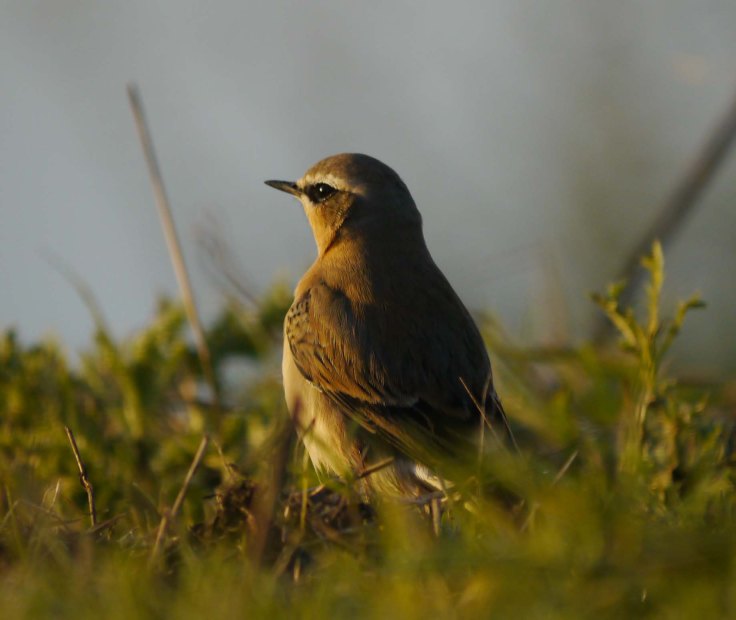
7 September 2012 Up bright and early, dropped the car off for MOT and was picked up by Neil Smart, we had gone on standby pending news of the Short-billed Dowitcher at Lodmoor RSPB in Weymouth. It was still present so we plumped for a day out in Dorset. Meeting up with Bob Radford on the way and changing to his car we were on site and birding this great habitat a couple of hours later. The SBD was not showing so we wandered about looking at other birds in the sunshine. Juvenile Sandwich Terns were following their parents and begging for fish but the adults just looked bothered in the heat. A Common Sandpiper, 5 Black-tailed Godwits, Common Whitethroat and Hobby were all distractions until the SBD was located in the marsh. We watched it for a while before getting the urge for Chips and Mushy Peas (fish for the other two and battered mushrooms for me) from the seafront. Scoffing down this exercise inducing snack we made changes to our plans when news of a Monarch Butterfly on Portland broke, we went straight to the Buddleia bush in Easton and enjoyed this huge butterfly in the sun.

Mediterranean Gull-Lodmoor

Sandwich Tern-panting in the heat

Small Tortoiseshell and Monarch

Monarch

Two Garganey among the waders

Redshank in the morning sun

Marsh Harrier-two were present at WWT Slimbridge on 6th.

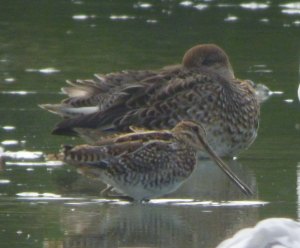
Snipe-quite a difference in plumage tones in these two birds.


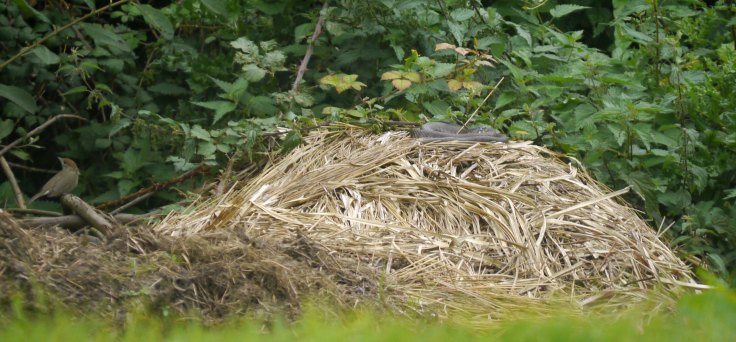
Blackcap mobbing a Grass Snake
A few bird species also had a look and scolded it.

1-31 August blog and sightings 2012

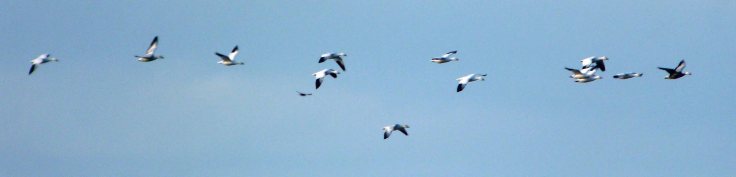
30 August 2012 A lovely start to the day with sunshine in full effect. At WWT the morning was livened by the call of distant Snow Geese which I could not see, eventually they appeared high over the reserve gliding in from the north. As is usual for this site this latest party of geese circled the reserve looking for a place to land. They eventually chose the Top New Piece bt left soon after. The flock all apeeared to be Lesser Snow Geese and fortuantely represented both colour phases, the blue and white (for those who know me,  a colour combination I am rather fond of being a Bristol Rovers supporter). The twelve white bird had two juveniles with them and the single blue phase which naturally stood out among the rest.

Spotted Crake WWT South Lake
Discovered by a visiting birder on 25th August (Mr Woollam). It showed again a few times since including when I opened up for members for an evening search.

27 August 2012 Another wet start to the day delivered 72 Arctic and 2 Common Terns. Intermediate and dark phase juvenile Arctic Skuas also made an appearance on the Severn which I was pleased to share with two fellow observers.

1-20 August 2012 A visit to Spain back in the early hours of 8th. Back to work on 12th and a busy period of passage was underway, getting out of the car in the car park I heard terns, looking up a flock of 17 probably Arctic Terns flew directly to the Severn, later a first winter Arctic Tern fed over the tide. Some highlights in images follow.

Curlew Sandpiper
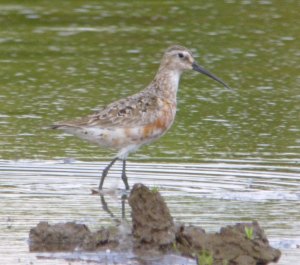
With two adults in July, this bird was the third I have seen this period. As usual adults are noted until late August when the juveniles begin to arrive.  A party of four rising to five and dropping to three followed this one.

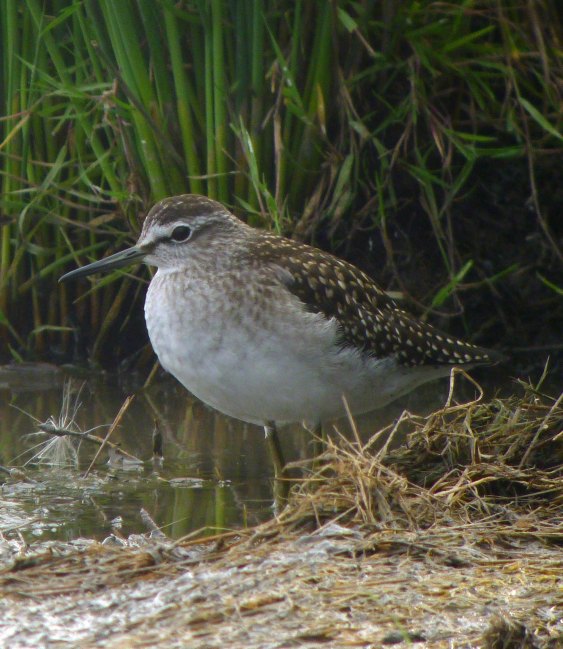
Wood Sandpiper
The third in Glos and WWT Slimbridge this year for me with a fourth appearing in August and joining this bird for a day or two.

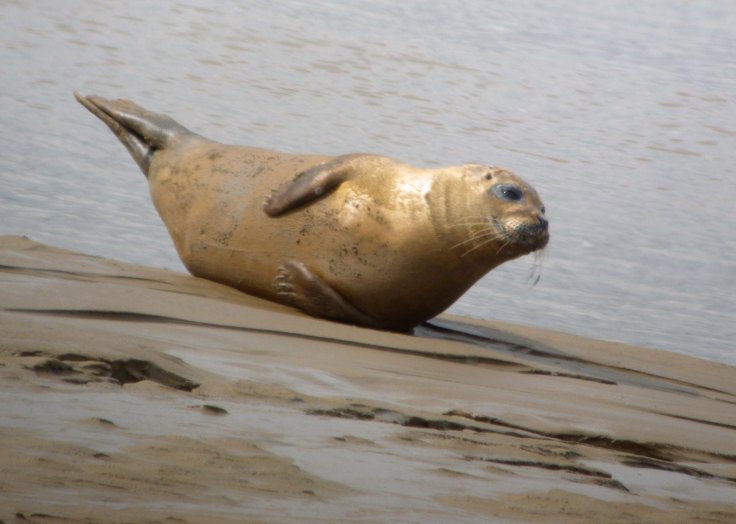
Harbour Seal 16 August 2012
An excellent addition to my Severn mammal list. This chubby chap looked so relaxed and at home on a Severn sandbar but there was nothing wrong with its hearing, sense of smell or eyesight. It knew we were there and it took some stalking to get close enough to take this shot. I am pleased to say we left it in the same place as we found it and did not push it for a better shot. The Seal was in the same place an hour later before the Severn bore panicked it into diving into the wave where it dissapeared.

Mediterranean Gull 19 August 2012
Always a treat to see this species, this one is on the WWT South Lake.


West Cornwall Seawatch 25 August 2012

Seawatching is one type of birding that can be favoured by the birding community indeed loved, in some cases it is rather hated, when the weather looks right and delivers it can be amazing. After keeping a close eye on a a weather system that was due in it was becoming clear that it had potential. A number of friends were getting rather revved up about the forecast for Saturday so I decided to offer a day  trip to give it a go. We left at 0400 arriving at Marazion Marsh just as a rain shower began at 0715. A quick search of the area and we were all soon watching a Spotted Crake below us as it fed around the edge of a small pool. Two were being seen here by the end of the day and this bird was nice detour.


Basking Sharks– One of the main highlights of the day was the constant views of these gentle giants as the filter fed in the sea below us. At least six were seen at any one time, often very close to shore but I came away feeling that at least twelve were present, other estimates ranged to 16. We watched three together feeding in a line at one point. Other interesing creatures included various Ocean Sunfish sightings, Grey Seal, Harbour Porpoise and for some Bottlenose Dolphins.

We settled at Pendeen Watch Lighthouse as the wind forecast was most favourable for this site. Many friends and familiar faces were gathered and our group spread out among the 60 or so gathered to start scanning. I moved to a few spots for best comfort and was joined by Ruth, Jeanne and Graham with Colin also re-appearing towards the end of the 7 hour watch. Paul and Rich stayed below the wall with the main group which is also wherePaul Marshall was camped. The food, flask and extra clothing were all needed as it rained many times but everyone stayed for the duration. We all saw nearly all the species and individuals noted by all seawatchers, some fo the large shearwaters were not so easy to get on to but with more practice this will become easier. The winds did not quite reach the forecasted potential but it still worked out well. The totals from all of the group were ranging from 4-7 Great Shearwater, 5-8 Cory’s Shearwater, 2-6 Sooty Shearwater, 10-14 Balearic Shearwater, 2000+ Manx Shearwater, 2000+ Gannet, 4 Kittiwake, 7-10 Great Skuas, 9-14 Arctic Skua, 1 juvenile Long-tailed Skua that Graham picked up first appeared in front of us, it gave excellent views passing close along the cliff. Flocks of Whimbrel, Sanderling, Turnstone, Dunlin, Oystercatcher, tern sp, Sandwich Terns and Common Scoter were all welcomed to the tally.  Other species noted by seawatchers included Pomarine Skua and a few Storm Petrels. It was a fantastic day, hard work in the rain at times and not quite ideal. Despite this I think everyone would do this again but I will try to ensure the sun is shining next time.

Cadiz Province, Andalucia 31 July to 7 August 2012

Cadiz Province, Andalucia, Spain

This report records the wildlife I saw whilst on my family holiday. I have visited the area many times and have stayed in Chipiona, Bolonia, Conil and Sanlucar before but always as part of a general birding or family holiday tour. We stayed at Sanlucar de Barrameda renting a comfortable apartment from a British couple which was handily situated in the centre of the old town. This was ideal for walking out for the tapas bars and restaurants, we are vegetarian and are used to seeking out the non-meat options from the menus but it has to be said if you do eat meat then Sanlucar de Barrameda offers some of the best seafood in Europe. We ate well, too well, more than we usually do but we had to try the options on offer. We explored various towns that we never did justice on previous visits and popped in to see some old favourites. Apart from the wildlife and food we enjoyed the Sherry, the lovely chilled Manzanilla produced in Sanlucar de Barrameda which is dominated by sherry bodegas. In fact from our roof terrace which has views across the town, River Guadalquivir, Bonanza salinas and the Coto Donana national park we could breathe in the sherry from the Solear bodega next door.

I went out most mornings early apart from two, a night of sherry, beer and cocktails with J Squire forced one lie-in and a rest on our last, travelling home day the other. Going out early was pleasant to avoid the heat of the day, the beach and swim in the sea which is a good place to be during this period. Also by the time the heat is rising my family are ready for the day. We made visits to local wetland sites, to Tarifa for an Orca trip, trip to Cadiz, Arcos de la Frontera, Chipiona, Vejer, Bolonia and Jimena. All the birding sites we visited save one are featured in the excellent Where to Watch Birds in Southern Spain by Paterson and Garcia.

31 July 2012 Flew from Bristol to Malaga with easyjet, all fine there, hire a car via Rentalcars who used Goldcar rental. There was a problem, a long wait to get the car of 1.5 hrs in a hot queue, 109 euro charge for a full tank of fuel which was more than you would pay at the pump (you bring back empty). This in mind I would rather use Avis and have no extras or wait. Got on the road and called in for tapas at a service area where Red-rumped Swallows floated about the car park. Another stop was at Sotogrande which was very hot, the sea was unusable thanks to a Jellyfish swarm and being the hottest part of the day, the birds were quiet, only Sardinian Warbler and the introduced Monk Parakeets seen, Bee Eaters were heard.

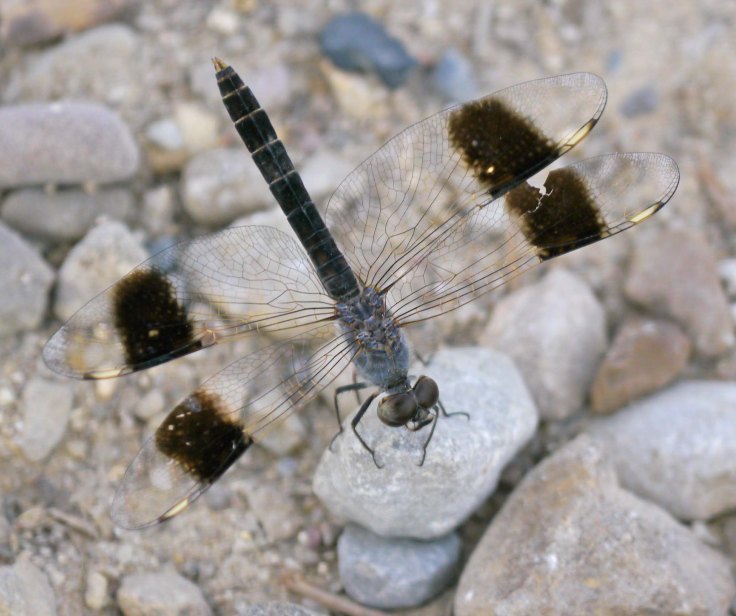
Another stop was made at the Laguna de Medina, I first came here over 20 years ago and saw my first White-headed Ducks. It has had a few problems in the intervening years, drying up for example but the introduction of Carp caused huge problems for the birds. Hopefully this will be sorted out, the lake was quiet compared to visits in times gone by. We did note Banded Groundlings, a male Ferruginous Duck plus juvenile Cetti’s Warblers, Nightingales, Montagu’s Harrier and more.

Banded Groundling Laguna de Medina MJMcGill
A confiding dragonfly which follows your movement to see what insects are disturbed. Often found at watering holes in Africa.

1 August 2012 Up and out early with JJS to explore the Bonanza salinas which was only 15 minutes away. So much going on, lots of activity with flocks of terns, waders etc. We checked out the Laguna de Tarelo and a small pool hidden in the greenhouses of Bonanza, afterwards we spent much of the day on the beach at Chipiona.

2 August 2012 Up early to go biridng at the Lagunas de Puerto Real. I have been a few times before but it was a new site for JJS. Laguna Salada held many Night Heron and Grey Herons a few Little Tern and around 60 Mallard. Not the teeming with life scene I have so enjoyed here before but I have sen it a dust bowl too. The scrub around the lake had Nightingale but for wetland birds we transferred to the nearby Laguna Chica, this was more like it with plenty of birds on the water. On the way back to Sanlucar we stopped for a coffee and sneaky look at at a small lagoon opposite the cafe. It is a site I discovered on a previous visit and sure enough still held plenty of birds most notably White-headed Ducks. It is between Rota and Costa Ballena but happens to be just inside the perimeter fence of the American military base, a plus for the birds I guess but not sure about using scopes in such an area. A short stop at Costa Ballena beach and at Chipiona followed before heading back to Sanlucar. We returned to the beach for the day in the surf. In the evening JJS, my wife and I went to the salinas until dark.

3 August 2012 All of us up early for 1.50 hour drive to Tarifa for the Killer Whale trip into the Straits of Gibraltar and to search off the coast of Morocco. We made a short stop at Bolonia for 45 minutes. The trip was around three hours leaving at 1100 and it was great. A tapas lunch  followed our return and then back to Sanlucar.

Orca gallery here http://www.anserbirding.com/photos/svmanager/g36/

4 August 2012 Late start for all, visit to Rota beach before taking the catamaran to Cadiz for a day out, great tapas, the best of the week. Stunning place and must spend at least a couple of nights here sometime. We ate in tonight.

5 August 2012 JJS headed off in the early hours as he had to leave early to get back to the Isle of May. I got up and went to Bonanza salinas/Laguna Tarelo for a couple of hours. Part of the day exploring Sanlucar de Barrameda and the afternoon at one of the White Towns, this time Arcos de la Frontera.

6 August 2012  I got up early in the dark to search for Red-necked Nightjar in La Algaida woods, sunrise at La Algaida salinas and saltmarsh. Rest of the day at Costa Ballena on the beach and in the sea. Stayed in.

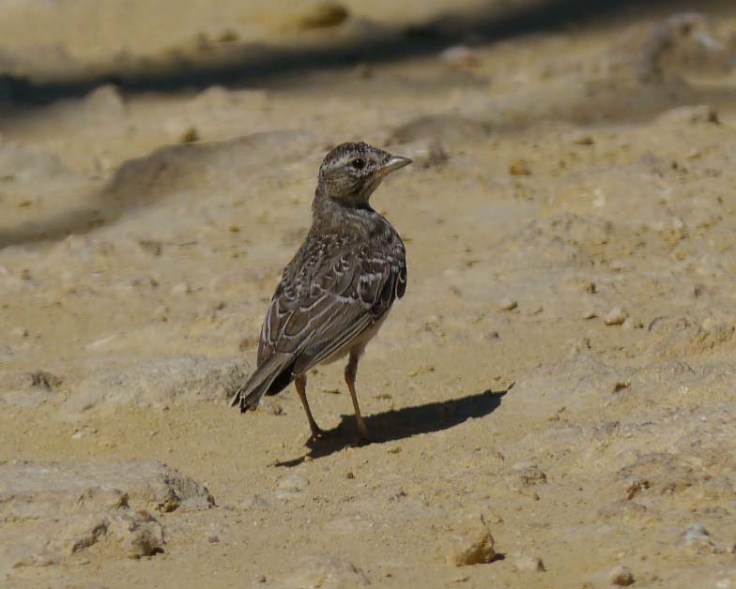
Lesser Short-toed Lark
Usually found in Steppe habitat in Iberia, these birds seem to thrive in the salt-flats around Donana and can be approachable from the car.

Short-toed Lark
A summer breeding visitor to Spain. These migratory tendencies cause them to regularly turn up in the UK where I have seen them on many Scilly Isles visits with groups. Another occasion I was c0-discoverer with JJ Squire as he located a skulking STL on Lundy one May. We also had a Woodchat the same day.

7 August 2012 Left Sanlucar at midday and made a stop at another of the White Towns, Vejer de la Frontera. Pleasant stroll around the town, castle and fortifications and a top salad lunch. Moved on the Bolonia to stroll around the roman ruins of Baelo Claudia. We have done this before but a new visitor centre an museum has been added. Spent a little time at a Mirador looking for raptors but the winds were Easterly and the hills misty near Tarifa. With time to spare we headed inland to explore the Moorish castle at Jimena de la Frontera before heading for a hot and sweaty and lacking in any moving air.. Malaga airport. Flight back home, excellent Easyjet staff and captain arriving back home in rain in the early hours.

Bird List

Shelduck- a fledged brood at Bonanza salinas on 1st.
Mallard-recorded at all the wetland sites.
Shoveler-seen at Bonanza salinas.
MARBLED DUCK-three on Laguna de Tarelo roosting on the island and one at the west end on 5th.


Teal-noted
Pochard-a small flock on Laguna Chica.
FERRUGINOUS DUCK- a drake on Laguna de Medina on 31st.
WHITE-HEADED DUCK- a drake on Laguna de Tarelo on 1st and 5th, 5 females on Bonanza Pool 1st and 5th, 31 on Laguna Chica and 12 on a pool on Rota airbase on 3rd.
Red-legged Partridge-a covey seen on the chalky fields outside Sanlucar on 4th.
Black-necked Grebe-seen on Lagunas Tarelo and Chica.
Little Grebe-noted.
Cory’s Shearwater-c50 noted on Orca trip on 3rd.
Balearic Shearwater-a few noted on the Orca trip.
Gannet-a few seen on the Orca trip.
Night Heron-very common around Bonanza salinas and Laguna Chica.
Cattle Egret-common.
Little Egret-common in wetland areas and the coast.
Squacco Heron-seen in small numbers around Bonanza.
Grey Heron-noted
White Stork-seen at La Algaida, Bonanza, whilst travelling and flocks were migrating SE near Algeciras on 7th.
Black Stork- seen at Bonanza on 5th and La Algaida on 6th.
Glossy Ibis-seen at Bonanza on 1st.
Spoonbill-large flocks at Bonanza on all visits.
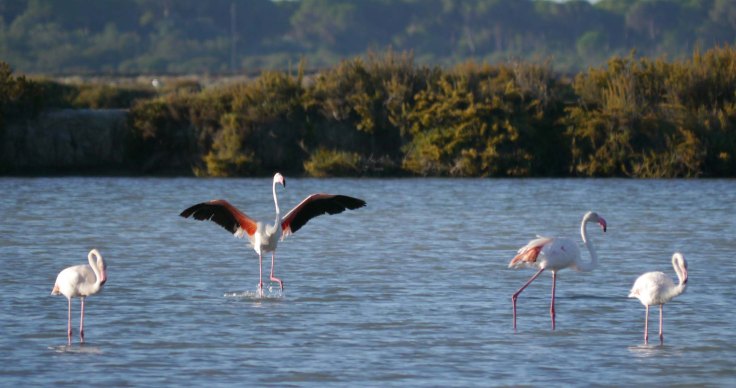
Greater Flamingo-large flocks on Bonanza and La Algaida salinas. Also from the car near Cadiz.
Griffon Vulture-small numbers noted but c50 birds were migrating with other raptors and storks near Los Barrios on 7th.
Osprey- one eating a fish at Bonanza on 5th.
Short-toed Eagle-seen around Los Barrios on 31st, Tarifa on 3rd and 7th.
Booted Eagle-seen around Tarifa, one over Sanlucar de Barrameda on 4th, a pair La Algaida woods and many whilst travelling.


Red Kite-one over Bonanza on 5th.
Black Kite-common.
Marsh Harrier-a few seen from the car.
Montagu’s Harrier-many noted from the car, seen well at Laguna de Medina 31st and Lagunas de Puerto Real on 2nd.
Common Buzzard-a few seen.
Sparrowhawk
Kestrel
Lesser Kestrel-seen from the car a few times
Large falcon sp-one seen at Los Barrios.
Water Rail-one at La Algaida saltmarsh.
Moorhen
Coot-very few on lakes which have formerly held large numbers.
Purple Swamphen-one at Laguan Chica on 2nd.
Avocet-thousands around the salinas.
Black-winged Stilt-hundreds at the salinas and a few at Laguna Salada and Chica.
Little-ringed Plover-seen at the freshwater sites.
Ringed Plover- large high tide roost at La Algaida saltmarsh.
Kentish Plover-seen on the beaches at low tide and around the salinas.
Grey Plover-one at La Algaida salinas on 6th.
Dunlin-thousands around the salinas.
Curlew Sandpiper-thousands around the salinas.
Little Stint-perhaps 30 seen on 1st, 2nd and 5th and 6th around the salinas.
Green Sandpiper-a few around the salinas and channels.
Common Sandpiper-common in the tidal creeks of the Guadalquibir.
Redshank-commonn around the salinas.
Spotted Redshank-one at La Algaida saltmarsh on 6th.
Greenshank- a few seen around the salinas on every visit.
MARSH SANDPIPER- one feeding in a tidal pool at La Algaida on 6th.
Black-tailed Godwit-thousands on the salinas
Whimbrel-seen flying over on every beach visit and 30+ at high tide at Bonanza and La Algaida on 5th and 6th.
Ruff- a few noted around Bonanza.
Black-headed Gull-common at the salinas
Slender-billed Gull- common at the salinas.
Mediterranean Gull-seen around Cadiz harbour.
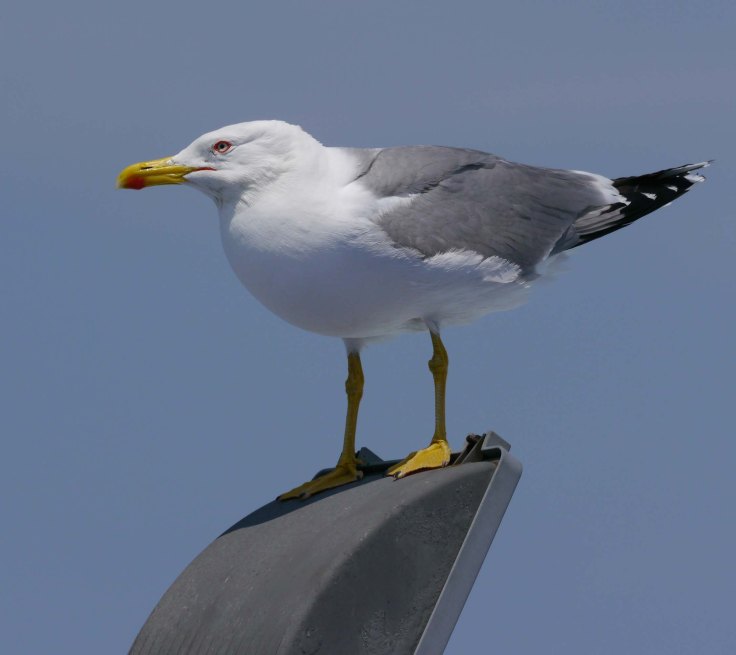
Yellow-legged Gull- very common around the coast and salinas.
Sandwich Tern-seen when on the beaches.

Iceland 14-19 June 2012 Birds and Cetaceans trip report

Iceland 14-19 June 2012 Birding and cetaceans

Humpback Whale

A brief summary of what we saw, more images on the gallery on link below.

http://www.anserbirding.com/photos/svmanager/g7/

Summary of areas covered (does not include stopping for the odd bird here and there).
14th Landed at Keflavik, stopped for food outside Reykjavik, headed for Seltjarnarnes and birded the Bakkatjorn lake area, headed for the north stopping on the estuary at Borgarnes, Blonduos (river mouth, sea, coffee shop and bakery), Akureyri (airport lagoons and mudflats) until reaching destination of Laugur where we were stay for two nights.
15th Headed to the River Laxa and Lake Myvatn for pre-breakfast session, explored Bardardalur valley, Husavik midday departure for Whale watch, checked a few pools at Nes, viewed the Godafoss waterfall,
16th Pre breakfast 0500 start for visit to Lake Myvatn and view the volcanic active areas. Back to Lake Myvatn post breakfast for a full tour around the lake, time on the River Laxa, drove to Varmalhid for refuel, Blonduos and then on to Hellnar on the Snaefellsnes peninsula, arrived at 7.30pm where we stayed for two nights.
17th Up early for 0630 breakfast, on to Stykkisholmur, refuel at Vegamot, picked up two Germans who had a puncture, ferry Baldur to Flatey Island, back to Stykkis for Pizza lunch, drove out along the north shore of Snaefellsnes stopping at Kolgrafafjordur, Grundarfjordur, Olafsvik, Rif and Onverdarnes lighthouse, back to hotel for 7.00pm.
18th Left after breakfast followed the road around the tip of Snaefellsnes to Hellisandur, stopped at bakery in Olafsvik, crossed over the peninsula to south side, on to Borgarnes to look over the estuary, back to Seltjarnarnes, had and evening meal in central Reykjavik on to Vogar where we stayed for the last night.
19th Left after breakfast to Gardur to refuel and head for morning flight, arrived back in Luton early afternoon.

The Cetaceans/mammals
HUMPBACK WHALE-one feeding in the bay off Husavik on 15th

where we were able spend some time watching it from our boat.
MINKE WHALE-at least five maybe ten feeding in the same area as the Humpback on 15th
HARBOUR PORPOISE-two feeding in a fjord on the N side of the Snaefellsnes peninsula.
KILLER WHALE (ORCA)- a pod showed very well on both nights from Hellnar 16th and 17th and another pod were off Onverdarnes on 17th.
WHITE-SIDED DOLPIN-a few off Hellnar on 17th.
ARCTIC FOX– one was spotted by Theresa in the valley of Bardardalur on 15th and another spotted by Tim at the west end of the Snaefellsnes peninsula.

Orca

The Birds
WHOOPER SWAN– seen at many sites from central Reykjavik, river valleys and adjacent meadows to remote highland pools, many pairs had cygnets and were fairly well grown.
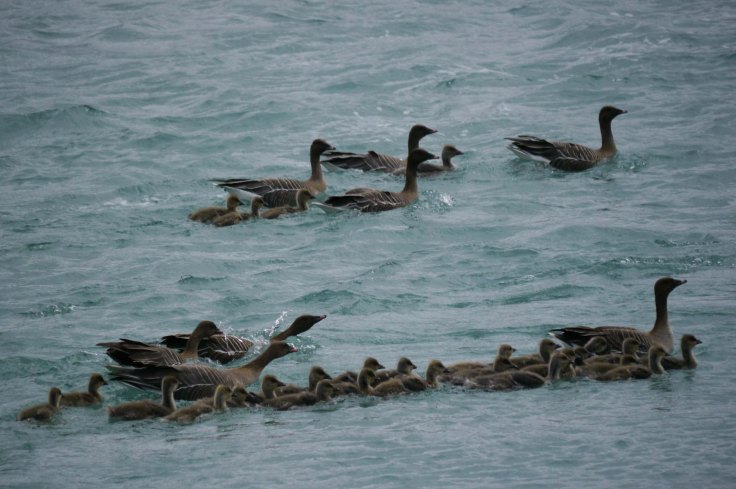
PINK-FOOTED GOOSE– flocks noted moving inland over Lake Myvatn on 15/16th , nervous flocks seen on the Myvatndheidi with a few closer individuals to study on 15th. Best of all were the 50 or so broods many in formed crèches along the river Heradsvatn. Most memorable were one close crèche involving a lot of goslings battling the rapids near the bridge (Solvellir).


GREYLAG GOOSE– A very common bird in the lowland coastal areas, large parties of non-breeders and creches of goslings were a delight to see near towns, homesteads and farms. Fairly confiding birds and certainly used to living near humans, these birds migrate to Britain for the winter.
CANADA GOOSE– at Laugarbrekka, Beryl Smith spotted the head of a Canada Goose peeking over when we stopped briefly on the road to look at the Red-throated Diver pair on a small lake. After a quick look at the nearby monument we returned to view this bird.


LIGHT (PALE) BELLIED BRENT GOOSE– a few straglers that has not made it yet to Canada seen at Bakkatjorn and Seltjarnarnes.
SHELDUCK– small numbers seen on the estuary at Borgarnes
MALLARD-noted at many sites, no counts made.
GADWALL-seen at Lake Myvatn, often among the Wigeon flock.
PINTAIL-seen on the pools around Nes and Lake Myvatn.
SHOVELER-recorded at Lake Myvatn.
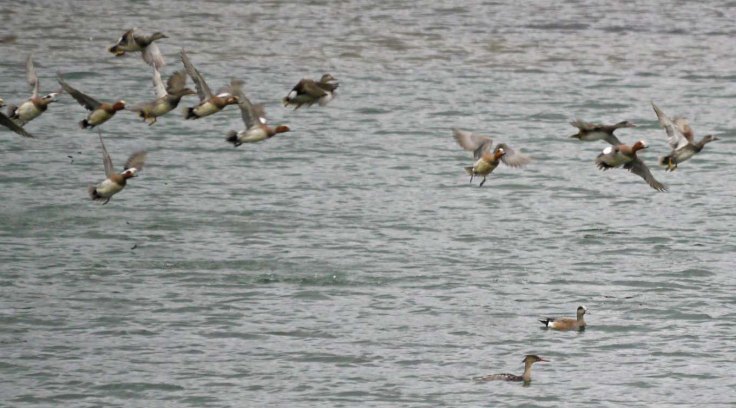
EURASIAN WIGEON– large flocks of hundreds noted at Myvatn and seen at a variety of sites. An aberrant, very pale headed male was noted here.
AMERCIAN WIGEON-two males were among the Wigeon flock along the west shore at Lake Myvatn.


TEAL– seen commonly.
GREATER SCAUP-seen on many pools and lakes, very common especially at Lake Myvatn.
TUFTED DUCK– thousands seen at Lake Myvatn and noted at many sites.
EIDER– common around the coast, thousands noted along the north shore of Snaefellsnes peninsula where we scanned for King Eider. Also noted in large numbers at Akureyri and Seltjarnarnes with many ducklings.


COMMON SCOTER– a dozen or more seen along the west shore of Lake Myvatn.
LONG-TAILED DUCK– seen every day at most wetland sites, some males were still in full non-breeding (winter) plumage, most were in breeding plumage allowing comparison and for you to decide which is your favourite. I have to go with non-breeding.
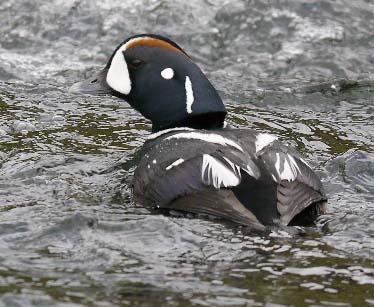
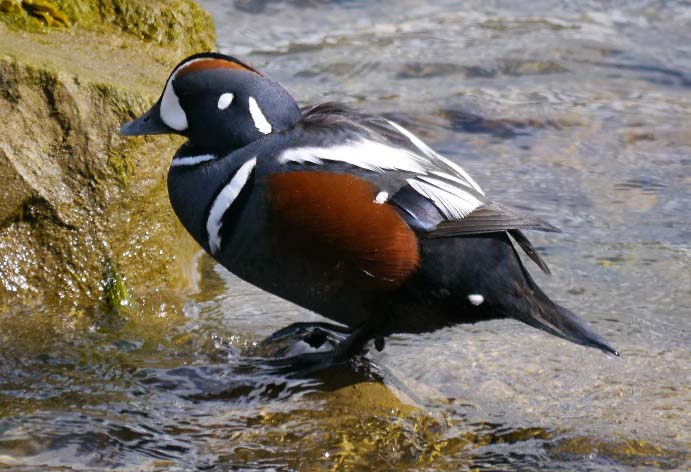
HARLEQUIN– the target bird for most people and the highlight of the trip too. We had to drive on past the first that were sighted (bad place to park/weather) but special time was set aside to be in the company of this splendid duck in its natural habitat. They were noted from all the streams and rivers around the Myvatn area and the River Laxa. This tough little duck was also seen along the seafront at Akureyri and taking in the violent rapids and falls at Godafoss like it was a millpond. Some of us scoped a male from the outdoor hottub below our accommodation, others watched, the duck that is from their rooms.


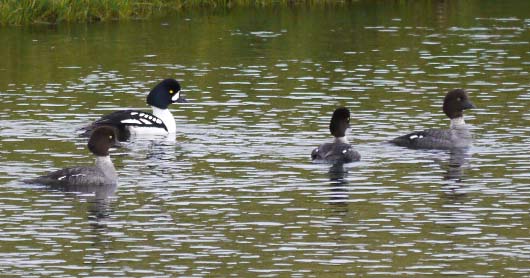
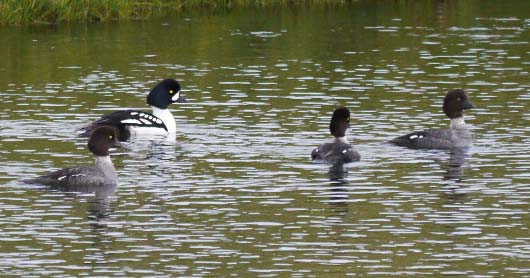
BARROW’S GOLDENEYE– another spectacular duck with its European breeding presence represented in Iceland, we observed them very well on the River Laxa and Lake Myvatn.


GOOSANDER-a female was seen with two ducklings along River Heradsvotn. It was seen from the bus on a roadside pool. Chris Stone saw a male from the bus on a stream near Dalur (Snaefellsnes).
RED-BREASTED MERGANSER– commonly seen at most sites, all the males ahd begun the eclipse moult so none were in pristine plumage.
ROCK PTARMIGAN– The first was spotted on slopes (Midvikurfjall) above the N1 by Theresa Stone, it was not a good place to stop though. Twenty minutes later she found another in a more convenient place near Godafoss so we walked up to it and got great views. We also watched two males scrapping with the victor showing off atop a rock at the west end of the Snaefellsnes Peninsula.


RED-THROATED DIVER– seen on many roadside pools and rivers, notable birds were a close one on the Laxa bridge, a non-breeding plumage bird at Olafsvik, pairs with young on Snaefellsnes from Road 54 and a trio at Rif Pools.


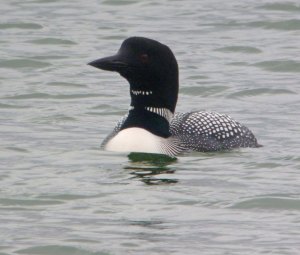
GREAT NORTHERN DIVER-these magnificent birds were enjoyed at Flodid and Lake Myvatn.


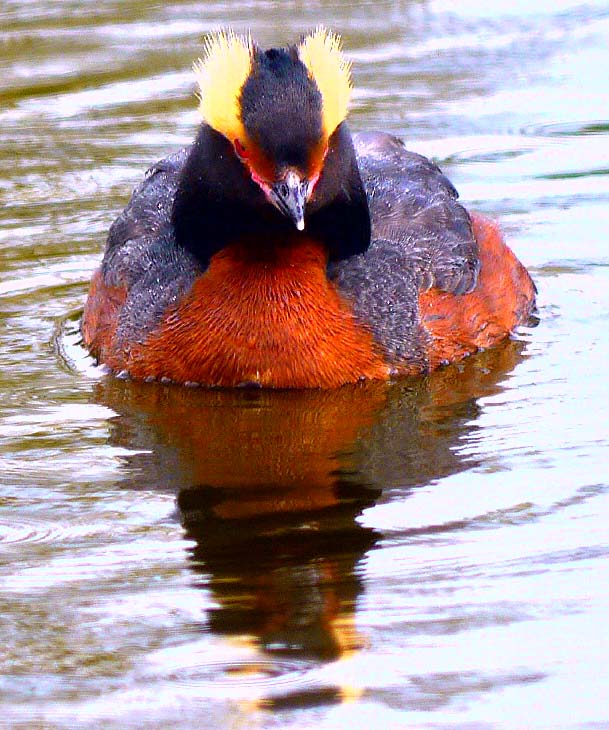
SLAVONIAN GREBE– again seen from many roadside pools but the best views were at Lake Myvatn where it is common.


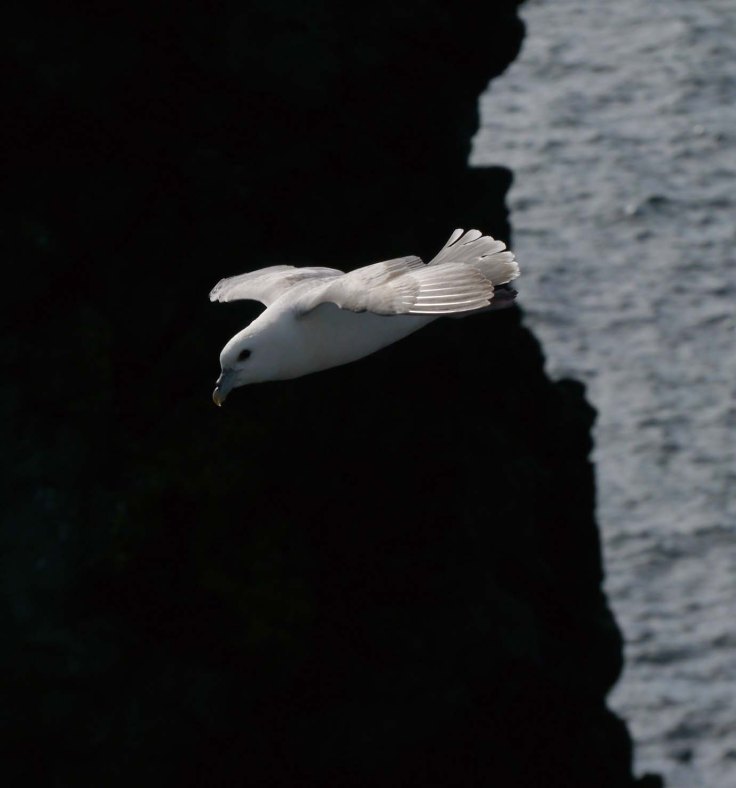
FULMAR-commonly seen whilst travelling around the country on inland breeding cliffs and breeding on coastal cliffs.


GANNET-seen from the Whale Watch boat and off Hellnar.
CORMORANT-seen around the coast.
WHITE-TAILED EAGLE-an adult seen perched and soaring around the estuary at Borgarnes on 18th.
MERLIN-unbelievably we never connected with this bird as a group, only seen once from the bus by Beryl adjacent to Vatsnhlid.
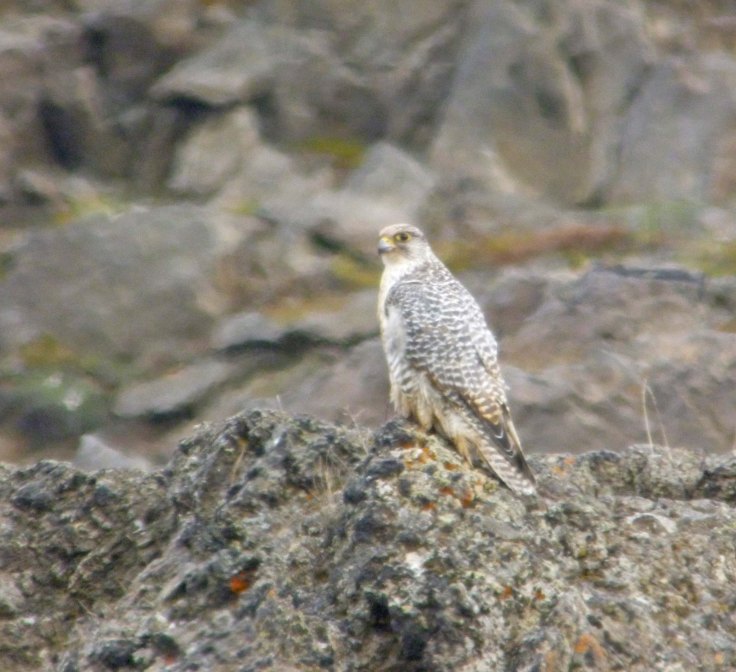
GYRFALCON-two were seen, excellent views of perched in the valley of Bardardalur on 15th and another perched and mobbing Raven at Lake Myvatn on 16th.


OYSTERCATCHER-noted at several sites.
RINGED PLOVER-noted a few sites, broken winged displays aimed at a dogwalker at Blonduos was notable.
GOLDEN PLOVER-lovely to see them daily in most places or at least hearing them, often feeding in the meadows allowing views next to the roads and breeding on the hills and slopes. Some noted on roundabouts, at the foot of peoples driveways and at Keflavik airport.
RED KNOT– seven were seen on Flatey Island on 17th.
SANDERLING-one at Bakkatjorn, Seltjarnarnes on 14th, a breeding plumaged bird entertained us at Husavik.
PURPLE SANDPIPER-a few seen on Flatey Island, two at Olafsvik and one at Bakkatjorn, all in breeding plumage.
TURNSTONE– noted at Bakkatjorn.
DUNLIN-a common bird, seen in aggressive and competitive flights over the Laxa, at Myatn and small flocks on the flats at Akureyri.
REDSHANK-delightfully common in lowland areas.


BLACK-TAILED GODWIT– also very common in lowland areas, lots of display flights witnessed.
WHIMBREL– another common wader seen in most areas.
SNIPE-a very common bird in the lowland areas, seen daily in display, a parent led two chicks across the road in front of us a Laugar on 15th. We made sure they got into cover.


RED (GREY) PHALAROPE– at least two females and one male on Flatey Island on 17th, possibly four individuals in total. The females were squabbling, maybe territorial, we saw a female settle on the nest probably to lay with her and the male spending time on guard or feeding in the grass nearby. They had chose a spot near the Arctic Terns possibly for protection.
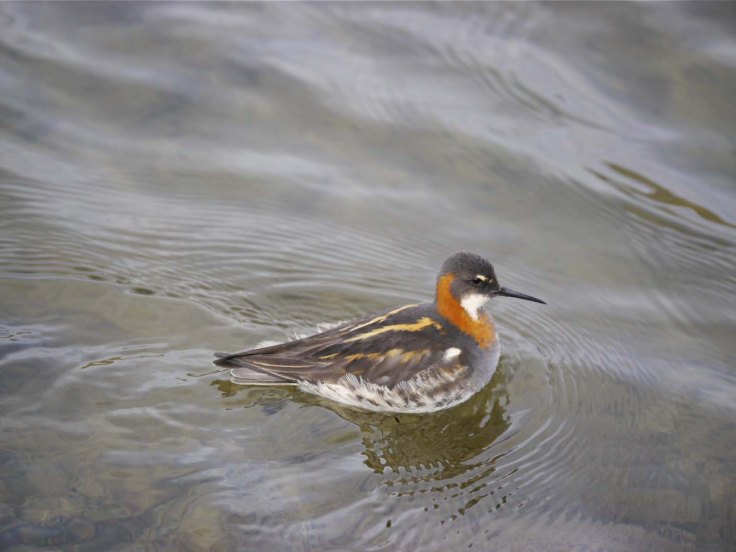
RED-NECKED PHALAROPE-seen daily, very common and delightful birds to be with as they are so confiding.


GREAT SKUA-seen on the Whale Watch on 15th.
ARCTIC SKUA-a fairly common bird, seen just about everywhere and every day.
BLACK-HEADED GULL-we searched the Husavik flock for a recent Bonaparte’s Gull without luck.
COMMON GULL
HERRING GULL
LESSER BLACK-BACKED GULL
GREAT BLACK-BACKED GULL
LITTLE GULL– a first summer was found on Rif Pools by Chris Stone


KITTIWAKE– a common bird around the coast, often being chased by Arctic Skuas.
GLAUCOUS GULL– noted at Blonduos, Husavik and Snaefellsnes.
ICELAND GULL– seen at Blonduos and Husavik.
ARCTIC TERN– the ‘Kriaa’ was everywhere.


PUFFIN-common around the coast.
BLACK-GUILLEMOT-seen from Blonduos, the Whale trip from Husavik and on Flatey Island and Stykkisholmur.


GUILLEMOT-good views of bridled and unbridled birds with Brunnich’s at Onverdarnes.
BRUNNICH’S GUILLEMOT-seen very well on ledges at Onverdarnes on 17th.

RAZORBILL-seen at Onverdarnes.
SHORT-EARED OWL-singles noted just after leaving the tunnel at Kuludalsa and another during the day en-route to Laugar. One at Laugar in the evening, all on 14th.
MEADOW PIPIT-common.
WHITE WAGTAIL-common
PIED WAGTAIL– I saw one well as I was driving, it was flycatching from on a fence next the road and next to a pool between Langaholt and Glumbaer on the Snaefellsnes peninsula. Despite stopping and reversing back it had flown off toward a farm and could not be refound. Only nine accepted records for Iceland.
WHEATEAR-a total of about 12 birds noted during the visit.
REDWING-a common bird, a few were in song at Laugar and heard at the airport.
WREN– One seen by Roberta.
RAVEN-seen daily.
STARLING– seen around Reykjavik.
COMMON REDPOLL– a few flew over us at Laugar on 16th.
SNOW BUNTING– singing and displaying males on Flatey Island, seen at Rif also.

June to July 2012 Blog and sightings

31 July 2012 Day one of a visit to Cadiz Province in Andalucia Spain. A stop or two on the way to Sanlucar de Barrameda included time at the beach for my family, the jellyfish swarm put paid to swimming in the Mediterranean sadly. A stop at Laguna de Medina was also of interest…more to come in August blog and trip report.

13-30 July 2012 A good end to July locally, the adult waders arrived, most still in breeding plumage and the first juvenile Dunlin and Whimbrel for me. Yellow-legged Gulls arrived as usual on the Severn, I saw at least nine probably eleven adults on 28th. I also saw what appears to be a Cape Shelduck female and a female Argentine Red Shoveler about the WWT scrapes.

Pick of the bunch has to be the Long-billed Dowitcher that James discovered among the wader roost on South Lake as we have not had one locally in recent decades. Another welcome bird for Glos birders and a reminder that WWT scrapes are well worth searching any time of year.

Long-billed Dowitcher images by MJMcGill


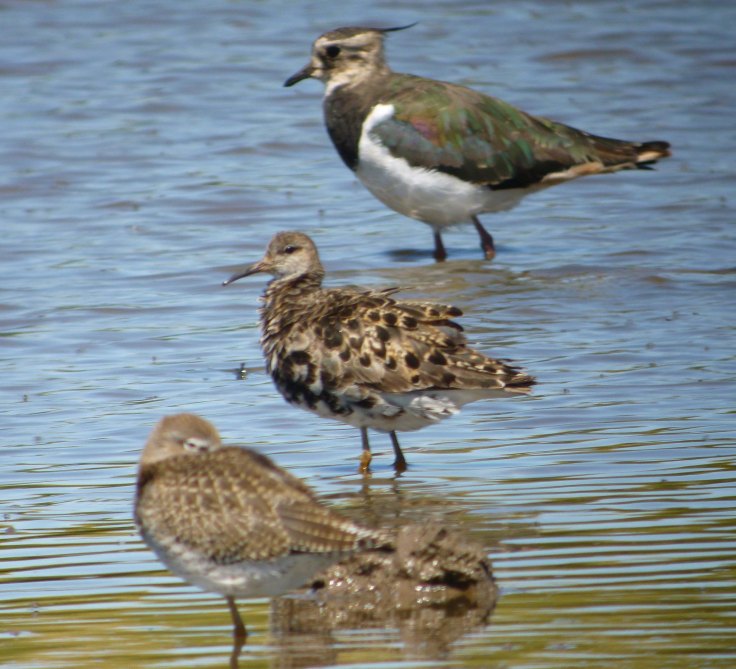
Ruff centre, Lapwing top and Redshank below MJMcGill

Curlew Sandpiper and Golden Plover

Yellow legged Gull
One of at least nine adults present on the banks of the Severn.

28 July 2012 A day out with Graham Clarkson, Jubs Squire and wildlife buddy Maisie McGill. We visited the Forest of Dean and Coombe Hill meadows among other sites. Meeting up with Paul and Truan Taylor we searched for an eventually located (well done Jubs) the male Red-veined Darter at Woorgreens. At another site we quickly located another target species (well done Tay) Scarce Blue-tailed Damselfly, both species were county lifers for me. The day was highly productive for odonata with Blue-tailed, Large Red, Azure, Common Blue and Emerald damselflies, Brown, Souther and Migrant Hawkers, Ruddy and Common Darter, Broad bodied Chaser, Black-tailed Skimmer and Emperor dragonflies noted.

A flock of 17 Crossbill were as always a welcome sight, displaying Lesser Redpoll and a few Siskins were seen aong with Tree Pipit and Jubs saw a Wood Warbler.

Red-veined Darter MJMcGill

Scarce Blue-tailed Damselfly MJMcGill Location witheld

12 July 2012

Common Scoter 1st summer male off Middle Point, Severn Estuary.

Red Knot, Dunlin and Redshank on WWT South Lake.

Reeve with the Redshank, WWT South Lake

7-10 July 2012 No blogging for a while but a few birds noted over the continuing wet summer. Some images of birds I have taken below. Plenty of wader variety about the Severn and WWT scrapes, I have seen 18 species since last Sunday with some in full breeding plumage such as male Bar-tailed Godwit, the 100+ Black-tailed Godwits, Wood Sandpiper and 17 Red Knot. Juvenile Little ringed Plover, Golden Plover and Ruff were all new returning birds as was Sanderling and 6 Ringed Plover today (10th July).

5 July 2012
Garganey
Two drakes in eclipse on the South Lake, one bird still retains the ‘ghosting’ remnants of the head pattern. I have seen this species often until June when the eclipse moult begins and in late July/August when they are fully in eclipse moult but do not recall seeing them in this stage.

A Greenshank and Red Knot were fresh returning migrants on the Top New Piece.

1 July 2012

Short-eared Owl This is the first July record for me in the county of Gloucestershire.

Little Egret MJMcGill

Iceland 14-19 June 2012 Trip report to come, a few digi images for now, better to come.

Harlequin MJMcGill

Slavonian Grebe, Lake Myvatn MJMcGill

Barrow’s Goldeneye

9 June 2012 I was forced to go to the estuary by my daughter who wanted to go birding! Scoping the still breezy Severn estuary at high tide produced a Storm Petrel, three Sanderling, 1 Dunlin, 5 Oystercatcher, 12 Curlew and a Great Skua.

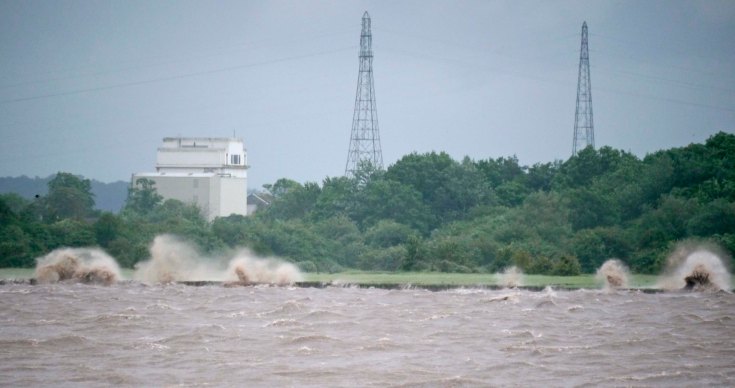
The Summer storm-8 June 2012

Saul Warth gets a battering, if you were stood on the shore the plumes would have been about 10 ft above your head.

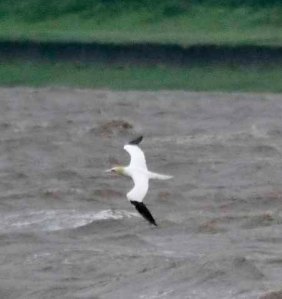
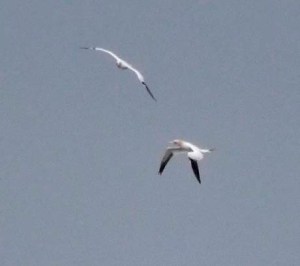
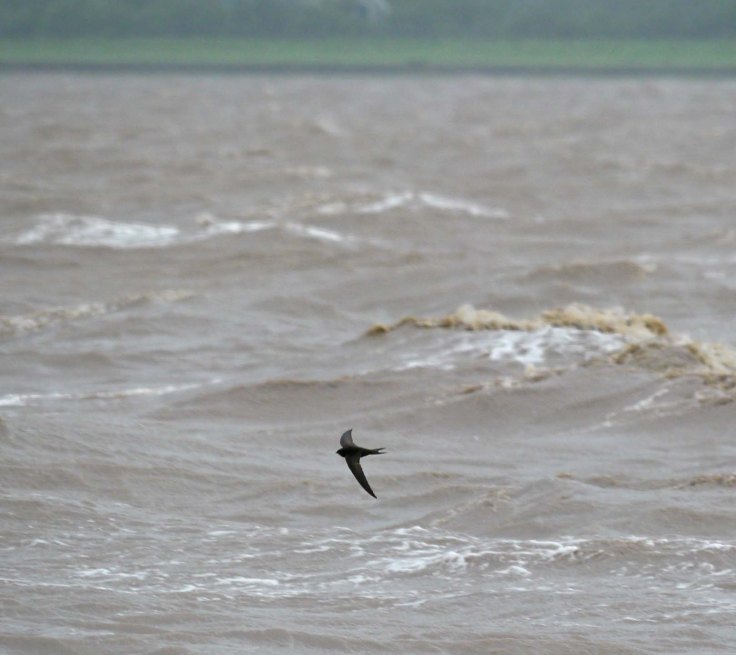
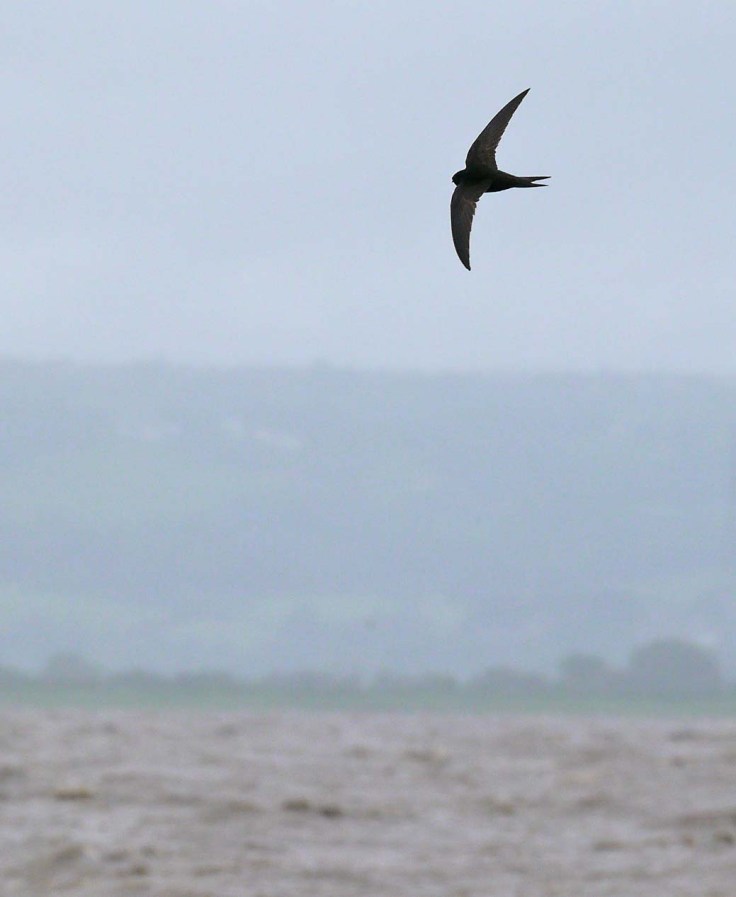
A forecast of gale force winds and a high tide was an attractive propsect as it often provides a chance of sea-birds we rarely see in the county. I settled in out of the strongest of winds and watched. Three Dunlin were on the mudlflats along with 6 Oystercatcher and 6 Curlew before the tide moved in at a scary pace. I was scanning for more calidrids when a Storm Petrel passed me close by, it carried on along the shore toward Saul Warth swinging side to side into the wind and over the huge spindrift topped waves. It passed by Hock Ditch when I lost it to view. Soon after two adult Gannets swung into view and moved up and down the shore before heading for the Awre peninsula.

Gannets look for a way out


The Swifts were feeding over the waves, often brushing my head as they crusied over

Sanderling plough South

Sanderling with a Dunlin

4 June 2012 An early morning out to watch the tide and check the waders that were present yesterday. 30 Sanderling, 80 Ringed Plover, 110 Dunlin, 1 Turnstone and a Grey Plover were present. A Peregrine ruined it and repeatedly attacked them leaving nowt left. Forgot to mention the Red Kite over A38 Frampton junction and then drifted across Whitminster.

Ringed Plover MJM

Sanderling (a range of plumages on show, this one moulting into breeding plumage)

Dunlin, Ringed Plover, Sanderling and can you find the Turnstone.

3 June 2012 At WWT a flock of 40 Sanderling, a Grey Plover, 1 Turnstone, 80 Dunlin, 80 Ringed Plover and 13 Curlew were on the estuary and I saw at least 8 Crane today, 13 were reported.

Sardinia and Corsica-24-28 May 2012

Introduction
I had been asked and was keen to organise a birding tour of Corsica for a group of friends from NCOS (D and B Dine, K Wills, D Pearce, G Watson, M and Jo Jones, A Jayne). I think I had better join the elite and will send off a membership form soon. The trip was put together with the endemic specialities in mind. My investigations led my to encourage a visit via Sardinia as it was only really possible to go to Corsica on charter flights, a week at a time. It seemed a good way to do it and take in both these Italian and French governed islands although both islands are very independently minded. This way I could put together a shorter trip, take in N. Sardinia and have two ferry crossings to seawatch from. I booked flights from London Luton to Alghero and hired a minivan for us to travel in. We arrived in the evening in Sardinia and were soon at Villa Barbarina near Fertilia where we were to stay for the night. AJ picked up on a calling Scop’s Owl and we also added Nightingale. After checking in and settling down with a drink. Some of us were up a bit later ‘unwinding’ and it was a pleasant place to be in evening.

25 May 2012
We woke to a misty start but the sun burnt through rapidly. The hotel grounds provided a variety of habitats from weedy fields, vineyards and olive groves so a variety of birds were enjoyed. Italian, Spanish and even Tree Sparrows showed off on the lawn or rooftops, not a House Sparrow in sight! Hooded Crows were much in evidence, a common bird here as well as in Corsica but not so densely populated on the latter island. Woodlarks sang and those that strolled around returned with a list of Mediterranea birds. The Spotted or (unspotted) Flycatchers were very bold. After breakfast we loaded up and headed to Lago di Baratz, a natural lake set in the hills. Wandering around here we saw many emerged dragonflies and butterflies, a flyover Purple Heron, distant Tawny Pipit, Sardinian Warblers, Cirl Buntings, Firecrest and more. On the lake a pair each of Black-necked, Little and Great Crested Grebes. A party of four Ferruginous Duck were also notable, a male with three females. Everyone looked closley at the Lizards, Gecko’s, plants and insects at this site, endemic species are always on offer on such an island.

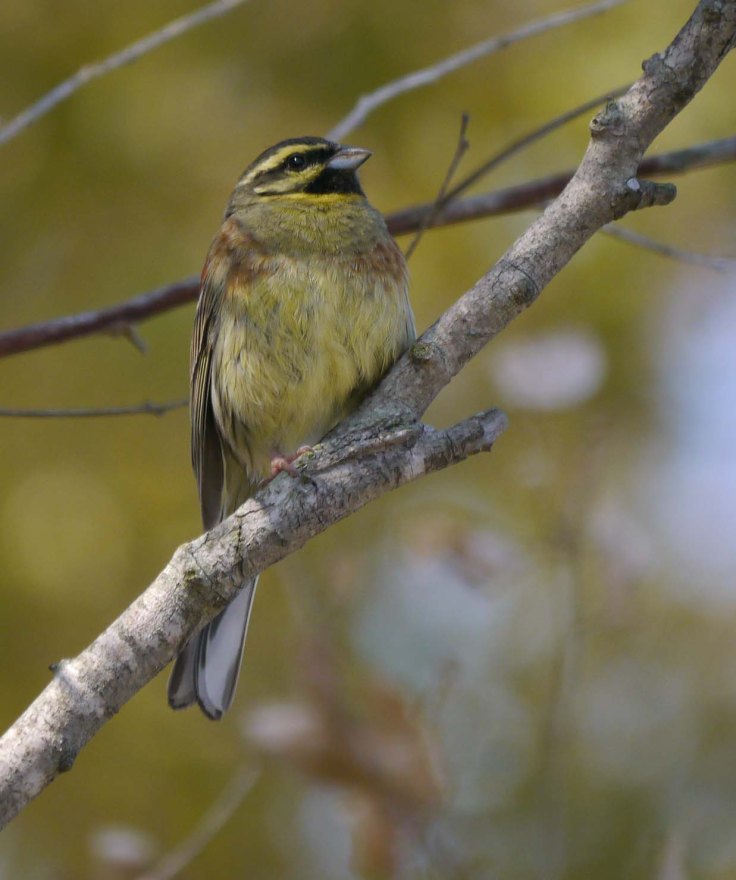
Cirl Bunting MJMcGill 

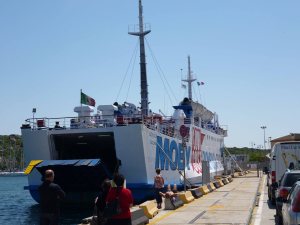
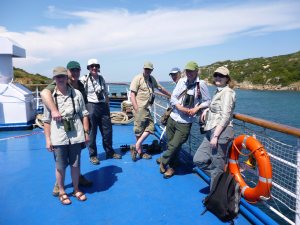
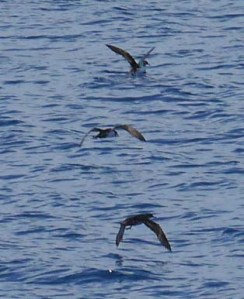
Moving on from here with the sun warming things up we set off for the fery port at Santa Theresa de Gallura for a 1500 departure. We arrived in good time and caught the supermarket before it closed. The deli counter sorted out fresh bread rolls and cheese for us and we took it to the harbour to eat on the wall. After boarding the ferry we got into a seawatch position at the back of the boat away from the noise and so we had a good view. A Mediterannean Shag flew by close and began fishing, it was a juvenile and appeared so pale, white necked like a grebe. Duncan Dine spotted a Blue-rock Thrush as we left the natural harbour mouth and we were soon seeing Yelkouan Shearwaters. A party of 25 dispersed from the surface as the boat moved into open water.

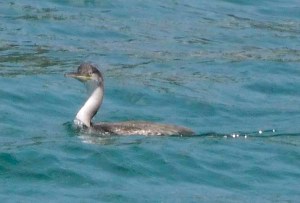
Juvenile Mediterranean Shag (desmarestii)


Yelkouan Sheawaters

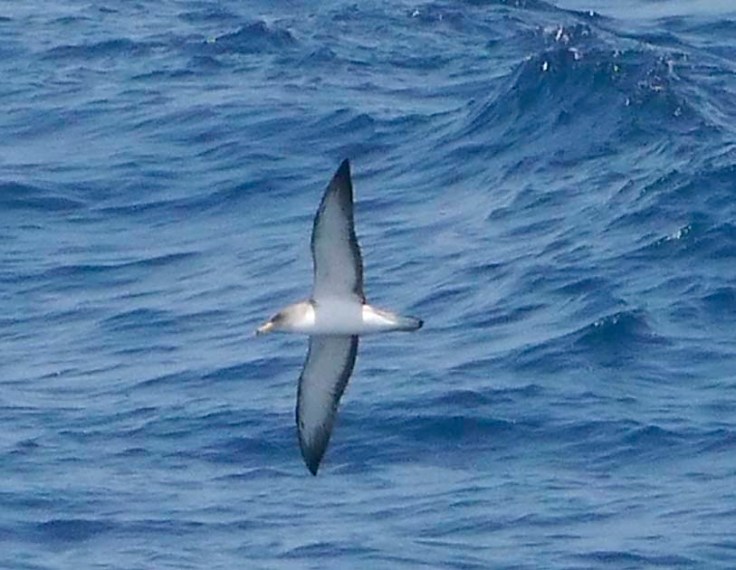
During the crossing more Yelkouan Shearwaters were seen and I saw at least one Cory’s (Scopoli’s) Shearwater, I think more were seen by the others. It was difficult to communicate sightings to each other when spread out searching and the wind and engine noise drowned us out. Only 40 minutes later and we approached the waved limestone cliffs of Bonafacio, Corsica. Again we were road mobile and I set off for the Etang du Urbino to fit a little more birding in. I dropped the gang off for a stroll along a lane to the shore where Shelduck, Quail, Bee Eaters, Sardinian Warbler, Turtle and Collared Dove, Yellow-legged Gulls, Little Egret and Red Kite were seen/heard. Another short drive and the seaside scrub adjacent to Etang du Diane was searched, a Woodchat Shrike, Sardinian and Subalpine Warblers and Stonechat were all seen and heard. We ran out of time here and did not reach the lake shore as we needed to reach our hotel in the Restonica Valley. After less than an hour we arrived, unpacked and searched the stream next to the hotel, Grey Wagtail and Dipper were seen and heard. I drove everyone to Corte to my favourite restuarant U Museu. The grub here was a hit as were the friendly, helpful and tolerant staff, as ever we made things hard for them to understand but Becky Dine got us sorted and kindly took the lead on ordering in French for all. Thank you for all your help Becky. We all relaxed and enjoyed the rather showery evening under cover of awnings and remained warm. After the meal we heard Scop’s Owl calling in the town, the shower had stopped. Back to the hotel for bed.

26 May 2012
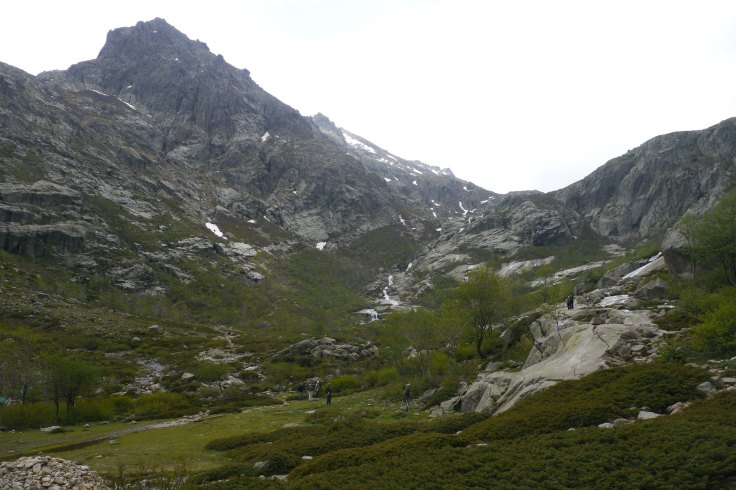
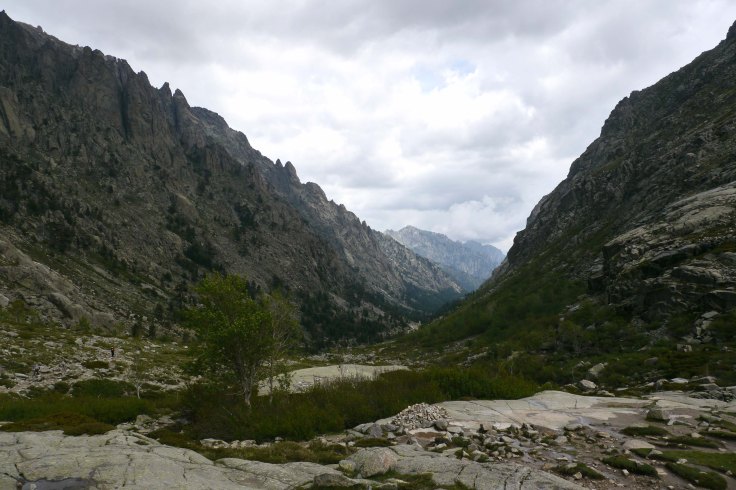
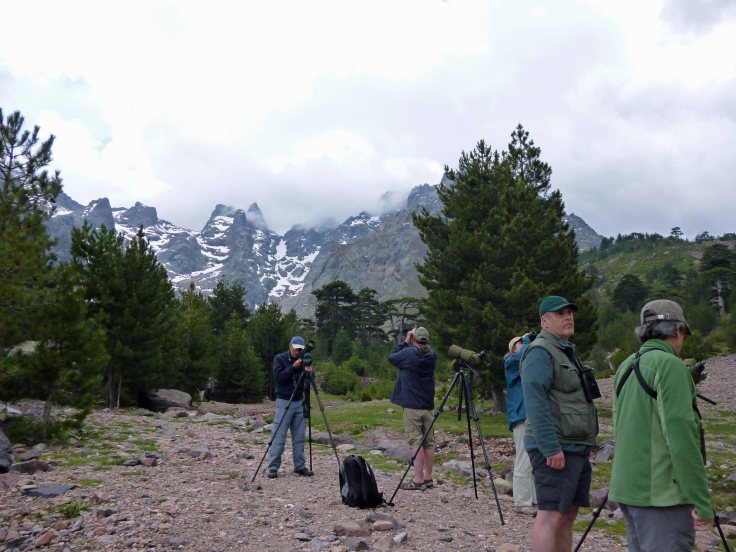
0800 start for an excellent breakfast and out birding by 0900 to head high up the Restonica Valley. Most of the group headed out earlier to birdwatch around the hotel so had a few extra sightings to add to the list. We stopped at one site I have seen a pair of Corsican Nuthatch before but it was very quiet so we moved the the end of the valley, paid and parked and set off on foot to climb up to a good viewing area close to Lac de Melo. Setting up our ‘viewing camp’ here everyone was soon chipping in with sightings, Water Pipits singing and carrying food, more Grey Wagtails, Mistle Thrush, Kestrel, Buzzard and then the smashing Corsican Finches. A male performed display flutters showing off yellow flashes as the four moved about the rocks, bushes and trees giving us good views. Parties of Alpine Chough remained stubbornly high above the peaks and crags although a few came to scope distance.  The views and scenery were excellent. A couple of hours passed by and we descended back to the cafe for lunch with Chaffinches for company.

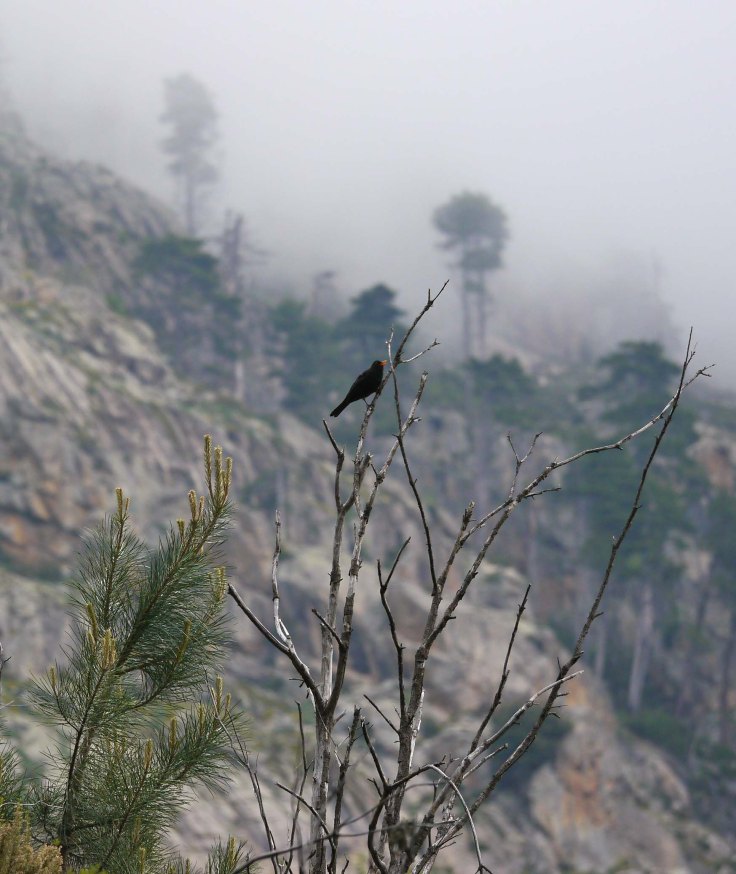
Heading back to the forested zone I dropped everyone for a wander through the forest downhill to the next parking spot where I would wait and wander back up toward them. As soon as I got out the van I could hear a Corsican Nuthtach calling. I followed the sound up the slopes and located a bird which dissapeared again. After a fifteen minute wait I heard a Great Spotted Woodpecker calling and then three of the endemic Nuthatches repsonding. The ‘pecker’ arrived in a reaby tree followed by one of the Nuthatches, it was shadowing the pied intruder. I tripped back down the slope to get near the road and keep an eye out for the group who arrived as the Nuthatches were calling again. Singles were calling either side of us so those on the road could hear and see one below the road and others hearing one above the road in the canopy. We waited 40 minutes but not more calls were heard and no sightings made so I used short and reduced sound playback. Nothing responded or appeared. We stopped and searched more areas but did not locate any ‘hatches’. Back for a change and out to the restaurant again for another great meal.

27 May 2012
A pre-breakfast start at 0700 to try for the Corsican Nuthatches was arranged, we arrived at the sunny spot and waited for a sound. Nothing came our way but the Firecrests and commoner passerines in song. A short playback and an instant repsonse from the Nuthatch who appeared in the canopy overhead, it flitted between trees and dissapeared again. Back at the van Keith spotted a party Alpine Swifts as we watched a Buzzard lift on the rising thermals. We watched these white-bellied boomerangs visit the cliff and chase an scream over the valley. Time for breakfast.

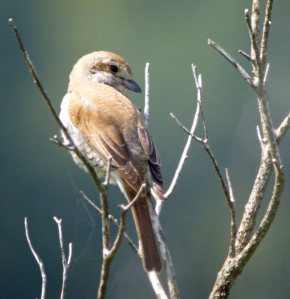
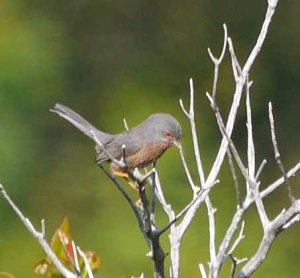
After our morning meal I took everyone off to Vivario to a spot where I have seen plenty of good birds before. Driving along we saw many Red Kites floating above the villages. We arrived at a decent spot and looked out across the valley and to the distant cloud covered peaks and soon spotted Golden Eagle. On the Maquis below everyone was seeing Marmora’s and Dartford Warblers pop up on the low bushes every so often. Duncan, Graham, Jo and Mick made their way down the track and saw Corsican Swallowtail and had great views of the birds. We also saw Corsican Finches, heard Woodlark, Great Spotted Woodpecker and enjoyed the butterflies too. I led everyone to where I had breeding Red-backed Shrikes before and AJ spotted a female on the slope in the bracken and brambles. We got into a better position to view the area and watched the pair.

Female Red-backed Shrike


After enjoying these class birds we headed back to the viewpoint to search for raptors, another Golden Eagle was seen but the highlight was seeing a young Bearded Vulture soar out of the cloud, circle mountain before flying along the cliff and was lost to view. Plenty of Red Kites were seen on the wing too.  We also had Alpine Swift blast low overhead, Crag Martins and I saw a single Red-rumped Swallow with the House Martins. Moving up the mountain to a side road that takes you to the Col de Sorba we stopped for butterflies, Scarce Swallowtail was watched and a Cuckoo (we saw it on the way down too). A walk along a track to another familiar spot for me we saw Corsican Finches (a male landed very close), Corsican Nuthatch, good views and heard a Scop’s Owl call four times in the middle of the day!

Time for a lunch stop and then more mountain birding. We stopped in the town of Porto Vecchio and had a snack and drink, then move on to try the Tortoise re-introduction centre on the way to Asco, it was shut and opened on 29 May! Moving on we drove all the way to the Haut Asco ski station and were soon watching Red Crossbills, a party of c8. Another climb up the slope to settle for a search and DP picked up two Mouflon feeding on the cliffs high above.

Birding Haut Asco

Mouflon

KW spotted a Golden Eagle crusing through the clouds. A coffee at the cafe and further searching of the peaks did not reveal the hoped for adult Bearded Vulture. A long descent back down the valley for a final stop in some likely scrub gave us Woodlarks and a roost of at least 27 Red Kites.

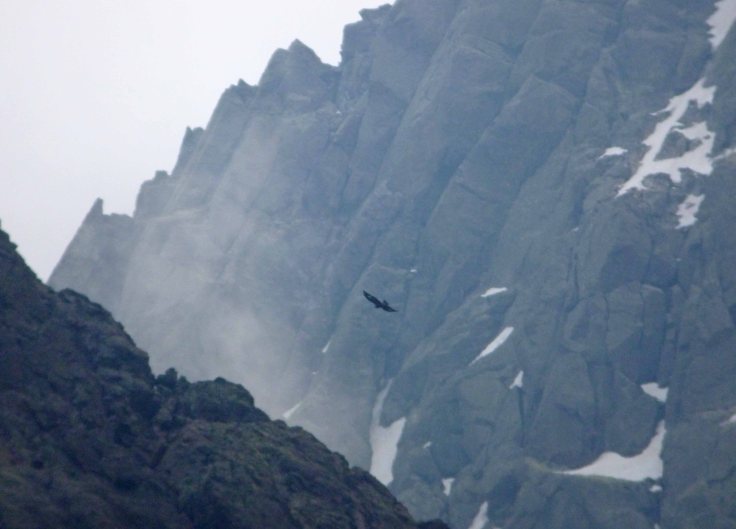
Golden Eagle

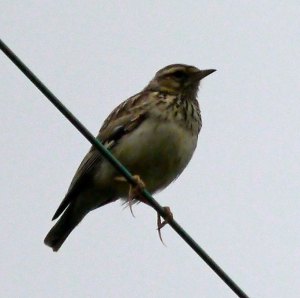
Woodlark

Back to change and head out again to a restaurant, a wander around Corte to look at the bulidings, statues and a bit of history and the excellent viewpoint was enjoyed. The Swifts were magic as they chased about the town. We had to eat at a different place as U Museu was closed, the service at the adjacent retstuarant was not great here but it did provide two Nightjars that DP heard first then discovered flying just above the buildings. They were using the clock tower to perch upon and were seen mating in the lights. Just wonderful birding and we were so pleased that a few folk had brough their bins.

28 May 2012
Up, packed and on the road by 0745, I needed to get to Bonafacio for the midday ferry and time was tight, we breakfasted en-route, I was looking for a seaside hotel or cafe and found one at Solenzara. In the harbour Med Shags fished, I spotted a gorgeous Audouin’s Gull and KW picked up on a close pod of 4+ Bottle nosed Dolphin. After bread roll, croissant and coffee/tea we once again loaded up and reached the ferry at 1120. Back on the boat for another seawatch a Peregrine flew along the cliff as we left Corsica, more Yelkouan Shearwaters were seen c6 in total and a few Cory’ (Scopoli’s) Shearwaters. One followed the boat and allowed great views as did the mob of Yellow-legged Gulls.

Back on Sardinia we made a lunch stop and then headed for Stagno di Pilo, a brackish coastal lake on the N coast. Birds seen here included Great White Egret, Little Egret, Shelduck with a brood, Coot, 2 Purple Heron, Cetti’s Warbler, Nightingale, Sardinian Warbler, five noisy squabbling Stone Curlews, 2 Turtle Doves, Marsh Harrier and displaying Tawny Pipit.

A further stop on the way to the airport gave us great views of 3-6 Lesser Kestrels, I was trying to explain the differences when a female Common Kestrel landed on wires next to them for comparison. A couple of Marsh Harriers floated about the area. We were soon at the airport where we bid goodbye the Becky and Dunc who were staying on to continue their holiday. The rest of us flew home, we said bye to Keith at Luton and arrived in Gloucestershire in the early hours.

Thanks to all of you on the trip, I really enjoyed your company and you were all so helpful, understanding and flexible to make it easier for me to plan and evolve each day, the birding and of course meals. You were all so sharp in the field and everyone made a discovery or two.

MJMcGill

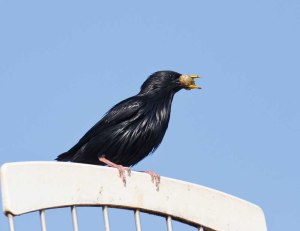
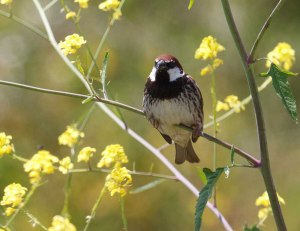
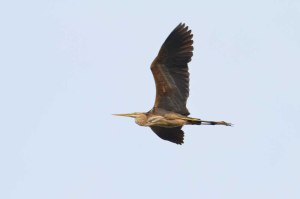
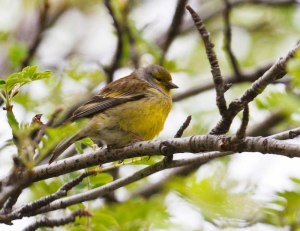
The following compilation of images are from Graham Watson, thanks GW. Spotless Starling, Spanish Sparrow, Purple Heron, Corsican Finch and Corsican Nuthatch x 2.


Blog at WordPress.com.

Up ↑