Netherlands Goose watching trip 9-12 February 2012

The Netherlands Gans Fest

9 February 2012

A visit to the Netherlands in winter has been on the cards for many years, an attempt to get a trip going in 2010 was thwarted by severe weather conditions. It was time to go for it again so a rather late advertised trip was arranged, a team of hardy souls committed, it was all systems go. The coldest and worst winter weather was again forecast but it still looked good. Six of us met at Whitminster, I picked up Jayne and Rich and Bob collected Bettie and Anne en-route to me. We then collected Tom who had booked just a couple of days before. A few Red Kite were noted on the way to Folkestone, the Eurotunnel was as efficient as ever and we were off heading through France. The snow bound fields helped us in seeing three Woodcock flying across the road to drop into ditches plus the bizarre sight of a Little Grebe flying down the motorway. A stop in Belgium for comfort and coffee allowed TM to seek out a couple of Crested Tits and a Short-toed Treecreeper.

We negotiated the heavy traffic around Antwerp and Amsterdam and arrived near Oostvardersplassen for a spot of birding. A rough hay field obviously held a lot of voles as 4 Buzzard, 2 Kestrel, male and female Hen Harrier, the male of the latter as always, a stunner. Two Great White Egrets also foraged with Grey Heron for rodents. A few minutes down the road and we were sifting through a flock of 3000 geese, Tundra Bean, Barnacle, White-fronted and Greylag and then a white phase Snow Goose joined them. A roost of 600 Stock Dove was very impressive. We headed to our Hotel, the Vigilante near Makkum arriving at 1930, very comfortable, very quiet and excellent food.

10 February 2012

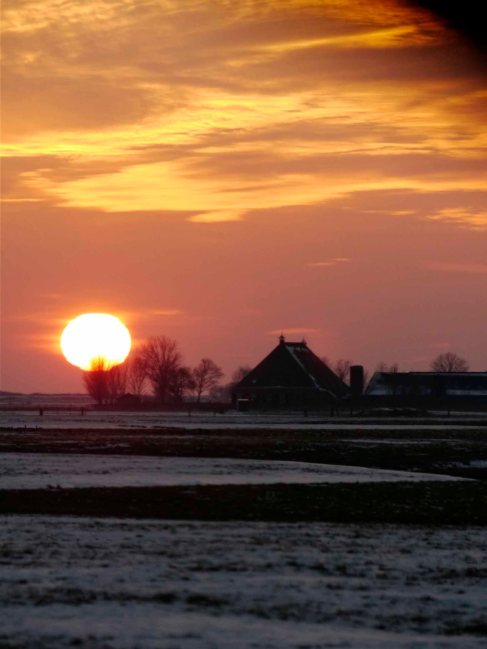
We had breakfast at 0715, I have to say it was excellent and we were in the car by 0800. Sunrise on a nearby dike just south of Makkum allowed us to watch tens of thousands of Barnacle and White-fronted Geese leaving the Ijsselmeer roost (on the ice?) and head to the fields for the day. Wonderful watching plus Hen Harrier and a female Goosander searching for open water. It was cold, the night saw -10 temperatures and geese foraged anywhere grass was not snow covered. Some birds were very tame, others skittish.

White-fronts leaving the roost

Geese leaving roost

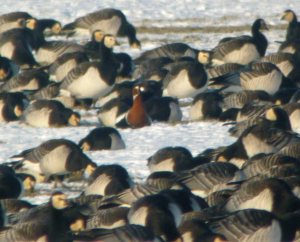
Driving slowly along the lanes toward Ferwoude we found a monster flock of geese, c7000 and got into a good position to go through them. They were up and down all the time but most came back to the same spot. I picked up a presumed Barnacle x Ross’s or Snow Goose and talked everyone onto the bird. Whilst doing this I saw a 2cy Red-breasted Goose hiding among the Barnies and Fronts. I gave directions for that bird and scanned back to find the hybrid again this time locating an adult Red-breasted Goose in the same flock. A great start to the day.

Red-breasted Goose among the Barnies (rear view when it dissapears and head-on, easy)
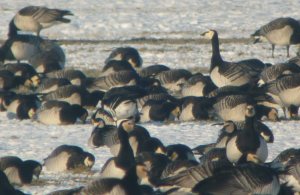
   

Mixed goose flocks

The ditches were frozen solid, every sluice had a Heron or if a puddle of water was available, a collection of duck. The flat open landscape was dotted with wind turbines and huge flocks of geese could be seen all around. The plan during the day focussed on looking at as many flocks as possible. We carefully followed any large gatherings stopping to scan any grounded flocks. Many were close to habitation, where grass was available in the lee of buildings. One particular flock of White-fronts and Pinks had two neck-collared of each and a re-visit gave up a probable Lesser White-front x White-front hybrid. A dark, yellow eye-ringed, pink billed and sweet looking bird but too big. This flock was so close Russian White-fronted Goose variations were prominent, yellow and white eye rings, extensive white frontal shields extended to top of the head and variations in shades.

It was apparent that a large scale skating event was underway, thousands of people skating the ditches and canals between each village, heads and shoulders glided past every goose flock in every direction. Cafes had been set up on the ice with open for hot chocolate signs and plenty of customers. Anne Nuttal did a little research and provided this info….

Incidentally, I had a look on the internet to see if  I could find out more about the skating event.  Apparently, if conditions  are right, on that w/e there is an annual race called Elfstedentocht — it  is a route of 200 km on canals connecting 11 cities — but it hasn’t happened  for 15 years.  There were hopes that the ice would be strong enough  this year, and the canals on the route were swept clean in  preparation.  However, it seems that the ice in the southern  part of the country was not thick enough, so the actual event didn’t take  place, although as we saw, many skaters were out.  I saw Jake King last  night, and he knew about the race because a Dutch neighbour of his had gone over  to take part in the late 1990s, which seems to confirm the information we had  gleaned.  (I know this isn’t about birds, but I thought you might be  interested!)

We stopped at the picturesque town of Workum for a coffee and bite to eat. Aftewards whilst driving out we stopped to scan a roadside canal with open water. A few female Smew and Goosander pairs allowed close approach and a ‘white nun’, a male Smew was to be seen further along the canal. We had been seeing Buzzards everywhere but we bumped into a juvenile Rough-legged Buzzard that gave us good views as it hunted. More goose searching ensued, great views and plenty more flocks culminating in an area with 20,000 geese gathered for a pre roost. Most were Barnacle Geese but the ‘Fronts and Pinks’ were ever present.

Heading North we stopped on the dike near Zurich for a search of open water on the sea. Big flocks of Wigeon and Curlew dominated but many other wader species were noted and sea-duck. Over 70 Goosander, 20 Smew, a Greater Scaup and Pochard and Tufted Duck were found. A loo stop nearby and we stopped at Harlingen harbour for the sunset and to search, a few Goosander and Smew were found with Little and Great Crested Grebe. Returning to Makkum we chanced on a flock of 4000 White-fronts which were close, scanning as the light faded revealed a Dark-bellied Brent and Pink-footed Geese, this group deserved a second look in daylight. We got back to the hotel in the dark.

11 November 2012

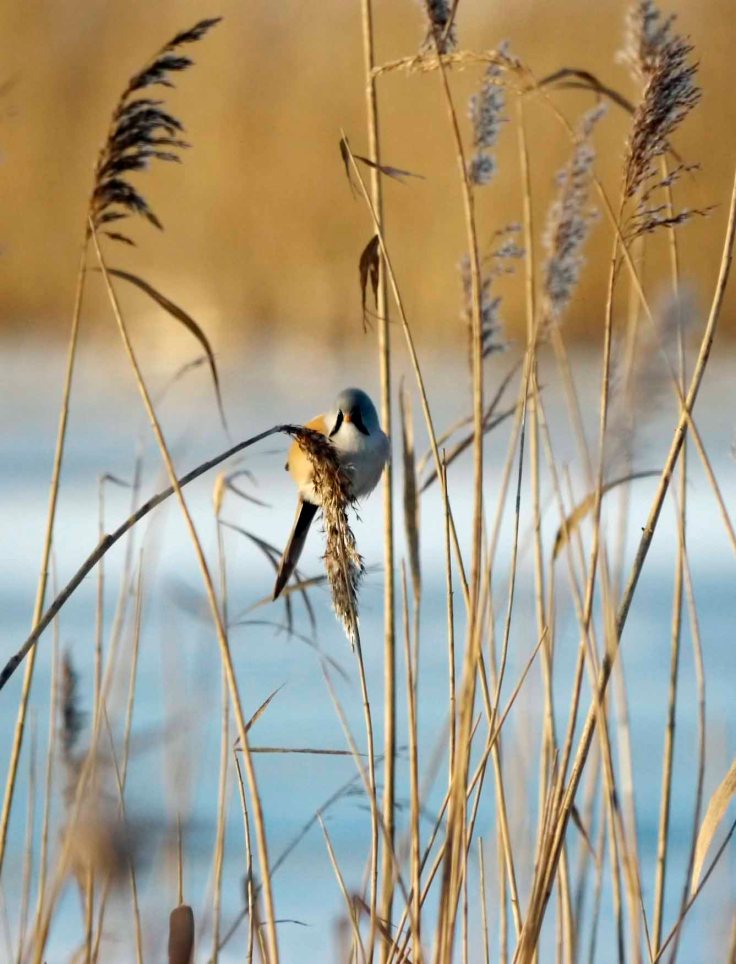
Again we were greeted by a stunning sunrise and -10 or more temperatures. Soon after setting off I slowed to look at a few geese and duck on an area of 30 feet square open water next to the bridge. A few Smew and White-fronted Geese were among the gathering and I noticed a Reed Bunting feeding on phragmites seed heads. Another bird caught my eye, rufous and blue…it was a male Bearded Tit, one of those birds you always enjoy watching and this one fed in the open and for the whole time we were with it. This was in sunny, calm conditions. Across the bridge a female Smew and male Goosander fished close by.

Bearded Reedling
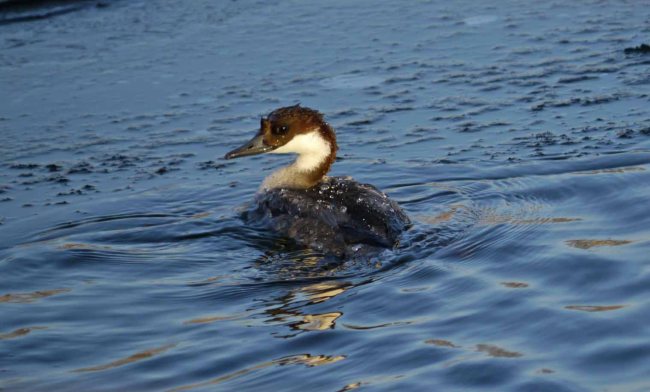
Goosander male and Smew female


Sound start but we had to ignore the goose flocks as best we could but a stop and search of yesterday’s White-front flock gave us three Tundra Bean Geese, lots of Pinks and of course excellent sunny views of the other two common species. We had to head onward to Anjum and the Lauersmeer, an hour or more driving further North up the coast and we arrived at the heavily frozen lake. It was pretty clear that the harsh weather had an impact on the birds, goose numbers were in the thousands but not as many as expected, no sign of White-tailed Eagles, only Buzzards on the ice and around 30 Hooded Crow, Fieldfares, Sparrowhawk and Hen Harrier were all we could muster. We headed for the coast and harbour of Lauerswoog, a good move as coffee, loos and birds were all on offer even though the cold wind had to to be braved. Large numbers of waders gathered at the ice free area at the port, many looked to be be struggling. Dunlin, Purple Sandpiper, Redshank, Turnstone, Oystercatcher and 1500 Brent Geese were found as were large numbers of Dutch folk out to photograph the frozen sea.

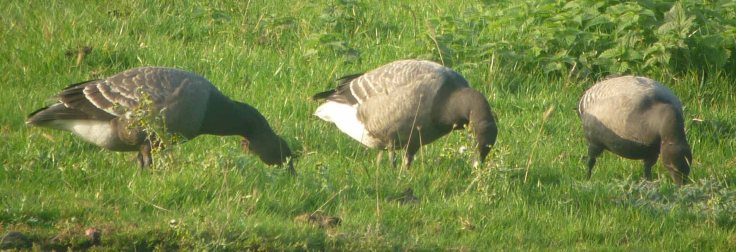
The icebergs and floes had 3000 Pintail, 1000 Shelduck and more duck species roosting upon them, open water Eiders, Goosanders and Smew and around 40 Goldeneye were also seen. Back in the car and a short drive to the Brent Geese. Amazingly close views of them were achieved as they grazed the grassy banks. A couple of Light-bellied Brents were feeding among the commoner Dark-bellied.

We used the coast road passing through many villages (Paesens, Wierum and Holwerd) and stopping for birds. 1800 Barnacle Geese and possible Twite were seen as well as 70 Skylark. At Holwerd ferry terminal we saw a flock of 45 Tundra Bean Geese on the ploughed fields and over the dike to the coast the sight of so many clsoe birds. Flocks of waders and Shelduck fed in the one open area. We, along with the many Dutch folk walked down onto the thick ice and found the birds to be totally tame, they were oblivious to our presence at they searched for food.

Amazing experience to be with the waders but we were here to look for passerines, we did see 15 or so Scandinavian Rock Pipits and scanning the saltmarsh two Merlins. It was time to head back to Makkum for the night, a hot shower and beer by the fire.
12 February 2012

Packed and ready to go in the morning we had a hearty breakfast and got going. The previous nights plan was to try and see Lesser White-fronted Geese and if time allowed look for a wintering Gyrfalcon near the Belgium border (not possible in the end). Our extensive search on the Petten/Camperduin area proved to be very goosey. A flock of 1300 Brents were found and one field held 4000 geese, in this gathering we had Pink-footed, White-fronted, Barnacle, Tundra Bean, Dark-bellied Brent, Greylags and BR located a small Canada Goose. A nice piece of scope work, well done Bob. Studying the bird it was accompanied by a Barnacle partner and a Canada x Barnacle hybrid. The canals had Smew, Goosander and diving duck, flocks of Wigeon and Teal all thanks to the icebreaking barge. The ‘levels’ had hunting Hen Harrier and a flock of Grey Partridge. We tried to get close to a distant flock of geese but were flushed by a dog walker on our arrival.

Canada Goose sp

Checking the clock, it was time to go, a four hour drive ahead with thousands of geese seen en-route, in Alkmaar a Woodcock flew across the road not far from the AZ Alkmaar stadium. We drove through a few snow flurries and arrived at the Channel Tunnel mid afternoon, boarded thus ending our birding. A magic trip, so many birds and great views.

MJM

A link to Tom Mabbett’s blog, includes a great shot of the Red-breasted Goose.

http://www.mabbettbrosbirding.com/


1-29 February 2012 blog and sightings

29 February 2012 A hectic but mostly enjoyable day at WWT thanks to Kingfishers, singing Blackcap and lots of general Spring activity to put a bounce in the step.

28 February 2012 Some new birds have arrived at work, more Black-tailed Godwits and Ruff were present today. Only 85 E White-fronted Geese were left on the Dumbles with 100 deciding to head off to begin migration even though it was cloudy.

“Spectacled” Wigeon female Albanism again.

Redshank showing albanistic line on back of head.

Mandarin
A stunning duck, as a kid it drew me in immediately providing plain wonder at the intricate plumage. A small ‘influx’ of them to WWT Slimbridge this week. Not enough females around, this one has paired to a female Mallard and was showing aggression toward male Mallards.

Jack Snipe
This bird remained in the open so I managed a quick snap and better quality video here.. http://www.wwt.org.uk/visit-us/slimbridge/sightings/

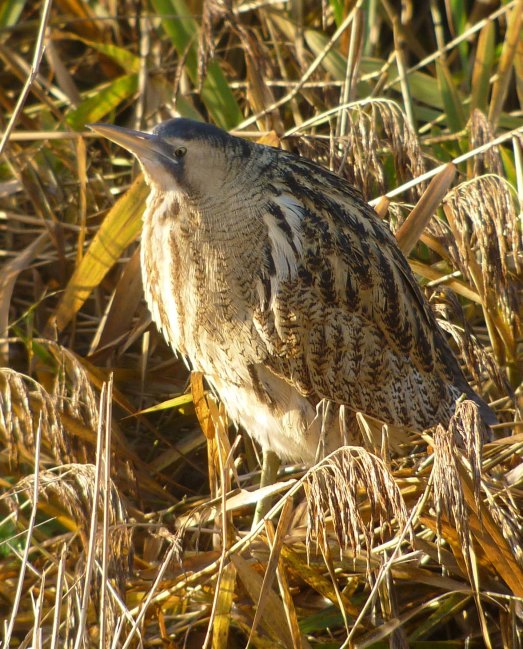
19-24 February 2012 Departing birds from WWT Slimbridge has been a feature this week. I have been kept busy on various pre breeding season jobs which allowed a few sightings of quality birds. I guided some prize winners around the reserve seeing two Bitterns from the Zeiss Hide on Sunday, also Bittern views on Monday and Wednesday in the 100 Acre. One flew over us twice on Monday and a single landed on the reeds near us whilst working on tern/gull rafts on Wednesday. Trilling Little Grebe, barking Great Crested Grebe, lots of songbirds all suggested spring. Whilst mowing/topping juncus I noted at least 70 Common Snipe and 9 Jack Snipe. I have uploaded the trip report and some images from the Netherlands trip on 9-12 February 2012.

18 February 2012 My first Reed Bunting of the winter was in the garden, I spent a bit of time re-arranging House Sparrow nest boxes in the garden. They are already looking at them.

Geese leaving the IJseelmeer roost, Makkum, Netherlands

9-12 February 2012 A short goosetastic trip to the Netherlands via France and Belgium. A full trip report covering this trip will follow soon.

1-11 February 2012 A very busy period spent preparing for the Festival of Birds at WWT Slimbridge or helping out on it. Great to see so many people braving the harsh weather to support it and to see so many familiar faces. A cold and frozen period with a dash of snow.

Forest of Dean 21 January 2012

Hawfinch pair, male on the left.

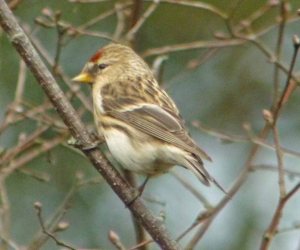
Lesser Redpoll

An earlier start than the last trip out, getting a bit lighter now and it was a half day event.  It was off to a flying start, we bumped into Gloucestershire’s celebrity birder Mike King who was not up for signing autographs but did have Hawfinches staked out. Thanks to Mike. We all enjoyed views of a trio which posed for a time atop the trees. They remained for about ten minutes and enjoyed them from a safe distance through the scope, these birds are rather shy.

Heading off for a walk we were met by continous flocks of Redpoll and Siskin all heading for the same area. Nuthatch, Coal Tits and a couple of flyover Crossbills did their best to steal some limelight but the small finches dominated the studying. Such good views could be had everyone watched the activity, Neil and I stole moments to sift through the Redpolls..always worth checking for Mealy (Common) or even an Arctic. A male Crossbill clung on to a pine, the wind was gusty at times but he stayed for all to watch. More flocks of finches arrived in our area, it could be due to the wind and it was more sheltered, could be that the larches were providing a lot of food or it could have been a family that lost their dog. They were scouring the hillsides shouting the dogs name, any birds in front of them may have been moved up to us. Happy ending they got the deer stalker back.

Flocks of Brambling arrived with a few Crossbills, eventually 200 had passed, some feeding next to us with the other finches. At least 200 Lesser Redpoll were present, 200-300 Siskin and the Brambling made it memorable. Another brief view of Hawfinch. Time to search for Willow Tit, quiet at first but a roving party of tits contained two Willows, I tried to get everyone onto them but they crossed the track twice before dissapearing into the woods, calling as they moved off. Sorry guys.

We moved on, explored Speculation where it was a bit breezy, a Buzzard was spotted on the way in. I did see a pair of Hawfinch, the male palying hide and seek with me, otherwise quiet. Onto Cannop Ponds, Nuthatch and seven Mandarin were enjoyed. A search for Dipper was a dip, we could not find them, the stream level was low but still adequate. To New Fancy View, a bit breezy here but two Buzzard and fly by Crossbills were noted, following the calls we located antoher flock of Siskin, c 40 and a party of 12 Crossbill.

A look at Woorgreens Lake was well worth it for the 12 Goosander present,8 adult males, three females and a first winter male. Moving off to the final stop I was surprised to see how much the water level had dropped at Wamore Common, no wildfowl at all!

Some good views of the finches today depsite it being breezy, thanks to all of you who attended and to Neil for helping me out with some nifty scope work. I hope the nest visit will focus on searching out the elusive Lesser Spotted Woodpecker.

New Forest/Hampshire Coast and Poole Harbour 14 January 2012

The day began with -4 temperatures and a hard frost. I made sure plenty of food was available for my garden birds before I left. I met with nearly everyone in Whitminster and we set off with only one more to pick up and to stop at a service area in readiness for birding.

The Hawkshill Inclosure was our first birding stop, largely due to the presence of a Dark-eyed Junco, a North American visitor. A large group of birders had gathered at the clearing but we were distracted by the calls of Crossbills all around us. These stocky finches gave views to eye level, fed on the ground, were singing and displaying in the sun. Excellent viewing of this top notch bird. The junco showed to all on a few occasions either on the fallen trees or on the ground, it perched in full view for a while. It’s slate grey head, neck and upperparts contrasted with the whitish-pink tinged billed and white underparts. A pleasing bunting like bird, certainly at home with counterparts. The Reed Bunting flock that had gathered at the same site numbered over 30. A Mistle Thrush sang, it was a good place to be, still, frozen white but sunny.

Moving on, a straw poll saw us heading for the nearby Spanish Sparrow, arriving at Calshot, most had either seen the bird via the kind folk who had it on their back garden feeders or headed for the “Spanish Sparrow Cafe”. The village hall were selling charity fund raising Tea, cake and rolls. For those that wanted to see the bird, they all had great views so we were soon back on the beach of Calshot spit. The tide was on the way in and on the sea were 2 Great Crested, 2 Little and 2 Black-necked Grebes. Waders were moving into the saltmarsh creeks with large roosts of Oystercatcher and smaller numbers of Dunlin, Turnstone, Black-tailed Godwit, Grey Plover, Redshank and Dark-bellied Brent Geese. A few Rock Pipit, Linnet and Reed Bunting visited the beach. Huge container ships passed by, perhaps used by the junco and sparrow?

We departed the site and headed back to what turned out to be a very quiet heath near Beaulieu road station, a few distant Stonechats, flover Siskins and Fieldfares were all we could muster despite checking a couple of spots. Time to head to Sandbanks, the entrance to Poole Harbour. Arriving here the wind had picked up from the east so the sea was choppy and wind eyewatering. More Brent Geese and waders were seen and parties of Red-breasted Merganser but highlights were two female Eider and two Razorbill as well as Shags.

Moving to the bay as the tide dropped a flock of feeding Bar-tailed Godwit, half a dozen Mediterranean Gulls, three Sandwich Terns, a couple of Goldeneye. The sun was setting so it was time to check out Poole Park on the way home. I have not mentioned every bird seen, it was an interesting day, calm, cold and sunny to begin with and overcast and windy by the afternoon but provided some good birding.

Forest of Dean 7 January 2012

The weather looked good for a visit and indeed was, a little breezy on the hilltops but fine for birding. We all met up and I set off with my gang to climb the New Fancy View ‘mound’. From here we saw Greenfinches, fly by Redpolls, c90 Siskin calling and feeding in the trees below. Two Crossbill flew by calling, a Great spotted Woodpecker looked out form the tree tops. Colin picked up two raptors over the treeline to the east. Both crusied along the ridge…a male Sparrowhawk mobbing a female Goshawk which provided a great size comparison. The female Goshawk flew back along the length of the ridge heading S before crossing the valley and flying by in the sun!

I picked up another party of c12 Crossbill feeding in distant pines when they obligingly flew toward us and landed below the viewing area. We all had scope views of them prising cones open. A male Goshawk flew directly overhead and soared east.

Goshawk


We then headed off to the north to search for target birds..Hawfinch and Willow Tit. A quick coffee break and we headed into the woods for a walk. Coal Tits were numerous, a Goldcrest showed and then I spotted a Willow Tit with the Coal Tit flock, they moved off into the plantation and we tried to get ahead of them to no avail. Along the track a pair of Raven floated above and we found a ‘rich seam’ (apt FOD miner language) of birds. 100 Siskins many singing a few feet above us, a few Lesser Redpolls, Nuthatches and Coal Tits were joined by c 10 Crossbills, we once again scoped them up. One or two more flew by. Rich reversed the roles and spotted a Treecreeper getting everyone onto it except me, I was too slow and dipped.

Common Crossbill MJMcGill

Exploring the plantation further we located a large flock of tits, Coal, Long-tailed and Blue and I heard a Willow Tit. Further searching by ear eventually gave up a Willow Tit, again calling and showed in the tree top before moving off. We moved off toward Speech House to search for Hawfinch, a long search revealed three very brief and shy views of a single but it did not show for the party. Roberta found the only Brambling of the day, a male with Chaffinch, Great and Blue Tits on beech mast. We had now had a few walks so it was time for a whistle stop and search method. Cannop Ponds Stoneworks has had a lot of coppicing work so no birds were present and dog walkers had been along the brook so nothing doing there. We did see a lovely set of birds, a pair of Dipper in Parkend the male showing off to the female, Nuthatch and Jay.

At Woorgreens the highlight was a stunning flock of 22 Goosander and a Teal. On the way back we stopped at Walmore Common now in full flood. 8 Bewick’s, 4 Mute and 2 Whooper Swans were nice indeed but the Peregrine stole the show, it was hunting the waders and panicked the Wigeon flock. A chase unsued and the victim crashed into the water to escape, a Lapwing. The rest of it’s flock mates were joined by a Ruff and 30 Dunlin and flew off high to avoid predation.

A good day out, thanks to all who attended for your company.

1-29 January 2012 blog and sightings

29 January 2012 All day spent preparing slides for DBWPS tommorow.

28 January 2012 Spent the afternoon with R Taylor counting gulls at Purton. This was for the Severn Estuary Gull Group (SEGG) and county database. We logged over 5000 gulls, most were Common with a few hundred Black-headed, Lesser and Great Black backed and Herring Gulls. 25 Pied Wagtail, 18 Meadow Pipit, Sparrowhawk, Kestrel and 32 Cormorant were also noted. Rich spotted a Little Owl as we returned through the lanes.

27 January 2012 A visit to Oldbury Power station to see the small party of Twite, I saw three of the four. Also plenty of Reed Bunting and Yellowhammer. I also called in at Sharpness Dock and saw a couple of Black Redstart.


24-26 January 2012 Nothing extra noted at work, a small flock of ten Ruff now roam the WWT floods and fields. Two male Blackcap at home in the garden.


22 and 23 January 2012 I caught up with a visiting Pomarine Skua to WWT, it had bathed in front of hides but I was doing an SBS talk at the time so missed this show. I caught up with it on the sandbanks off Middle Point where it roosted overnight and suspected it could be seen the next day. As predicted it caused a stir among the waders as it headed out in the morning, apparently flying downstream to Purton. A good bird for WWT, not too many records and only the third I have seen. I can again dream of seeing the ‘light and bouncy’ one on the Severn….adult Long tailed Skua.

21 January 2012 A morning in the Forest of Dean, see trip reports page followed by a fine afternoon at Cheltenham Town’s Whaddon Road ground…Bristol Rovers away, three points in the bag.

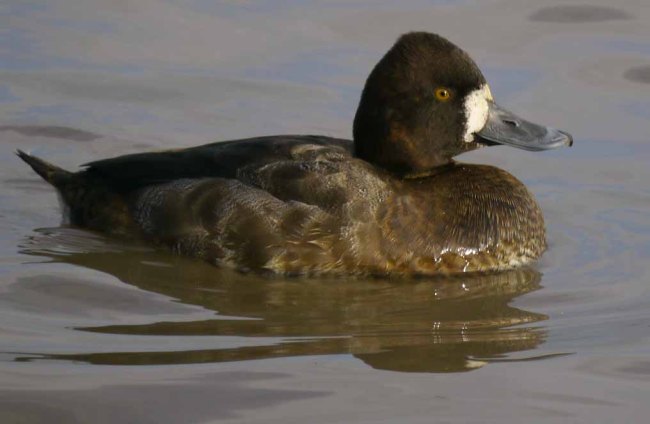
Lesser Scaup, female

Egyptian Geese (they try their best but a quality Anser they are not)

15-19 January 2012 Nothing new birding wise back to work at WWT Slimbridge, the 2 Egyptian Geese were a novelty, post frozen bird numbers began to rise again. I did miss a Short-eared Owl over the Rushy on 19th..I was feeding at the time, the birds not me.

14 January 2012 Day trip to Hampshire/Dorset, see trip reports.

12-13 January 2012 A rather boring couple of days with piles of paper, receipts and spreadsheets…yes, it is Tax return time again. Graham Clarkson stayed over and we discussed potential trips for 2012, a few ideas banded about depending on WWT work shedules etc. Blue Tit checking out one of my nest boxes and Collared Doves exploring possible nest sites in the garden.

Andy Jayne has messaged me with news of a male American Wigeon at Coombe Hill Meadows from Grundon Hide.

8-12 January 2012 Some new species for year included, Chiffchaff plus a female Stonechat in the WWT 100 Acre. The birding remains very good at WWT but still much the same as over Christmas. Colder weather is coming so new birds will arrive.

Bittern WWT Slimbridge

7 January 2012 A day trip to the Forest of Dean. Details on the trip reports page.

6 January 2012 I met up with Bob Radford and we headed for the high Cotswolds with a mission, to search through the Linnet flocks for Twite, none were found. We sifted through 1000 Linnets, 30 and 40 Yellowhammer, 60 Chaffinch, 20, 30 and 30 Greenfinch. A single Corn Bunting, 29 Golden Plover and lots of released Red-legged Partridge were also seen. During our route a total of 13 Kestrel were noted, over 50 Buzzards, two Hen Harrier, 3 Short-eared Owls and 12 Red Kites. Chips and mushy peas on the bridge in Bourton on the Water was followed by a quick look at the pits, 93 Coot, 2 Wigeon and small parties of Tufted Duck were the reward, a Coal Tit was new for the year. Off to the Forest of Dean tommorow.

5 January 2012 A brisk hide round with the 100 Acre Marsh Harrier scopeable from Holden Tower.

4 January 2012 A morning water level check at the 100 Acre provided the female Marsh Harrier, 2 Peregrine and 2 Buzzards plus a couple of Redpolls.

3 January 2012 An appointment at Frampton Surgery plus taking time off in lieu allowed for an hour around the pits, a few Little and Great Crested Grebe, some Tufted Duck and Coot flocks and a Little Egret were all eclipsed by an adult male and first winter male Goldeneye. Very smart birds and only regular in the CWP locally, Nick Goatman passed on news of these birds. I also explored some floods adjacent to the R Frome with another Little Egret seen.

1-2 January 2012 I recorded 76 species at WWT on 1st with a Barn Owl pick of the day as I left work at 7.42pm. A search of the north end of the reserve on 2nd gave up Short-eared Owl, Snipe, Marsh Harrier, 13 Grey Plover and Meadow Pipit.

September to December 2011 blog and sightings

Some bird highlights of the 2011 autumn, most are taken at WWT Slimbridge but one or two exceptions are my rare birding moments away from the Trust. I have hardly got out birding from October to late December due to working on the house but here are my favourite bits, at least the ones I managed to capture on memory card.

Semipalmated Sandpiper and Dunlin

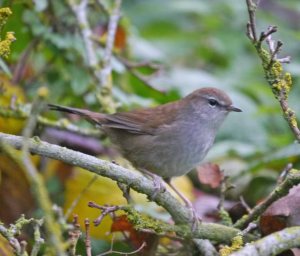
Cetti’s Warbler
Often quiet from July-September. Much easier to locate in October and November when they begin calling again.

Pallid Harrier, Black Down, Somerset
Made a last minute decision and dash for this bird when I got the spare time. Also saw the Spotted Sandpiper at Chew Valley Lake.

Common Scoter
This male was briefly on South Lake but soon flew off South, I saw another, a female on the Severn in November. They have been rather scarce in recent years.

Pied Wheatear
One of the best local finds of the autumn. This bird was at Thornbury Sailing Club

Ruddy Shelducks over the Top New Piece

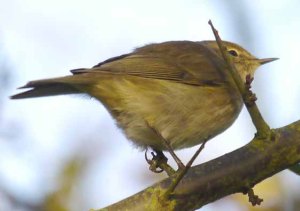
Chiffchaff sp
Always worth studying the late Oct to February Chiffs, this may be an example of abietinus

Brent Geese on the Dumbles

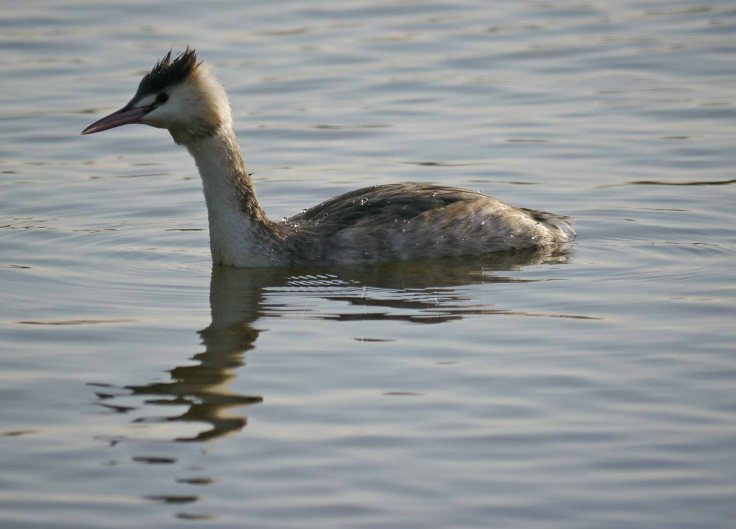
Great Crested Grebe South Lake

Bittern
It is great to have this bird back in front of the Zeiss Hide at WWT, even better that two are showing daily from November to the end of the year.

Lesser Scaup female
This bird arrived last winter in late December 2010 appearing in front of me when just about to feed the Rushy, this time in December 2011 I spotted it without binoculars to hand as it was getting dark in almost the same place.

Ferruginous Duck x Pochard
I always find these wild hybridisations of interest, the fourth I have seen at WWT over the years. It flew in to the Tack Piece on 29 December.


1-24 September 2011 blog and sightings

17-24 September 2011
Another good week locally, Sunday 18th September being very memorable for the variety of birds around and yet another North American wader…juvenile Semipalmated Sandpiper. A large number of birders were already enjoying the Dotterel and Buff-breasted Sandpiper so JSL and I headed off a short distance to count the wader roost. We were viewing from slightly different places as the flock were strung out and this bird stood out immediately. It was feeding on the wet mud with other waders and allowed some images/video to be taken even though it was raining and overcast. This should, if accepted constitute the second county record after JSL discovered one in 2006 (another bumper year for SPS in Britain).  It is likely that it has been seen before and since then but close or prolonged views were not attained. One possible was noted in the 1960’s but other encounters included brief but close views of a bird in the early 90’s, me included and I had distant views of a possible on two dates in Sep 2008. It was accompanying Little Stints. No such doubts over the 2006 and 2011 birds though.

Semi-p (the greyer bird with Dunlin)

7-16 September 2011
The seabird sightings continued near daily, I missed out on the best bird, an adult breeding plumage Sabine’s Gull and the juveniles seen on other dates around the Severn. Cannot play cricket and watch birds. I did spot an adult Grey Phalarope on one of the incoming tides and was present with a group when the Buff-breasted Sandpiper arrived in front of us all on 10th. This bird re-appeared and has shown daily to 16th at least, with a Dotterel as well. I have been on the other side of the estuary today (16th) with JSL watching a juvenile Spotted Sandpiper, a county first and good find for J Phillips.

Spotted Sand

Arctic Tern over the Dumbles
Around a dozen have been on show daily on the Severn

Sanderling
Lots of small waders have been in the estuary, up to 27 Curlew Sandpiper, a few Little Stints and flocks of Sanderling among the Dunlin/Ringed Plover. Also Whimbrel, Turnstone, Bar-tailed Godwit, Knot and Little ringed Plover notable on the scrapes.

6 September 2011
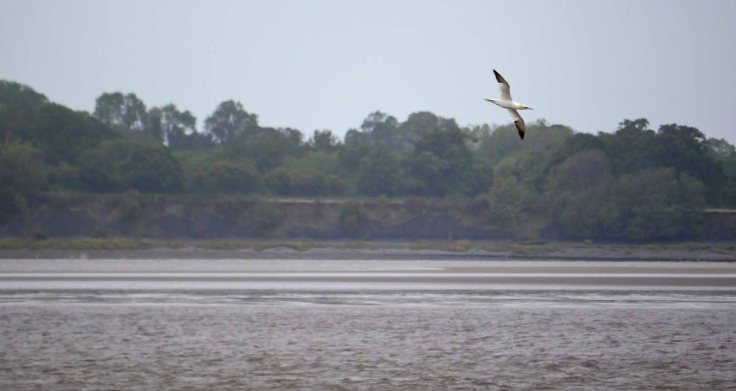
Since last week I have been looking forward to what the forecasted gales would bring in to Severn waters. Severn beach had a very good day but we also had a run of seabirds at lunchtime. Sadly the Manx Shearwaters are victims of these gales as young birds leave the Pembs Islands nest burrows. We saw at least two killed today, one by gulls/Raven and the other by Peregrine. JSL and I saw three Fulmar, 2 Gannets, 4 Arctic Terns but missed the juvenile Sabine’s Gull spotted by JK and JP. A Guillemot also went upstream from Sharpness and was seen off Hock Cliff. A good day for seabird watching. Also the Marsh Harrier was hunting over the reserve again this afternoon.

Gannet off Middle Point MJMcGill

5 September 2011
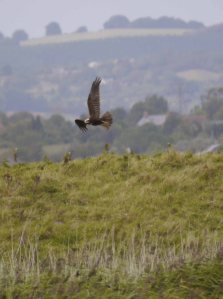
Spent lunchtime watching the high tide (not very high) but no seabirds. A juvenile Marsh Harrier spent much of the day around the Dumbles and Top new Piece.

Marsh Harrier over the seawall

1-4 September 2011
The showers have deposited many Wheatears locally. We have had counts of double figures daily along the Severn shore. Plenty of Yellow Wagtails too…70+ among the cattle. The hedges are full of warblers but the estuary was very much quieter for waders.

Northern Wheatear MJMcGill

21 July – 30 August 2011 Blog and sightings

22-30 August 2011
During this period locally I have seen a number of migrants and offspring from the breeding season. The wader variety has increased and highlights have been my first juvenile Curlew Sandpiper and Sanderling on 26th with up to five of the former and nine of the latter by 29th. It is a great time of year with so much to see. Anything can show up and does…a juvenile Marsh Harrier on 23rd hunting the Maize crop at WWT was a nice start. I went and had a quick look at Dave Paynter’s Wryneck at Sharpness on 29th and on the morning of the 30th the first bird I saw from the Zeiss Hide was an Osprey flying down river. Other notables from 29th was a juvenile Cuckoo and 2 juvenile Hobbies.

Red Knot over the Severn
Most are not red, only the one in this image but there is a range of subtle juvenile plumages.

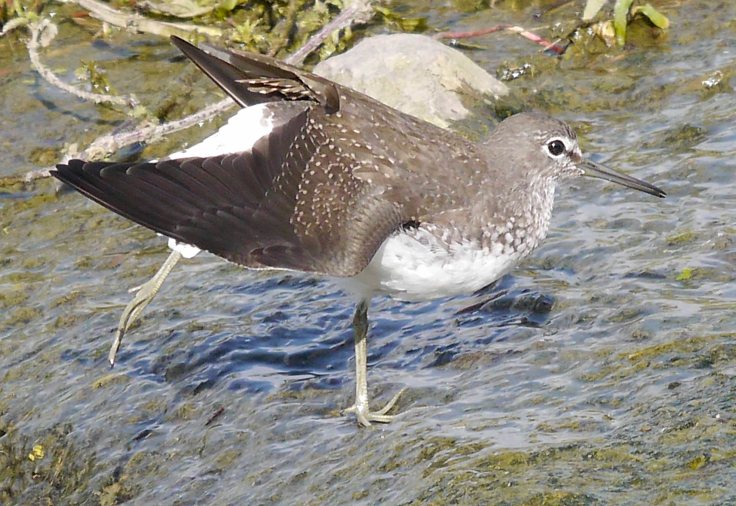
Green Sandpiper

Redstart
A good run of records from the trust during the whole period.

21 August 2011
Lots of birds seen whilst unlocking the hides and two Landrover safari’s. The Cuckoo was a good late record, juvenile Spotted Redshanks are very smart birds and three Little-ringed Plovers. See http://www.wwt.org.uk/visit-us/slimbridge/wildlife-sightings/todays-sightings-20110821-162400 for the roundup.

20 August 2011
A Common Whitethroat and Willow Warbler in the garden this morning…nice. A day at the British Birdwatching Fair…nice to catch up with so many of you.

17 August 2011
Two Chiffchaffs spent all day feeding my garden, they breed locally but these are passage birds.

15-16 August 2011
I have been beating the garden into shape, I have to catch up with lots and may be doing lots more this week. A juvenile Robin and juvenile Sparrowhawk are the only obvious birds about. A good breeding season for many birds that nest at my home but they are spending more time in the adjacent fields of wheat and hedges.

13-14 August 2011
A weekend!!! two days of playing cricket for Whitminster CC with the wrong results…lost both.

9-13 August 2011
A trip to stay in East Dorset near Wimborne to spend time as a family. We did lots of fun stuff but I also got to have a brief look and walk around some new wildlife sites. Ibsley Water was packed with birds, I saw at least 40 Egyptian Geese here, I did not realise they were this common  in West Hampshire. A male Red-crested Pochard was also present with a few Common Pochard and lots of Little and Great Crested Grebe. A Black-necked Grebe and Great White Egret had been reported too. We had a stroll around Holt Heath in Dorset, excellent site with some of Britain’s rarest reptiles such as Smooth Snake and Sand Lizard. Dartford Warbler also present and the only site in Dorset with breeding Curlew. A walk up onto Bindon Hill near Lulworth Cove was breezy but worth the climb, lots of Chalkhill Blues but a little late for Lulworth Skipper. A cycle ride around Moors Valley CP was also much enjoyed but the wrong time of year for really productive woodland birding. Some old favourites were also taken in from this lovely part of England…Stonehenge, Mudeford Quay and Bournemouth beach. A visit to a Lebanese restaurant called Retro, Bournemouth was the foody highlight, excellent grub.

8 August 2011
An afternoon at WWT Slimbridge to attend joint celebration of the Spoon-billed Sandpiper project so far. Nice to see so many WWT staff present.

31 July-4 August 2011
A week back to work at WWT Slimbridge. The Spoonbill, 2 Garganeys, Wood Sandpiper and flocks of waders on the scrapes all very welcome.


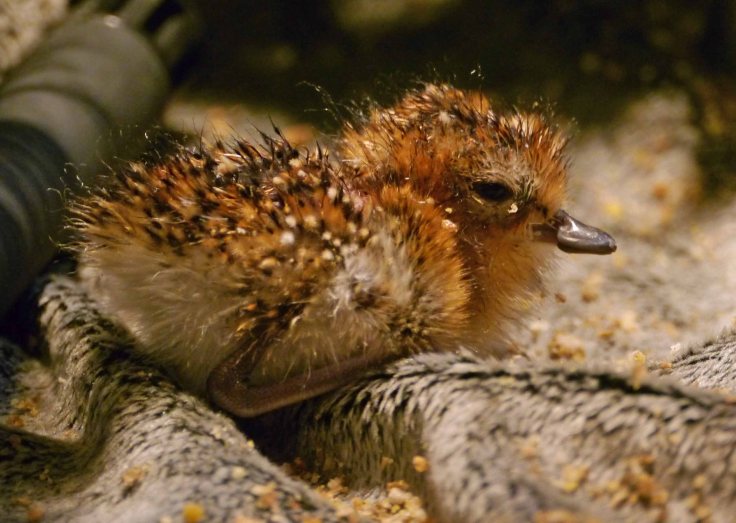
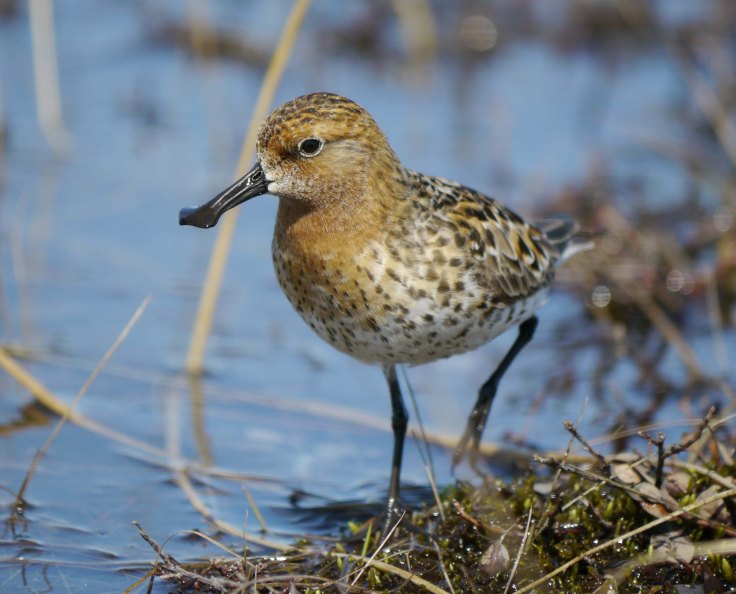
Spoon-billed Sandpiper chick MJMcGill

Spoon-billed Sandpiper, adult MJMcGill

28/29 July 2011
Still just spending time at home and feeling the strains of a cricket practice session on Wednesday night, stiff from bowling. I have not been away from the garden but have to say that the Swallows and House Martins are a pleasure to watch and listen to. I have been seeing Swifts daily until 28th at least, they will dissapear soon.

27 July 2011
I spent most of the day out with my family, we visited the magnificent Forest of Dean for a picnic and a walk. I checked out a dragonlfy pool first at Edgehill, Emperor, Southern Hawker and Emerald Damselflies all seen. A Whitethroat scolded me. Our picnic spot at the Speech House arboretum was very quiet for birds as adults are moulting and juveniles are not wanting to attract attention. A walk around Cannop Ponds was productive. The water was attracting a lot of birds to bathe and drink. Blackcaps were calling, juvenile Marsh, Blue, Great and Coal Tits all seen. At least 4 juvenile Grey Wagtails, three juvenile Siskins, a GSWoodpecker, male Bullfinch, c20 secretive, moulting Mandarin, a Silver-washed Fritillary floated by. Pick of the lot was three juvenile Crossbills that had come to drink.

21-26 July 2011
My time has been spent trying to get back on track, catching up with sleep and spending time at home. A Hobby over Whitminster school was a bonus on 21st.

20 July 2011
I have returned from what has been a succesful expedition to Chukotka, Russian (Far Eastern Siberia) to collect and hatch eggs of the critically endagered Spoon-billed Sandpiper.

For more info see

http://www.wwt.org.uk/support-us/please-help-us-to-save-the-incredible-spoonbilled-sandpiper

or to follow the blog see..

http://sbsproject.wordpress.com/
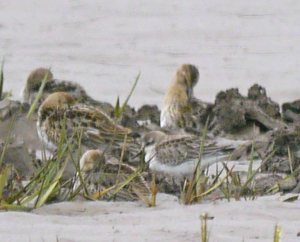
Extremedura 6-10 April 2011

Full trip report and sightings to come, here are a few images to look at until I upload more. Martin

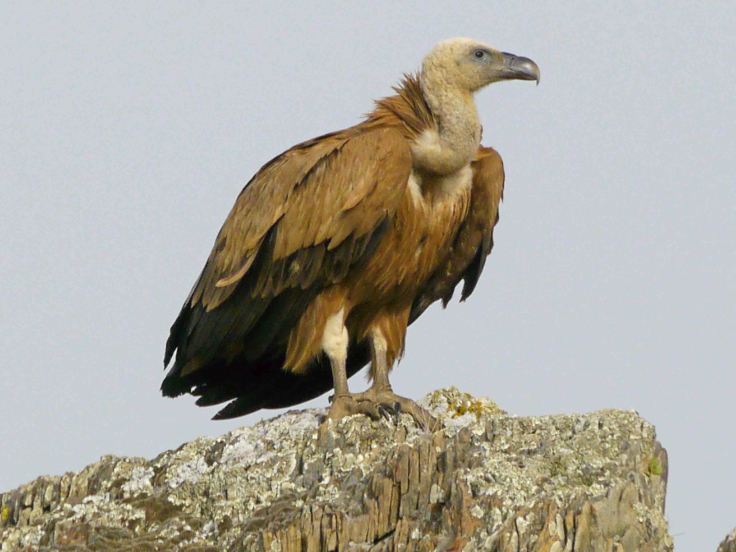
Griffon Vulture MJMcGill

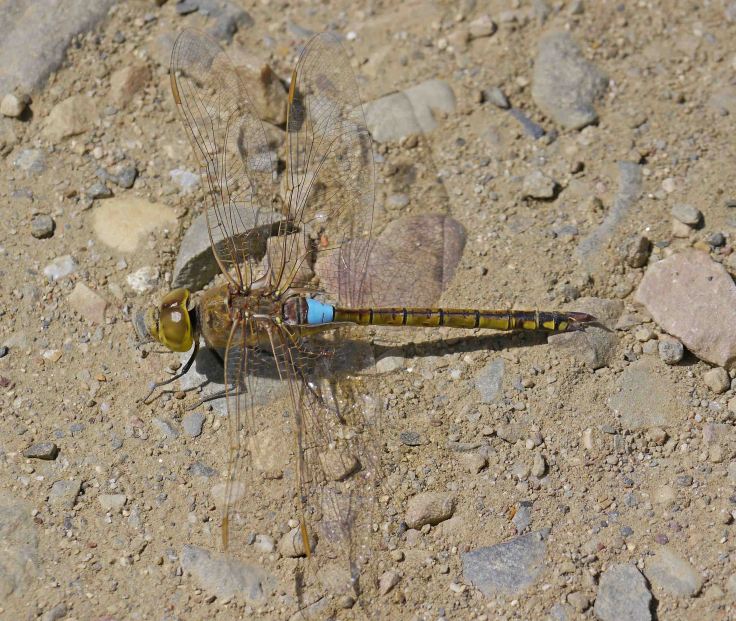
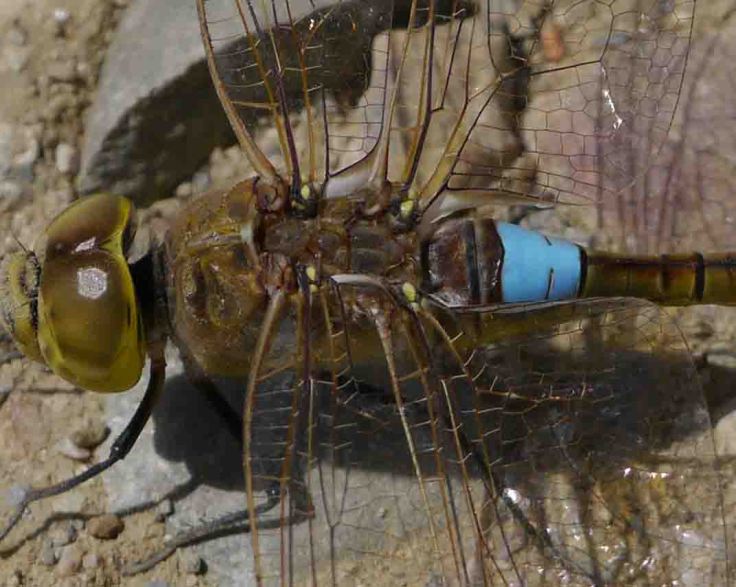
Vagrant Emperor MJMcGill
I thought the mass early emergence was local Lesser Emperors but looking at the images at home it would seem that the thousands of dragonflies seen were all Vagrant Emperors, as the names suggests they are part of an invasion to Europe. I had only seen a few dragonflies in Monfrague at this time of year before,  we saw 1000,s this time.

Sand Martins MJMcGill

Corn Bunting MJMcGill
Delightfully common.

Roller

Blog at WordPress.com.

Up ↑