1-31 December 2012 blog and sightings

Some images from a quieter month birding-wise for me. Norfolk on 1 December kicked the month off with some great birding, a brief trip report on the  relevant page. Only the one half day out to the Forest of Dean on 15th,  a few Waxwing forays and the excellent birds on offer at WWT Slimbridge to note due to short days and mostly wet weather. Despite having leave around Christmas the weather and short dark days was not really condusive to much in the way of dry or comfortable birding.

Bewick’s Swans have been showing beautifully at WWT Slimbridge with over 200 present and very mobile.

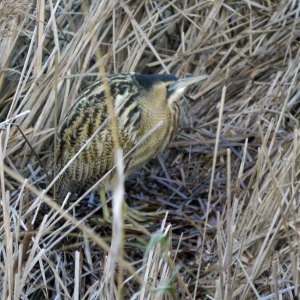
Bittern– always intersting to watch go about it business.

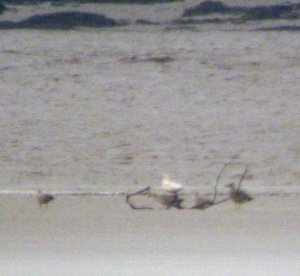
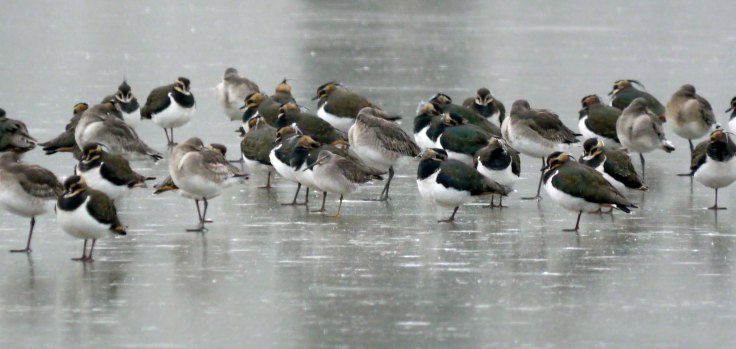
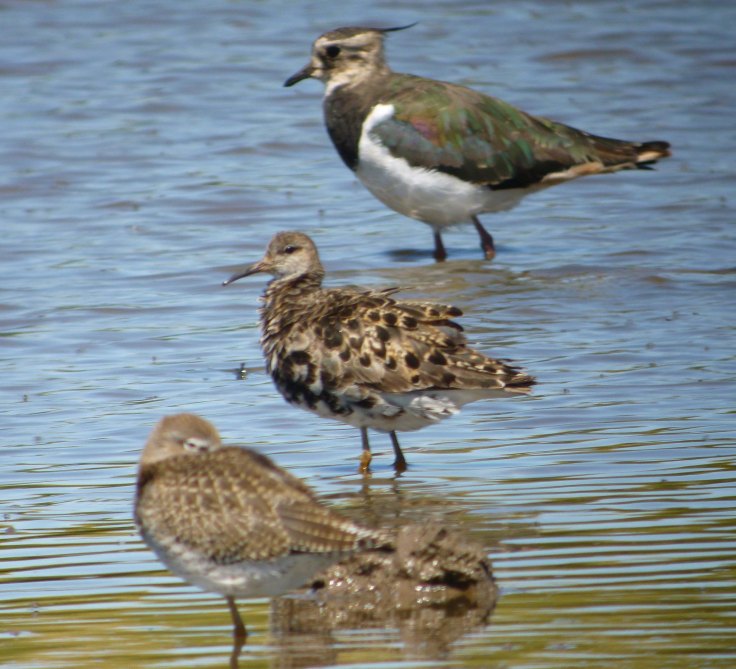
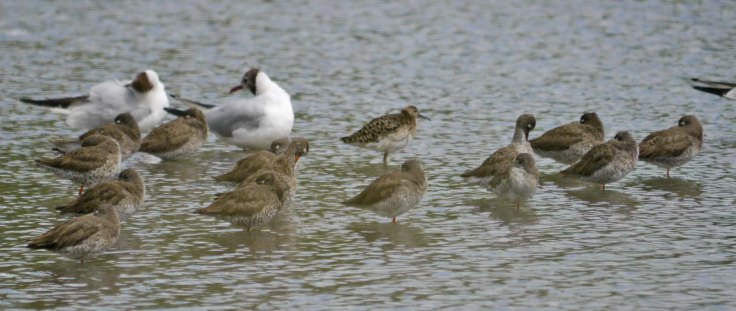
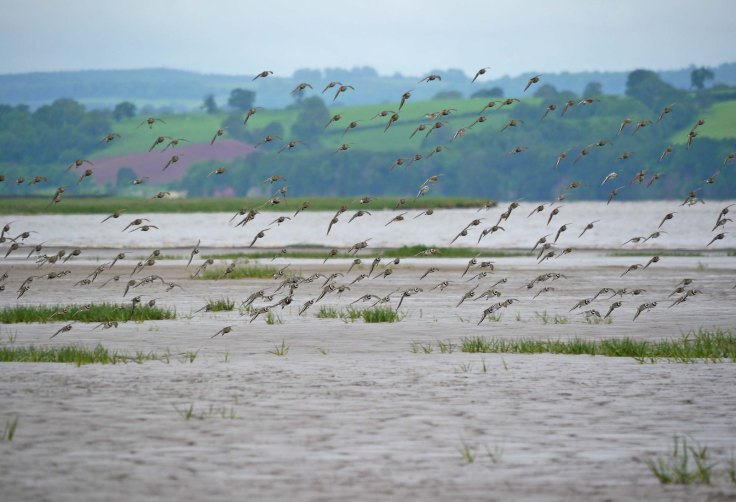
One freeze up proved too much for some local wintering waders forcing a move on. This perhaps the last picture of the Long-billed Dowitcher among its stable mates.

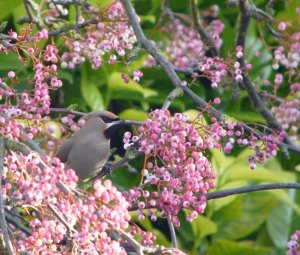
Waxwings– I had three and a single fly over me calling at work on two different dates. Only the third and fourth for me at WWT after two singes in previous invasions. A mobile flock of 15 in Slimbridge village were vocal and showy on one Saturday morning and a flock of 80 in Gloucester on 15th made it a good month for sightings. Despite getting the apples out I never scored with any in the garden…yet.

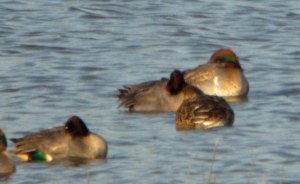
A large Teal count (3000+) at work on Christmas eve was rewarded with first winter Green-winged Teal that I picked out on the floods among 500 Teal from the Holden Tower. I think this is the first one I have seen on the Dumbles.

I hope everyone has had a restful period over the Christmas holidays and wish you all a happy new year for 2013.

North Norfolk 30 November-2 December 2012

30 November 2012 A frosty but sunny start to the day, good journey to Cambridgeshire via a coffee stop, two Red Kite were noted during this journey. Our first port of call was to see a flock of 40 Waxwings in a village outside Cambridge. For most of us it was the first sighting of the current invasion and as ever very welcome. This flock were engaged in standard Waxwing behaviour of spending time sitting in a large Ash tree, dropping to Pink Rowan (sorbus) to grab berries before retreating to digest with a good lookout point. Flight forays away from the site were likely to be for water.

Moving on to Norfolk we had a look around the Wolferton Triangle on request for a Golden Pheasant but had no luck. At Thornham Harbour we spent the rest of the day watching the movements of bird to feeding areas or to roost as it was fairly calm and a sunny end to the day.

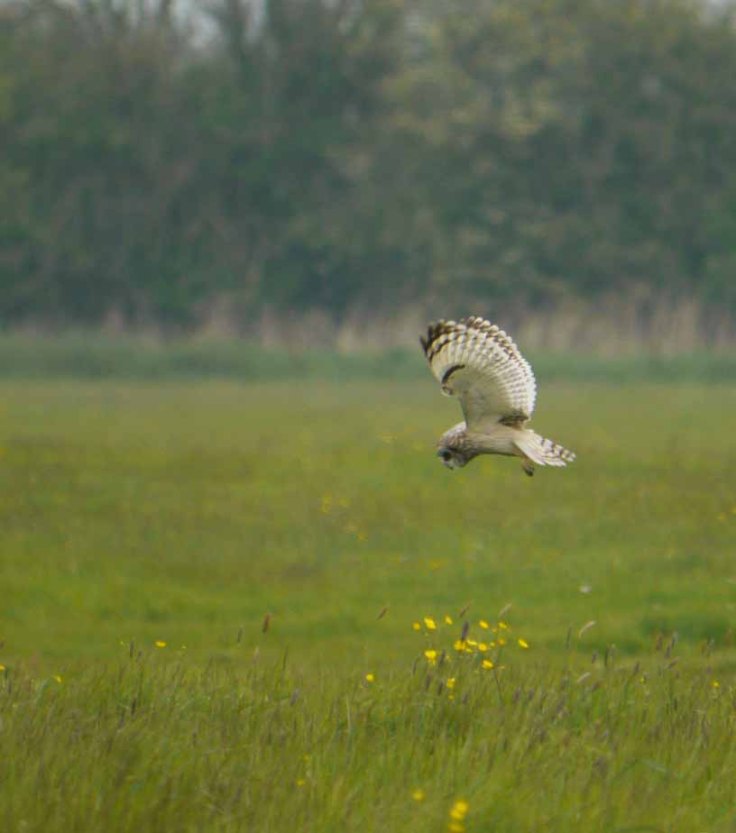
Thornham was a busy birding spot, I spent much of the time straining my ears to hear if any Lapland Buntings were around, there were plenty of birds to see. Rock Pipits called regularly, various waders fed or flew about the creeks as it was low tide. A large flock of 1600 Pink-footed Geese arrived and landed on the beach, Jayne spotted a leucistic bird among them.  More Pink-feet were at Holme marsh along with a Buzzard and more notable a Red Kite. Two Snow Buntings flew low overhead calling as they headed for Titchwell. A Short-eared Owl also hunted the marsh here and the Brent Goose flock were occasionally flighty and showed over the saltmarsh.

A female Merlin was on the beach and hung around for a while no doubt waiting for a meal, the Linnets that were feeding in the saltmarsh would have done nicely for it. It was a fine sunset with many birds calling as they went to roost. As we passed Titchwell the Short-eared Owl was still hunting up and down the edge of Thornham marsh with Pink-footed Geese and Greylags feeding there too. We relocated nearby to Brancaster beach car park and watched Goldeneye and Red-breasted Mergansers on the sea and coastal creeks. At dusk a search for Barn Owl ensued around many of the villages on the way back. None were seen but a Tawny Owl was pinpointed in the headlights for all to see.

1 December 2012 A wet and blustery start to the day, a pre-breakfast visit to Gore Point was trying, the rain, wind and darkness made it difficult to see but a few birds were noted, I did see two Snow Buntings on the beach shingle but they were very hard to see and breakfast called. After eating we headed for Titchwell RSPB where we watched Spotted Redshank alongside Common Redshank and Little Egret on the brackish marsh. Large flocks of Golden Plover and Lapwing roosted on the freshmarsh. At the beach it was fairly busy, male Long-tailed Duck, a Great Northern Diver that drifted and dived away into the surf, Red-throated Divers, Goldeneye, Eider and 2 close Common Scoter and flocks of them further out. A few Guillemot were drifting by.

We had to return to the hotel at lunch to sort out a problem with rooms but were soon back on the birding trail.

Looking out from Hunstanton cliffs the Fulmars were crusing gracefully and a few more species were noted on the sea as the tide was on the way out. Heading back along the coast a flock of the bizzarre Egyptian Geese were seen near Burnham Overy. Next stop was in Wells next the Sea, Brent Geese flew over the town whilst some lunch items were sourced and facilities used. A good walk out was the next plan so we returned to Holkham and drove slowly along Lady Anne’s Drive looking at the geese on the way. The Pink-footed Geese were fabulous, thousands of them in good light and close. A walk out and through the gap exploring saltmarsh and dunes was very bracing in the cold wind. A couple of girls were actually paddling bare-foot in the sea, good luck to them.

We finally found a few Skylark, Meadow Pipits and Linnet flocks but not the hoped for Shore Lark. They are rather scarce this winter, even as I finish this report on 31 December there are none being reported. A walk along the pines provided sheltered birding and we enjoyed the geese again but also a hunting Barn Owl that gave prolonged views. We returned after dark to the hotels.

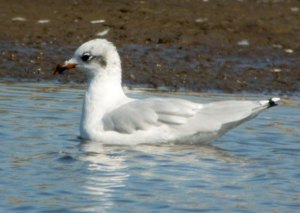
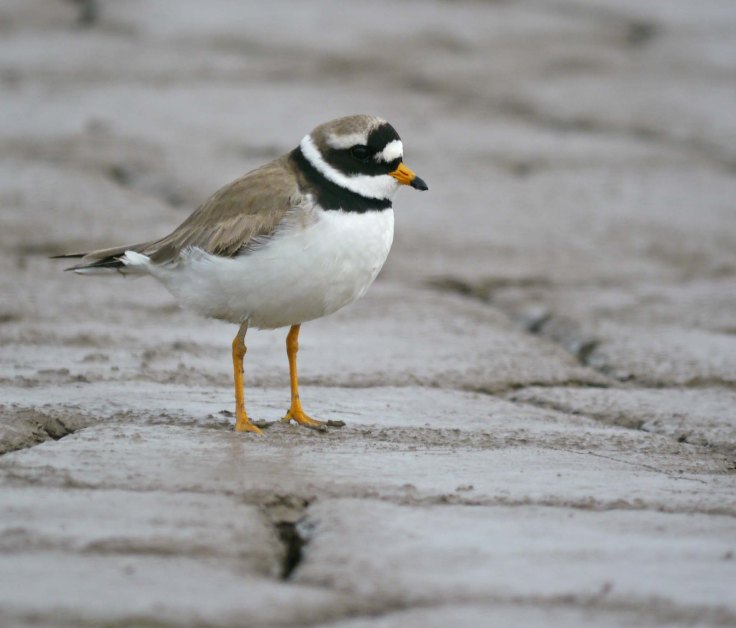
2 December 2012 A lovely sunny start to the day, a Waxwing flew over me calling as I walked into the hotel for breakfast. Our first stop was Titchwell RSPB where we headed for the beach passing three Marsh Harriers, we walked part way to Thornham Point. It was high tide as we arrived and thousands of birds were on the beach with a rough sea to boot. Once again a male Long-tailed Duck did a fly-by, perhaps the same bird as yesterday. Plenty more Red-throated Divers were moving along the coast with Great Crested Grebes, Goldeneyes, 3 Goosander (male and two females), scoter, distant auks, gulls and dabbling duck. Large flocks of Sanderling scurried along the beach with Dunlin, Bar-tailed Godwit, Knot, Turnstone, Oystercatcher and gulls. A single Ringed Plover and at least three Mediterranean Gulls were also seen. A really good birding session with plenty to see.

Heading back across the reserve we had a look at the new hide and the marshes, Little Grebe, Shoveler, Wigeon , Teal, Pochard and Pintail were all present. A small flock of Black-tailed Godwit were noted. Back on the seawall and despite the wind three Bearded Tits were found, it was a case of ‘there behind you’ as Ruth spotted them, she was the only one looking the other way when they appeared. We had Water Rail and Cetti’s Warbler calling in the carr.

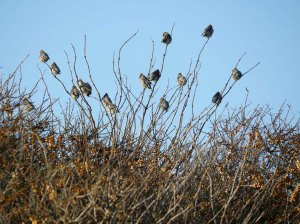
A Holme village a flock of Waxwing flew over the car as we got out. We relocated them in the dunes as they fed on Sea-buckthorn, they rested and digested whilst looking out to sea across the Wash, crests waving in the wind.

A thorough search of the shingle and beach did not give up any Snow Buntings but a selection of waders and Linnets and Goldfinches gave us something to look at. News of Penduline Tits in Cambs and pretty much on the way home gave us a target but as we arrived on site it was getting dark and there was not enough time to search for them.

We arrived back safe after some traffic around Birmingham with a fair list of birds and a weekend that certainly blew the cobwebs away.

Martin


1-26 November blog and sightings

25-26 November 2012 Extremely enjoyable birding on WWT Slimbridge’s Tack Piece. The floods have created ideal conditions for waders and wildfowl and other species too. A cracking flock of 403 Black-tailed Godwit were present including a colour ringed bird that was marked at Seaton LNR, Axe Estuary in February 2012, seen around the Exe Estuary on 25/26 April 2012 before noting it locally.

23 November 2012 A visit to Gloucester to recycle and visit the bank allowed a Waxwing-less tour through town on the way home.

Pied Wagtails
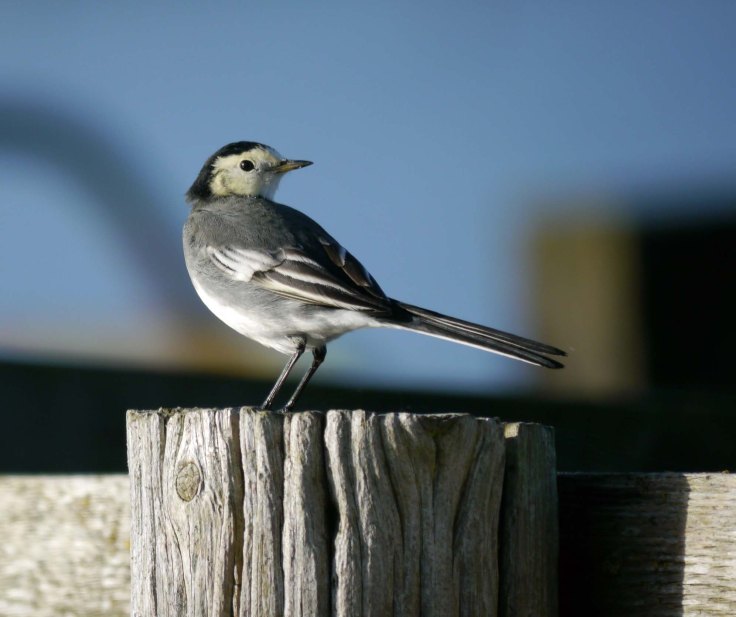
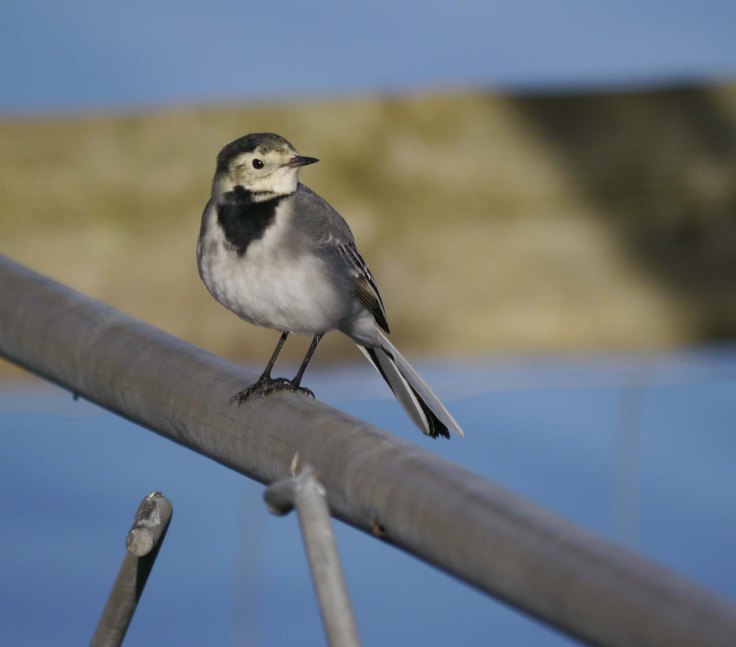
A fine sunny morning in Whitminster tempted me to hang about for twenty minutes and watch the Pied and Grey Wagtails at Fromebridge.

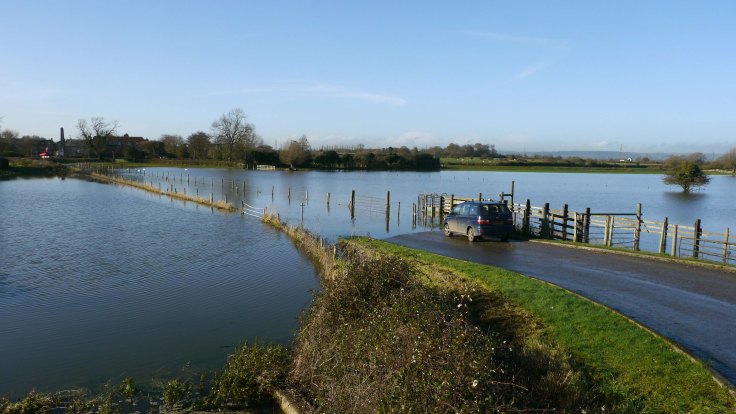
The Fromebridge Mill floods. This sheet of water stretches from the A38 to Saul and may become a wildfowl magnet over the next few weeks. The pub here is currently shut offering a new meaning for watering hole!

E White-fronted Geese
A really slow start for this species this winter. The flock increased to 27 by 26th.

Teal
At least 2000 are present on the New Grounds

Redwing
Large numbers have passed through this month. Often frustrating as they are shy, it is always welcome when you get a good view. Flocks have stripped the berries leaving a few for local or straggling birds to clean up what is left. Perhaps we will see another garden invasion if it snows this winter.

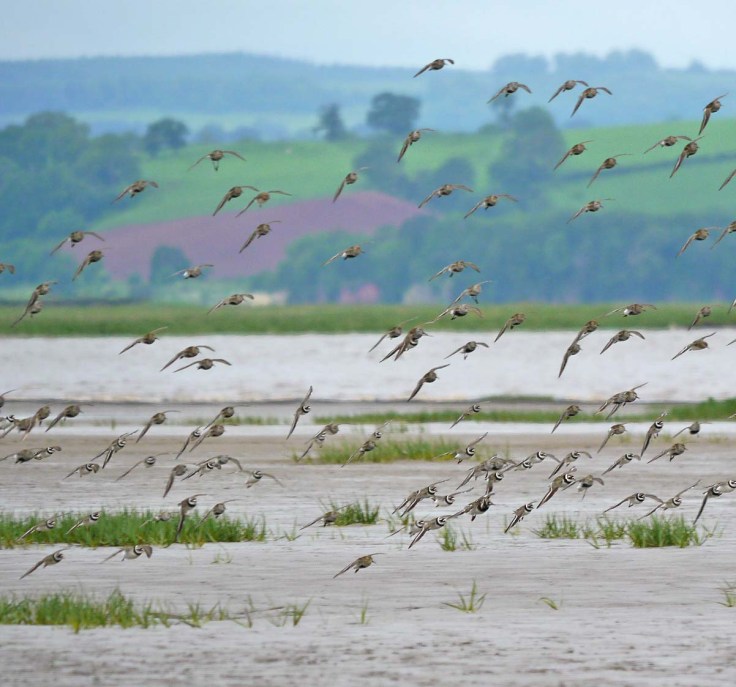
The Golden Plover flock has been building around the New Grounds and reached 1000 birds. Two or possibly three of the flock are retaining partial breeding plumage unless they are moulting early.

‘GoPlo or ‘Geeps’. Can’t help using nicknames.

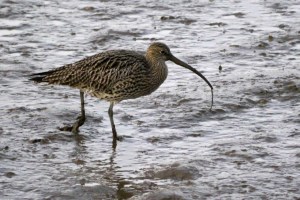
Long-billed Dowitcher with Black-tailed Godwits

6 November 2012 The day started with a little visible migration, after a NE breeze and a frost overnight it changed to a SW with low cloud and light drizzle. As this weather pushed in I found myself getting a bunch of tools together with two of our guys at WWT Slimbridge. I heard a faint pipit call which made me perk up immediately. I looked in the direction of the call but had a hedge in the way at the Top Hut. It flew in from the NE (it may have been on the ground in the boggy field/withy bed area and simply taken off from the Gosling field after calling first) and I managed to ‘get on it’ as it called again much closer and I could see it through the hedge coming my way. As far as sighting detail is concerned it was a silouhette and the same size as a Meadow Pipit. It called again as it went over and continued South down the lane and over the centre. A longer and more drawn out single but not particularly loud call sounding like Ppeeace or Ppeeez.  I made a call on the radio to tip off those staff in the centre to get outside as a Red-throated Pipit was on the way over but it was over the centre by the time I got a reply. Meadow Pipits are flying around the site daily and a variety of calls are heard, I have heard Rock and Water Pipit on site also in recent days. Two Waxwing were seen in the car park on the same morning.

5 November 2012 A hide round at WWT Slimbridge included the usual search through the Top New Piece Teal flock. As on a number of occasions before it once again produced a male Green winged Teal. It did wake up and show itself better before going back to sleep again.

4 November 2012 By employing a little fieldcraft I have to say I really enjoyed a close encounter with two Roe Deer. This wary animal was onto me but was not quite sure.

3 November 2012 A morning and early afternoon out in the Forest of Dean. Trip report soon.

1 November 2012

Little Egret on the WWT Slimbridge, Tack Piece.
This bird has claimed this part of the reserve for it’s feeding territory.

Part of the Black-tailed Godwit flock and play….spot the Long-billed Dowitcher


1-27 October 2012 Blog and sightings

27 October 2012 Back to work at WWT Slimbridge after a couple of weeks off. I led a Birdwatch morning walk with a few highlights, Brent Goose, Siskins and Redpolls in the Alders, first Bewick’s Swans of the winter and up to 11 E White-fronted Geese.

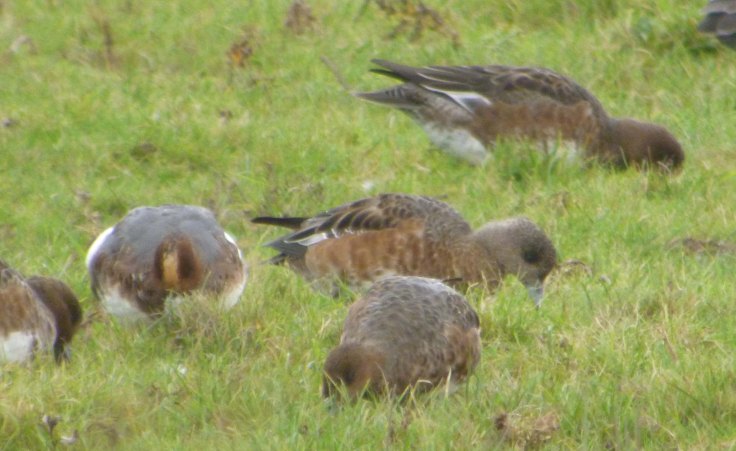
One particularly interesting duck on the Tack Piece led me to try to study it in detail, a female Wigeon showing the features that match an American Wigeon played hide and seek behind clumps of reeds. The usual flushes and panics that re-shuffle the flock meant that I had to refind it among the 600 Wigeon. I managed a couple of views of the underwing with slight lift of the wings it offered but missed a good flap when changing from camera to scope. Here are a few shots of it and I hope to ‘nail’ the underwing tommorow. It could of course turn out to have dusky or peppered axillaries indicating Eurasian and be a write off but from what I have seen so far I feel fairly confident.

Female facing left at the top

From top to bottom, the female in the middle

Top left

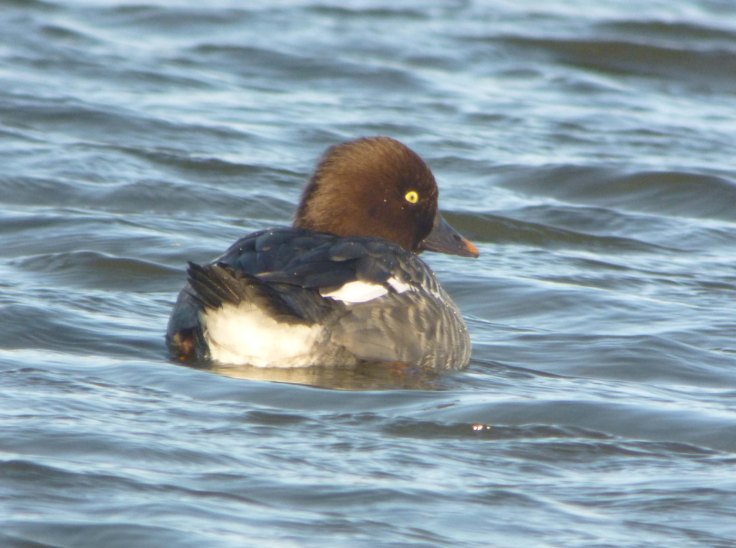
26 October 2012 A local walk along the canal at Splatt Bridge in the morning produced my first Goldeneye of the winter. Some vis mig was in evidence before the wind got too strong at 1000am. Bramblings, Chaffinches, Skylarks, Meadow Pipits, Fieldfare were all noted heading North.

The Goldenye headed toward Frampton Pools and on checking saw it on Townfield Lake where Nick Goatman had seen one the day before. A record of a female on WWT Slimbridge South Lake in the afternoon may refer to this bird touring or a second individual locally

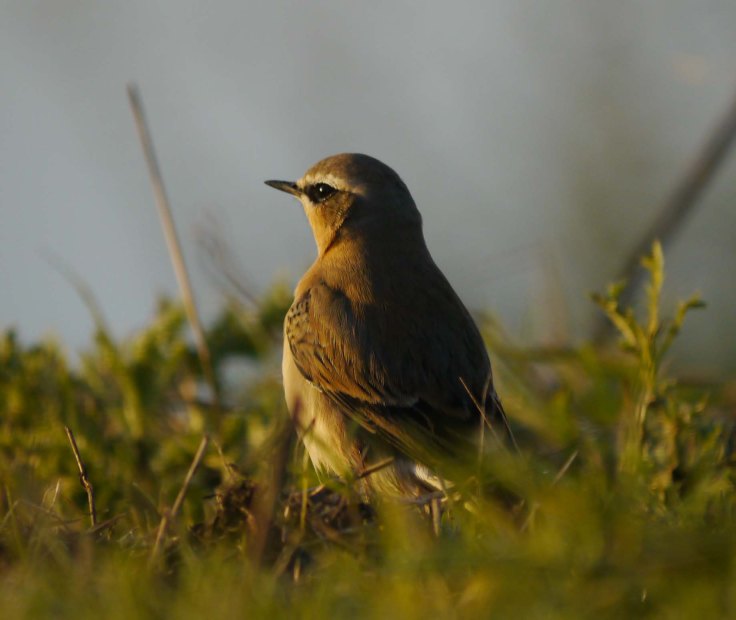
25 October 2012 A walk out to the Severn Estuary in the afternoon produced a bit of visible migration, a late Wheatear on the rocks and 5 Little Egrets on the mud off Hock Ditch.  A half dozen Pochard on Townfield Lake represented the water loving winter arrivals.

15-19 October 2012 A week off to provide cover at home for family matters and get the garden organised for a bird filled winter? No birding all week! The tripod is still in my bag from last Sunday. A pair of Raven flew over the house ‘cronking’ today and a few Jays are to be seen flitting about the village.

9-14 October 2012 A trip to the Channel Islands. Alderney via Guernsey. See trip report.

7 October 2012 Lots of visible migration over the house this morning including 100 Redwings, Jay, Redpoll, 3 Swallow and a Yellowhammer.

6 October 2012 Managed to bag a rarity today in the sunshine, no not Eastern Kingbird but a win at home Bristol Rovers 3-1 against Northampton.

4 October 2012 Another Thursday morning hide round at WWT Slimbridge resulted in the discovery on my 5th and 6th American waders of the autumn. A Pectoral Sandpiper flew in from the NE and dropped onto the saltmarsh of the Severn, Ten minutes later and having been joined by John Budd we watched two waders fly from the same area to join a Lapwing flock, it was the Pectoral and a new Buff-breasted Sandpiper. The previous bird was last seen 22nd September and there has been a lot of turnover of migrant waders since then, this year has been excellent for American vagrants as westerly winds have prevailed.

Buff-breasted Sandpiper flies over to the North
This bird was silent as some guides suggest, the previous bird called all the time, a double call that was unusual, a bit like Turnstone, shrill-ish.

A rather strange sight on the Severn, two Black Swans migrate north. Perhaps not fresh in from Australia.

Dunlin and Ringed Plover over the Severn

1-30 September 2012 blog

A Severn Rainbow above

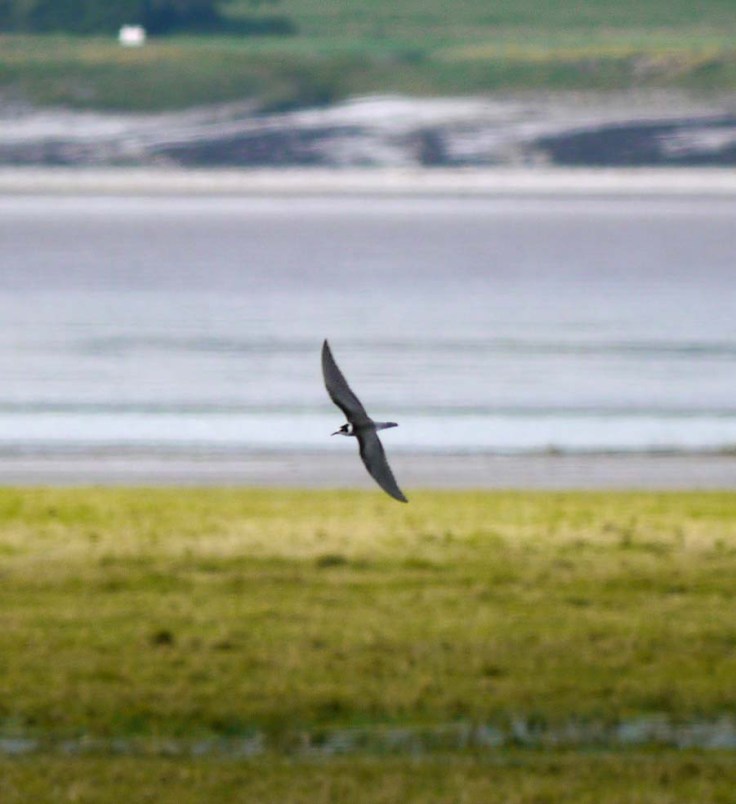
Black Tern (next two images)
Over the Holden Tower scrape, a late record and probably the same bird that has resided at Clevedon well into October.

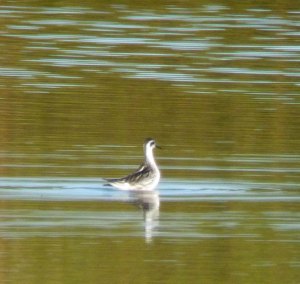
27 September 2012 Whilst doing my usual Thursday morning hide round/water levels check I popped back to the Zeiss Hide at 0900 to count the godwits, as it was a still and sunny morning I could clearly hear a wader calling that was familiar but not typical. Out of the sky dropped this juvenile Red-necked Phalarope. I have seen thousands of these lovely birds in Russia and Iceland plus a good number in the UK  including 5-6 at WWT Slimbridge but surprisingly this is a new one for what is probably best called a ‘personally located list’.

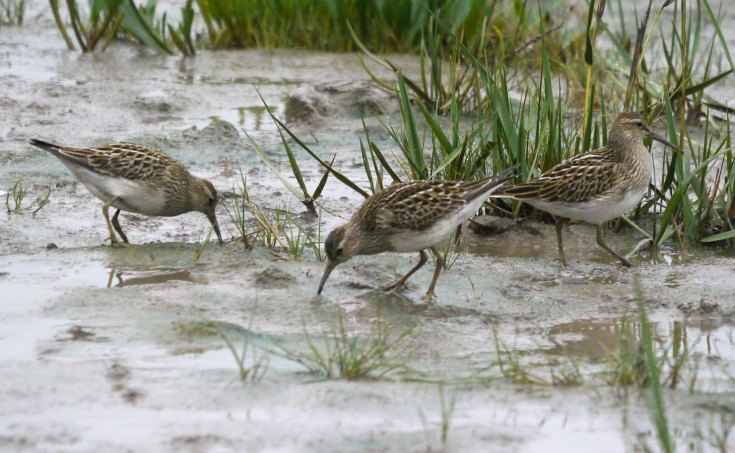
23 September 2012 Back at work and headed out around midday to see if a repeat performance of Buff-breasted Sandpiper and Pectoral Sandpiper was on the cards for all visitors to WWT Slimbridge. No sign of the Buff b..and we searched high and low but a reward in the form of three Pectoral Sandpipers made the drenching worthwhile. Other notable Severn birds were the Rock Pipit, quite early for this part of the estuary and the first juvenile Curlew Sandpipers of the season, by comparison..late. We just have not had the wind direction to drift them to us so far. Other notables were the major N-NE migration of Swallows and House Martins and large numbers of Meadow Pipits.

Pectoral Sandpipers MJMcGill

22 September 2012 Spent a lot of time working in the garden doing essential and tiring stuff, Meadow Pipits heading over all day.

21 September 2012 Had an hour at the 100 Acre and canal. I managed to scope the distant male Common Scoter as it sat off Hock Ditch on the top of the tide, it was very distant. Also starting to really note the last of the summer birds, a Yellow Wagtail, Hobby and Reed Warbler. How long before these birds dry up until next Spring? The four GCP Cranes were feeding in both the 50 and 100 Acres at midday.

Wheatear and WW2 Gun emplacement (Pill Box)

18 September 2012 After hearing a wader calling as it flew by Neil Smart and myself on 16th whilst doing the WeBS count I was convinced it was a Pec. I was fortunate to really get to know this call in Chukotka in 2011, a ‘pprreeett’ sound. Again the next day I heard it at high tide and saw it whizz across the Dumbles only to dissapear in long grass where the Curlew were roosting. This ruled out further investigation over high tide, I asked Mike Smart to check on his way out of Curlew ring reading and mentioned my suspicions of Pectoral Sand to all in the Holden Tower but it was not seen, despite checking scrapes after work I neved saw it either. Today I finally got it on the deck, I was in early to meet Mike Smart (for Curlew ring reading) where it was feeding with a Ruff in a pool near the Top New Piece, it flew around with a Snipe eventually settling in the Top New Piece where I could confirm the id. Sometimes they don’t want to give themselves up easily.

Pectoral Sandpiper, Top New Piece

16 September 2012 I was out on the tide for the monthly WeBS count when I saw a Buff-breasted Sandpiper arrive on the saltmarsh. It was rather nervous and flighty when Neil Smart arrived but dropped in very close to us until the rapid tide moved it and it dissapeared again. Despite searching I did not see it until my lunch break at 1335 when it flew high South past Middle Point calling and dropped into the spartina island far out on the estuary. Gladly it showed again the next day for a few and despite being very flighty on 18th and dissapearing miles upriver out of view…it returned to the Dumbles where it showed until 1430 before dissapearing again. At least a number of birders got to connect with it via escorted walks out to a ‘safe’ viewing spot.

A snatched Buff-breasted Sandpiper shot

14/15 September 2012 Birding interlude, cricket or was it a beer tour to Barry, S Wales. I did note 3 Yellow Wagtail 2 Tree Pipit and 4 Meadow Pipit over Barry Wanderers CC ground along with 11 Pied Wagtail on the pitch during tea. Can’t stop counting birds, shame it wasn’t runs!

13 September 2012

Wheatear

12 September 2012

Swallows
On wires every morning this week and lots of migration noted, in some cases hundreds heading south especially 16th September. Large numbers of Sand Martin were also around. In this image the juveniles can be compared with adults, the former having short tails and duller plumage.

11 September 2012

Spotted Crake
After finishing work for the day I popped into the Zeiss Hide on the way out, I noticed a crake at the back of the scrape, it looked very yellow billed so I took some hurried shots. The bright sunshine was blazing out much of the colour and markings. It snuck off into cover, did not come back out so I went off to pass on the info to staff and visitors. Heading back and staying with birders that Dave P had collected from South Lake we never saw it again and I left at 1810. I checked a few times over the next couple of days along with others but it had gone or remained hidden.


9 September 2012

Starlings catch a sunrise ride on a handy lookout post. I love stuff like this.

Two Garganey and a Mallard
I alway’s get a kick out of Garganey spotting whatever species they are with and have done every autumn since 1988.

8 September 2012 Loving the sunshine, true cricket weather but alas the season has finished. I shall ignore football for another week or two, allow Bristol Rovers to get organised. I had a day on my own catching up with sorting the garden out and other stuff. I set the feeding station up with a variety of feeds and sat back and watched. Coal Tit was the first this year and a Greenfinch and flock of Goldfinch are popping in. A flock of Linnets are feeding in the field next to the house so I hope I get a decent flock and maybe Merlin again this winter.

7 September 2012 Up bright and early, dropped the car off for MOT and was picked up by Neil Smart, we had gone on standby pending news of the Short-billed Dowitcher at Lodmoor RSPB in Weymouth. It was still present so we plumped for a day out in Dorset. Meeting up with Bob Radford on the way and changing to his car we were on site and birding this great habitat a couple of hours later. The SBD was not showing so we wandered about looking at other birds in the sunshine. Juvenile Sandwich Terns were following their parents and begging for fish but the adults just looked bothered in the heat. A Common Sandpiper, 5 Black-tailed Godwits, Common Whitethroat and Hobby were all distractions until the SBD was located in the marsh. We watched it for a while before getting the urge for Chips and Mushy Peas (fish for the other two and battered mushrooms for me) from the seafront. Scoffing down this exercise inducing snack we made changes to our plans when news of a Monarch Butterfly on Portland broke, we went straight to the Buddleia bush in Easton and enjoyed this huge butterfly in the sun.

Mediterranean Gull-Lodmoor

Sandwich Tern-panting in the heat

Small Tortoiseshell and Monarch

Monarch

Two Garganey among the waders

Redshank in the morning sun

Marsh Harrier-two were present at WWT Slimbridge on 6th.

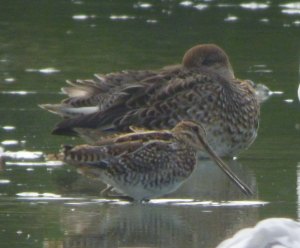
Snipe-quite a difference in plumage tones in these two birds.


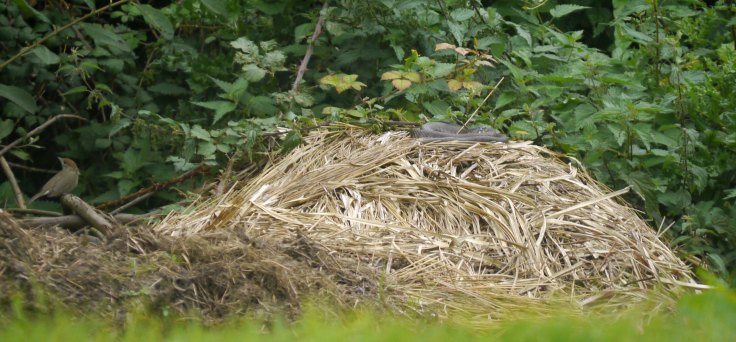
Blackcap mobbing a Grass Snake
A few bird species also had a look and scolded it.

1-31 August blog and sightings 2012

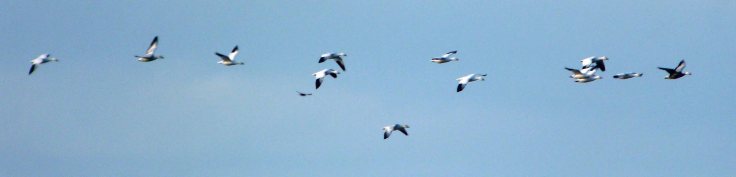
30 August 2012 A lovely start to the day with sunshine in full effect. At WWT the morning was livened by the call of distant Snow Geese which I could not see, eventually they appeared high over the reserve gliding in from the north. As is usual for this site this latest party of geese circled the reserve looking for a place to land. They eventually chose the Top New Piece bt left soon after. The flock all apeeared to be Lesser Snow Geese and fortuantely represented both colour phases, the blue and white (for those who know me,  a colour combination I am rather fond of being a Bristol Rovers supporter). The twelve white bird had two juveniles with them and the single blue phase which naturally stood out among the rest.

Spotted Crake WWT South Lake
Discovered by a visiting birder on 25th August (Mr Woollam). It showed again a few times since including when I opened up for members for an evening search.

27 August 2012 Another wet start to the day delivered 72 Arctic and 2 Common Terns. Intermediate and dark phase juvenile Arctic Skuas also made an appearance on the Severn which I was pleased to share with two fellow observers.

1-20 August 2012 A visit to Spain back in the early hours of 8th. Back to work on 12th and a busy period of passage was underway, getting out of the car in the car park I heard terns, looking up a flock of 17 probably Arctic Terns flew directly to the Severn, later a first winter Arctic Tern fed over the tide. Some highlights in images follow.

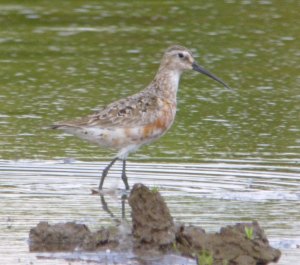
Curlew Sandpiper
With two adults in July, this bird was the third I have seen this period. As usual adults are noted until late August when the juveniles begin to arrive.  A party of four rising to five and dropping to three followed this one.

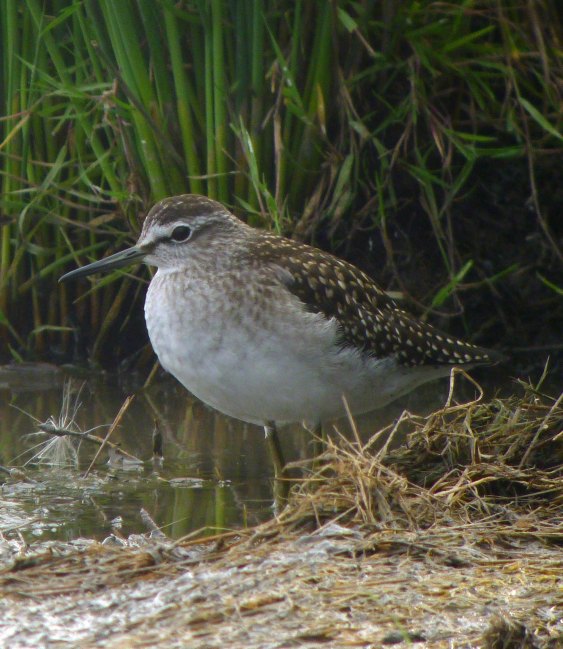
Wood Sandpiper
The third in Glos and WWT Slimbridge this year for me with a fourth appearing in August and joining this bird for a day or two.

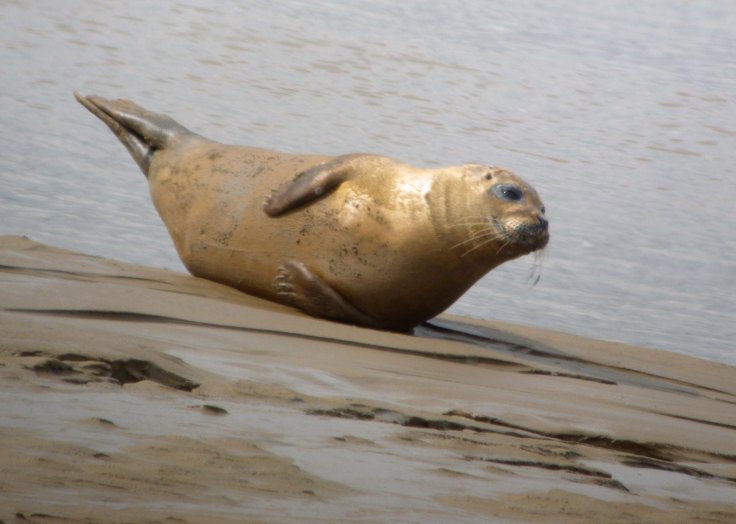
Harbour Seal 16 August 2012
An excellent addition to my Severn mammal list. This chubby chap looked so relaxed and at home on a Severn sandbar but there was nothing wrong with its hearing, sense of smell or eyesight. It knew we were there and it took some stalking to get close enough to take this shot. I am pleased to say we left it in the same place as we found it and did not push it for a better shot. The Seal was in the same place an hour later before the Severn bore panicked it into diving into the wave where it dissapeared.

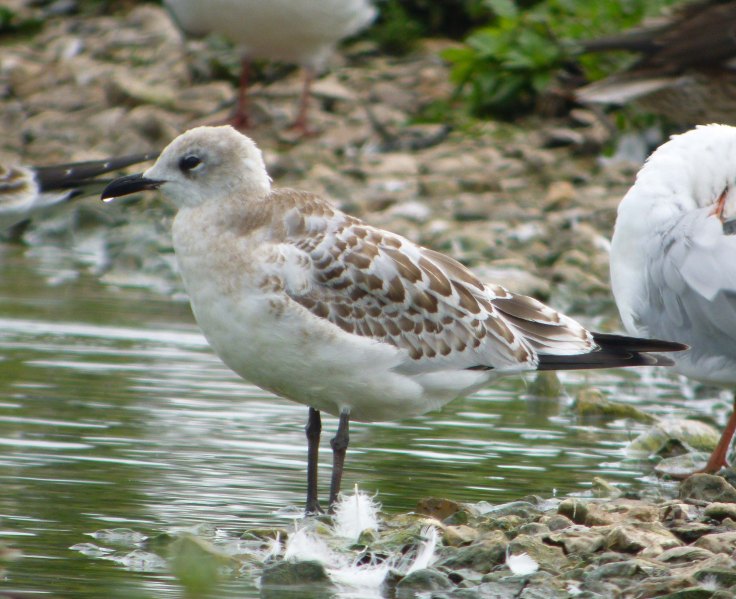
Mediterranean Gull 19 August 2012
Always a treat to see this species, this one is on the WWT South Lake.


June to July 2012 Blog and sightings

31 July 2012 Day one of a visit to Cadiz Province in Andalucia Spain. A stop or two on the way to Sanlucar de Barrameda included time at the beach for my family, the jellyfish swarm put paid to swimming in the Mediterranean sadly. A stop at Laguna de Medina was also of interest…more to come in August blog and trip report.

13-30 July 2012 A good end to July locally, the adult waders arrived, most still in breeding plumage and the first juvenile Dunlin and Whimbrel for me. Yellow-legged Gulls arrived as usual on the Severn, I saw at least nine probably eleven adults on 28th. I also saw what appears to be a Cape Shelduck female and a female Argentine Red Shoveler about the WWT scrapes.

Pick of the bunch has to be the Long-billed Dowitcher that James discovered among the wader roost on South Lake as we have not had one locally in recent decades. Another welcome bird for Glos birders and a reminder that WWT scrapes are well worth searching any time of year.

Long-billed Dowitcher images by MJMcGill


Ruff centre, Lapwing top and Redshank below MJMcGill

Curlew Sandpiper and Golden Plover

Yellow legged Gull
One of at least nine adults present on the banks of the Severn.

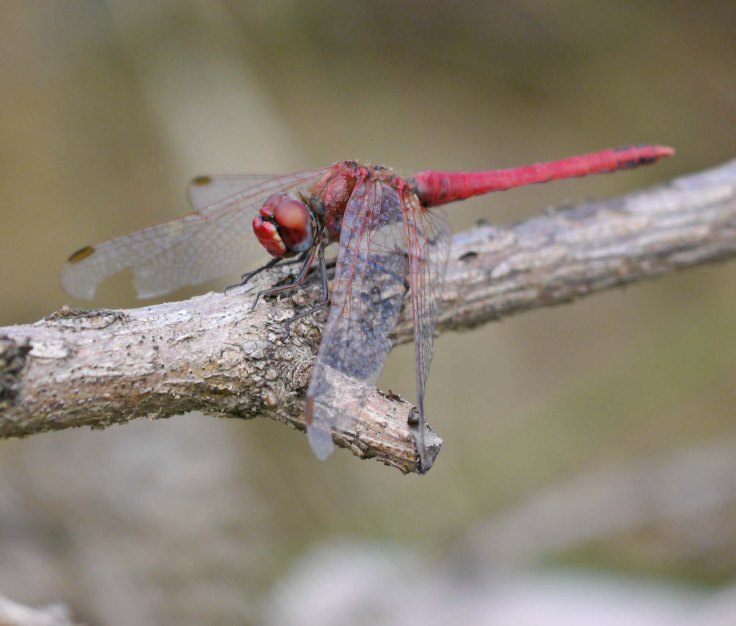
28 July 2012 A day out with Graham Clarkson, Jubs Squire and wildlife buddy Maisie McGill. We visited the Forest of Dean and Coombe Hill meadows among other sites. Meeting up with Paul and Truan Taylor we searched for an eventually located (well done Jubs) the male Red-veined Darter at Woorgreens. At another site we quickly located another target species (well done Tay) Scarce Blue-tailed Damselfly, both species were county lifers for me. The day was highly productive for odonata with Blue-tailed, Large Red, Azure, Common Blue and Emerald damselflies, Brown, Souther and Migrant Hawkers, Ruddy and Common Darter, Broad bodied Chaser, Black-tailed Skimmer and Emperor dragonflies noted.

A flock of 17 Crossbill were as always a welcome sight, displaying Lesser Redpoll and a few Siskins were seen aong with Tree Pipit and Jubs saw a Wood Warbler.

Red-veined Darter MJMcGill

Scarce Blue-tailed Damselfly MJMcGill Location witheld

12 July 2012

Common Scoter 1st summer male off Middle Point, Severn Estuary.

Red Knot, Dunlin and Redshank on WWT South Lake.

Reeve with the Redshank, WWT South Lake

7-10 July 2012 No blogging for a while but a few birds noted over the continuing wet summer. Some images of birds I have taken below. Plenty of wader variety about the Severn and WWT scrapes, I have seen 18 species since last Sunday with some in full breeding plumage such as male Bar-tailed Godwit, the 100+ Black-tailed Godwits, Wood Sandpiper and 17 Red Knot. Juvenile Little ringed Plover, Golden Plover and Ruff were all new returning birds as was Sanderling and 6 Ringed Plover today (10th July).

5 July 2012
Garganey
Two drakes in eclipse on the South Lake, one bird still retains the ‘ghosting’ remnants of the head pattern. I have seen this species often until June when the eclipse moult begins and in late July/August when they are fully in eclipse moult but do not recall seeing them in this stage.

A Greenshank and Red Knot were fresh returning migrants on the Top New Piece.

1 July 2012

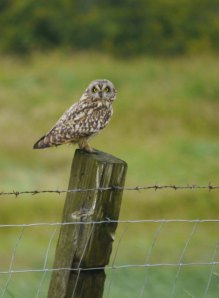
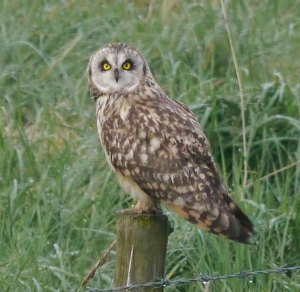
Short-eared Owl This is the first July record for me in the county of Gloucestershire.

Little Egret MJMcGill

Iceland 14-19 June 2012 Trip report to come, a few digi images for now, better to come.

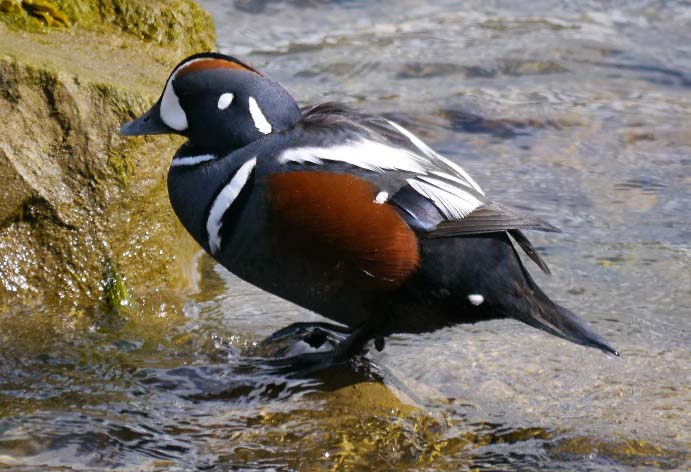
Harlequin MJMcGill

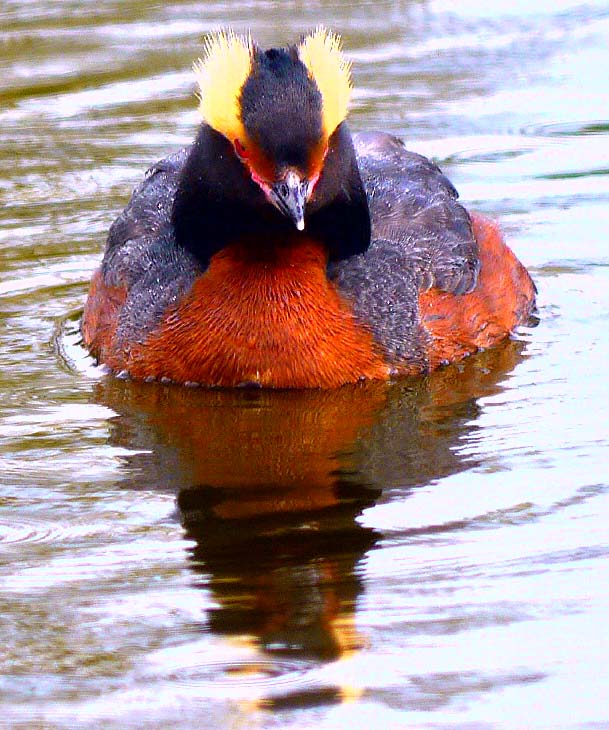
Slavonian Grebe, Lake Myvatn MJMcGill

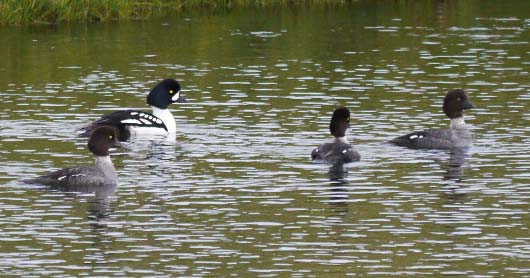
Barrow’s Goldeneye

9 June 2012 I was forced to go to the estuary by my daughter who wanted to go birding! Scoping the still breezy Severn estuary at high tide produced a Storm Petrel, three Sanderling, 1 Dunlin, 5 Oystercatcher, 12 Curlew and a Great Skua.

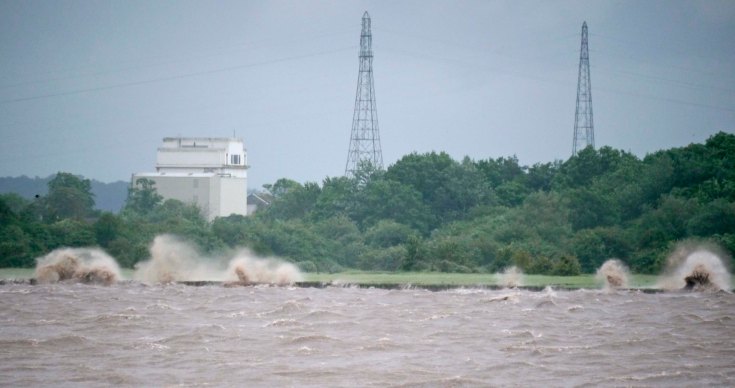
The Summer storm-8 June 2012

Saul Warth gets a battering, if you were stood on the shore the plumes would have been about 10 ft above your head.

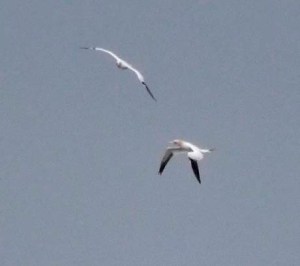
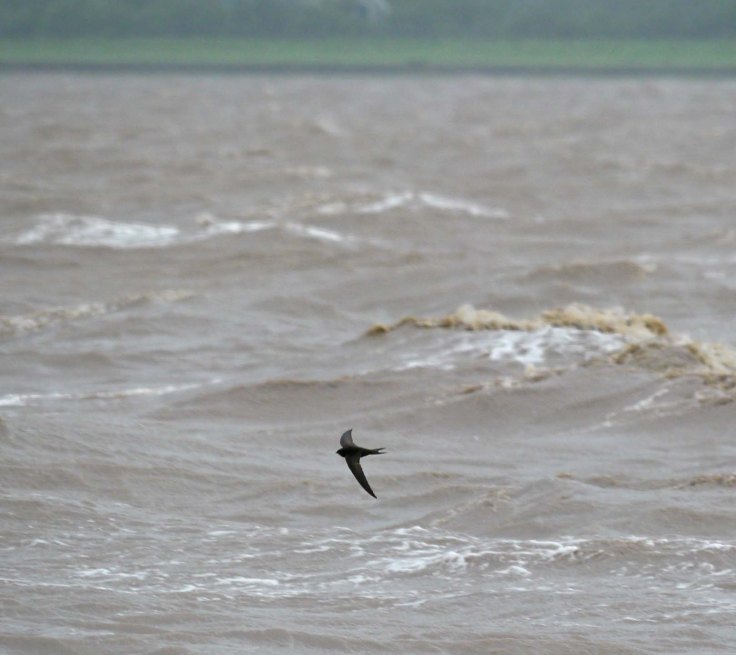
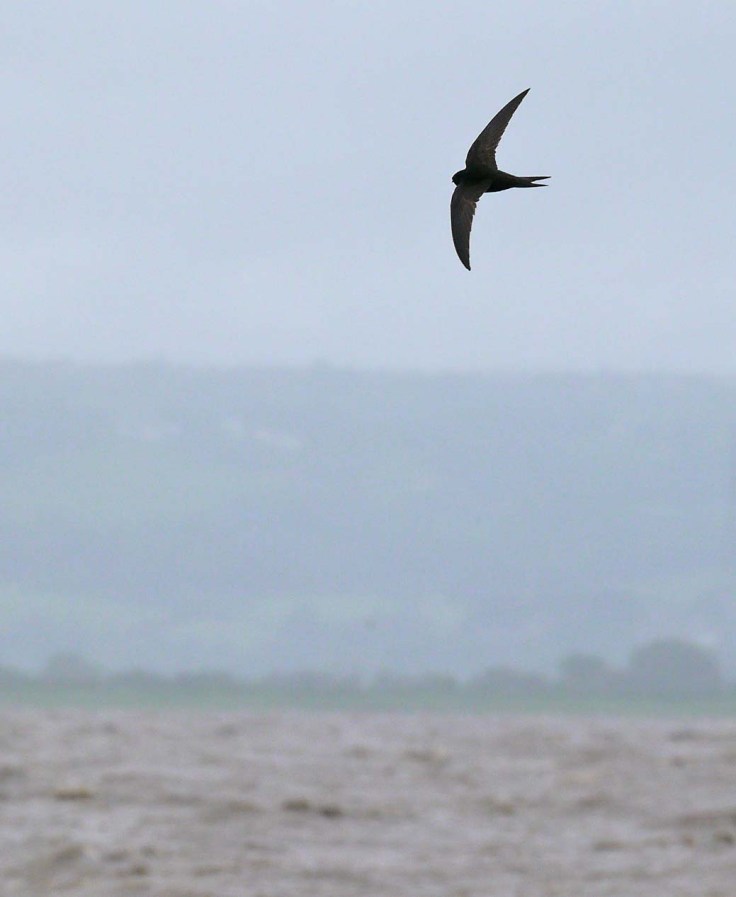
A forecast of gale force winds and a high tide was an attractive propsect as it often provides a chance of sea-birds we rarely see in the county. I settled in out of the strongest of winds and watched. Three Dunlin were on the mudlflats along with 6 Oystercatcher and 6 Curlew before the tide moved in at a scary pace. I was scanning for more calidrids when a Storm Petrel passed me close by, it carried on along the shore toward Saul Warth swinging side to side into the wind and over the huge spindrift topped waves. It passed by Hock Ditch when I lost it to view. Soon after two adult Gannets swung into view and moved up and down the shore before heading for the Awre peninsula.

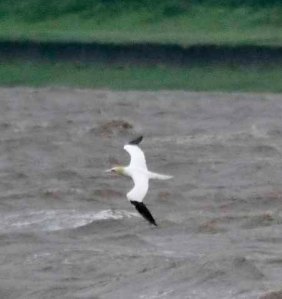
Gannets look for a way out


The Swifts were feeding over the waves, often brushing my head as they crusied over

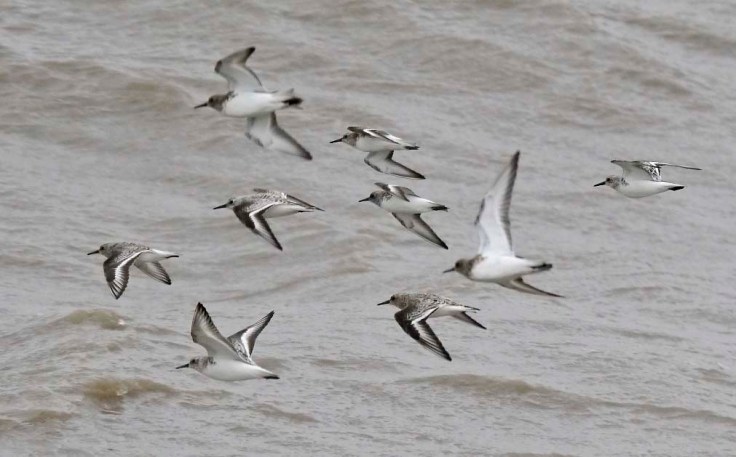
Sanderling plough South

Sanderling with a Dunlin

4 June 2012 An early morning out to watch the tide and check the waders that were present yesterday. 30 Sanderling, 80 Ringed Plover, 110 Dunlin, 1 Turnstone and a Grey Plover were present. A Peregrine ruined it and repeatedly attacked them leaving nowt left. Forgot to mention the Red Kite over A38 Frampton junction and then drifted across Whitminster.

Ringed Plover MJM

Sanderling (a range of plumages on show, this one moulting into breeding plumage)

Dunlin, Ringed Plover, Sanderling and can you find the Turnstone.

3 June 2012 At WWT a flock of 40 Sanderling, a Grey Plover, 1 Turnstone, 80 Dunlin, 80 Ringed Plover and 13 Curlew were on the estuary and I saw at least 8 Crane today, 13 were reported.

12 May 2012 Half day birding trip to the Forest of Dean

A morning in the Forest of Dean was planned as the weather was perfect. We departed Whitminster at 0630 to make the most of the morning and arrived at Walmore Common. A Purple Heron had been seen here a couple of days before so it was worth a stop. The common was in flood and had a lot of birds feeding and roosting including Little Egrets, Shelduck and Shoveler but no Purple Heron. We carried on to Yew Tree Brake and were soon hearing and glimpsing Firecrest in the firs, the views were of birds high up. A Tawny Owl was discovered at day roost and was being mobbed by smaller passerines. After an hour with the Firecrests we moved on to Nagshead RSPB. A short walk and we were watching the first Pied Flycatcher, at least seven mnales were noted singing on a stroll around the paths. The highlight here was a male Wood Warbler in full song in the sun.

Pied Flycatcher

Wood Warbler

Our next stop was at Woorgreens where management work has re-created some excellent habitat. Following the lake we soon found a Garden Warbler, it showed for us low down in the gorse. A Crossbill flew over. Moving out onto the heath the first of seven Tree Pipits were seen, a very tame and close bird that gave us great views.

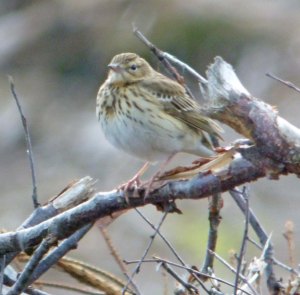
Tree Pipit

Other warbler species were noted, a Willow Warbler was heard, lots of Blackcaps, Chiffchaff, displaying Common Whitethroat and another Garden Warbler. The parachute display flights of the Tree Pipits were great to watch and hear. A female Goshawk appeared overhead and circled in the thermals, a nice addition to the Buzzards. I could hear them arriving and announced that Crossbills were on their way when three flew low overhead and dropped in the pines. A large party of Redpoll and Siskin were feeding in birches, quite late for such a gathering but perhaps delayed breeding by a week or two.

Goshawk

Heading back to the car a smashing Willow Tit began calling and gave us all amazing views as it fed in the alders. The Garden Warbler was out in the open and singing again, more good views. The common woodland birds such as Jay and Great Spotted Woodpecker and Nuthatch added to the outing but it was just one of those perfect days where so many birds gave themselves up, right place, right time. Thanks to all who attended.
MJM.


1-31 May 2012 sightings and blog

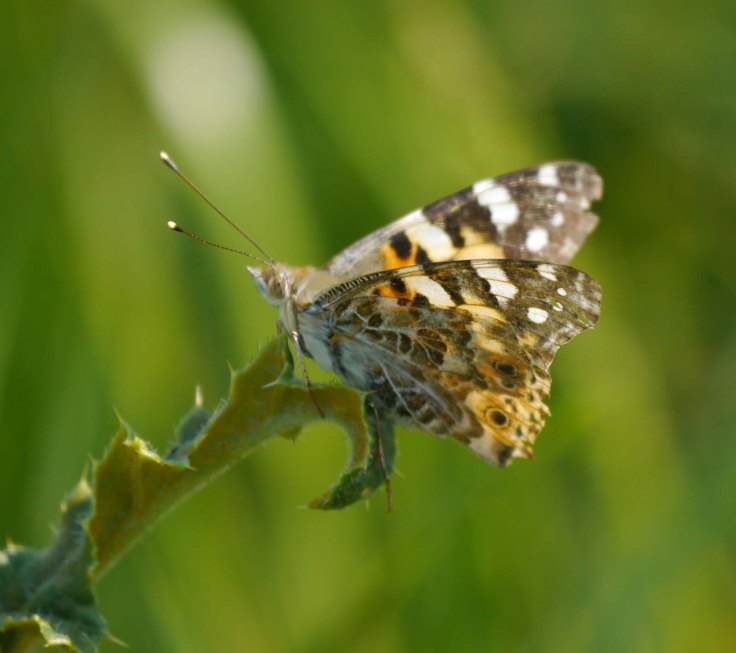
30 May 2012 A Painted Lady at WWT Slimbridge.

24-28 May 2012 Sardinia and Corsica, full trip report soon.

21 May 2102 Was tempted and took the afternoon off to yomp up Bradnor Hill, Hereford for this stunner.


18 May 2012 I saw three pairs of Common Tern, a Whimbrel, 24 Sanderling, 3 Grey Plover, 76 Dunlin, 3 Knot, 16 Curlew, 42 Ringed Plover and a Short-eared Owl out on the WWT reserve/estuary tonight.

14-17 May 2012 Highlights were the female Red-necked Phalarope and hatching Avocets at WWT Slimbridge. The latter a special moment in time as it is a first for the county. A party of 15 Sanderling on 14th were of note.

13 May 2012 Up at 0330 for a Dawn Chorus event at WWT Slimbridge. Again, perfect weather for singing birds and the misty start was very atmospheric. A party of four Great Crane Project Eurasian Cranes made it very special. A Redpoll over was unusual, Cuckoo welcome and plenty of songsters.

12 May 2012 Trip report soon, a very good morning out in the Forest of Dean, weather was great, the birds fell into place.

10 May 2012 Got up and ready for work, opened the door and u-turned, back to bed for the day. Some sort of fever, a birdless day save the fledged Starlings and delightful constant communications from sparrows.

9 May 2012 Woke up feeling groggy but pressed on to do a full breeding wader survey of Saul Warth, not a single territorial bird found only migrants such as 27 Whimbrel and four Bar-tailed Godwit, Four Lesser and seven singing Common Whitethroat were nice. Carried on into work until lunch and headed home feeling pretty awful. An afternoon in bed with a temp and I had to get going, dosed up to do a Spoon-billed Sandpiper talk for the Friends of Slimbridge. It semed to go OK so I hope no-one noticed the hot flushes, sweats and light headed bouts!

8 May 2012 I saw the male Garganey again this morning.

7 May 2012 A new bird for the year came in the form of a Wood Sandpiper that Dave Paynter found on the Bottom New Piece, it was not obliging only giving occasional glimpses from distance.

6 May 2012 Some torrential rain prduced some interesting reactions from species such as Swallow. They clearly did not enjoy the ‘monsoon’ and did their best to avoid the heavy downpours. A few more waders were about the estuary but in low numbers. At least 2 female Whinchat were notable, four were seen at Middle Point, WWT yesterday!

5 May 2012 See trip reports

4 May 2012 No birding but good to see Steve Dark at the birders meet at the Old Forge and some of the usual crew.

3 May 2012 An interesting morning yet again, five Common Tern headed upriver on the tide but bumping into Pavlo Zaltowski in the Holden Tower he informed me of a wader he saw on the mud off Saul Warth and thought it to be a phalarope, his verbal description sounded perfect for Red-necked Phalarope. I headed up with JSL as he was going that way with our electric 4wd and sure enough it was out on the mud with hundreds of waders including a Curlew Sandpiper, Turnstone and 100 Red Knot, 22 Grey Plover and 15 Bar-tailed Godwits. 2 Sanderling were also present.

Dealing with a flood problem near the Zeiss Hide I spent most of the day in a digger or in a drainage trench but a Common Tern did fly by on the Top New Piece. On the way out I saw a male and two female Blue-headed Wagtails with an intermediate bird and 10 Yellow Wagtails at the end of the day. An evening walk along the canal at Frampton with Graham Clarkson was productive. Two Short-eared Owl, Cuckoo, Water Rail, 2 Bar-tailed Godwit 8 Curlew and 41 Whimbrel.

Red-necked Phalarope, non-breeding plumaged but just beginning moult

and with a Dunlin (right)

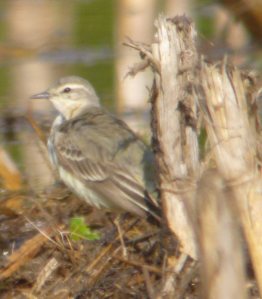
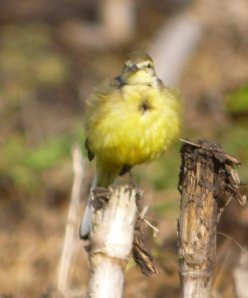
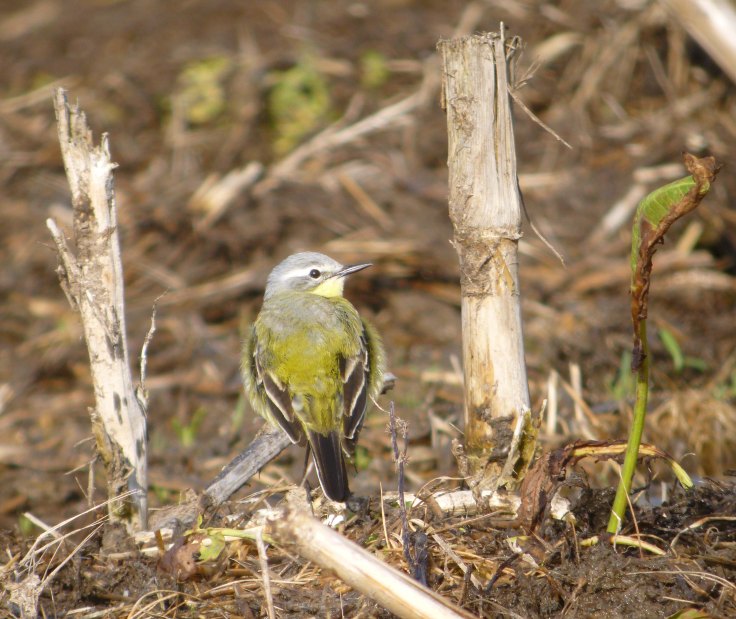
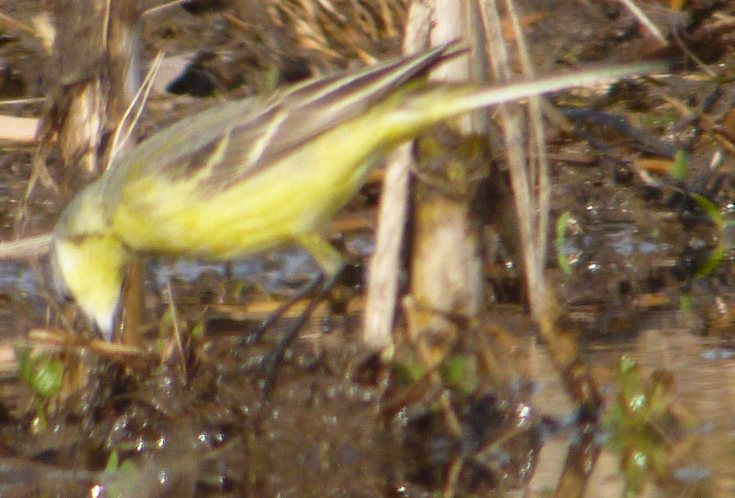
2 May 2012 A female Blue-headed Wagtail was with 15 Yellow Wagtails at WWT Slimbridge on the Tack Piece and near Middle Point at the Goose House.

Blue headed Wagtail female next two images with female Yellow Wagtail flavissima (3rd image)

1 May 2012 A cold, wet start to the day with strong NE winds gradually morphed into a SE light breeze and sunshine. Many migrants were around the Severn today, it would have been great to have the whole day off to just sit and watch.

Garganey- a pair in the Bull Ground Channel, then flew to 100 Acre puddles and fed. My first of the year>
Bar-tailed Godwit 17 in the morning and c30 by the end of the day.
Grey Plover 5 off Saul Warth and 5 arrived with a Turntstone S of Mid Point 1350hrs.
Turnstone- 1 arrived lunchtime
Sanderling-7 in the morning, c30 by early evening
Dunlin-250
Ringed Plover-120
Black Tern-one fed on the Tack Piece scrape where I was working, two more flew over low.
Little Gull- an adult and first summer flew upriver at 1305hrs and an adult fed on the Tack Piece scrape and roosted in the floods.
Short-eared Owl- up to three around Middle Point 1300-1800hrs.
Little Tern-4 flew downriver, another single flew down and one was off Saul Warth 1610-1640.
Arctic Tern-37 flew upriver at 1340hrs
Mediterranean Gull- a first summer with the BH Gull flock and two adults/second summers calling and flying around over the Goose House/Middle Point.
Wheatear- 25 when the sun came out!
Yellow Wagtail- 25 arrived at the end of the day after hearing c 10 N during the day.
Blue-headed Wagtail- a pale headed bird with the above.
plain Yellow Wagtail- an interesting female with the above.
Swallow-1000’s N
Swift 100’s N
House Martin-100’s N
Sand Martin- 300+

Black Tern and Little Gull
Amazingly feeding over the scrape we were working on! It was pouring with rain and they both picked flies from the surface.


Little Tern

Short-eared Owl

Wheatear

A very plain, almost colourless female Yellow Wagtail


A typical bird that was nearby for comparison.


1-28 April 2012 sightings and blog

Most daily sightings are from WWT Slimbridge where I work unless stated. I do not really year list but am always interested in seeing a decent number of birds each year to keep sharp! All images mine unless stated.

28 April 2012 A shorter visit to the Severn foreshore resulted in 16 Whimbrel, c35 Ringed Plover, c75 Dunlin and a Knot.

27 April 2012 I ventured out for a visible migration watch session, to just sit and see what passes by on the foreshore and marsh between 0930-1230. Also some birds from the canal towpath, Splatt birdge and viewing platform at the WWT 100 Acre.

Whimbrel 11
Curlew 20
Grey Plover 1
Little ringed Plover 1 N
Mandarin male
Hobby 1 hunting over WWT 100 Acre, seen twice (1st of the year for me).
Kingfisher- saw the male, heard a nest swap take place
Whitethroat 2 males
Cetti’s Warbler 2 males
Willow Warbler 1
Chiffchaff 2
Blackcap 6
Sedge Warbler 8
Reed Warbler 4
Yellow Wagtail 3 N
Knot 1 N, 1N with 40 Dunlin,
Dunlin 100, 40, 1
Sanderling c10 with the Dunlin
Ringed Plover 1 with single Dunlin N
Arctic Tern 1 N
Great Skua 1 N higher above estuary, flew toward Newnham.
Osprey 1 crossed the estuary and headed NW
Wheatear 4 on foreshore, 8 in 100 Acre on the fences
Whinchat 2 males on 100 Acre fences (1st of the year for me).
Swift up to 30 over reedbed
Swallow-light passage total 120 birds
Sand Martin 10
Hosue Martin 6

At Splatt Bridge
Common Sandpiper 2 (1st of the year for me)
Siskin 2

Extra news…DBP had many Wheatears at Middle Point and TM texted with Black Tern on South Lake.

When I got home I picked up a weeny fledged Robin in the garden and moved it to a safe bush near the house…now to stay on Cat alert!

26 April 2012 Highlight was a female Red-breasted Merganser I scoped from Holden Tower-WWT,  flying in and joining two Great Crested Grebes on the estuary. It flew off upriver after ten minutes off gull hassle. Also the 2 DB Brents remained. A male Redstart and excellent selection on warbler including Whitethroat from the tower.

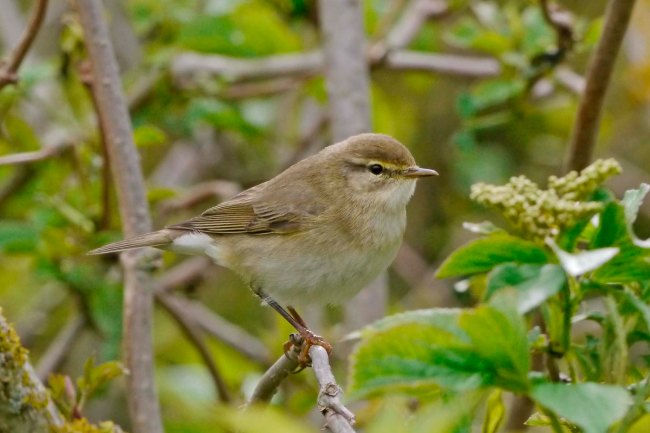
This Willow Warbler was singing it’s heart out despite the weather.
25 April 2012 I took time out at work to watch the tide, it looked good on the forecast and sure enough it was. I looked from 0815-1030. I saw a flock of c10 Little Gulls and c9 Arctic Tern go through N at 0820 then 6 ‘Barwits’. Many parties of Bar-tailed Godwit passed through N, 75 at least. A total of 300-400 Arctic Tern passed through with some large flocks of over 100, 80, 60. GY noted more Little Gulls, a Little Tern and 61 Arctic Terns after 1100hrs. The 2 DB Brents were still present. A Ruddy Shelduck flew S, I also saw it on the Tack Piece earlier. My first Swifts of the year passed thru…c14 in total. 6 Tufted Duck went N.

24 April 2012 A quick lunchtime search from Middle Point produced two Iceland Gulls, two Dark-bellied Brents, 2 Peregrine and Yellow Wagtail N. Pics of Brents and the two Iceland Gulls below.

 

20 April 2012 A day at London Wetland Centre, thanks to all who packed the theatre for Kate Humble and my Spoon-billed Sandpiper presentation. No birding save the amusement of invasive Ring-necked Parakeets. The centre was having a very birdy day though, Iceland Gull, Greenland Wheatear and Turtle Dove to name a few.

19 April 2012 I headed for the tower as a pale phase Arctic Skua had been seen by JSL, the reward was a dark phase and pale phase Arctic Skua heading N upriver, I also got a radio call from JSL and saw the Kittiwake going downriver before heading back to a partly office bound day.

18 April 2102 I welcomed back some more ‘new for 2012 migrants today. A pair of Common Scoter at 075o off Middle Point, flew up channel after being hassled on the water by a Herring Gull. These were probably seen last Saturday (14th) as a report of a pair were in the diary during high tide. Also  I heard first then saw Turnstone plus single Dunlin, Bar-tailed Godwit, Knot and Grey Plover. 10 Curlew, 5 Oystercatcher and 5 Ringed Plover by 0800 but it was time to go to work for the day. Coming back from fixing up barbed wire in the BNP I heard and saw a Grasshopper Warbler-another 1st of the year. At lunch I had a look on the river and saw two Whimbrel. A few migrants passed over me, Yellow Wagtails 2 and Swallows 10. Another first of the year included this Common Tern that was roosting on the shore and hanging around Middle Point until 0800 at least.
 

Common Scoter off WWT, they were a long way out!

17 April 2012 New for the year for me on the Severn were two Dark-bellied Brent Geese on the tide, floating and flying off Middle Point. A Swallow passage was on today, I noted c 400 with 40 Sand Martin and 30 House Martin. A male Wheatear was in the 100 Acre. Only 28 Curlew were on the estuary basin 0730-0800 but a flock of c50 were present off Middle Point at 1630, these appeared to be migrants. The Cackling Canada was on the spartina island and I saw it fly low with c30 Canada toward Frampton Pools at 0930.

Nice garden bird for Neil Smart-a Wryneck that showed for a short while on the path.

16 April 2012 A few more Reed and Willow Warblers, Sand Martins about today, a Greenshank and 2 Little-ringed Plovers. The undoubted highlight was the Curlew flock. I see a flock of 30-100 migrate from the estuary or over my home every year in early to mid April but today it was a swarm. A flock of 300-400 lifted from the sands as the tide came in and headed high into the sky. All were calling which made it even more spectacular. The majority of the flock formed up into waves and headed NNE a few returned to the estuary where 84 were still present on the sands. At least two Bar-tailed Godwit left too. About half a mile to the S another flock of 120 Curlew were resting on the sands with one Bar-tailed Godwit. One of the Curlews looked to be darvic ringed but the incoming flood pushed them off. I have been seeing c60 Curlew daily around the estuary all week and these are rather quiet, the increase are clearly migrants, perhaps from the Severn/Bristol channel catchment. The N winds have stalled migration so the change during the day to the S winds may well have opened up the opportunity to head off, hence the larger number. I was also very pleased to see the Avocets still very attentive to the S Lake nest and have added a lot of material to it.

15 April 2012 The Avocets have begun building a nest on the South Lake, male passing sticks and small stones over his shoulder to the female who throws it on the the nest. A Red Kite, 3 ringed Plover, two Redstarts, 2 Yellow Wagtail, 100 Swallows and a Grey Plover were all notable migrants and the Black-tailed Godwit flock increased to 142.

Three House Martins were back over the garden in Whitminster.

14 April 2012 A morning in the Cotswolds, see trip reports page.

13 April 2012 Mistle Thrush still singing daily near my home as well as Chiffchaffs. Spent a couple of hours with my daughter looking for the Hoopoe seen by one of the WWT gardeners flying along the foreshore and heading N.

12 April 2012 The Avocets are still looking good at WWT Slimbridge, some nest building and lots of copulating. We added a small island for Avocets to nest upon on the South Lake wader scrape.

11 April 2012 Saw the first Greenshank of the year for Glos and WWT.

9 April 2012 A wet and rainy day, much needed but difficult to do much in. My first House Martin of the year looked like it was having a bad time of it in the rain. A dark phase Arctic Skua was seen heading upriver at 0945, this would be the first of the year. Best of all the 4 Little-ringed Plovers on the Dumbles scrape, another 1st of the year for me. Six Avocets remain on the reserve and Bob Radford had a female Redstart on the summer walkway.

8 April 2012 Never ventured out much except for a look at the Common Scoter that Nick Goatman found at Townfield Lake, Frampton. Alway’s nice to see one close, this bird appears to be feeding happily and avoiding the sailing boats. They do not appear as much as they once did, the population is declining.

Common Scoter, female MJM
7 April 2012 Nice to see Great spotted Woodpecker in the garden again today.

4-5 April 2012 A few waders about the estuary, Ringed Plover, a Knot and Grey Plover. First Tree Pipit of the year  N over South Finger WWT Slimbridge.

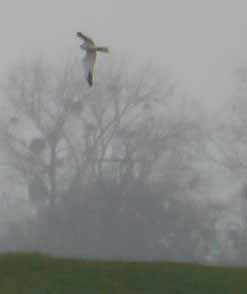
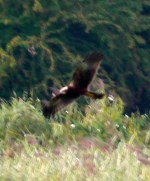
Male Pallid Harrier WWT Slimbridge 100 Acre 3 April 2012 MJMcGill
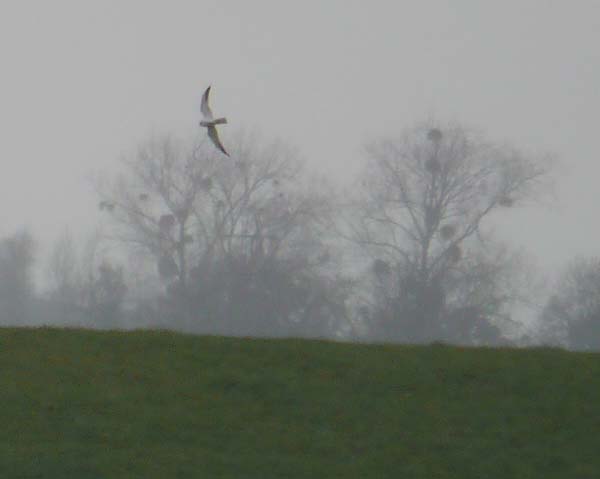
3 April 2012 It was a cold and showery day at work (WWT Slimbridge, 100 Acre ) with a bit of a duff job to get on with. The task was to smash up and remove a large block of concrete from around an old broken metal gatepost. My broken finger from the previous Sunday evening’s cricket net session made it even grimmer. It was only the fact that I had dragged JSL out with me to suffer the same fate and a party of 10 Sand Martins that offered any spring cheer, the hirundines were heading south!

We took it turns to smash the concrete and to scan the sky when resting for Ospreys and the mooted and hoped for Alpine Swift. A heavy downpour saw us running to the tractor cab to sit it out. After it cleared and around 1610hrs a Herring Gull began yelping, it was having a go at a raptor but we could not see it. JSL mentioned that an Osprey must be on the way and we looked around frantically in the sky..the gull appeared and then low over the Bull Ground a very pale male Harrier. It flew past us and lifted over the hedge holding the pose that showed me a full and very pointed black diamond shape on the primaries. It changed it’s wing shape as it passed showing both upper and underwing and still only showed the same feature, the inner part of the diamond protruding far into the inner hand and a very pointed wingtip (hand). It was also so pale and never had a dark trailing edge to the underwing, clean white only. I was expecting the ‘dipped in ink’ hand of a Hen Harrier. The bird was an adult, no brown or worn feathers were apparent only a hint of browner or ginger barring on the undertail, I never saw the uppertail too well but JSL did.  This all happened so fast but I called out the main features and said ‘Pallid’ whilst running for the camera. We watched it cruise over the 100 Acre and drop down near the seawall, I was trying to get a shot of it and asking JSL to keep a close eye on the bird, talk me in so I could get a pic under the electric 4WD roof cover keeping the camera dry. It went over the seawall and despite pressing the button knew the pics were no good. It came back over briefly and I got a few shots as it flipped back over the bank. We waited a minute expecting it to recover from the gull attention and despite the crows being agitated, it did not appear. We drove to the seawall in the electric 4WD and scanned the area, no sign of it at all in any direction despite having a reasonable view and it spotting with rain. We had good views for just over a minute. The light was not great but was ‘on’ the bird and behind left of us so all the detail could be seen, it was not hooded, just appeared fairly uniformly pale grey, reminiscent of a Black-winged Kite.

I recounted the features to JSL and mentioned Pallid again but he was just so pleased to have seen an adult male Harrier at WWT Slimbridge he was in ‘7th heaven’. He had already sent out the news of Hen Harrier via Twitter (I think it is commendable as it is probably better to have news out and incorrect than not at all, perhaps not for some,  if  it is wrong you get shot down for wasting peoples time, cannot win..catch 22) .We packed up and headed in. Back in the office I pointed out the features in the Collin’s Bird Guide for Pallid and really wanted to get my images on a screen, I looked at them in the car and rang JSL to say the features on the pics tallied with Pallid and then went home to have a look at what they were like. After downloading and having a good look at them I thought it best to just get a pic out for all to see so whoever can make their own minds up. I had rang Neil Smart to discuss the bird. I did not want to undermine JSL over the ID as it was a 50/50 observation but I thought it a Pallid so I Tweeted a pic of it with the main features on show, although it was grainy after blowing it up, it showed the bird. Rather than me trying to convince anyone best to just put it out there. Next step for me was to have a shower and meet a couple of cricketing friends from the village for a pint. My thoughts were now with making the 2nd 11, bowling, batting, banter and beer. After an hour JSL rang I guess he had recounted the features after the dust had settled and penny had dropped and rang me to say he could not believe he did not pick up on it when watching it in the field. He was a bit stressed but there were no worries it is only a passing bird and was not like the wader breeding season has failed for the year.

The Rare Bird Alert team had rung him saying they had seen my pic and thought it Pallid, he had been busy trying to raise opinion with local birders, all that replied went for Pallid despite the pic not being perfect. All good fun. It was a shame it did not stick for more to see. Male Hen, Montagu’s and Pallid Harriers are very popular birds with many birding friends and colleagues, they are smart and brighten any day, certainly did on the 3rd April. I will submit the record to the County Records Commitee for review as it would be a county first.  JSL will of course have to add some notes.  MJM


Blog at WordPress.com.

Up ↑