Sardinia and Corsica-24-28 May 2012

Introduction
I had been asked and was keen to organise a birding tour of Corsica for a group of friends from NCOS (D and B Dine, K Wills, D Pearce, G Watson, M and Jo Jones, A Jayne). I think I had better join the elite and will send off a membership form soon. The trip was put together with the endemic specialities in mind. My investigations led my to encourage a visit via Sardinia as it was only really possible to go to Corsica on charter flights, a week at a time. It seemed a good way to do it and take in both these Italian and French governed islands although both islands are very independently minded. This way I could put together a shorter trip, take in N. Sardinia and have two ferry crossings to seawatch from. I booked flights from London Luton to Alghero and hired a minivan for us to travel in. We arrived in the evening in Sardinia and were soon at Villa Barbarina near Fertilia where we were to stay for the night. AJ picked up on a calling Scop’s Owl and we also added Nightingale. After checking in and settling down with a drink. Some of us were up a bit later ‘unwinding’ and it was a pleasant place to be in evening.

25 May 2012
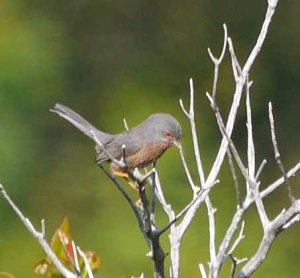
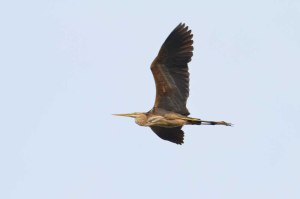
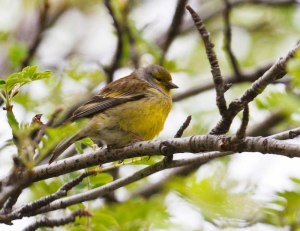
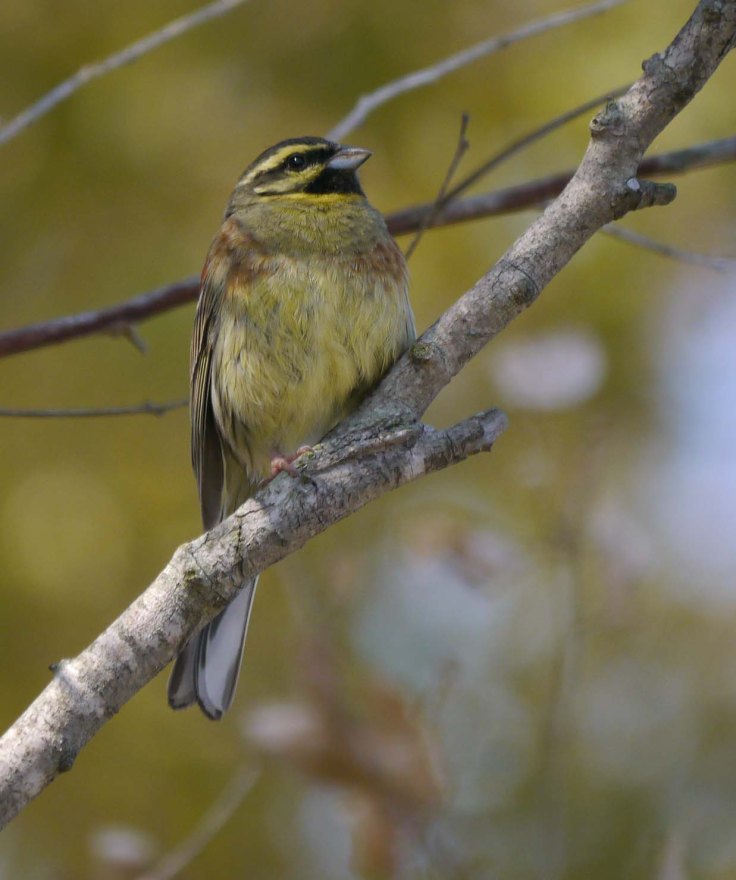
We woke to a misty start but the sun burnt through rapidly. The hotel grounds provided a variety of habitats from weedy fields, vineyards and olive groves so a variety of birds were enjoyed. Italian, Spanish and even Tree Sparrows showed off on the lawn or rooftops, not a House Sparrow in sight! Hooded Crows were much in evidence, a common bird here as well as in Corsica but not so densely populated on the latter island. Woodlarks sang and those that strolled around returned with a list of Mediterranea birds. The Spotted or (unspotted) Flycatchers were very bold. After breakfast we loaded up and headed to Lago di Baratz, a natural lake set in the hills. Wandering around here we saw many emerged dragonflies and butterflies, a flyover Purple Heron, distant Tawny Pipit, Sardinian Warblers, Cirl Buntings, Firecrest and more. On the lake a pair each of Black-necked, Little and Great Crested Grebes. A party of four Ferruginous Duck were also notable, a male with three females. Everyone looked closley at the Lizards, Gecko’s, plants and insects at this site, endemic species are always on offer on such an island.

Cirl Bunting MJMcGill 
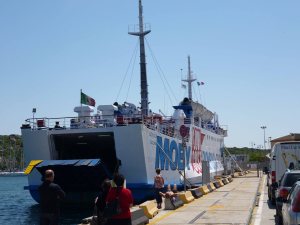
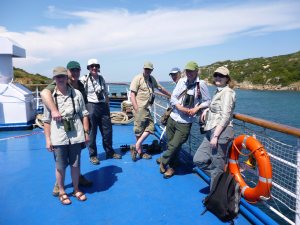
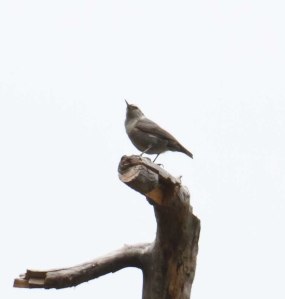
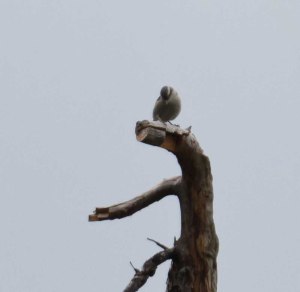
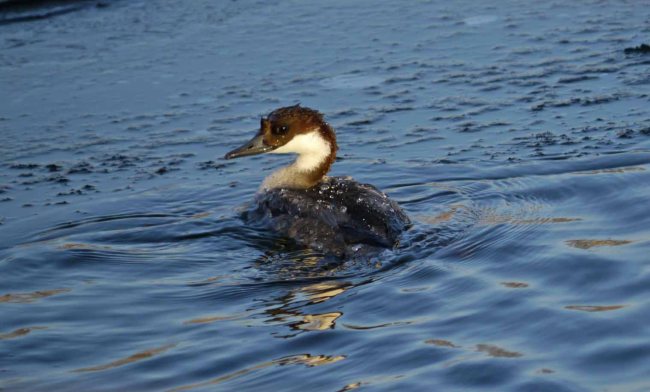
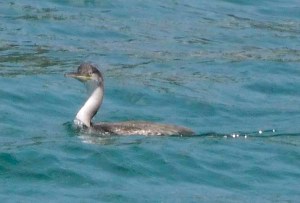
Moving on from here with the sun warming things up we set off for the fery port at Santa Theresa de Gallura for a 1500 departure. We arrived in good time and caught the supermarket before it closed. The deli counter sorted out fresh bread rolls and cheese for us and we took it to the harbour to eat on the wall. After boarding the ferry we got into a seawatch position at the back of the boat away from the noise and so we had a good view. A Mediterannean Shag flew by close and began fishing, it was a juvenile and appeared so pale, white necked like a grebe. Duncan Dine spotted a Blue-rock Thrush as we left the natural harbour mouth and we were soon seeing Yelkouan Shearwaters. A party of 25 dispersed from the surface as the boat moved into open water.

Juvenile Mediterranean Shag (desmarestii)
 

Yelkouan Sheawaters
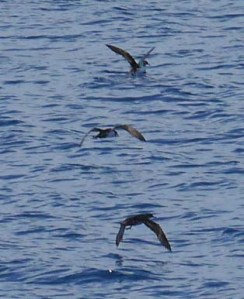
During the crossing more Yelkouan Shearwaters were seen and I saw at least one Cory’s (Scopoli’s) Shearwater, I think more were seen by the others. It was difficult to communicate sightings to each other when spread out searching and the wind and engine noise drowned us out. Only 40 minutes later and we approached the waved limestone cliffs of Bonafacio, Corsica. Again we were road mobile and I set off for the Etang du Urbino to fit a little more birding in. I dropped the gang off for a stroll along a lane to the shore where Shelduck, Quail, Bee Eaters, Sardinian Warbler, Turtle and Collared Dove, Yellow-legged Gulls, Little Egret and Red Kite were seen/heard. Another short drive and the seaside scrub adjacent to Etang du Diane was searched, a Woodchat Shrike, Sardinian and Subalpine Warblers and Stonechat were all seen and heard. We ran out of time here and did not reach the lake shore as we needed to reach our hotel in the Restonica Valley. After less than an hour we arrived, unpacked and searched the stream next to the hotel, Grey Wagtail and Dipper were seen and heard. I drove everyone to Corte to my favourite restuarant U Museu. The grub here was a hit as were the friendly, helpful and tolerant staff, as ever we made things hard for them to understand but Becky Dine got us sorted and kindly took the lead on ordering in French for all. Thank you for all your help Becky. We all relaxed and enjoyed the rather showery evening under cover of awnings and remained warm. After the meal we heard Scop’s Owl calling in the town, the shower had stopped. Back to the hotel for bed.

26 May 2012
0800 start for an excellent breakfast and out birding by 0900 to head high up the Restonica Valley. Most of the group headed out earlier to birdwatch around the hotel so had a few extra sightings to add to the list. We stopped at one site I have seen a pair of Corsican Nuthatch before but it was very quiet so we moved the the end of the valley, paid and parked and set off on foot to climb up to a good viewing area close to Lac de Melo. Setting up our ‘viewing camp’ here everyone was soon chipping in with sightings, Water Pipits singing and carrying food, more Grey Wagtails, Mistle Thrush, Kestrel, Buzzard and then the smashing Corsican Finches. A male performed display flutters showing off yellow flashes as the four moved about the rocks, bushes and trees giving us good views. Parties of Alpine Chough remained stubbornly high above the peaks and crags although a few came to scope distance.  The views and scenery were excellent. A couple of hours passed by and we descended back to the cafe for lunch with Chaffinches for company.
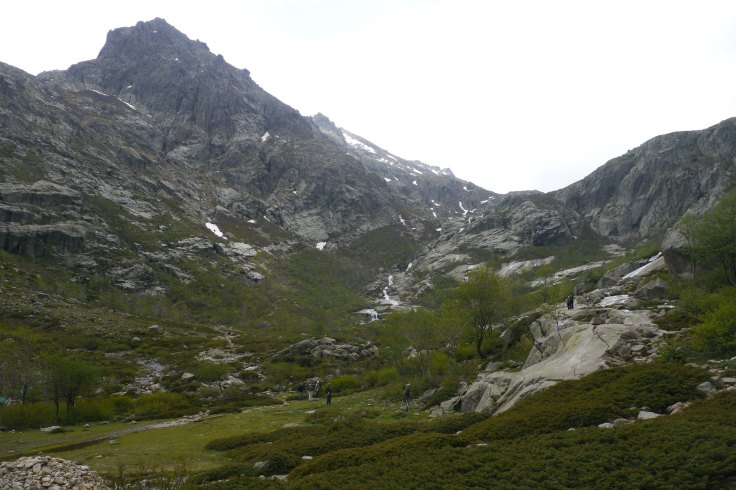
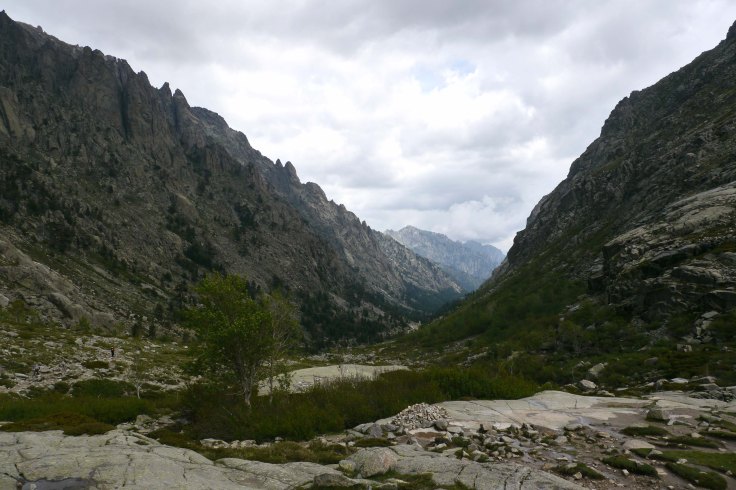
Heading back to the forested zone I dropped everyone for a wander through the forest downhill to the next parking spot where I would wait and wander back up toward them. As soon as I got out the van I could hear a Corsican Nuthtach calling. I followed the sound up the slopes and located a bird which dissapeared again. After a fifteen minute wait I heard a Great Spotted Woodpecker calling and then three of the endemic Nuthatches repsonding. The ‘pecker’ arrived in a reaby tree followed by one of the Nuthatches, it was shadowing the pied intruder. I tripped back down the slope to get near the road and keep an eye out for the group who arrived as the Nuthatches were calling again. Singles were calling either side of us so those on the road could hear and see one below the road and others hearing one above the road in the canopy. We waited 40 minutes but not more calls were heard and no sightings made so I used short and reduced sound playback. Nothing responded or appeared. We stopped and searched more areas but did not locate any ‘hatches’. Back for a change and out to the restaurant again for another great meal.
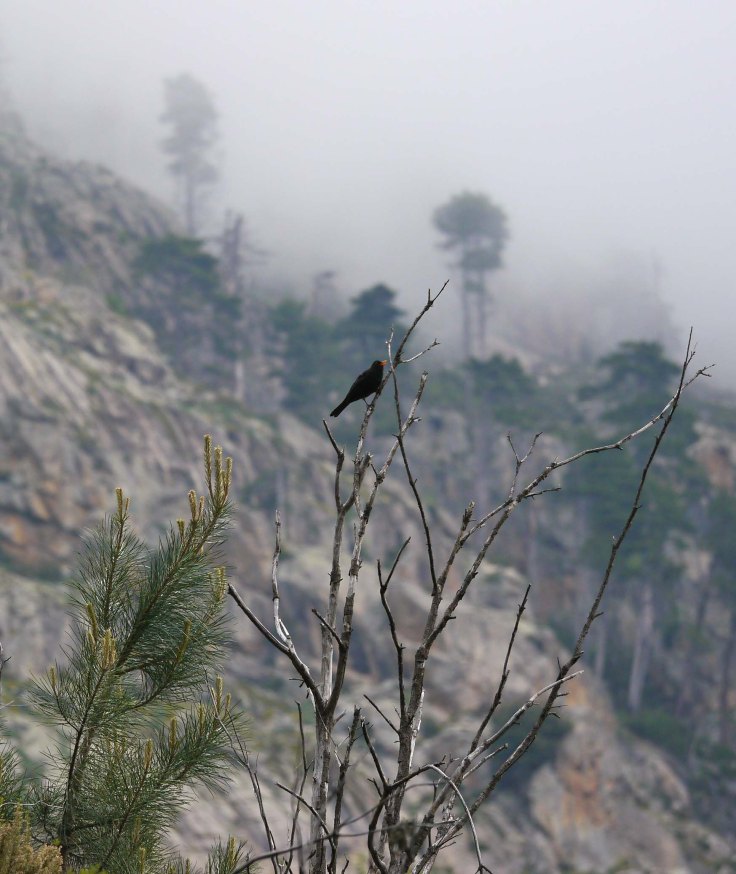
27 May 2012
A pre-breakfast start at 0700 to try for the Corsican Nuthatches was arranged, we arrived at the sunny spot and waited for a sound. Nothing came our way but the Firecrests and commoner passerines in song. A short playback and an instant repsonse from the Nuthatch who appeared in the canopy overhead, it flitted between trees and dissapeared again. Back at the van Keith spotted a party Alpine Swifts as we watched a Buzzard lift on the rising thermals. We watched these white-bellied boomerangs visit the cliff and chase an scream over the valley. Time for breakfast.

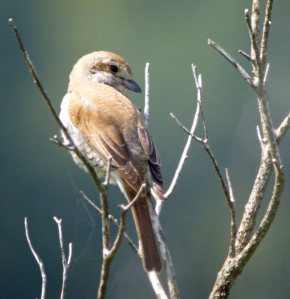
After our morning meal I took everyone off to Vivario to a spot where I have seen plenty of good birds before. Driving along we saw many Red Kites floating above the villages. We arrived at a decent spot and looked out across the valley and to the distant cloud covered peaks and soon spotted Golden Eagle. On the Maquis below everyone was seeing Marmora’s and Dartford Warblers pop up on the low bushes every so often. Duncan, Graham, Jo and Mick made their way down the track and saw Corsican Swallowtail and had great views of the birds. We also saw Corsican Finches, heard Woodlark, Great Spotted Woodpecker and enjoyed the butterflies too. I led everyone to where I had breeding Red-backed Shrikes before and AJ spotted a female on the slope in the bracken and brambles. We got into a better position to view the area and watched the pair.

Female Red-backed Shrike


After enjoying these class birds we headed back to the viewpoint to search for raptors, another Golden Eagle was seen but the highlight was seeing a young Bearded Vulture soar out of the cloud, circle mountain before flying along the cliff and was lost to view. Plenty of Red Kites were seen on the wing too.  We also had Alpine Swift blast low overhead, Crag Martins and I saw a single Red-rumped Swallow with the House Martins. Moving up the mountain to a side road that takes you to the Col de Sorba we stopped for butterflies, Scarce Swallowtail was watched and a Cuckoo (we saw it on the way down too). A walk along a track to another familiar spot for me we saw Corsican Finches (a male landed very close), Corsican Nuthatch, good views and heard a Scop’s Owl call four times in the middle of the day!

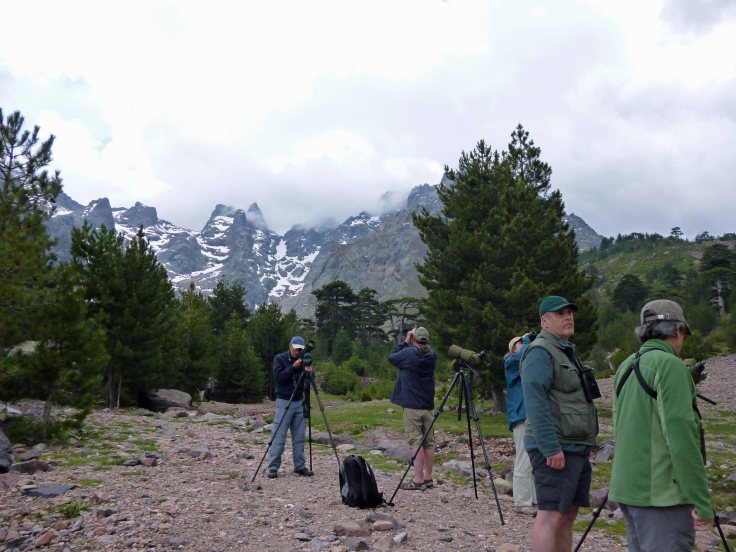
Time for a lunch stop and then more mountain birding. We stopped in the town of Porto Vecchio and had a snack and drink, then move on to try the Tortoise re-introduction centre on the way to Asco, it was shut and opened on 29 May! Moving on we drove all the way to the Haut Asco ski station and were soon watching Red Crossbills, a party of c8. Another climb up the slope to settle for a search and DP picked up two Mouflon feeding on the cliffs high above.

Birding Haut Asco
Mouflon
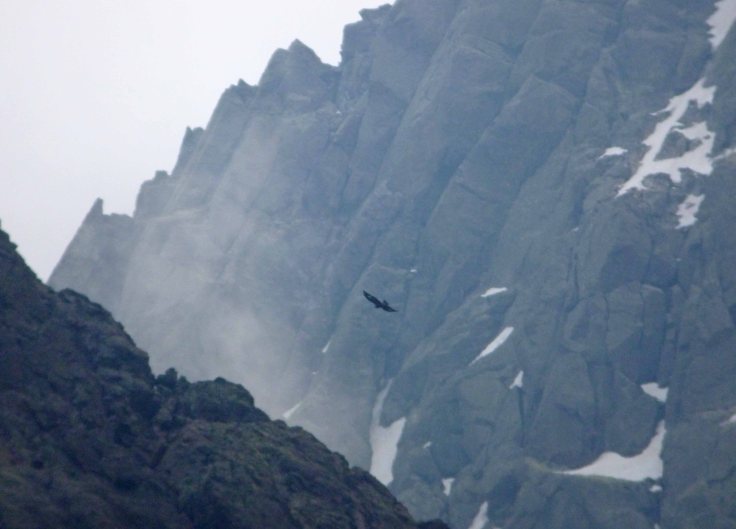
KW spotted a Golden Eagle crusing through the clouds. A coffee at the cafe and further searching of the peaks did not reveal the hoped for adult Bearded Vulture. A long descent back down the valley for a final stop in some likely scrub gave us Woodlarks and a roost of at least 27 Red Kites.

Golden Eagle
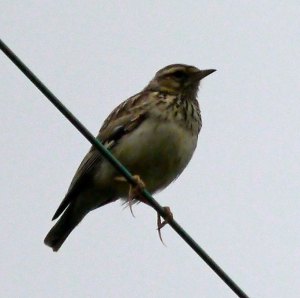
Woodlark
Back to change and head out again to a restaurant, a wander around Corte to look at the bulidings, statues and a bit of history and the excellent viewpoint was enjoyed. The Swifts were magic as they chased about the town. We had to eat at a different place as U Museu was closed, the service at the adjacent retstuarant was not great here but it did provide two Nightjars that DP heard first then discovered flying just above the buildings. They were using the clock tower to perch upon and were seen mating in the lights. Just wonderful birding and we were so pleased that a few folk had brough their bins.

28 May 2012
Up, packed and on the road by 0745, I needed to get to Bonafacio for the midday ferry and time was tight, we breakfasted en-route, I was looking for a seaside hotel or cafe and found one at Solenzara. In the harbour Med Shags fished, I spotted a gorgeous Audouin’s Gull and KW picked up on a close pod of 4+ Bottle nosed Dolphin. After bread roll, croissant and coffee/tea we once again loaded up and reached the ferry at 1120. Back on the boat for another seawatch a Peregrine flew along the cliff as we left Corsica, more Yelkouan Shearwaters were seen c6 in total and a few Cory’ (Scopoli’s) Shearwaters. One followed the boat and allowed great views as did the mob of Yellow-legged Gulls.
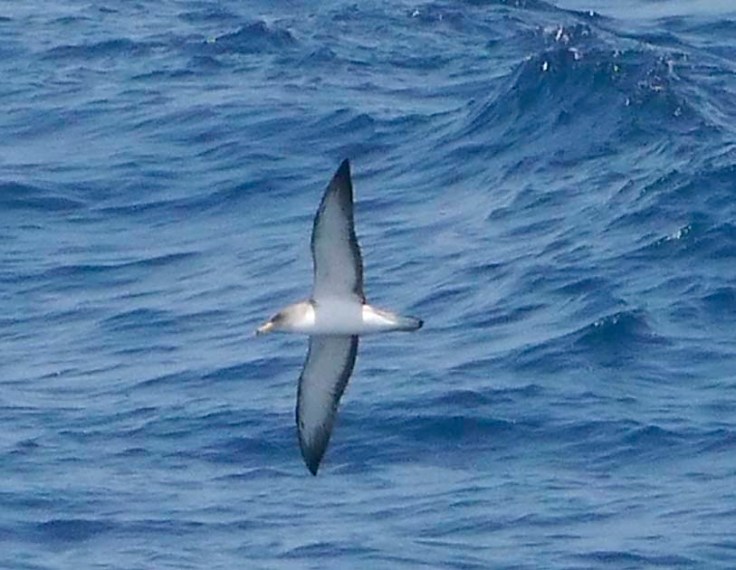
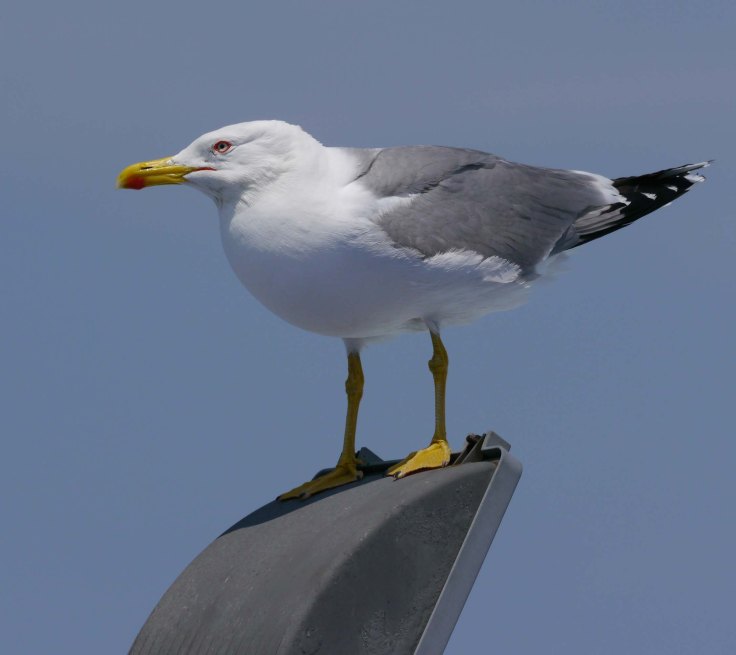
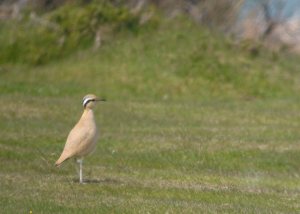
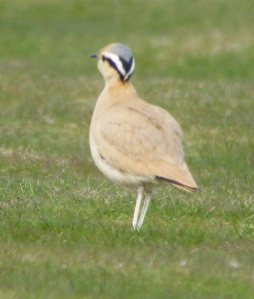
Back on Sardinia we made a lunch stop and then headed for Stagno di Pilo, a brackish coastal lake on the N coast. Birds seen here included Great White Egret, Little Egret, Shelduck with a brood, Coot, 2 Purple Heron, Cetti’s Warbler, Nightingale, Sardinian Warbler, five noisy squabbling Stone Curlews, 2 Turtle Doves, Marsh Harrier and displaying Tawny Pipit.

A further stop on the way to the airport gave us great views of 3-6 Lesser Kestrels, I was trying to explain the differences when a female Common Kestrel landed on wires next to them for comparison. A couple of Marsh Harriers floated about the area. We were soon at the airport where we bid goodbye the Becky and Dunc who were staying on to continue their holiday. The rest of us flew home, we said bye to Keith at Luton and arrived in Gloucestershire in the early hours.

Thanks to all of you on the trip, I really enjoyed your company and you were all so helpful, understanding and flexible to make it easier for me to plan and evolve each day, the birding and of course meals. You were all so sharp in the field and everyone made a discovery or two.

MJMcGill

The following compilation of images are from Graham Watson, thanks GW. Spotless Starling, Spanish Sparrow, Purple Heron, Corsican Finch and Corsican Nuthatch x 2.
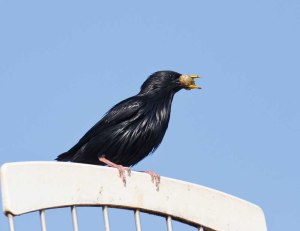
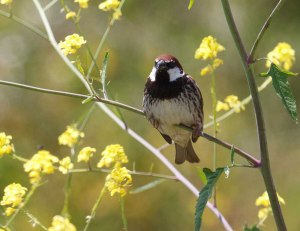


12 May 2012 Half day birding trip to the Forest of Dean

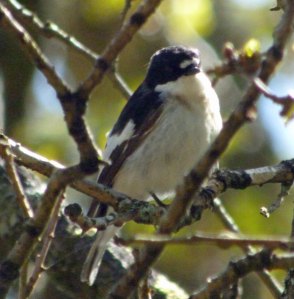
A morning in the Forest of Dean was planned as the weather was perfect. We departed Whitminster at 0630 to make the most of the morning and arrived at Walmore Common. A Purple Heron had been seen here a couple of days before so it was worth a stop. The common was in flood and had a lot of birds feeding and roosting including Little Egrets, Shelduck and Shoveler but no Purple Heron. We carried on to Yew Tree Brake and were soon hearing and glimpsing Firecrest in the firs, the views were of birds high up. A Tawny Owl was discovered at day roost and was being mobbed by smaller passerines. After an hour with the Firecrests we moved on to Nagshead RSPB. A short walk and we were watching the first Pied Flycatcher, at least seven mnales were noted singing on a stroll around the paths. The highlight here was a male Wood Warbler in full song in the sun.

Pied Flycatcher

Wood Warbler

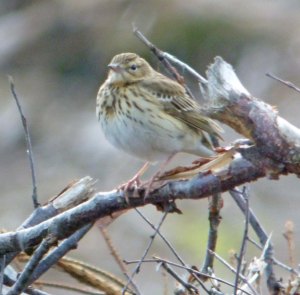
Our next stop was at Woorgreens where management work has re-created some excellent habitat. Following the lake we soon found a Garden Warbler, it showed for us low down in the gorse. A Crossbill flew over. Moving out onto the heath the first of seven Tree Pipits were seen, a very tame and close bird that gave us great views.

Tree Pipit

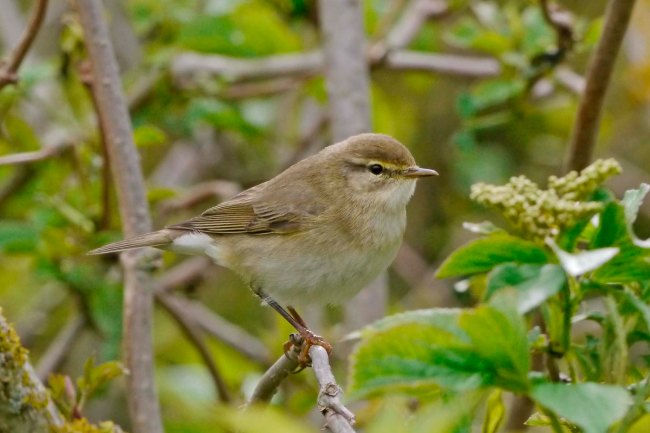
Other warbler species were noted, a Willow Warbler was heard, lots of Blackcaps, Chiffchaff, displaying Common Whitethroat and another Garden Warbler. The parachute display flights of the Tree Pipits were great to watch and hear. A female Goshawk appeared overhead and circled in the thermals, a nice addition to the Buzzards. I could hear them arriving and announced that Crossbills were on their way when three flew low overhead and dropped in the pines. A large party of Redpoll and Siskin were feeding in birches, quite late for such a gathering but perhaps delayed breeding by a week or two.

Goshawk

Heading back to the car a smashing Willow Tit began calling and gave us all amazing views as it fed in the alders. The Garden Warbler was out in the open and singing again, more good views. The common woodland birds such as Jay and Great Spotted Woodpecker and Nuthatch added to the outing but it was just one of those perfect days where so many birds gave themselves up, right place, right time. Thanks to all who attended.
MJM.


5 May 2012 Anser birding event

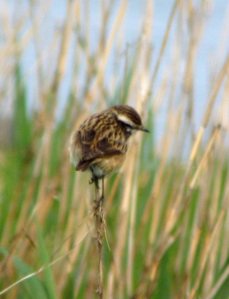
Whinchat

Four of us gathered for an Anser birding session, it was left open so I could make a call on where we would head for the night before. It had been so good locally all week and the tide was favourable so I suggested searching the Severn. It was a good move. Parking up and walking the Severn Way footpath we enjoyed the benefits of Spring and the birdsong which included a showy Mistle Thrush. The hedgerow gave up a singing Lesser Whitethroat and a large flock of hirundines (Martins and Swallows) fed all around us at ground level, the sheltered spot providing insects. We saw a few local birders out and about, thanks to Greg Mabbett for pointing out a male Whinchat, one of the birds I was looking out for the group. At least three Wheatear fed nearby.

The waders began arriving, three Whimbrel, two of which headed inland. At least 20 were present. 12 Curlew and a distant Bar-tailed Godwit were noted but closer flocks revealed 14 Grey Plover (a few in stunning breeding plumage), 35 Red Knot (lots of fully red birds), 340 Dunlin, 210 Ringed Plover, 4 Sanderling, 3 Turnstone, 2 Oystercatcher and a Curlew Sandpiper in breeding plumage (not the bird seen last Thursday). A couple of Yellow Wagtails flew by. Swifts were feeding and moving overhead, Blackcaps, Chiffchaff and Green Woodpecker added to the commoner passerines. Three Common Gull were on the estuary. The wader flock panicked and dispersed when a Kestrel flew across the river.

Moving on to Townfield Lake we noted a Common Tern and more Sand Martins and Swifts, a Nightingale was heard, Common Whitethroat seen displaying, Garden Warbler sang but remained on the move. A pleasant morning out with some stunning birds. Thanks to Ruth, Colin and Jeanne.

1-31 May 2012 sightings and blog

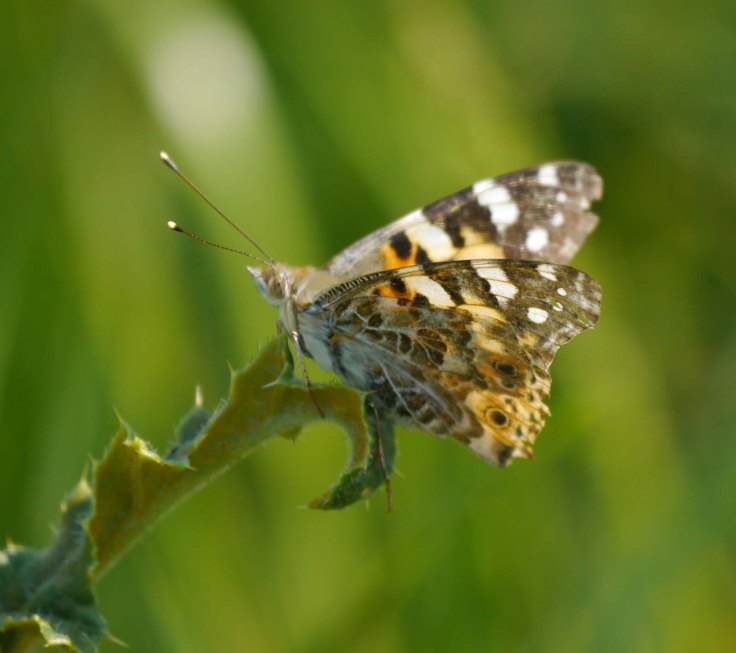
30 May 2012 A Painted Lady at WWT Slimbridge.

24-28 May 2012 Sardinia and Corsica, full trip report soon.

21 May 2102 Was tempted and took the afternoon off to yomp up Bradnor Hill, Hereford for this stunner.


18 May 2012 I saw three pairs of Common Tern, a Whimbrel, 24 Sanderling, 3 Grey Plover, 76 Dunlin, 3 Knot, 16 Curlew, 42 Ringed Plover and a Short-eared Owl out on the WWT reserve/estuary tonight.

14-17 May 2012 Highlights were the female Red-necked Phalarope and hatching Avocets at WWT Slimbridge. The latter a special moment in time as it is a first for the county. A party of 15 Sanderling on 14th were of note.

13 May 2012 Up at 0330 for a Dawn Chorus event at WWT Slimbridge. Again, perfect weather for singing birds and the misty start was very atmospheric. A party of four Great Crane Project Eurasian Cranes made it very special. A Redpoll over was unusual, Cuckoo welcome and plenty of songsters.

12 May 2012 Trip report soon, a very good morning out in the Forest of Dean, weather was great, the birds fell into place.

10 May 2012 Got up and ready for work, opened the door and u-turned, back to bed for the day. Some sort of fever, a birdless day save the fledged Starlings and delightful constant communications from sparrows.

9 May 2012 Woke up feeling groggy but pressed on to do a full breeding wader survey of Saul Warth, not a single territorial bird found only migrants such as 27 Whimbrel and four Bar-tailed Godwit, Four Lesser and seven singing Common Whitethroat were nice. Carried on into work until lunch and headed home feeling pretty awful. An afternoon in bed with a temp and I had to get going, dosed up to do a Spoon-billed Sandpiper talk for the Friends of Slimbridge. It semed to go OK so I hope no-one noticed the hot flushes, sweats and light headed bouts!

8 May 2012 I saw the male Garganey again this morning.

7 May 2012 A new bird for the year came in the form of a Wood Sandpiper that Dave Paynter found on the Bottom New Piece, it was not obliging only giving occasional glimpses from distance.

6 May 2012 Some torrential rain prduced some interesting reactions from species such as Swallow. They clearly did not enjoy the ‘monsoon’ and did their best to avoid the heavy downpours. A few more waders were about the estuary but in low numbers. At least 2 female Whinchat were notable, four were seen at Middle Point, WWT yesterday!

5 May 2012 See trip reports

4 May 2012 No birding but good to see Steve Dark at the birders meet at the Old Forge and some of the usual crew.

3 May 2012 An interesting morning yet again, five Common Tern headed upriver on the tide but bumping into Pavlo Zaltowski in the Holden Tower he informed me of a wader he saw on the mud off Saul Warth and thought it to be a phalarope, his verbal description sounded perfect for Red-necked Phalarope. I headed up with JSL as he was going that way with our electric 4wd and sure enough it was out on the mud with hundreds of waders including a Curlew Sandpiper, Turnstone and 100 Red Knot, 22 Grey Plover and 15 Bar-tailed Godwits. 2 Sanderling were also present.

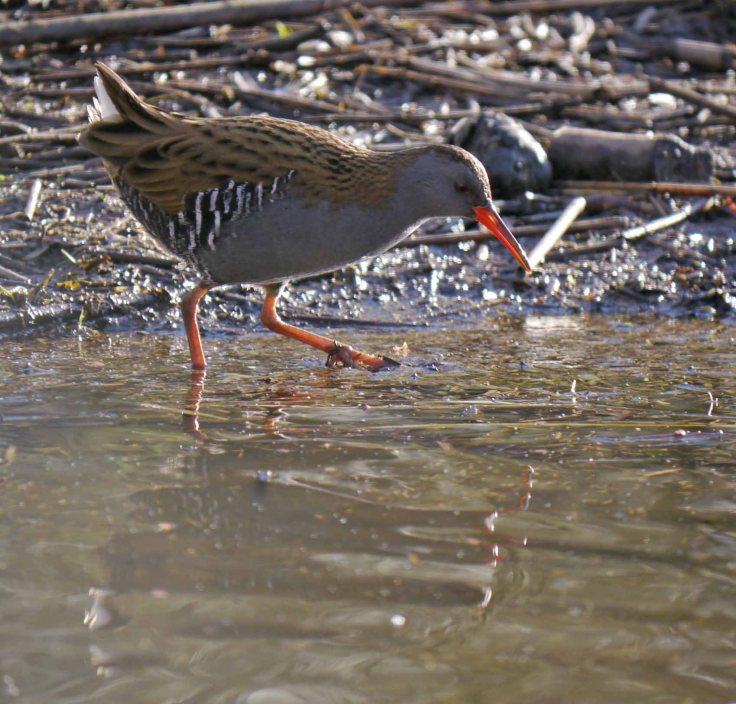
Dealing with a flood problem near the Zeiss Hide I spent most of the day in a digger or in a drainage trench but a Common Tern did fly by on the Top New Piece. On the way out I saw a male and two female Blue-headed Wagtails with an intermediate bird and 10 Yellow Wagtails at the end of the day. An evening walk along the canal at Frampton with Graham Clarkson was productive. Two Short-eared Owl, Cuckoo, Water Rail, 2 Bar-tailed Godwit 8 Curlew and 41 Whimbrel.

Red-necked Phalarope, non-breeding plumaged but just beginning moult

and with a Dunlin (right)

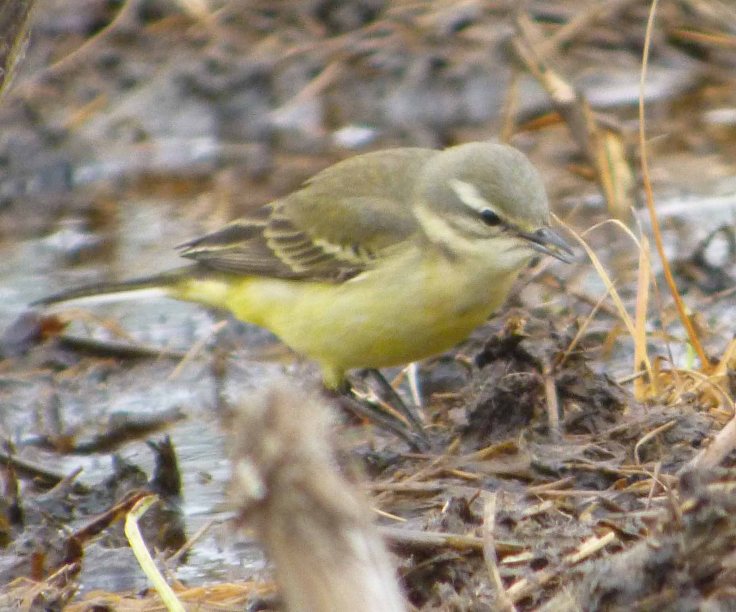
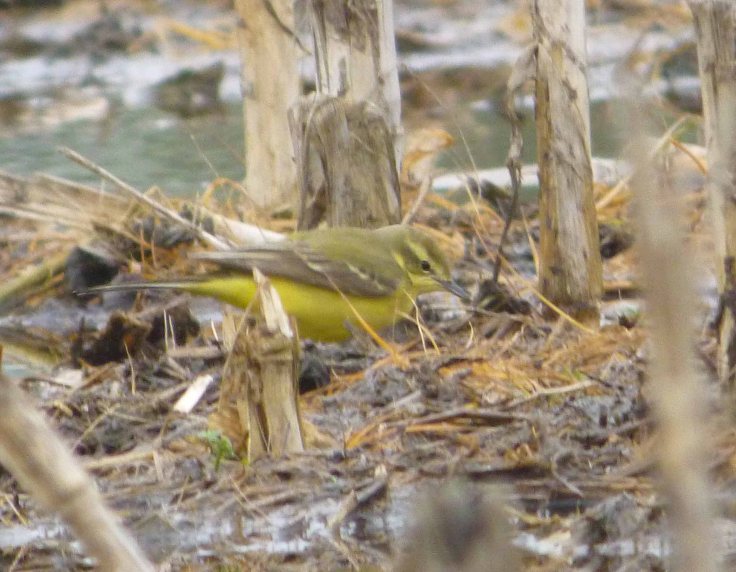
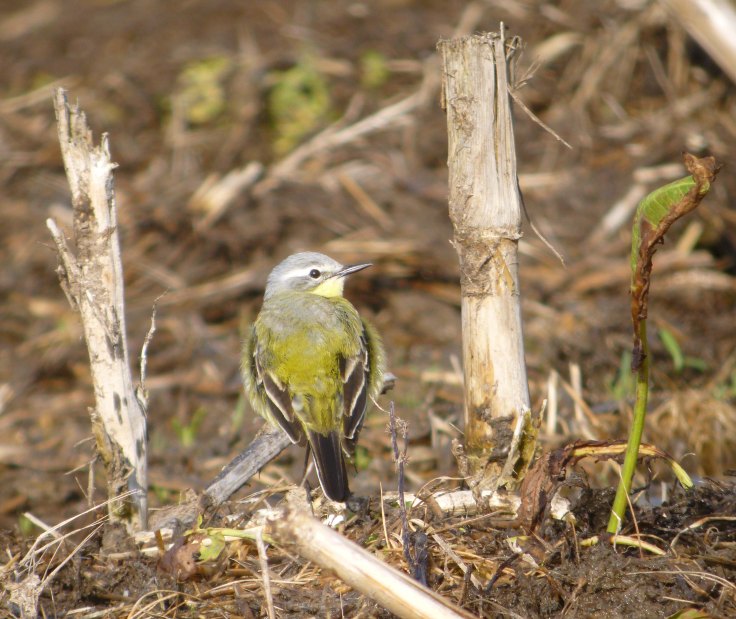
2 May 2012 A female Blue-headed Wagtail was with 15 Yellow Wagtails at WWT Slimbridge on the Tack Piece and near Middle Point at the Goose House.

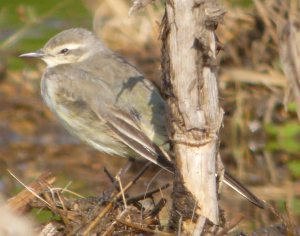
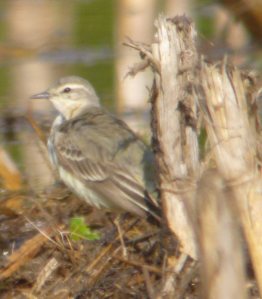
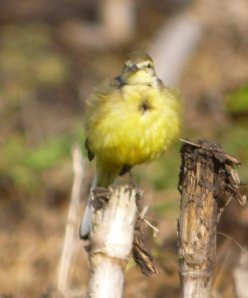
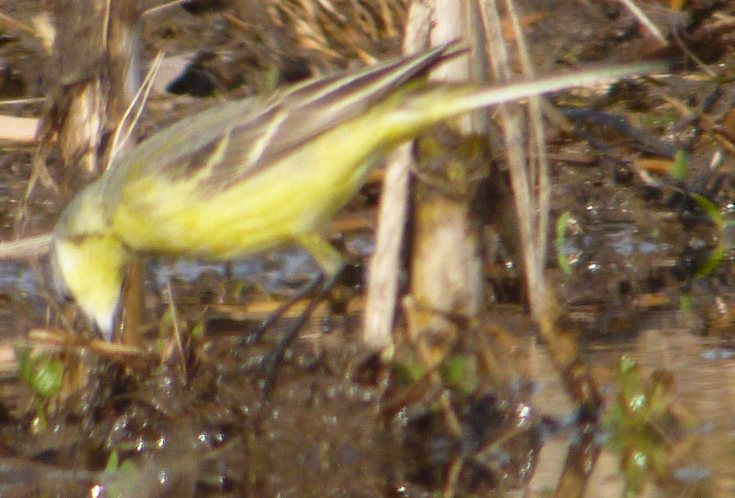
Blue headed Wagtail female next two images with female Yellow Wagtail flavissima (3rd image)

1 May 2012 A cold, wet start to the day with strong NE winds gradually morphed into a SE light breeze and sunshine. Many migrants were around the Severn today, it would have been great to have the whole day off to just sit and watch.

Garganey- a pair in the Bull Ground Channel, then flew to 100 Acre puddles and fed. My first of the year>
Bar-tailed Godwit 17 in the morning and c30 by the end of the day.
Grey Plover 5 off Saul Warth and 5 arrived with a Turntstone S of Mid Point 1350hrs.
Turnstone- 1 arrived lunchtime
Sanderling-7 in the morning, c30 by early evening
Dunlin-250
Ringed Plover-120
Black Tern-one fed on the Tack Piece scrape where I was working, two more flew over low.
Little Gull- an adult and first summer flew upriver at 1305hrs and an adult fed on the Tack Piece scrape and roosted in the floods.
Short-eared Owl- up to three around Middle Point 1300-1800hrs.
Little Tern-4 flew downriver, another single flew down and one was off Saul Warth 1610-1640.
Arctic Tern-37 flew upriver at 1340hrs
Mediterranean Gull- a first summer with the BH Gull flock and two adults/second summers calling and flying around over the Goose House/Middle Point.
Wheatear- 25 when the sun came out!
Yellow Wagtail- 25 arrived at the end of the day after hearing c 10 N during the day.
Blue-headed Wagtail- a pale headed bird with the above.
plain Yellow Wagtail- an interesting female with the above.
Swallow-1000’s N
Swift 100’s N
House Martin-100’s N
Sand Martin- 300+

Black Tern and Little Gull
Amazingly feeding over the scrape we were working on! It was pouring with rain and they both picked flies from the surface.


Little Tern

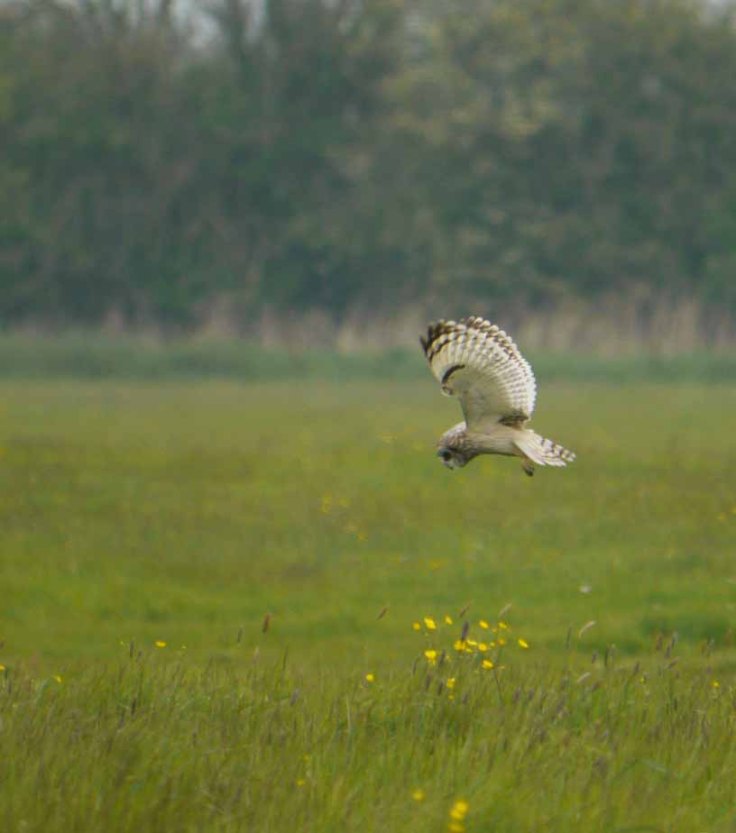
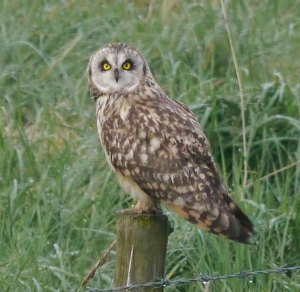
Short-eared Owl

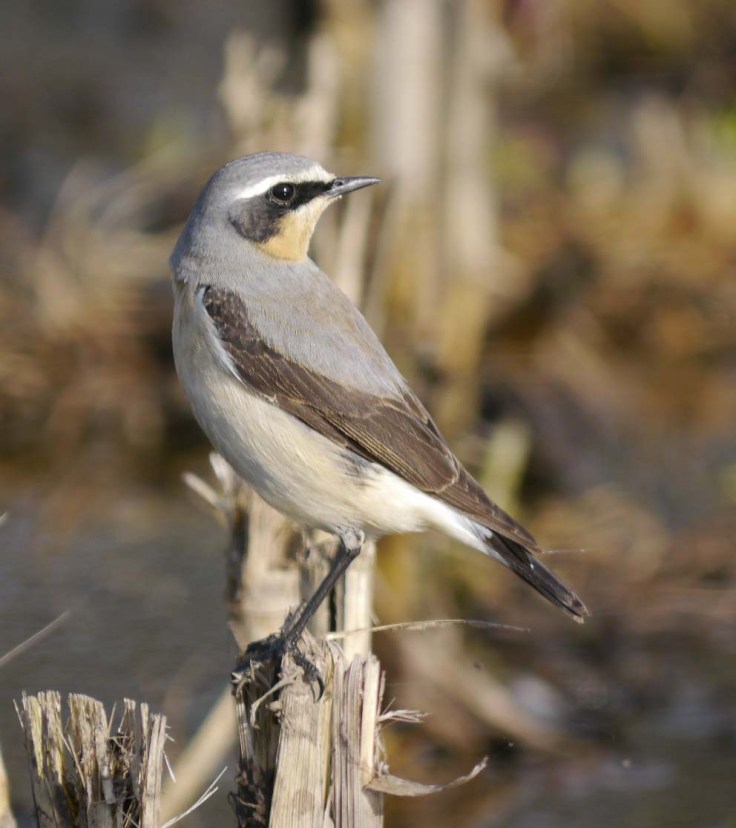
Wheatear

A very plain, almost colourless female Yellow Wagtail


A typical bird that was nearby for comparison.


14 April 2012 Anser Birding outing

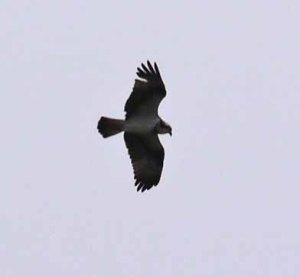
The overnight forecast looked good for a fall of migrants so I thought it best to head for Cleeve Hill, Cheltenham to search for Ring Ouzels. Only Roberta was up for todays outing so we both headed for the Cotswolds leaving a damper Severn Vale. First stop was at Dowdeswell Reservoir where the Osprey was circling the lake.  Tom Mabbett had been watching and reporting this bird for a few days, thanks for his updates, this bird may well be visiting Witcombe Res too. It was searching the lake for a fishing opportunity but gave up and drifted off at 0840 as it harried by corvids.

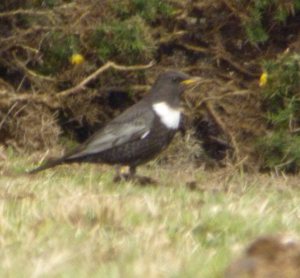
Heading up to Cleeve Common it was nice to see a few Yellowhammers flitting across the road. Windy but dry conditions were found on the common and a walk across to the central part of the hill and valley we saw Meadow Pipits and Skylarks as well as a leucistic Rook. Stopping at a good vantage point I spotted a party of Ring Ouzels. They were feeding on the slopes among the gorse and at least eight were present, my first scan revealed what appeared to be six males, a female and a plainer bird with a shadow of a gorget, maybe a 2cy (second calender year) female. We bumped into Paul Masters who had seen six nearby. Studying the birds from the gorse it appeared that at least two female were present, a full census was not possible as walkers, dog walkers, power walkers horse riders etc were dispersing the birds. Six flew over us and across the valley, seven were seen perched up in tree tops but I think that more were present.

Not a bad morning, quality birds. Returning back down to the vale for a quick look at Townfield Lake, Frampton we watched over 100 Sand Martin and a few Swallows feeding high above the lake. The female Common Scoter was still present. This concluded the morning out.

1-28 April 2012 sightings and blog

Most daily sightings are from WWT Slimbridge where I work unless stated. I do not really year list but am always interested in seeing a decent number of birds each year to keep sharp! All images mine unless stated.

28 April 2012 A shorter visit to the Severn foreshore resulted in 16 Whimbrel, c35 Ringed Plover, c75 Dunlin and a Knot.

27 April 2012 I ventured out for a visible migration watch session, to just sit and see what passes by on the foreshore and marsh between 0930-1230. Also some birds from the canal towpath, Splatt birdge and viewing platform at the WWT 100 Acre.

Whimbrel 11
Curlew 20
Grey Plover 1
Little ringed Plover 1 N
Mandarin male
Hobby 1 hunting over WWT 100 Acre, seen twice (1st of the year for me).
Kingfisher- saw the male, heard a nest swap take place
Whitethroat 2 males
Cetti’s Warbler 2 males
Willow Warbler 1
Chiffchaff 2
Blackcap 6
Sedge Warbler 8
Reed Warbler 4
Yellow Wagtail 3 N
Knot 1 N, 1N with 40 Dunlin,
Dunlin 100, 40, 1
Sanderling c10 with the Dunlin
Ringed Plover 1 with single Dunlin N
Arctic Tern 1 N
Great Skua 1 N higher above estuary, flew toward Newnham.
Osprey 1 crossed the estuary and headed NW
Wheatear 4 on foreshore, 8 in 100 Acre on the fences
Whinchat 2 males on 100 Acre fences (1st of the year for me).
Swift up to 30 over reedbed
Swallow-light passage total 120 birds
Sand Martin 10
Hosue Martin 6

At Splatt Bridge
Common Sandpiper 2 (1st of the year for me)
Siskin 2

Extra news…DBP had many Wheatears at Middle Point and TM texted with Black Tern on South Lake.

When I got home I picked up a weeny fledged Robin in the garden and moved it to a safe bush near the house…now to stay on Cat alert!

26 April 2012 Highlight was a female Red-breasted Merganser I scoped from Holden Tower-WWT,  flying in and joining two Great Crested Grebes on the estuary. It flew off upriver after ten minutes off gull hassle. Also the 2 DB Brents remained. A male Redstart and excellent selection on warbler including Whitethroat from the tower.

This Willow Warbler was singing it’s heart out despite the weather.

25 April 2012 I took time out at work to watch the tide, it looked good on the forecast and sure enough it was. I looked from 0815-1030. I saw a flock of c10 Little Gulls and c9 Arctic Tern go through N at 0820 then 6 ‘Barwits’. Many parties of Bar-tailed Godwit passed through N, 75 at least. A total of 300-400 Arctic Tern passed through with some large flocks of over 100, 80, 60. GY noted more Little Gulls, a Little Tern and 61 Arctic Terns after 1100hrs. The 2 DB Brents were still present. A Ruddy Shelduck flew S, I also saw it on the Tack Piece earlier. My first Swifts of the year passed thru…c14 in total. 6 Tufted Duck went N.

24 April 2012 A quick lunchtime search from Middle Point produced two Iceland Gulls, two Dark-bellied Brents, 2 Peregrine and Yellow Wagtail N. Pics of Brents and the two Iceland Gulls below.


20 April 2012 A day at London Wetland Centre, thanks to all who packed the theatre for Kate Humble and my Spoon-billed Sandpiper presentation. No birding save the amusement of invasive Ring-necked Parakeets. The centre was having a very birdy day though, Iceland Gull, Greenland Wheatear and Turtle Dove to name a few.

19 April 2012 I headed for the tower as a pale phase Arctic Skua had been seen by JSL, the reward was a dark phase and pale phase Arctic Skua heading N upriver, I also got a radio call from JSL and saw the Kittiwake going downriver before heading back to a partly office bound day.

18 April 2102 I welcomed back some more ‘new for 2012 migrants today. A pair of Common Scoter at 075o off Middle Point, flew up channel after being hassled on the water by a Herring Gull. These were probably seen last Saturday (14th) as a report of a pair were in the diary during high tide. Also  I heard first then saw Turnstone plus single Dunlin, Bar-tailed Godwit, Knot and Grey Plover. 10 Curlew, 5 Oystercatcher and 5 Ringed Plover by 0800 but it was time to go to work for the day. Coming back from fixing up barbed wire in the BNP I heard and saw a Grasshopper Warbler-another 1st of the year. At lunch I had a look on the river and saw two Whimbrel. A few migrants passed over me, Yellow Wagtails 2 and Swallows 10. Another first of the year included this Common Tern that was roosting on the shore and hanging around Middle Point until 0800 at least.


Common Scoter off WWT, they were a long way out!

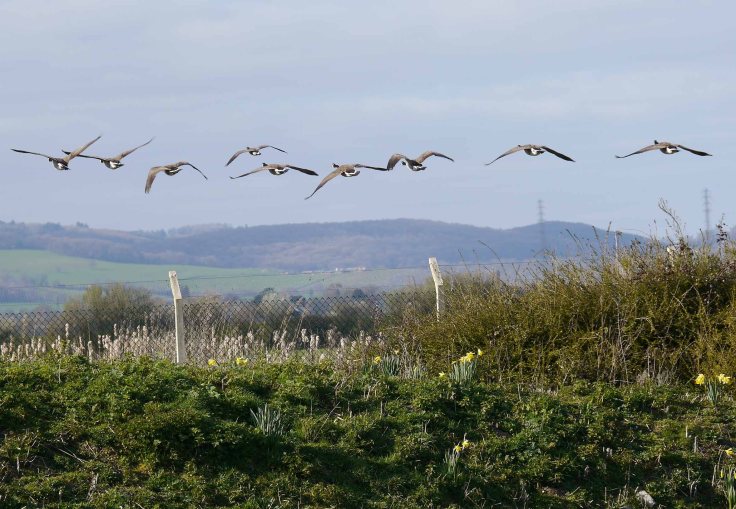
17 April 2012 New for the year for me on the Severn were two Dark-bellied Brent Geese on the tide, floating and flying off Middle Point. A Swallow passage was on today, I noted c 400 with 40 Sand Martin and 30 House Martin. A male Wheatear was in the 100 Acre. Only 28 Curlew were on the estuary basin 0730-0800 but a flock of c50 were present off Middle Point at 1630, these appeared to be migrants. The Cackling Canada was on the spartina island and I saw it fly low with c30 Canada toward Frampton Pools at 0930.

Nice garden bird for Neil Smart-a Wryneck that showed for a short while on the path.

16 April 2012 A few more Reed and Willow Warblers, Sand Martins about today, a Greenshank and 2 Little-ringed Plovers. The undoubted highlight was the Curlew flock. I see a flock of 30-100 migrate from the estuary or over my home every year in early to mid April but today it was a swarm. A flock of 300-400 lifted from the sands as the tide came in and headed high into the sky. All were calling which made it even more spectacular. The majority of the flock formed up into waves and headed NNE a few returned to the estuary where 84 were still present on the sands. At least two Bar-tailed Godwit left too. About half a mile to the S another flock of 120 Curlew were resting on the sands with one Bar-tailed Godwit. One of the Curlews looked to be darvic ringed but the incoming flood pushed them off. I have been seeing c60 Curlew daily around the estuary all week and these are rather quiet, the increase are clearly migrants, perhaps from the Severn/Bristol channel catchment. The N winds have stalled migration so the change during the day to the S winds may well have opened up the opportunity to head off, hence the larger number. I was also very pleased to see the Avocets still very attentive to the S Lake nest and have added a lot of material to it.

15 April 2012 The Avocets have begun building a nest on the South Lake, male passing sticks and small stones over his shoulder to the female who throws it on the the nest. A Red Kite, 3 ringed Plover, two Redstarts, 2 Yellow Wagtail, 100 Swallows and a Grey Plover were all notable migrants and the Black-tailed Godwit flock increased to 142.

Three House Martins were back over the garden in Whitminster.
14 April 2012 A morning in the Cotswolds, see trip reports page.

13 April 2012 Mistle Thrush still singing daily near my home as well as Chiffchaffs. Spent a couple of hours with my daughter looking for the Hoopoe seen by one of the WWT gardeners flying along the foreshore and heading N.

12 April 2012 The Avocets are still looking good at WWT Slimbridge, some nest building and lots of copulating. We added a small island for Avocets to nest upon on the South Lake wader scrape.

11 April 2012 Saw the first Greenshank of the year for Glos and WWT.

9 April 2012 A wet and rainy day, much needed but difficult to do much in. My first House Martin of the year looked like it was having a bad time of it in the rain. A dark phase Arctic Skua was seen heading upriver at 0945, this would be the first of the year. Best of all the 4 Little-ringed Plovers on the Dumbles scrape, another 1st of the year for me. Six Avocets remain on the reserve and Bob Radford had a female Redstart on the summer walkway.

8 April 2012 Never ventured out much except for a look at the Common Scoter that Nick Goatman found at Townfield Lake, Frampton. Alway’s nice to see one close, this bird appears to be feeding happily and avoiding the sailing boats. They do not appear as much as they once did, the population is declining.

Common Scoter, female MJM

7 April 2012 Nice to see Great spotted Woodpecker in the garden again today.

4-5 April 2012 A few waders about the estuary, Ringed Plover, a Knot and Grey Plover. First Tree Pipit of the year  N over South Finger WWT Slimbridge.

Male Pallid Harrier WWT Slimbridge 100 Acre 3 April 2012 MJMcGill

3 April 2012 It was a cold and showery day at work (WWT Slimbridge, 100 Acre ) with a bit of a duff job to get on with. The task was to smash up and remove a large block of concrete from around an old broken metal gatepost. My broken finger from the previous Sunday evening’s cricket net session made it even grimmer. It was only the fact that I had dragged JSL out with me to suffer the same fate and a party of 10 Sand Martins that offered any spring cheer, the hirundines were heading south!

We took it turns to smash the concrete and to scan the sky when resting for Ospreys and the mooted and hoped for Alpine Swift. A heavy downpour saw us running to the tractor cab to sit it out. After it cleared and around 1610hrs a Herring Gull began yelping, it was having a go at a raptor but we could not see it. JSL mentioned that an Osprey must be on the way and we looked around frantically in the sky..the gull appeared and then low over the Bull Ground a very pale male Harrier. It flew past us and lifted over the hedge holding the pose that showed me a full and very pointed black diamond shape on the primaries. It changed it’s wing shape as it passed showing both upper and underwing and still only showed the same feature, the inner part of the diamond protruding far into the inner hand and a very pointed wingtip (hand). It was also so pale and never had a dark trailing edge to the underwing, clean white only. I was expecting the ‘dipped in ink’ hand of a Hen Harrier. The bird was an adult, no brown or worn feathers were apparent only a hint of browner or ginger barring on the undertail, I never saw the uppertail too well but JSL did.  This all happened so fast but I called out the main features and said ‘Pallid’ whilst running for the camera. We watched it cruise over the 100 Acre and drop down near the seawall, I was trying to get a shot of it and asking JSL to keep a close eye on the bird, talk me in so I could get a pic under the electric 4WD roof cover keeping the camera dry. It went over the seawall and despite pressing the button knew the pics were no good. It came back over briefly and I got a few shots as it flipped back over the bank. We waited a minute expecting it to recover from the gull attention and despite the crows being agitated, it did not appear. We drove to the seawall in the electric 4WD and scanned the area, no sign of it at all in any direction despite having a reasonable view and it spotting with rain. We had good views for just over a minute. The light was not great but was ‘on’ the bird and behind left of us so all the detail could be seen, it was not hooded, just appeared fairly uniformly pale grey, reminiscent of a Black-winged Kite.

I recounted the features to JSL and mentioned Pallid again but he was just so pleased to have seen an adult male Harrier at WWT Slimbridge he was in ‘7th heaven’. He had already sent out the news of Hen Harrier via Twitter (I think it is commendable as it is probably better to have news out and incorrect than not at all, perhaps not for some,  if  it is wrong you get shot down for wasting peoples time, cannot win..catch 22) .We packed up and headed in. Back in the office I pointed out the features in the Collin’s Bird Guide for Pallid and really wanted to get my images on a screen, I looked at them in the car and rang JSL to say the features on the pics tallied with Pallid and then went home to have a look at what they were like. After downloading and having a good look at them I thought it best to just get a pic out for all to see so whoever can make their own minds up. I had rang Neil Smart to discuss the bird. I did not want to undermine JSL over the ID as it was a 50/50 observation but I thought it a Pallid so I Tweeted a pic of it with the main features on show, although it was grainy after blowing it up, it showed the bird. Rather than me trying to convince anyone best to just put it out there. Next step for me was to have a shower and meet a couple of cricketing friends from the village for a pint. My thoughts were now with making the 2nd 11, bowling, batting, banter and beer. After an hour JSL rang I guess he had recounted the features after the dust had settled and penny had dropped and rang me to say he could not believe he did not pick up on it when watching it in the field. He was a bit stressed but there were no worries it is only a passing bird and was not like the wader breeding season has failed for the year.

The Rare Bird Alert team had rung him saying they had seen my pic and thought it Pallid, he had been busy trying to raise opinion with local birders, all that replied went for Pallid despite the pic not being perfect. All good fun. It was a shame it did not stick for more to see. Male Hen, Montagu’s and Pallid Harriers are very popular birds with many birding friends and colleagues, they are smart and brighten any day, certainly did on the 3rd April. I will submit the record to the County Records Commitee for review as it would be a county first.  JSL will of course have to add some notes.  MJM


Lesser Spotted Woodpecker search 24 March 2012

A small group of us gathered at 0630 and we began our birding day at a very foggy Highnam Woods RSPB. A walk through the woods to the highest point delivered many common woodland birds in full song. Most notable were a few Blackcaps and 6 or more Chiffchaffs. Lots of Redwing were also seen but they were highly nervous and hid in the tree tops as they do on the breeding grounds in Scandinavia. A single Nuthatch called and at least five Great Spotted Woodpeckers were ‘drumming’. A Lesser Spotted Woodpecker called a number of times near the track but moved away and down the hill.

Giving up with the ensuing silence we moved further along the track, a few Goldcrests were calling, one seen. Lesser Spotted Woodpecker began drumming (tapping a resonant branch rapidly to produce a far carrying sound), more calls were heard and drumming nearer to us. High up in the canopy one called but the briefest of movement the only reward as the fog cheated us out of a sighting. It was quite chilly in the mist and the calls were now not heard and from commoner species a subsidence in the effort. On the way out a pair of Marsh Tit were seen and heard next to the track. We decided to head for the Cannop Valley in the Forest of Dean where we parked and walk the stream. It was now clear, a very sunny day and so still. The Mandarins, Greylag and Mallards were all we saw on the water, tits, finches and Nuthatches in the trees. A Great Spotted Woodpecker was seen and drummed, a distant Lesser Spotted Woodpecker called, still no sighting. We covered a large section of the valley and as it warmed and became busier with people we gave up. A quick stop to look and listen for Firecrest was made but no luck, it was time to finish for the morning. We were unlucky that the fog was so thick on this particular day, it was a smashing morning when it cleared. A pair were noted on the same morning at Nagshead RSPB.

1-27 March 2012 blog and sightings

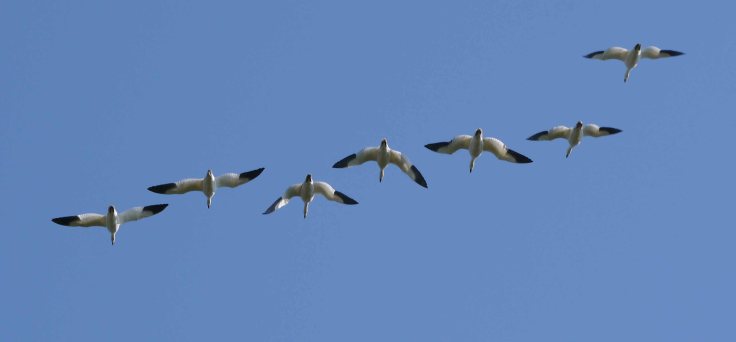
Lesser Snow Geese over the Tack Piece, WWT Slimbridge

27 March 2012 Highlights today were the seven Lesser Snow Geese at WWT Slimbridge. This flock is highly likely to be the same party of seven that were at the trust last summer. A map made from the stable isotope results taken from feathers from that group showed they originate from an area that included Britain, N France, N Belguim, Netherlands, Germany and S Scandinavia.

Black-tailed Godwit flock over the reserve.
Can you do a quick glance guesstimate? how many? Answer below.

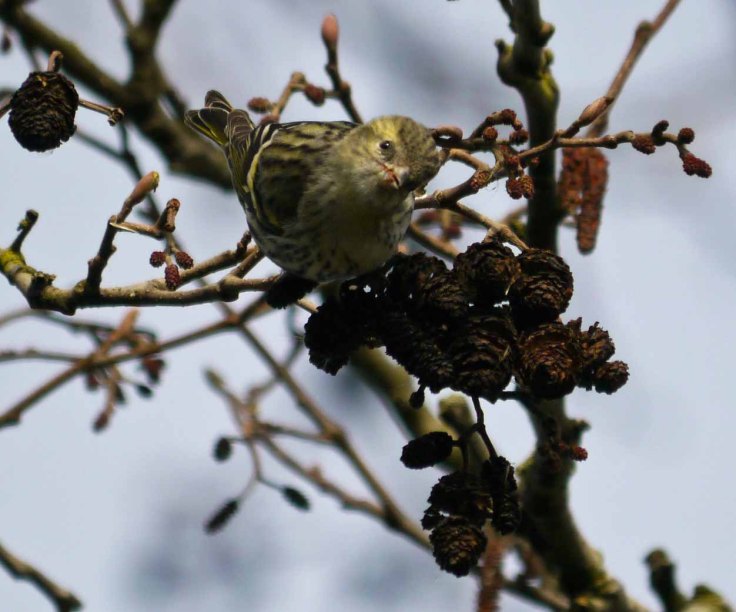
Siskin– always so vocal, especially in Spring. This female hung above my head and called away whilst stripping seeds from the Alder cones.

26 March 2012 At work more Black-tailed Godwits were around with 95 counted together. A new Ruff, dark breeding plumaged bird was with the ‘local’ wintering Ruff. A light Herring Gull passage up the Severn the only vismig I could see. A party of Meadow Pipits and a male Wheatear on the foreshore at WWT Slimbridge another addition.A Chiffchaff was singing in the garden tonight.

25 March 2012 Due to being at work I missed out on the three Common Cranes that flew over Whitminster, my home, could have had them on the garden list, they ended up in Oxfordshire the next day.  Mid morning Neil Smart and I saw a large falcon near Middle Point, later at the 100 Acre. It was very large, long and brown, the broad moustachial marking more like a helmet and brown ‘trousers’ all very distinctive, it seemed to show features of both Gyr and Saker Falcon. It showed heavy wear in the primaries. The day was made very interesting due to the antics of copulating and nest scraping Avocets and a passage of Little Gulls. Reacting at lunchtime to Paul Bowerman’s tweet (thanks Paul) about 17 heading up from Severn Beach I had a look from the foreshore at WWT and picked up a flock heading off the estuary toward Frampton with a few Black-headed Gulls, at least one first winter bird was present, most adults but the ever overtaking group confused my count. 17 at least but I reckon more like 23. I checked out the 100 Acre pools and an adult was flycatching with BHG’s over the hedge. Lots of insects on th ewing as they emerge in the warm weather. Back at the centre I had one last check before hosting into the SBS presentation, 5 adult Little Gulls came overhead with BHG’s and circled, all the time snapping insects.

Falcon sp Gyr x Saker?

24 March 2012 Up at 0530 and off on an Anser morning outing for Lesser Spotted Woodpeckers. See trip reports section for details. Despite being only 15 minutes from the two displaying Long-billed Dowitchers at Meare Heath, I spent a smashing afternoon with family and friends in Wells. I cannot complain, a pint or two in the sun was most welcome plus the pub and town was the set from the film, Hot Fuzz.

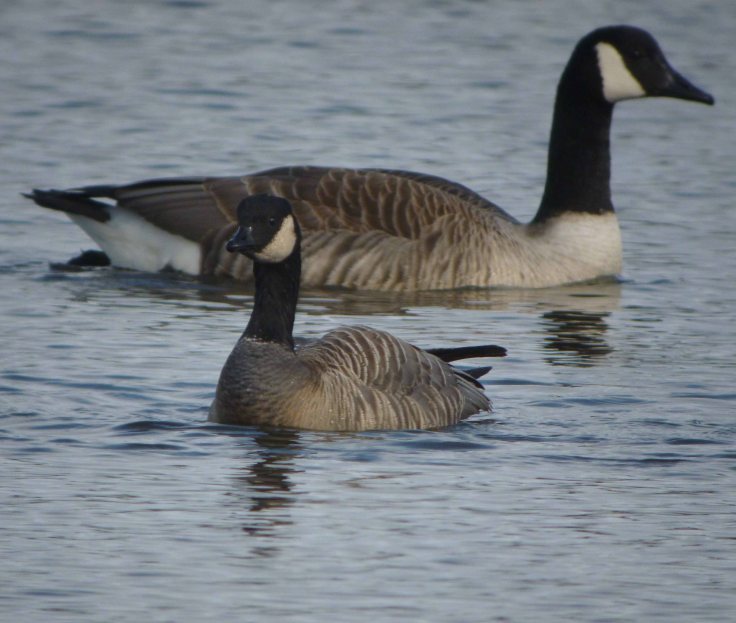
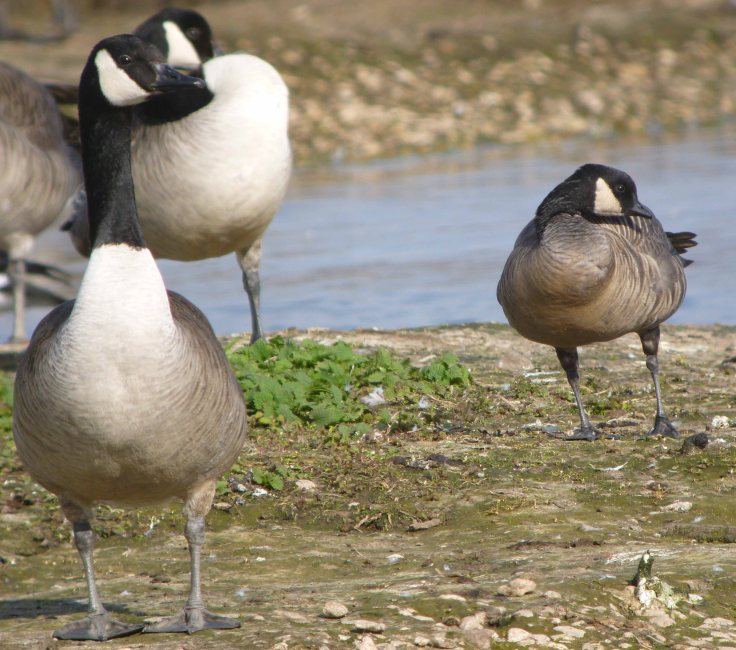
20 March 2012 Got a call from Nige Warren at In Focus to say the small canada goose had arrived with 30 or so Canada Geese on the Rushy. I was near the office and collected my bins and scope rapidly and got to the hide phoning a few folk to tip them off. I think it is a Cackling Canada Goose  minima, excellent views were had in very good light as it bathed, preened and then flew off again after 20 minutes. Previous views were over a mile away in heat haze etc and it was quite a shock to see a white half collar and short neck whilst it was in a relaxed mood. On the estuary it was in the tall saltmarsh vegetation and in the creeks so the fact it was craning it’s neck to see over and was being bullied by the others (many views were when it was pecked and had just jumped up) made it look longer necked. If you want to see it it I would suggest making an effort this weekend as the tides are higher and should move it closer to hides. Here are some images.


18-19 March 2012 A few more Black-tailed Godwits at WWT Slimbridge made the flock up to 53. My first 10 Severn Red Knot of the year and six Avocets (2 and the 4 that were present all week). A Short-eared Owl was also about. John Budd had informed me of a Canada Goose type that was small last Thursday but I never saw it. It appeared again 19th and was feeding on the spartina island. I look forward to getting some good views as it looks interesting.

16-17 March 2012  Severe earache from the tailend of the week and for the weekend, I was completely deaf in one ear, not good when so many birds in song. I would have been useless at locating birds in the Forest of Dean. On Friday I went to my parents home in Bristol to conduct some tree surgery whilst harnessed/roped up in a tall sycamore. We had to lower each section to the ground by rope.

The Tree
This tree began it’s life as a self seeded sapling next to our coal bunker in the back garden. In 1978 I snapped off part of it and sharpened it to use as a spear in what was probably a dangerous game with my mates. The tree sprouted more shoots and my Dad eventually dug it up and moved it to the end of the garden. It had a lot to do with my birding youth as it dominated the garden and was used by most of the birds that visited. I tried artificial platforms for the Collared Doves and also got my first breeding Blue Tits in a box next to it.

Some highlights were Siberian Chiffchaff, Redstart, Reed Bunting, Siskin as well as many other species over the years until I left home at 16. It had become huge and despite previous thinning out and reducing in size needed to be a third the height. It still serves as a tree house, swings and climbing ropes for their 5 grandchildren. My daughter was ‘birdwatching’ with my Dad only last week looking into the tree for possible species. It is still there, more manageable for my Dad but should still offer a home and shelter to the local birds. Saturday afternoon was spent eating Nurofen and trying to ignore the earache whilst soaking up water during the torrential downpours in the terraces at Bristol Rovers.

15 March 2012 I was delighted to see my first Wheatear of the year, as always at the usual place for me, the Dumbles at WWT Slimbridge.

11-13 March 2012 Birds seen whilst at work have not really changed, the only migrants I have noted invlove gulls, mostly Lesser Black-backed and Common Gulls. The tides have been high this week on the Severn and clear nights followed by misty or foggy mornings. This gives some hope but the only new birds have been four Avocets that were seen on 10th and appear on the Top New Piece over the high tides.

10 March 2012 A day sorting out the garden at home, I found a Blackbird nest, fresh leaves and grasses, a Goldcrest, a pair of Raven low over a few times and a Brimstone and Peacock butterflies. A warm and sunny Spring day.

2-9 March 2012 Most of the birding has ben dominated by daily departures of wildfowl and waders but lots of Spring activity on the sunny days. White-fronted Geese and Bewick’s Swans being the most closely watched of all. Lapwing and Kingfisher are displaying and spring staging/wintering Black-tailed Godwits are increasing with 38 by 8th. I have missed a few other migrants such as the beautiful Mediterranean Gulls and three Light Bellied Brent Geese, very rare for Glos.

Russian White-fronted Geese


Water Rail

1 March 2012 Up early to meet Neil Smart and ‘Jubs’ Squire for a drive to West Sussex, our aim, the wintering Paddyfield Warbler then a days birding. Neil drove us, so nice to be a passenger. We arrived at 0730 after a coffee and sandwich. A foggy start to the day delayed activity but Cetti’s Warblers, Water Rails, Curlew, Wigeon, Heronry? and Reed Buntings made it atmospheric. When the sun burnt through a fellow birder located the PadWarb in the belt of reeds that was adjacent to the sea wall. It showed on and off for the next hour until we were all satisfied with the various views and heard the call.

It was flycatching, coming out onto the barbed wire fence and edge of reeds but always mobile hence not getting any reasonable images. I really enjoyed this bird but it did take a wait and patience. Well worth it. We left and decided to head for the New Forest as  JS had not seen a Dark-eyed Junco in the UK before and there were many other birds to be seen. At midday we arrived at Hawkhill and were soon watching Siskins, Crossbills (singing), Woodlarks displaying and the junco. A Great Spotted Woodpecker drummed, bees buzzed and a Red Admiral was active. A great day to be on the heath.

A few snatched shots of the Paddyfield Warbler that do no justice to the splendid binocular/scope views.


Black-tailed Godwit flock answer from 27 March 2012 =120

Netherlands Goose watching trip 9-12 February 2012

The Netherlands Gans Fest

9 February 2012

A visit to the Netherlands in winter has been on the cards for many years, an attempt to get a trip going in 2010 was thwarted by severe weather conditions. It was time to go for it again so a rather late advertised trip was arranged, a team of hardy souls committed, it was all systems go. The coldest and worst winter weather was again forecast but it still looked good. Six of us met at Whitminster, I picked up Jayne and Rich and Bob collected Bettie and Anne en-route to me. We then collected Tom who had booked just a couple of days before. A few Red Kite were noted on the way to Folkestone, the Eurotunnel was as efficient as ever and we were off heading through France. The snow bound fields helped us in seeing three Woodcock flying across the road to drop into ditches plus the bizarre sight of a Little Grebe flying down the motorway. A stop in Belgium for comfort and coffee allowed TM to seek out a couple of Crested Tits and a Short-toed Treecreeper.

We negotiated the heavy traffic around Antwerp and Amsterdam and arrived near Oostvardersplassen for a spot of birding. A rough hay field obviously held a lot of voles as 4 Buzzard, 2 Kestrel, male and female Hen Harrier, the male of the latter as always, a stunner. Two Great White Egrets also foraged with Grey Heron for rodents. A few minutes down the road and we were sifting through a flock of 3000 geese, Tundra Bean, Barnacle, White-fronted and Greylag and then a white phase Snow Goose joined them. A roost of 600 Stock Dove was very impressive. We headed to our Hotel, the Vigilante near Makkum arriving at 1930, very comfortable, very quiet and excellent food.

10 February 2012

We had breakfast at 0715, I have to say it was excellent and we were in the car by 0800. Sunrise on a nearby dike just south of Makkum allowed us to watch tens of thousands of Barnacle and White-fronted Geese leaving the Ijsselmeer roost (on the ice?) and head to the fields for the day. Wonderful watching plus Hen Harrier and a female Goosander searching for open water. It was cold, the night saw -10 temperatures and geese foraged anywhere grass was not snow covered. Some birds were very tame, others skittish.

White-fronts leaving the roost

Geese leaving roost

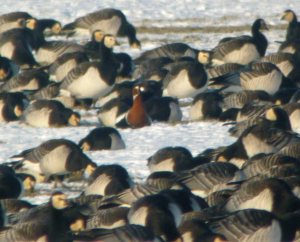
Driving slowly along the lanes toward Ferwoude we found a monster flock of geese, c7000 and got into a good position to go through them. They were up and down all the time but most came back to the same spot. I picked up a presumed Barnacle x Ross’s or Snow Goose and talked everyone onto the bird. Whilst doing this I saw a 2cy Red-breasted Goose hiding among the Barnies and Fronts. I gave directions for that bird and scanned back to find the hybrid again this time locating an adult Red-breasted Goose in the same flock. A great start to the day.

Red-breasted Goose among the Barnies (rear view when it dissapears and head-on, easy)


Mixed goose flocks

The ditches were frozen solid, every sluice had a Heron or if a puddle of water was available, a collection of duck. The flat open landscape was dotted with wind turbines and huge flocks of geese could be seen all around. The plan during the day focussed on looking at as many flocks as possible. We carefully followed any large gatherings stopping to scan any grounded flocks. Many were close to habitation, where grass was available in the lee of buildings. One particular flock of White-fronts and Pinks had two neck-collared of each and a re-visit gave up a probable Lesser White-front x White-front hybrid. A dark, yellow eye-ringed, pink billed and sweet looking bird but too big. This flock was so close Russian White-fronted Goose variations were prominent, yellow and white eye rings, extensive white frontal shields extended to top of the head and variations in shades.

It was apparent that a large scale skating event was underway, thousands of people skating the ditches and canals between each village, heads and shoulders glided past every goose flock in every direction. Cafes had been set up on the ice with open for hot chocolate signs and plenty of customers. Anne Nuttal did a little research and provided this info….

Incidentally, I had a look on the internet to see if  I could find out more about the skating event.  Apparently, if conditions  are right, on that w/e there is an annual race called Elfstedentocht — it  is a route of 200 km on canals connecting 11 cities — but it hasn’t happened  for 15 years.  There were hopes that the ice would be strong enough  this year, and the canals on the route were swept clean in  preparation.  However, it seems that the ice in the southern  part of the country was not thick enough, so the actual event didn’t take  place, although as we saw, many skaters were out.  I saw Jake King last  night, and he knew about the race because a Dutch neighbour of his had gone over  to take part in the late 1990s, which seems to confirm the information we had  gleaned.  (I know this isn’t about birds, but I thought you might be  interested!)

We stopped at the picturesque town of Workum for a coffee and bite to eat. Aftewards whilst driving out we stopped to scan a roadside canal with open water. A few female Smew and Goosander pairs allowed close approach and a ‘white nun’, a male Smew was to be seen further along the canal. We had been seeing Buzzards everywhere but we bumped into a juvenile Rough-legged Buzzard that gave us good views as it hunted. More goose searching ensued, great views and plenty more flocks culminating in an area with 20,000 geese gathered for a pre roost. Most were Barnacle Geese but the ‘Fronts and Pinks’ were ever present.

Heading North we stopped on the dike near Zurich for a search of open water on the sea. Big flocks of Wigeon and Curlew dominated but many other wader species were noted and sea-duck. Over 70 Goosander, 20 Smew, a Greater Scaup and Pochard and Tufted Duck were found. A loo stop nearby and we stopped at Harlingen harbour for the sunset and to search, a few Goosander and Smew were found with Little and Great Crested Grebe. Returning to Makkum we chanced on a flock of 4000 White-fronts which were close, scanning as the light faded revealed a Dark-bellied Brent and Pink-footed Geese, this group deserved a second look in daylight. We got back to the hotel in the dark.

11 November 2012

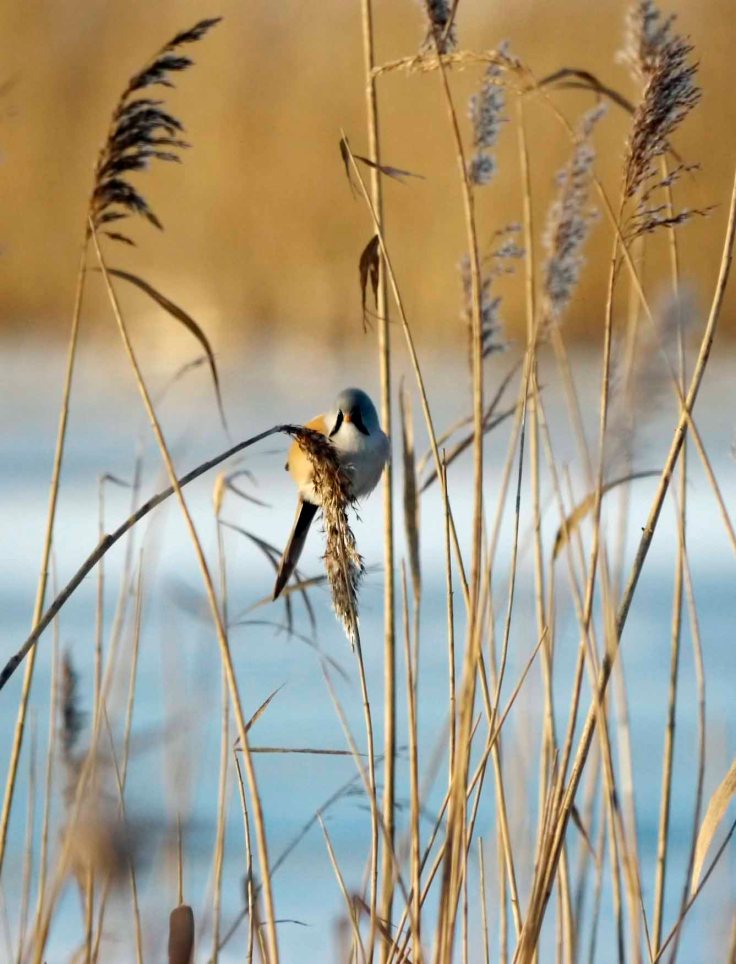
Again we were greeted by a stunning sunrise and -10 or more temperatures. Soon after setting off I slowed to look at a few geese and duck on an area of 30 feet square open water next to the bridge. A few Smew and White-fronted Geese were among the gathering and I noticed a Reed Bunting feeding on phragmites seed heads. Another bird caught my eye, rufous and blue…it was a male Bearded Tit, one of those birds you always enjoy watching and this one fed in the open and for the whole time we were with it. This was in sunny, calm conditions. Across the bridge a female Smew and male Goosander fished close by.

Bearded Reedling

Goosander male and Smew female


Sound start but we had to ignore the goose flocks as best we could but a stop and search of yesterday’s White-front flock gave us three Tundra Bean Geese, lots of Pinks and of course excellent sunny views of the other two common species. We had to head onward to Anjum and the Lauersmeer, an hour or more driving further North up the coast and we arrived at the heavily frozen lake. It was pretty clear that the harsh weather had an impact on the birds, goose numbers were in the thousands but not as many as expected, no sign of White-tailed Eagles, only Buzzards on the ice and around 30 Hooded Crow, Fieldfares, Sparrowhawk and Hen Harrier were all we could muster. We headed for the coast and harbour of Lauerswoog, a good move as coffee, loos and birds were all on offer even though the cold wind had to to be braved. Large numbers of waders gathered at the ice free area at the port, many looked to be be struggling. Dunlin, Purple Sandpiper, Redshank, Turnstone, Oystercatcher and 1500 Brent Geese were found as were large numbers of Dutch folk out to photograph the frozen sea.

The icebergs and floes had 3000 Pintail, 1000 Shelduck and more duck species roosting upon them, open water Eiders, Goosanders and Smew and around 40 Goldeneye were also seen. Back in the car and a short drive to the Brent Geese. Amazingly close views of them were achieved as they grazed the grassy banks. A couple of Light-bellied Brents were feeding among the commoner Dark-bellied.

We used the coast road passing through many villages (Paesens, Wierum and Holwerd) and stopping for birds. 1800 Barnacle Geese and possible Twite were seen as well as 70 Skylark. At Holwerd ferry terminal we saw a flock of 45 Tundra Bean Geese on the ploughed fields and over the dike to the coast the sight of so many clsoe birds. Flocks of waders and Shelduck fed in the one open area. We, along with the many Dutch folk walked down onto the thick ice and found the birds to be totally tame, they were oblivious to our presence at they searched for food.

Amazing experience to be with the waders but we were here to look for passerines, we did see 15 or so Scandinavian Rock Pipits and scanning the saltmarsh two Merlins. It was time to head back to Makkum for the night, a hot shower and beer by the fire.

12 February 2012

Packed and ready to go in the morning we had a hearty breakfast and got going. The previous nights plan was to try and see Lesser White-fronted Geese and if time allowed look for a wintering Gyrfalcon near the Belgium border (not possible in the end). Our extensive search on the Petten/Camperduin area proved to be very goosey. A flock of 1300 Brents were found and one field held 4000 geese, in this gathering we had Pink-footed, White-fronted, Barnacle, Tundra Bean, Dark-bellied Brent, Greylags and BR located a small Canada Goose. A nice piece of scope work, well done Bob. Studying the bird it was accompanied by a Barnacle partner and a Canada x Barnacle hybrid. The canals had Smew, Goosander and diving duck, flocks of Wigeon and Teal all thanks to the icebreaking barge. The ‘levels’ had hunting Hen Harrier and a flock of Grey Partridge. We tried to get close to a distant flock of geese but were flushed by a dog walker on our arrival.

Canada Goose sp

Checking the clock, it was time to go, a four hour drive ahead with thousands of geese seen en-route, in Alkmaar a Woodcock flew across the road not far from the AZ Alkmaar stadium. We drove through a few snow flurries and arrived at the Channel Tunnel mid afternoon, boarded thus ending our birding. A magic trip, so many birds and great views.

MJM

A link to Tom Mabbett’s blog, includes a great shot of the Red-breasted Goose.

http://www.mabbettbrosbirding.com/


1-29 February 2012 blog and sightings

29 February 2012 A hectic but mostly enjoyable day at WWT thanks to Kingfishers, singing Blackcap and lots of general Spring activity to put a bounce in the step.

28 February 2012 Some new birds have arrived at work, more Black-tailed Godwits and Ruff were present today. Only 85 E White-fronted Geese were left on the Dumbles with 100 deciding to head off to begin migration even though it was cloudy.

“Spectacled” Wigeon female Albanism again.

Redshank showing albanistic line on back of head.

Mandarin
A stunning duck, as a kid it drew me in immediately providing plain wonder at the intricate plumage. A small ‘influx’ of them to WWT Slimbridge this week. Not enough females around, this one has paired to a female Mallard and was showing aggression toward male Mallards.

Jack Snipe
This bird remained in the open so I managed a quick snap and better quality video here.. http://www.wwt.org.uk/visit-us/slimbridge/sightings/

19-24 February 2012 Departing birds from WWT Slimbridge has been a feature this week. I have been kept busy on various pre breeding season jobs which allowed a few sightings of quality birds. I guided some prize winners around the reserve seeing two Bitterns from the Zeiss Hide on Sunday, also Bittern views on Monday and Wednesday in the 100 Acre. One flew over us twice on Monday and a single landed on the reeds near us whilst working on tern/gull rafts on Wednesday. Trilling Little Grebe, barking Great Crested Grebe, lots of songbirds all suggested spring. Whilst mowing/topping juncus I noted at least 70 Common Snipe and 9 Jack Snipe. I have uploaded the trip report and some images from the Netherlands trip on 9-12 February 2012.

18 February 2012 My first Reed Bunting of the winter was in the garden, I spent a bit of time re-arranging House Sparrow nest boxes in the garden. They are already looking at them.

Geese leaving the IJseelmeer roost, Makkum, Netherlands

9-12 February 2012 A short goosetastic trip to the Netherlands via France and Belgium. A full trip report covering this trip will follow soon.

1-11 February 2012 A very busy period spent preparing for the Festival of Birds at WWT Slimbridge or helping out on it. Great to see so many people braving the harsh weather to support it and to see so many familiar faces. A cold and frozen period with a dash of snow.

Blog at WordPress.com.

Up ↑